

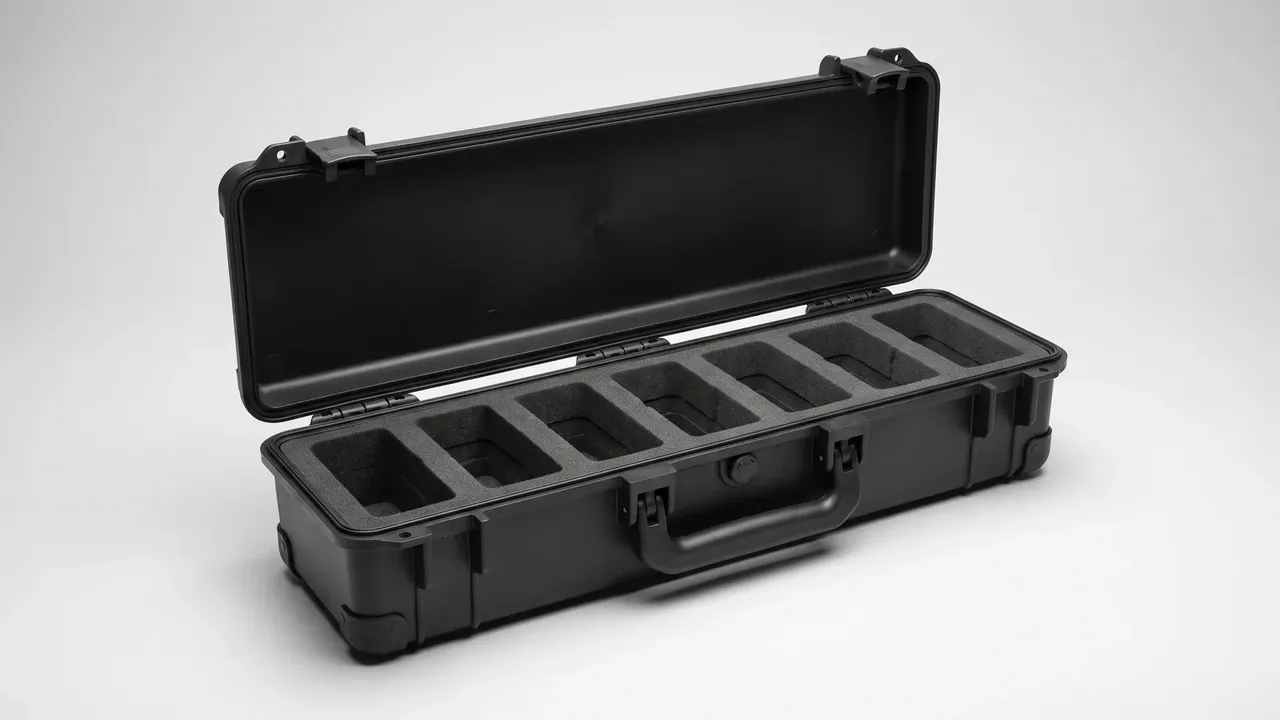
Quick answer: For the same 60 L of kit, a drone case differs from an aluminium flight case, an EVA pack, a carton and a commodity tool box in five measurable places: a 1.5 m drop, sealing grade, empty weight, cost per trip and repairability.
Table of contents
- How a Drone Case Compares with Four Alternatives
- Drop and Sealing: Where the Gap Shows
- Weight and Cost per Trip
- Usable Volume from the Same Footprint
- When a Drone Case Is the Wrong Buy
- FAQ
1. How a Drone Case Compares with Four Alternatives
Four products compete for the same budget: an aluminium flight case, an EVA hard backpack, a carton with foam, a commodity tool box. Each sells something different: aluminium stiffness and appearance, EVA weight, cardboard unit price, and the commodity box shelf availability.
The moulded case sits above all four on durability and below them only on first-order price, asking tooling and a minimum quantity in return.
| Option | Weight (60 L class) | Sealing | After a 1.5 m drop |
|---|---|---|---|
| Moulded case | 7.2 kg | IP67 | Still serviceable |
| Aluminium flight case | 9.4 kg | IP54 | Corner dents, lid lifts |
| EVA hard backpack | 1.1 kg | None | Shock passes through |
| Corrugated box | 0.6 kg | None | One trip only |
| Commodity tool box | 2.4 kg | IP20 | Latch snaps |
2. Drop and Sealing: Where the Gap Shows
The drop test sorts them quickly: six faces, twelve edges and eight corners at 1.5 m put the load on shell rebound and latch retention. Aluminium takes a permanent dent, cardboard is finished on the first impact, and an EVA shell hands the shock to the equipment.
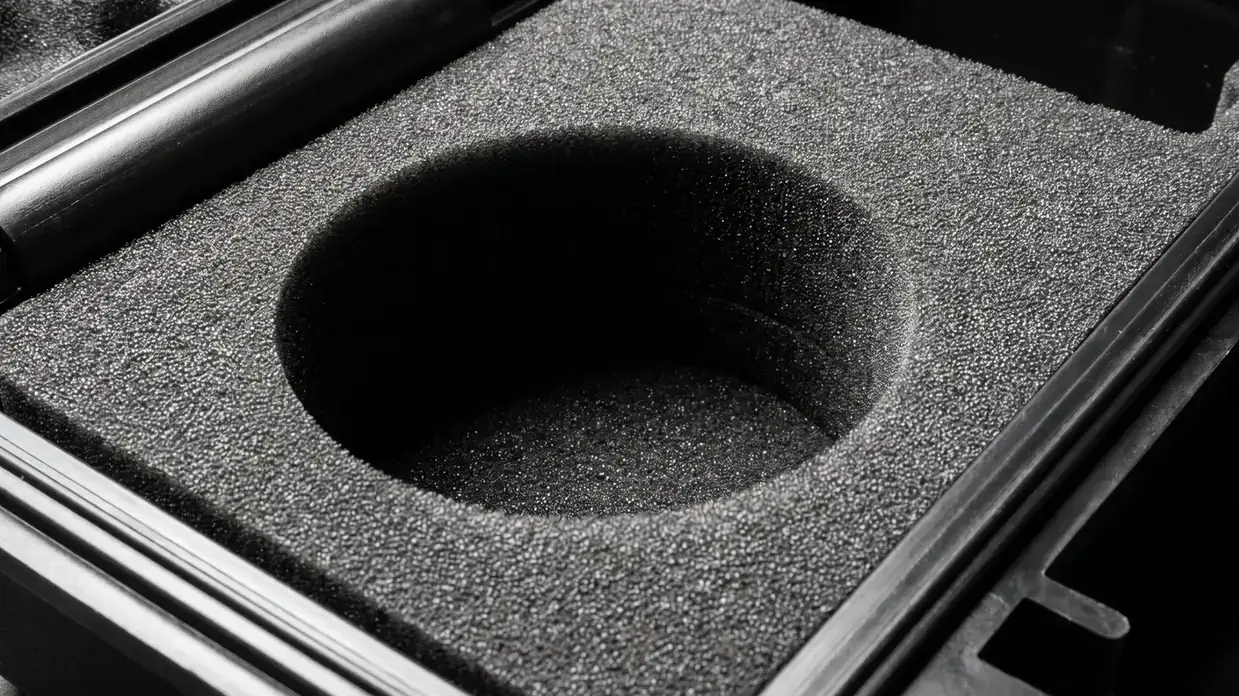
Sealing is the second gap: what counts is sealing after a drop. A moulded body holds 35 percent gasket compression through 30 minutes of immersion, while aluminium depends on a flat rim that a dent removes.
Temperature belongs here too: from -20 C to 60 C the moulded shell and gasket move predictably, while aluminium rims collect condensation that finds the rivet holes.
3. Weight and Cost per Trip
At the same 60 L a moulded case weighs 7.2 kg, aluminium 9.4 kg, a commodity tool box 2.4 kg, an EVA pack 1.1 kg. Every kilogram counts on a 150 m two-person carry, and EVA weight is paid for in protection.
Cost only makes sense per trip: a 1,680 USD case over 400 trips is 4.2 each, a 2,400 aluminium case over 300 is 8, a 420 EVA pack over 60 is 7, a 38 carton is 38 once. The arithmetic collapses for a team flying ten times a year.
| Measure | Moulded case | Closest alternative |
|---|---|---|
| Cost per trip | 4.2 | Aluminium 8 |
| Sealing | IP67 | Aluminium IP54 |
| Repair | Hinge pin 8 USD, 30 minutes | Return to works |
| Stacking | 3 high, no sag | Commodity box 2 high |
| Lead time | 25 days after tooling | 40 days sheet metal |
4. Usable Volume from the Same Footprint
Inside a 620 x 420 x 230 mm envelope a moulded case delivers 60 L of clear volume, and 25 mm of foam is the floor: thinner leaves no travel for a drop, thicker and nothing fits. Modules stood upright fit six where laying them flat fits four, lifting usable volume from 62 to 78 percent.
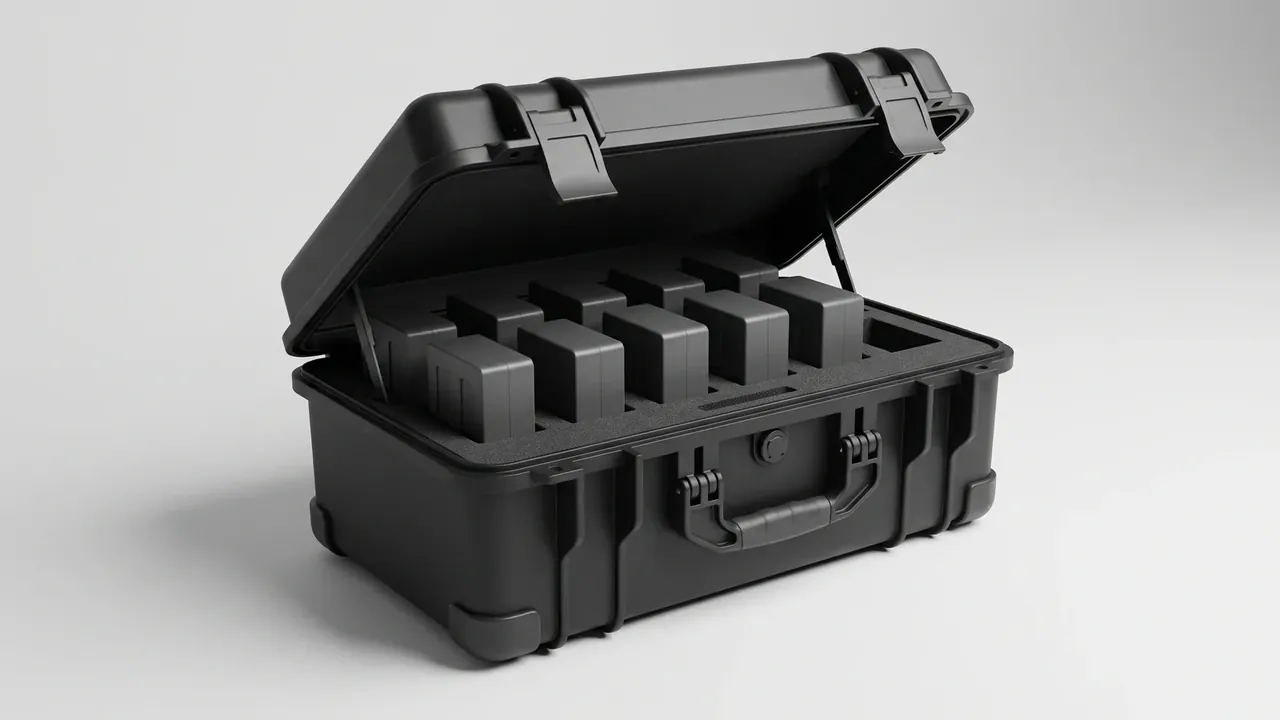
The alternatives lose volume: an aluminium case carries 260 rivet heads inside, so the foam dodges them; a commodity tool box grows ribs inward, capping pockets at 180 mm.
5. When a Drone Case Is the Wrong Buy
Under three outings a year, stored indoors, carried by one person, a foam-lined carton or EVA pack is the better spend. Opened in front of a customer, an aluminium shell reads better than moulded plastic.
| Question | Moulded case | Alternative |
|---|---|---|
| Outings per year | Over 20 | Under 3 |
| Transport | Road, air, sea | Hand carried |
| Environment | Rain, dust, salt | Indoor air |
One boundary: the case handles protection and rotation on the case side; fixing, foam thickness and loading still need their own design.
Conclusion
The difference between a drone case and its alternatives is not the material but five checkable facts: condition after a 1.5 m drop, sealing grade, empty kilos, cost per trip and repairability. Put those in a table and the choice stops depending on a sales pitch, and most projects end up with a drone case on trip count alone.
This article discusses only the container (case body) side of specifications and design intent, and does not cover any handling, loading or use of the contents.
Related Reading
- How to choose a drone case: size and battery transport
- Prop and airframe protection in transit
- Selection checks for camera equipment cases
- PP cases against ABS cases
Related Products
- 8 Series — Gun Cases; Military Equipment Cases; Camera Equipment Cases; Drone Cases; Watch Cases; Knife Cases; First Aid Cases; Electronics Equipment Cases
- WL8-2812 PP Gun Case — model WL8-2812
- All protective cases and toolboxes: 7 series, 158 models