

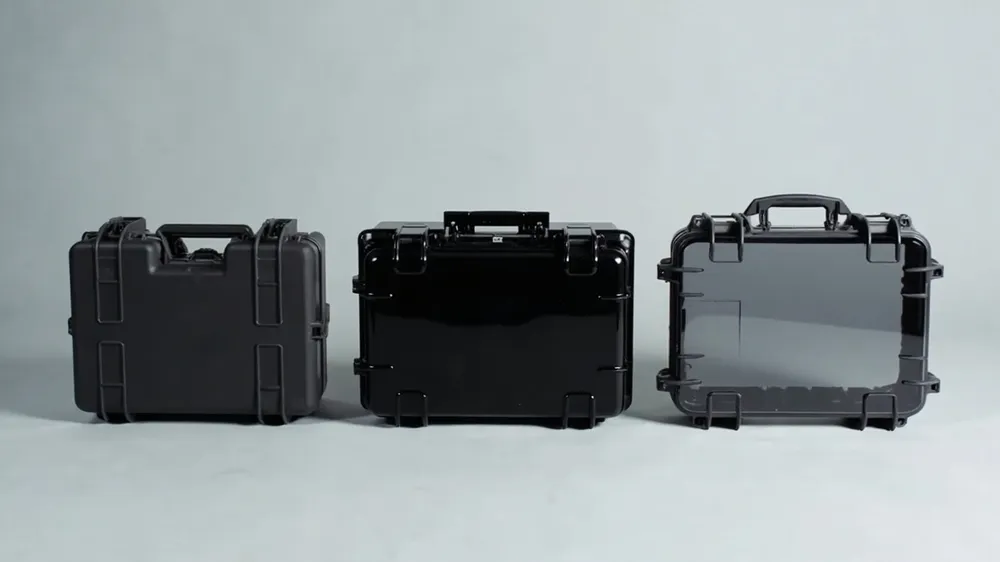
When buyers ask "what material should a drone case use", they usually expect a single answer. But the shell material is never a standalone question — it depends on the temperature your drone flies in, whether it gets dropped, whether you print a brand on it, and where it ships. Put PP, ABS and PC side by side and you find they have no absolute winner, only different trade-offs. This guide explains which scenario favours which material, and how to avoid both over-specifying (paying for performance you never use) and under-specifying (saving cost at the expense of protection).
Why Material Is the Foundational Variable
A case protects on three levels: the shell carries impact, the interior absorbs and spreads it, the seal keeps out water and dust. The shell is the first line, and it decides whether the case cracks under drop, crush or cold — and also the weight and printability.
Once the material is chosen, nearly every performance metric is bounded: how light, how rigid, how cold-tolerant, how good-looking you can get is largely fixed at this stage. So material is not "pick a colour at the end"; it is the first engineering parameter set at project kickoff. With that framing, you stop ranking materials by price.
PP (Polypropylene): The Light, Tough, Cheap All-Rounder
PP is the most common case shell. Its core strengths are low density, good toughness, chemical resistance and low raw-material cost. Its molecular structure makes it naturally impact-resistant and resistant to brittle fracture, giving stable everyday knock and vibration absorption.
PP's weaknesses are twofold. First, cold-temperature toughness drops: below around minus ten degrees Celsius, ordinary PP turns brittle and crack risk on drop rises. Second, rigidity is relatively low: at equal wall thickness it deforms more easily under load than ABS or PC.
PP therefore fits general field work where portability and cost matter — commuter cases for consumer folding drones, or industry cases used in temperate indoor/outdoor settings. Glass-filled PP lifts rigidity noticeably, a high-value compromise.
ABS: The Rigid, Printable, Presentable Option
ABS excels at high rigidity, glossy surface, easy printing and dimensional stability. If your case must carry a brand logo via screen print or laser engraving, ABS surface treatment beats PP; if the product is positioned as a "precision tool", ABS matches the feel.
The cost is moderate cold impact and moderate weathering. In northern winters or long sun exposure, ABS can degrade. Plain ABS is also only averagely flame retardant; flame-rated grades are needed for some vehicle or electrical contexts.
ABS suits cases that value finish and branding, especially professional-grade industry cases. It is not for long-term extreme cold or strong sun.
PC (Polycarbonate): The High-Toughness Extreme-Environment Choice
PC has the strongest impact strength of the three, and crucially excellent low-temperature toughness — it stays ductile at minus thirty to forty, unlike ordinary PP which goes brittle. PC can also be made transparent, letting you see the contents at a glance.
PC's downsides are stress-cracking risk, weak scratch resistance and high cost. Stress cracking means a shell with sharp corners or assembly stress can crack over time; weak scratch resistance means the surface marks easily. Cost is the ceiling of the three.
PC is the first choice for extreme cold and high-value payloads: high-altitude surveying, cold-region inspection, or transit cases carrying expensive gear where failure is unacceptable. When "the case must not fail" outranks "the case must be cheap", PC is the answer.
Side-by-Side Comparison
| Dimension | PP | ABS | PC |
|---|---|---|---|
| Weight | Lightest | Medium | Heavier |
| Rigidity | Fair (modifiable up) | Good | Good |
| Ambient impact | Good | Good | Excellent |
| Cold toughness | Fair (brittle risk) | Fair | Excellent |
| Surface/print | Fair | Glossy, printable | Transparent, scratchable |
| Chemical | Good | Medium | Medium |
| Cost | Low | Medium | High |
| Typical use | General, value | Brand, finish | Cold, high value |
This table is not for picking the highest total score; it is for circling your scenario first, then seeing which column fits. Most drone cases land between PP and ABS; PC is reserved for special cases.
Modification and Alloys: Nobody Uses Pure Resin
In real production, factories rarely use pure PP or pure PC; they use modified or alloyed grades to balance properties: glass-filled PP for rigidity, ABS/PC alloys for processability plus toughness, and toughened PP for cold regions.
That means asking "PP or ABS" is not enough — ask "which exact grade, which modification, and is there third-party test data". Two resins both called "PP" can differ by over 100% in cold performance. Naming the grade in the contract is the first lock against silent substitution.
Wall Thickness: The Overlooked Second Variable
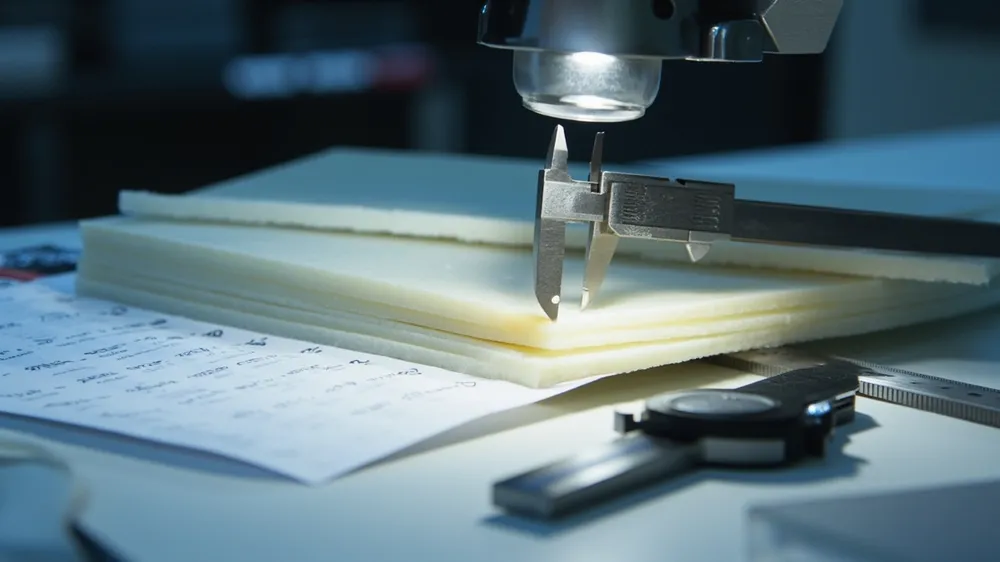
Many ask the material but not the wall. Wall thickness directly sets rigidity, weight and cost. Same PP at 2.5mm vs 3.5mm gains rigidity but also weight and material cost.
| Wall range | Use | Trade-off |
|---|---|---|
| 2.0–2.5mm | Small consumer, light load | Light, limited rigidity |
| 2.5–3.0mm | Standard industry | Balanced |
| 3.0–3.5mm+ | Heavy load, drop risk | Heavy, costly |
Practical rule: set wall by load first, then material by environment. Insufficient wall cannot be compensated by a pricier material; sufficient wall lets ordinary PP survive daily drops.
Quick Decision by Scenario
| Your scenario | Recommended | Reason |
|---|---|---|
| Consumer folding daily commute | PP (or toughened) | Light, cheap, enough |
| Industry case, branding | ABS (or ABS/PC) | Finish and print |
| Cold / high-altitude | PC or toughened PP | Cold toughness |
| High-value payload | PC | Best impact |
| Long sun, vehicle | ABS/PC + UV stabilizer | Weathering and rigidity |
Note UV resistance is independent of base material. PP and ABS both age under UV; long-outdoor cases need UV stabilizer added to the compound, or the shell goes brittle and chalky within a year or two.
Three Clauses Buyers Must Put in the Contract
- Grade: not "PP" but the specific grade and modification, with a material certificate (COA).
- Wall and tolerance: nominal wall plus allowed minus tolerance, sampled at acceptance.
- UV / flame: if the scenario needs it, state the additive and verification.
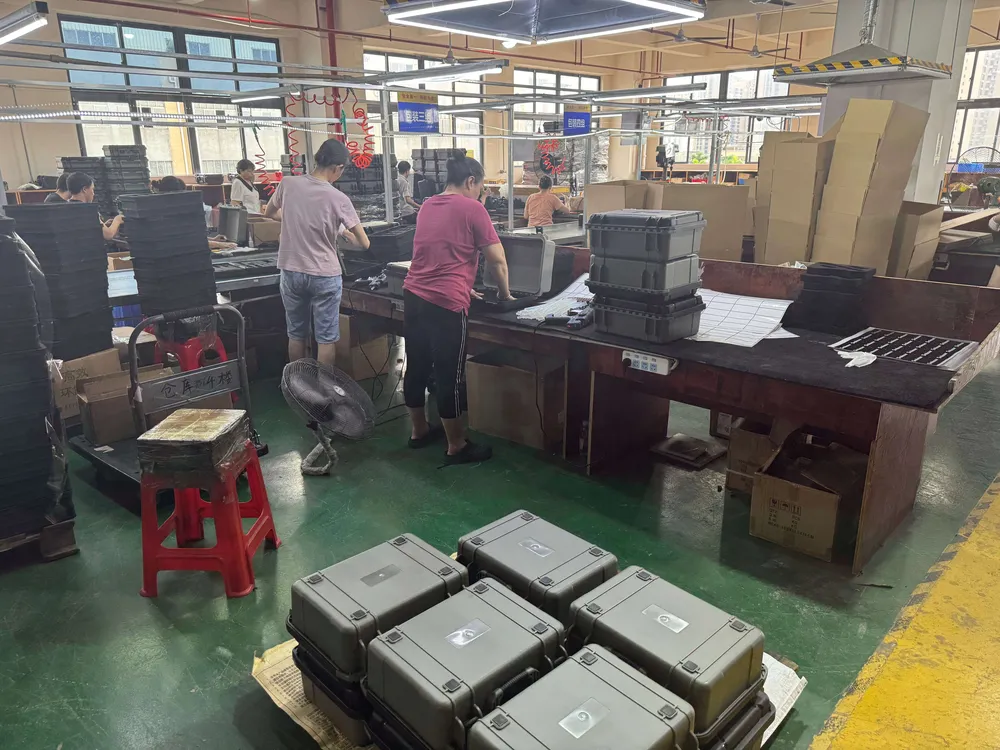
Grade substitution is the most common trap. Quoted one grade, moulded a cheaper one — invisible to the eye, quietly lower performance. Naming the grade plus requesting COA is the highest-value safeguard.
Common Misconceptions
One: "expensive is better" — a PC commuter case is just heavier and dearer for protection you cannot feel. Two: "material over wall" — covered. Three: "transparent means PC" — some ABS is semi-transparent too. Four: "ignore recycled ratio" — high recycle content lowers performance; contract the virgin ratio.
Summary
Drone case material selection is "fix the scenario, then the wall, then the material". PP is the all-rounder for most, ABS wins on finish and print, PC is for extremes and high value. Do not be fooled by trade names; make the factory quote specific grade, wall, modification and test data, and write them into the contract. Replacing "use good material" with verifiable clauses lets the factory quote accurately, because you remove the uncertainty premium.
For more on plastic durability see ABS vs PP cases; for cold use see cold brittleness; for recycle content see virgin vs recycled.