

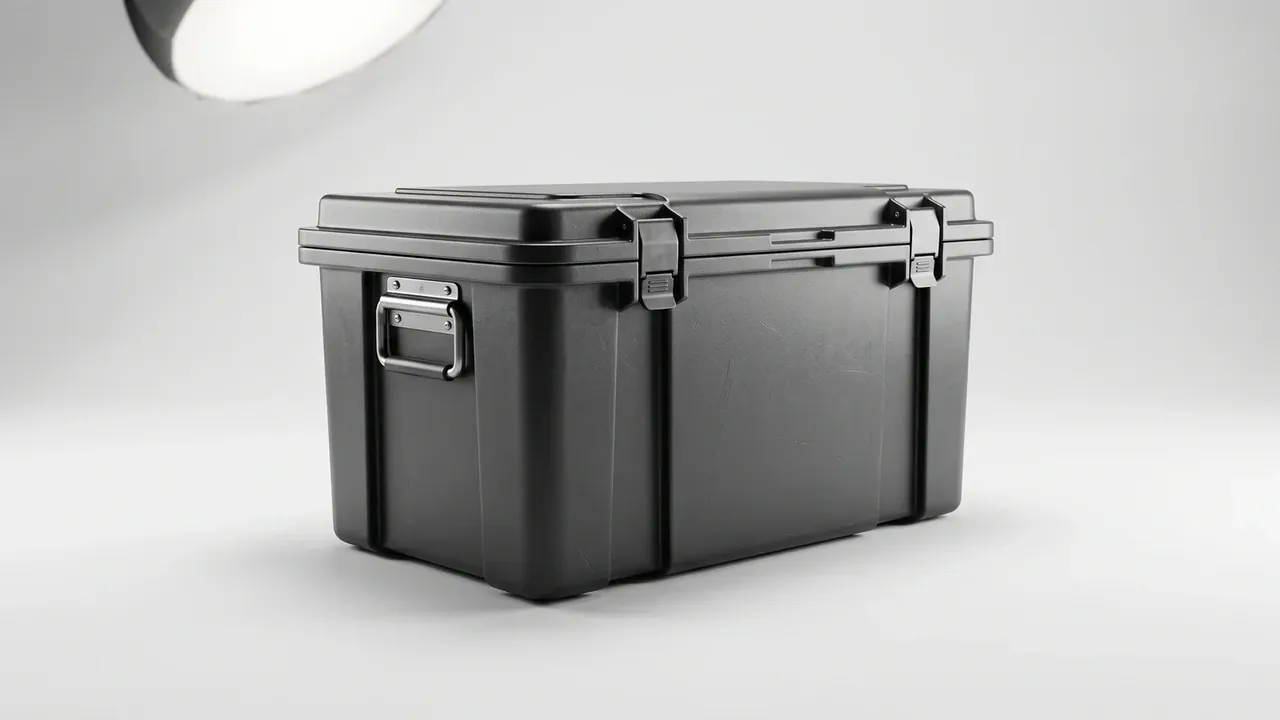
Quick answer: A dustproof waterproof case is accepted on two condition sets: particle size, concentration and vacuum, then depth, time and sequence. The IP number is only the conclusion.
Table of contents
- Reading the IP Pair on a Dustproof Waterproof Case
- Dust Testing: Particle Size and Vacuum
- Immersion Testing: Depth and Time
- Gasket Acceptance and Failure Criteria
- Added Tests for Long Outdoor Duty
- FAQ
1. Reading the IP Pair on a Dustproof Waterproof Case
The two digits are not a sum: the first covers solids, the second liquids. IP66 and IP67 are different rigs, a powerful jet against short immersion, and passing one proves nothing.
A dustproof waterproof case marked IP66 plus IP68 needs two water tests. IP68 alone, without depth and time, has no condition: 1.5 m for 30 minutes and 3 m for 60 minutes both qualify.
| Rating | Dust | Water | Key condition |
|---|---|---|---|
| IP65 | Dust tight | Jet | 6.3 L/min, 30 kPa |
| IP66 | Dust tight | Strong jet | 12.5 L/min, 100 kPa |
| IP67 | Dust tight | Short immersion | 1 m, 30 min |
| IP68 | Dust tight | Continuous immersion | Agreed |
Treat the rating as a type test result, not a life statement; hinge wear and gasket ageing are held by rechecks.
2. Dust Testing: Particle Size and Vacuum
The standard test uses talcum at a median 75 µm and 2 kg per cubic metre for 8 hours, with the interior pulled to a 2 kPa vacuum and air drawn at 40 times the case volume per hour. The vacuum makes dust travel into gaps.
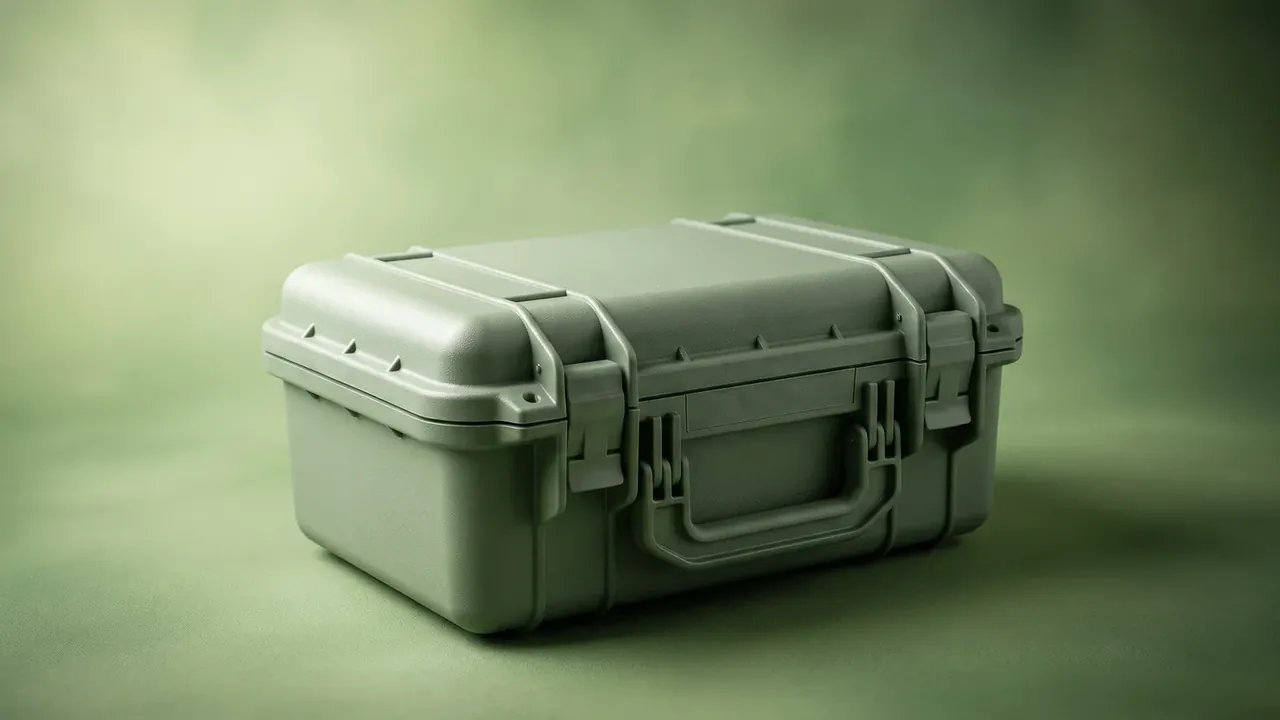
Without vacuum the test only proves external settling; many dustproof waterproof case models pass a static chamber and take dust within three months on a roof rack.
Compare particle size against gap width: 75 µm talcum passes a 0.1 mm gap, parting lines sit near 0.15 mm, and flat faces stop nothing. Tightness comes from gasket compression.
IP6X demands no visible deposit inside; IP5X tolerates some dust, so name the level.
3. Immersion Testing: Depth and Time
IPX5 is a nozzle at 6.3 L/min and 30 kPa for 3 minutes per face, IPX6 is 12.5 L/min at 100 kPa, IPX7 is 1 m for 30 minutes, and IPX8 is whatever depth and time the parties agree, commonly 3 m for 60 minutes.
| Test | Condition | Misreading |
|---|---|---|
| IPX5 | 6.3 L/min, 30 kPa, 3 min per face | Read as rain |
| IPX6 | 12.5 L/min, 100 kPa, 3 min per face | Read as immersion |
| IPX7 | 1 m, 30 min | Read as soaking |
| IPX8 | Agreed, often 3 m, 60 min | Left blank |
Sequence matters: jet first, immersion second. The jet opens gaps the soak then exposes; reversed, a compressed gasket flatters the sample.
Temperature adds a variable. A dustproof waterproof case runs five cycles from minus 30 to plus 70 degrees, then enters water; a warm case in cold water pulls water inward, catching what a static soak misses.
4. Gasket Acceptance and Failure Criteria
The gasket is the only barrier. Acceptance fixes three numbers: hardness 70 Shore A, assembled compression 25 percent, and compression set no higher than 20 percent after 22 hours at 70 degrees.
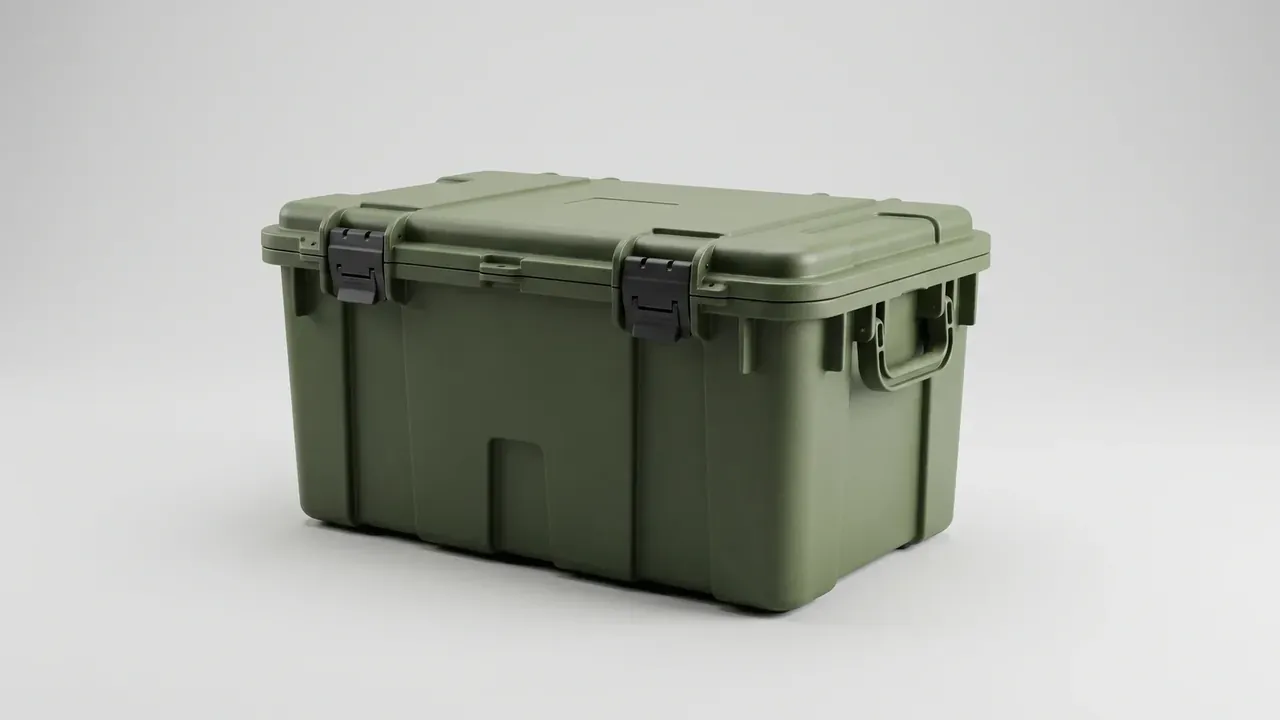
After opening, check for droplets, discoloured absorbent paper, flattened or cut gasket.
The latch decides whether compression survives: after 5000 cycles the stroke may lose 20 percent at most, with an even lid gap.
Air decay suits a full check: charge to 30 kPa, hold 120 seconds, pass at 0.3 kPa loss. It cannot replace immersion but runs on every case.
5. Added Tests for Long Outdoor Duty
Outdoors, ultraviolet, thermal cycling, salt spray and dust deposit act together, so acceptance adds items beyond the standard test.
| Added item | Condition | Verdict |
|---|---|---|
| UV ageing | 1000 h, 0.76 W/m², 340 nm | No chalking or cracking |
| Cold bend | 4 h at minus 30, then bend | No crack |
| Salt spray | 96 h neutral | No red rust on metal |
| Latch life | 5000 cycles | Stroke loss within 20 percent |
The gasket ages first: silicone holds temperature, nitrile resists oil, EPDM balances both. A three-year cycle costs less than repairs.
The relief valve is easily missed: its disc must hold pressure without weeping, so test it alone at 30 kPa.
Conclusion
A dustproof waterproof case is accepted on two condition sets: particle size, concentration and vacuum, then depth, time and sequence. The rating is only a conclusion; conditions are reproducible. Buyers who pay for conditions receive a dustproof waterproof case.
This article discusses only the container (case body) side of specifications and design intent, and does not cover any handling, loading or use of the contents.
Related Reading
- How sealing works in a dustproof case
- Choosing a dustproof case
- Dehumidifying structure of a moisture-proof case
- Grades and design of waterproof hard cases
Related Products
- 8 Series — Gun Cases; Military Equipment Cases; Camera Equipment Cases; Drone Cases; Watch Cases; Knife Cases; First Aid Cases; Electronics Equipment Cases
- WL8-2812 PP Gun Case — model WL8-2812
- All protective cases and toolboxes: 7 series, 158 models