

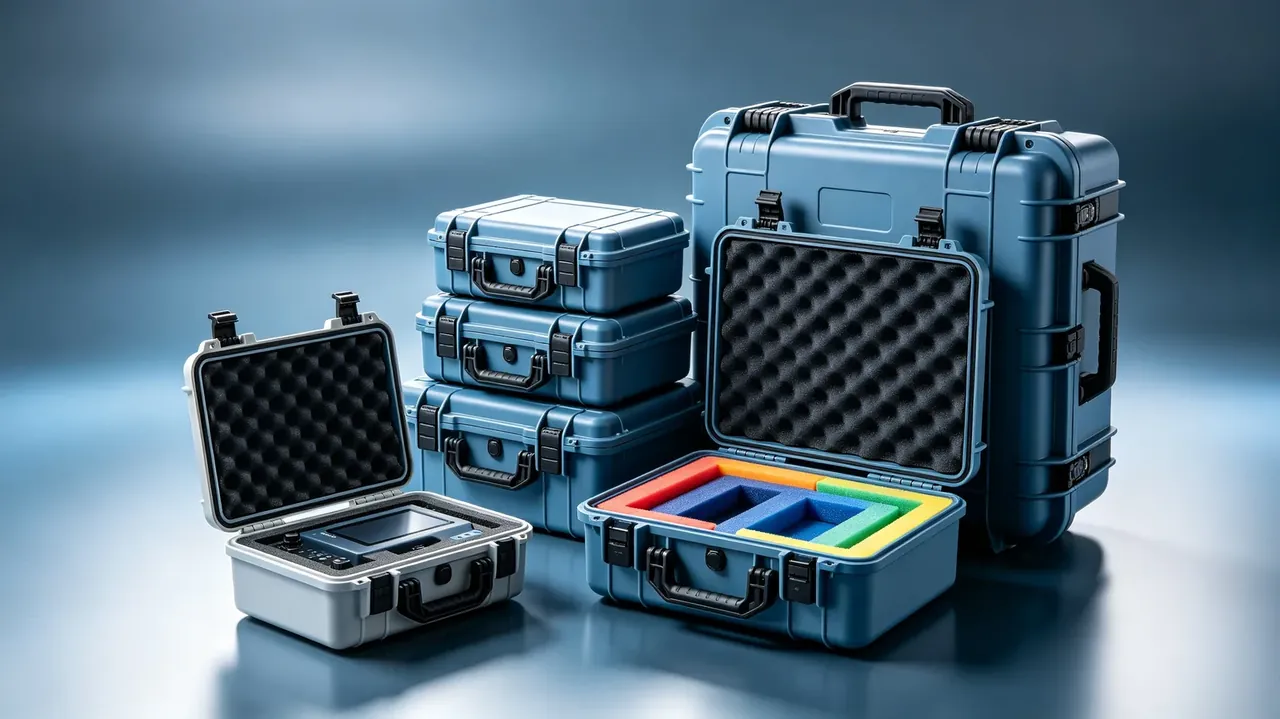
Quick answer: An eac case declared as packaging follows TR CU 005/2011, as a product it follows TR CU 010/2011, and electrical fittings add TR CU 020/2011.
Table of contents
- One Case, Three Possible Identities
- Route A: Packaging Under TR CU 005/2011
- Route B: Product Under TR CU 010/2011 and 020/2011
- Certification or Declaration: Two Russian Routes
- Validity Periods and the Eight-Item Russian Label
- FAQ
1. One Case, Three Possible Identities
A 600 mm by 400 mm by 300 mm moulded case leaves the factory and the broker files it under packaging, so the folder is built around TR CU 005/2011. Send the same unit as a housing that travels with a machine and it is a component, judged under the machine's regulation. Sell it with a model number and warranty and it lands under TR CU 010/2011.
Identity follows the transaction: packed, shipped and discarded at the far end it is packaging; priced separately and returnable it is a product.
Get it wrong and everything inherits the error: no risk assessment, a 1-year file stretched to 5.
| Regulation | Declared object | Trigger | Core documents |
|---|---|---|---|
| TR CU 005/2011 | Packaging and packaging materials | Case travels with goods, then discarded | Declaration, material list, Russian label |
| TR CU 010/2011 | Machinery-type product | Sold separately, or fitted with lift and brake hardware | Technical file, risk assessment, report |
| TR CU 020/2011 | Electromagnetic compatibility | Lighting, charging port, dehumidifier, control module | EMC report, circuit description |
| Two stacked | Powered and sold separately | Both rows above apply | Separate registrations |
The last row is where shipments die: a powered case filed as packaging meets a circuit description that contradicts it.
2. Route A: Packaging Under TR CU 005/2011
Here the declared object is the pack, not the thing being packed. That decides what the file contains: pack structure, materials, closure, stacking performance. Model lineage and after-sales terms stay out.
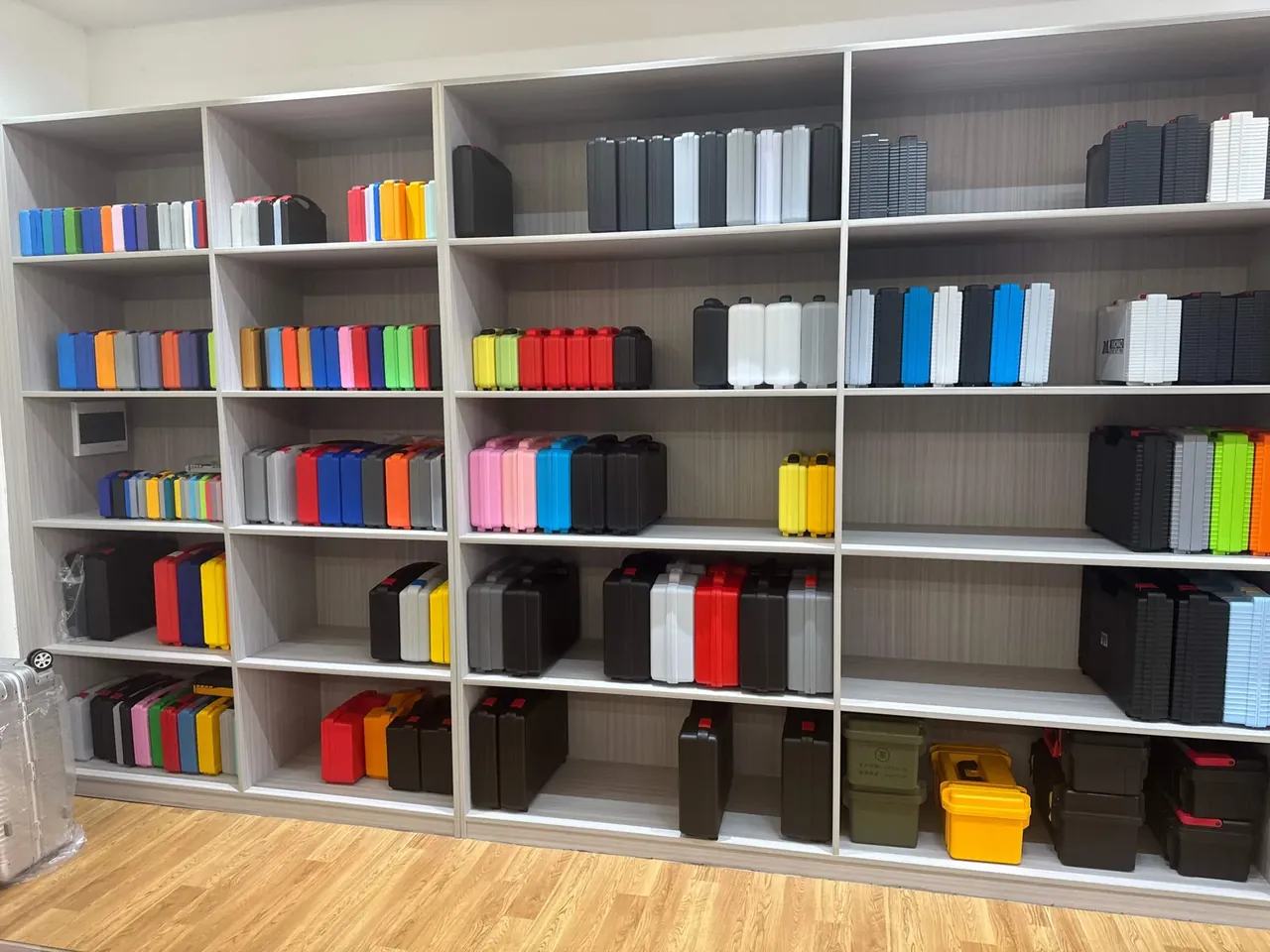
Four documents carry the route: declaration, material list, Russian label artwork, performance report. The applicant signs and registers without a third party. The material list names resin grade and recycling mark; the report covers drop, stacking and closure strength.
Three samples, one tool, one batch. Drop severity steps with gross weight, stacking runs 3 high for 24 h, and closure strength applies only to gasketed designs.
Packaging is cheap to hold and narrow to change: alter the structure or resin grade and the assessment is redone; change only the colour and the file stands.
3. Route B: Product Under TR CU 010/2011 and 020/2011
Sold as a product, the case is judged first on whether it moves. Castors with brakes, gas struts, tilting brackets and sliding trays all pull it into the machinery route. A plain hinged lid with catches usually stays a general product, though the technical file is still required.
The folder grows from four documents to six: technical file, risk assessment, general arrangement, Russian instructions, report, consistency statement. Risk assessment is what packaging never needs, and it must address pinch points, catch rebound and handle failure.
Electrical fittings add a second layer: lighting, a USB port, a dehumidifier module or an electronic lock each need EMC testing under TR CU 020/2011, registered apart from the machinery file.
4. Certification or Declaration: Two Russian Routes
Russian keeps them apart: сертификация is certification by a third-party body; декларирование is declaration registered by the applicant, who carries the liability. English summaries collapse both into certification.
The choice follows how the regulation classifies the object, not company size. Packaging declares, with almost no exceptions; machinery mostly certifies; powered cases split by function.
Certification adds a factory audit and three samples held at a laboratory. Declaration issues a number the day documents are complete, but an adverse check revokes it.
Applicant status is a hard gate: the entity must be registered in the customs union, so an overseas maker files through the importer or a representative, which decides who signs as first responsible party.
| Route | Samples | Issued by | Maximum validity | Typical use |
|---|---|---|---|---|
| сертификация | 3 | Third-party body | 5 years | Machinery, powered fittings |
| декларирование | 3 | Applicant | 5 years | Packaging, low-risk goods |
| Series | 3 plus 1 type sample | As above | 5 years | Several sizes, one tool |
| Single batch | 1 | As above | 1 year | Trials |
Certification samples stay at the laboratory; declaration samples need only be on site.
5. Validity Periods and the Eight-Item Russian Label
Three bands, chosen by production continuity rather than price: one year for a trial order, three for a stable model with an annual consistency statement, five for a family with a factory audit midway.
Where one case holds both, neither covers the other: customs pulls whichever matches the declared basis, and the wrong one counts as none.
The Russian label carries eight items: product name, country of origin, applicant name and address, manufacturing date, batch number, quantity, gross weight, and a one-line statement of use. Characters run 3 mm or more, label width 40 mm and up, 15 mm margins.
| Label item | Position | Height | Note |
|---|---|---|---|
| Name and model | First line, centred | 4 mm | Matches the declaration |
| Country of origin | Second line, left | 3 mm | Full country name |
| Applicant name and address | Middle block | 3 mm | Matches the registration |
| Date and batch | Lower right | 3 mm | Year-month, 4-digit batch |
| Gross weight, quantity | Lower left | 3 mm | Units in kg and pieces |
| Statement of use | Footer strip | 3 mm | 20 characters or fewer |
Labels must survive too: 3 years at ambient without fading, and for cold-chain designs an adhesion recheck after 4 h at -25 ℃.
Customs codes follow the declared basis: packaging and product entries diverge from the sixth digit, and so do control conditions. Change the basis and the code changes in the same pass; paperwork alone is a common reason for refusal.
Conclusion
The hard part of an eac case is identity, not testing. Packaging runs on TR CU 005/2011, a product on TR CU 010/2011, electrical fittings add TR CU 020/2011, and samples, validity and applicant status differ across all three. Settle the transaction form first, then the 1, 3 or 5 year band.
This article covers case-side specifications only and does not address any handling, loading or use of the contents.
Related Reading
- EAC route for cases shipped to Russia
- Wood packaging quarantine and treatment
- ISPM 15 essentials for timber packaging
- Certification set for one export unit
- Customs codes and export documents
Related Products
- 8 Series — Gun Cases; Military Equipment Cases; Camera Equipment Cases; Drone Cases; Watch Cases; Knife Cases; First Aid Cases; Electronics Equipment Cases
- WL8-2812 PP Gun Case — model WL8-2812
- All protective cases and toolboxes: 7 series, 158 models