

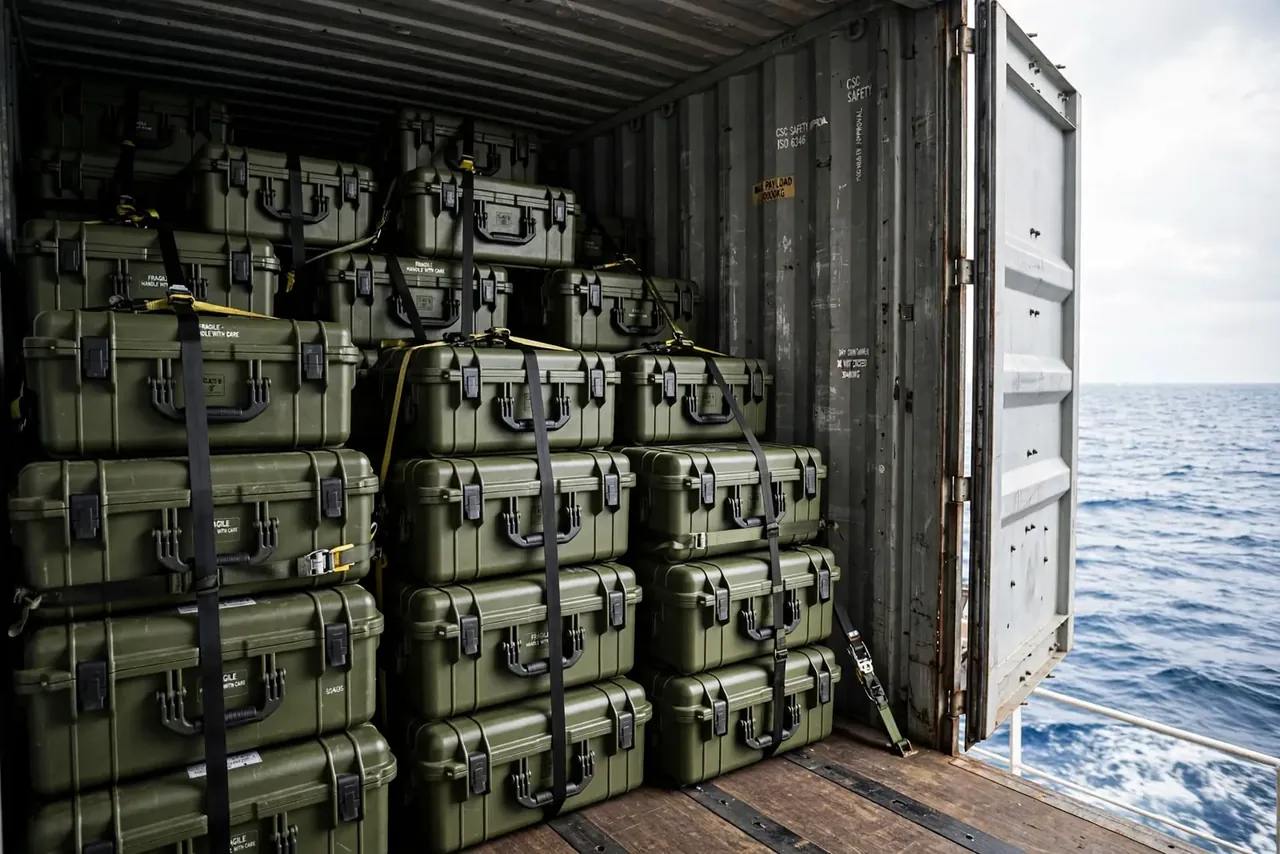
Quick answer: Case export russia fails at minus 40 C, where PP impact retention drops to about 30%, while EPDM gaskets keep 85% of their rebound and stay sealed.
Table of contents
- Where EAC ends and TR CU begins
- Russian wording the GOST label must carry
- The corner fails before the gasket
- 25 days of rail temperature and humidity
- Wood packaging quarantine and arrival checks
- FAQ
1. Where EAC ends and TR CU begins
A rail batch to Novosibirsk arrived with 3 cracked corners, 2 of them starting under a latch seat. Nothing in the paperwork was missing: the failure was thermal, and that split sets the order of work on any case export russia project.
Three regulations touch a protective case: TR CU 004/2011 for equipment between 50 and 1000 V AC, TR CU 005/2011 for packaging, and TR CU 020/2011 for electromagnetic compatibility. A plain PP case has no electrical fittings, so it falls under packaging only and needs a declaration, not a certificate.
| Regulation | Scope | Applies to a plain case | Document needed |
|---|---|---|---|
| TR CU 004/2011 | Equipment 50–1000 V AC, 75–1500 V DC | No | None |
| TR CU 005/2011 | Packaging materials and packs | Yes | Declaration (DS) |
| TR CU 020/2011 | Electromagnetic compatibility | No | None |
| Case with a charging port or e-lock | Fittings judged as electrical | 004 and 020 both apply | Certificate (SS) |
The line sits at the accessory. Fit a USB port or an electronic lock and 004 and 020 arrive together: the file upgrades to a certificate, the timeline stretches from 10 working days to 30.
2. Russian wording the GOST label must carry
Russian receivers read the label before they open the case. A 60 × 40 mm label has to hold 10 items, and one missing field can park a pallet on the platform for a week.

The 10 items are product name, model, external dimensions, empty weight, shell material, manufacturer name and address, country of origin, batch number, storage conditions, and the EAC mark. Russian text runs at 2 mm minimum height.
Country of origin causes most reprints: writing China is not accepted, the field reads Китай. The address must reach street level, and the batch number has to match the moulded stamp character for character. A label costs under 0.3 CNY per case, while air freighting corrected labels costs about 400 times that.
3. The corner fails before the gasket
PP is tough at room temperature and turns brittle as it cools. At minus 40 C the impact retention of a moulded shell is around 30%, while an EPDM gasket still returns about 85% of its compression.
| Ambient | Shell impact retention | Gasket rebound | Packaging action |
|---|---|---|---|
| +20 C | 100% | 100% | Standard corrugated shipper |
| −10 C | 78% | 96% | 5 mm EPE corner protectors |
| −25 C | 55% | 88% | 10 mm protectors, 3 mm internal clearance |
| −40 C | 30% | 85% | Timber or honeycomb box, no single-case shipping |
| −50 C | 18% | 80% | Insulated packaging, case carries no load |
The gasket still works at minus 40 C, the shell does not, so the low temperature budget belongs to corner protectors and outer packaging, not to a softer seal compound.
Corners are the thinnest section of the moulding: on a typical tool the corner wall runs 0.6 mm thinner than the side wall at an R12 radius. Opening the radius to R20 and levelling corner thickness buys more than any seal change, and it is paid once in tooling.
Below minus 20 C, cracks start at the latch seat root, where wall thickness is only 4 mm.
4. 25 days of rail temperature and humidity
A 25 day rail leg walks the wagon interior from minus 35 C to plus 18 C. One logger per pallet at a 2 h interval records about 300 points.
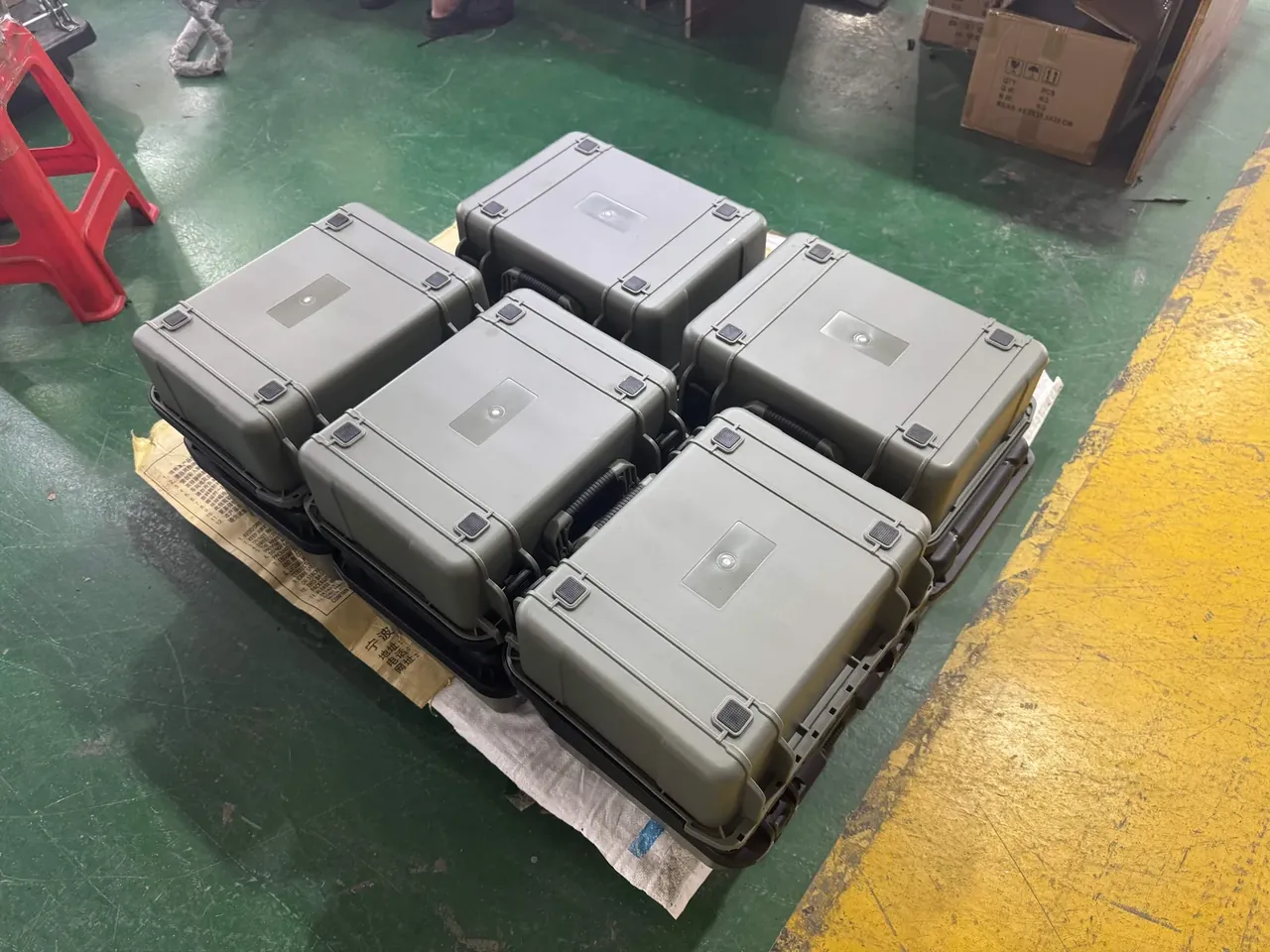
| Mode | Transit days | Minimum | Peak RH | Packaging action | Logging |
|---|---|---|---|---|---|
| Rail, full wagon | 25 | −35 C | 80% RH | 10 mm corners plus desiccant | 2 h |
| Sea plus rail | 38 | −28 C | 88% RH | Timber box with barrier film | 4 h |
| Air | 6 | −12 C | 65% RH | 5 mm corners | 1 h |
| Road direct | 18 | −30 C | 75% RH | 10 mm corners | 2 h |
The steepest drop lands around transhipment at Zabaykalsk. Three transhipments mean the case leaves the pallet, hits ground and is restacked each time, and that shock hurts corners more than the cold.
Humidity peaks on the warm-up leg: as the wagon climbs from minus 35 C above zero, moisture condenses on the shell and the corrugated shipper softens under load.
Specify loggers at plus or minus 0.5 C and 3% RH; anything coarser smooths away the transhipment spikes.
5. Wood packaging quarantine and arrival checks
Wood packaging follows a separate rulebook. ISPM 15 requires heat treatment or fumigation, bark removal and an IPPC mark, and it has no mutual recognition with EAC: EAC covers the product, quarantine covers the packaging.
Keep crate moisture below 20% and make the country code on the mark two letters. Plywood or honeycomb board avoids quarantine, at the cost of stiffness: over a 1.2 m span deflection grows by about 3 mm.
Arrival inspection runs four moves: radial cracks at the corners, each latch worked 10 times, gasket indentation recovery, and the batch number against the label.
Conclusion
Settle temperature first and paperwork second. Once the lowest transit temperature is fixed, the mode table picks the packaging: rail at 25 days and minus 35 C needs 10 mm corners plus a timber box, while air at 6 days and minus 12 C is fine with 5 mm corners. On the case side, opening the corner radius to R20 and levelling wall thickness buys more than any gasket change. EAC and the GOST label close in 10 working days and never become the bottleneck, so this season's 3 cracked corners can become 3 traceable data points.
This article discusses container-side specifications and design implications only, and does not cover any handling, loading or use of the contents.
Related Reading
- How low temperature drop tests are judged
- Case use in Nordic cold conditions
- Plywood pressed cases as a wood alternative
- Configuring export packaging as a whole
Related Products
- 8 Series — Gun Cases; Military Equipment Cases; Camera Equipment Cases; Drone Cases; Watch Cases; Knife Cases; First Aid Cases; Electronics Equipment Cases
- WL8-2812 PP Gun Case — model WL8-2812
- All protective cases and toolboxes: 7 series, 158 models