

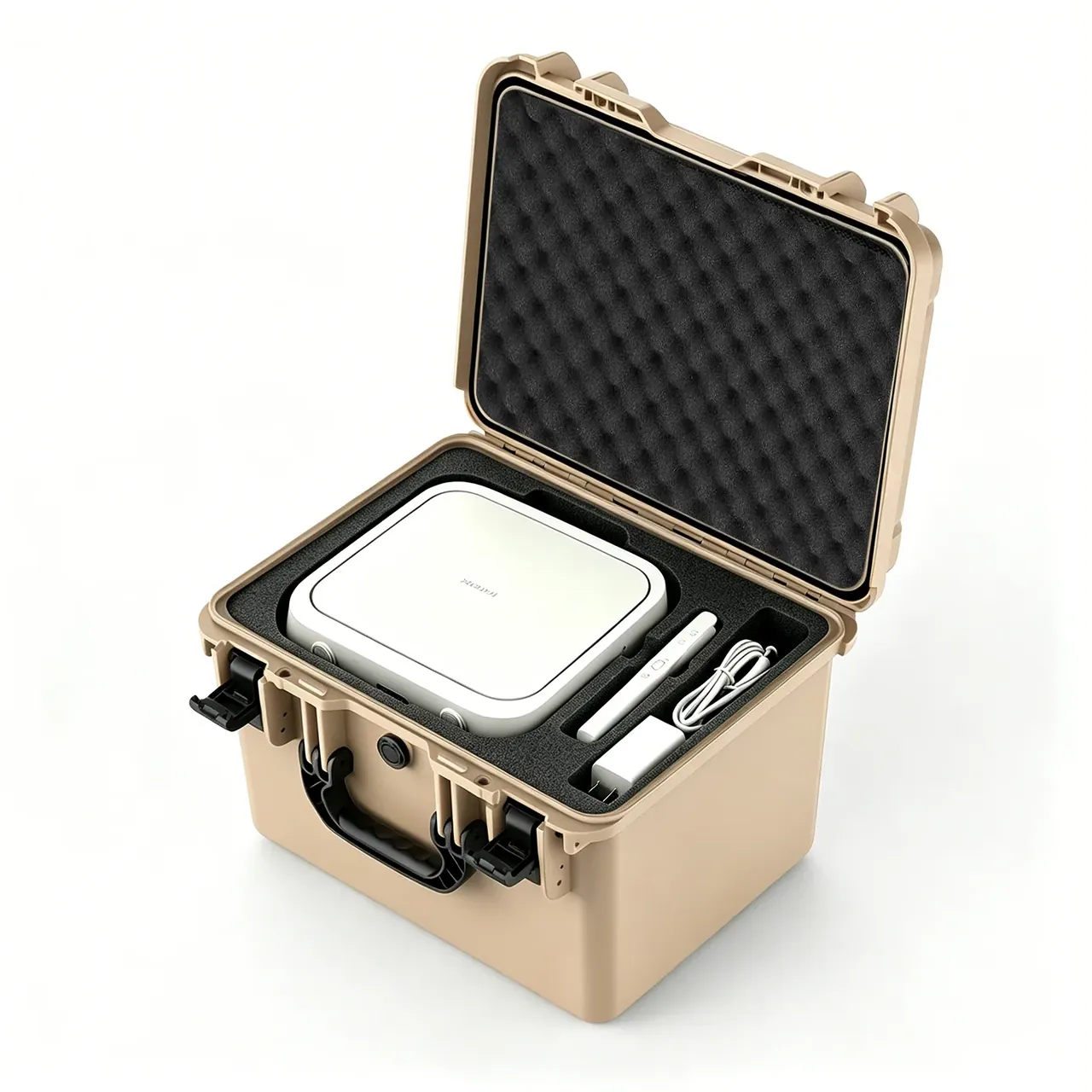
Quick answer: Case wood packaging leaves by two legal routes, heat treatment at 56 ℃ for 30 min or methyl bromide at 48 g/m³, and one bad mark returns the box.
Table of contents
- Two legal routes: heat treatment and fumigation
- What the four fields of an IPPC mark contain
- The exemption list: plywood, OSB, processed board
- Deck thickness and load on a timber pallet
- Australia, the EU, the US and the 1.6 times cost
- FAQ
1. Two legal routes: heat treatment and fumigation
Solid timber ships under two codes: HT for heat treatment and MB for methyl bromide, with the letters on the mark as proof.
HT holds the core of the board at 56 ℃ for 30 min. MB seals the load at 48 g/m³ for 24 h with the ambient above 10 ℃.
| Route | Condition | Batch time | Residue | ANZ and EU | Cost per m³ |
|---|---|---|---|---|---|
| HT | Core 56 ℃ / 30 min | 6 h | None | Accepted | 18 USD |
| MB | 48 g/m³ / 24 h / ≥10 ℃ | 36 h | Yes | Mostly refused | 14 USD |
Time decides. An 8 m³ batch spends 6 h in the kiln and is nailed the same day, while MB needs 24 h sealed plus 12 h venting, so 36 h pass before the first nail. The EU and Australia-New Zealand barely accept MB, which leaves HT on those lanes.
The third route skips treatment: build from plywood, OSB or particleboard, where prices spread under 8%.
Heat treatment depends on moisture, not the controller display. Boards must dry below 20% or 30 min at 56 ℃ only warms the water. Probe 3 points, keep the kiln record 2 years: the only defence when a case wood packaging load is pulled.
2. What the four fields of an IPPC mark contain
The mark is a bordered rectangle with four fixed fields: IPPC wheat symbol, two-letter country code, producer registration number, treatment code. Lose one and the batch counts as unmarked.

Size has a floor: 60 mm × 30 mm border, 5 mm letters, on two opposite sides at least 200 mm off the ground.
Three mistakes repeat: paper labels that tear off, HT and MB on the same board, and last season's stamp with a dead number.
The number belongs to the producer, one per factory, so a trader's quote carries a handling fee for borrowing it.
The arithmetic is blunt: a legal mark costs 0.5 USD, a rejected 20 ft container 1200 USD.
A crooked stamp can be argued about; a missing field cannot.
3. The exemption list: plywood, OSB, processed board
ISPM 15 covers solid timber: crate boards, skids, pallets and bearers. Boards formed under heat and pressure fall outside it, so plywood, OSB, particleboard, fibreboard and LVL are all exempt.
Fumigation-free crates live on that exemption: no stamp on the plywood, only a material declaration.
The exemption has an edge: a plywood crate on solid skids still needs those skids stamped, and one unmarked 22 mm bearer returns the container.
Capacity differs: at 18 mm plywood bends near 40 MPa, OSB near 34 MPa, so a 1.5 t floor needs a crossbearer in case wood packaging.
End grain tells: rings mean solid timber, glue lines mean plywood.
4. Deck thickness and load on a timber pallet
A 22 mm deck on 3 bearers carries 1.5 t static. At 18 mm it falls to 1.1 t, at 15 mm to 0.9 t, and 25 mm reaches 1.9 t.
| Deck | Bearers | Static | Dynamic | Weight | Cost each |
|---|---|---|---|---|---|
| 15 mm | 3 | 0.9 t | 0.5 t | 11 kg | 16 USD |
| 18 mm | 3 | 1.1 t | 0.7 t | 13 kg | 19 USD |
| 22 mm | 3 | 1.5 t | 0.9 t | 16 kg | 22 USD |
| 25 mm | 3 | 1.9 t | 1.1 t | 19 kg | 26 USD |
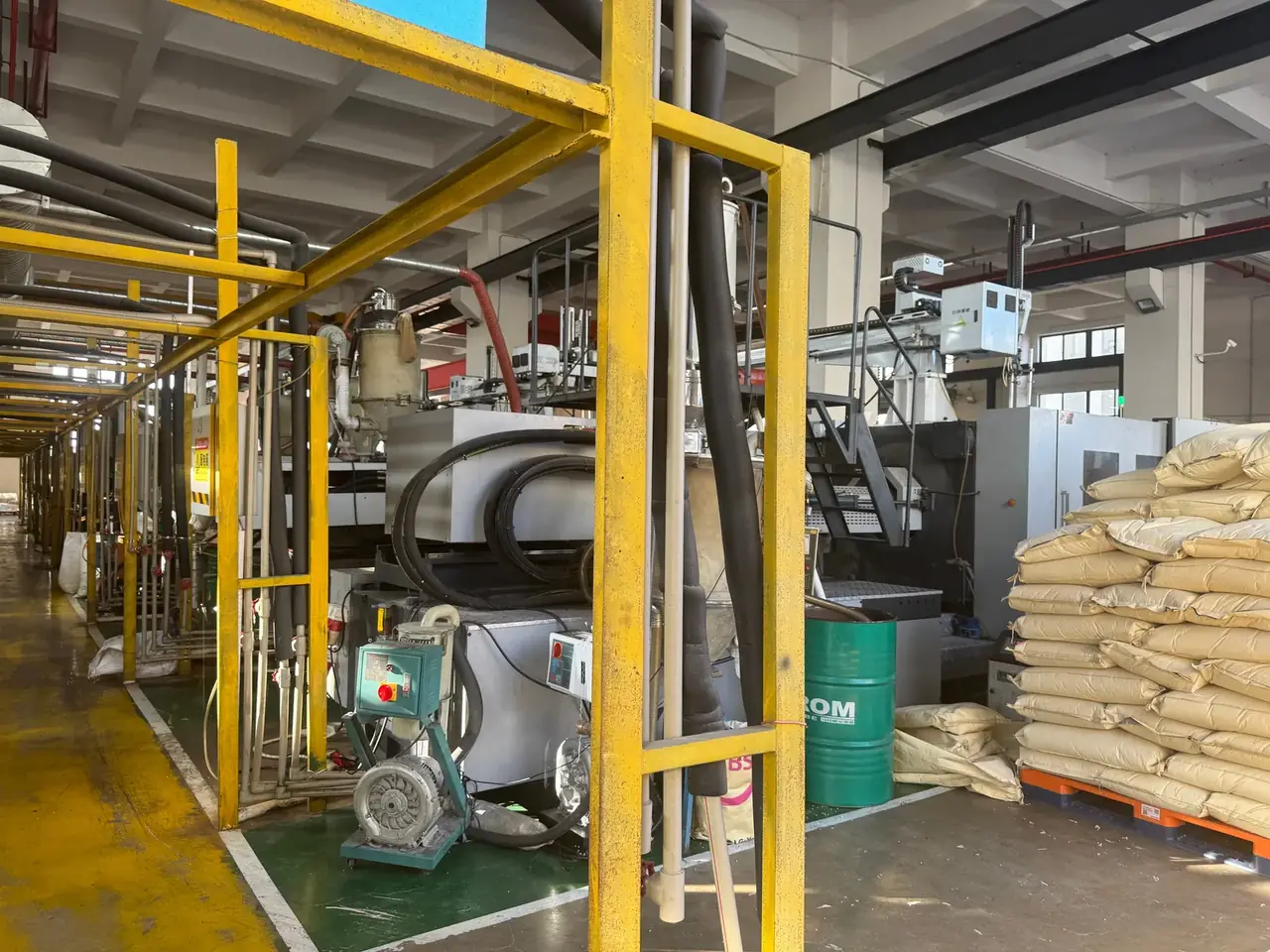
The 1.5 t is static; dynamic load runs at 60%, so 0.9 t when a forklift lifts. Entry clearance is 100 mm, or the forks cut the floor.
Nails go every 150 mm, 25 mm from the edge, at 2.5 mm, with 3 mm gaps so rain drains.
A 22 mm deck costs 12% more and adds 0.4 t, yet works out 6% cheaper per tonne as one pallet replaces 1.4 at 18 mm.
Stack 3 high and the bottom pallet carries 4.5 t, past the rating, so step to 25 mm or cap the stack at 2 layers.
5. Australia, the EU, the US and the 1.6 times cost
All three markets accept the mark and differ in conditions. The EU wants bark-free timber, Australia and New Zealand turn back an unreadable mark, and the US takes HT or MB with the mark on a visible face.
The ratio is 1.6 times: 45 USD for a timber crate against 28 USD for a heavy carton, driven by 18 kg against 6 kg.
Pay it above 40 kg per crate, across 3 handling steps, or when the destination stacks 3 high; skip it for one-way air freight or a carton that passes a drop test.
Split the ratio and it reads 60% board, 25% labour and 15% treatment, so negotiate board first and treatment last.
On the ANZ lane the inside is inspected too, so blow the crate out with compressed air before nailing.
Conclusion
Case wood packaging follows one order: destination, route, deck thickness, then price. The destination decides whether MB exists at all, and if it does not, only HT or a processed board remains. The route decides whether a kiln slot is needed, and 6 h in the kiln has to sit in the plan as a day. The deck decides 1.5 t or 1.1 t, and an order sitting 0.4 t over the line should not save that 12%. Price comes last, because the 1.6 times premium insures against one thing, the 1200 USD return. Tick the table before the order goes out; a stamp at assembly costs less than one after refusal. Two of the five rows need no treatment, and choosing between them is a question of load, not paperwork.
| Option | Material | Treatment | Destinations | Cost each |
|---|---|---|---|---|
| Timber crate + HT | Solid board 22 mm | 56 ℃ / 30 min | EU, ANZ, US | 45 USD |
| Timber crate + MB | Solid board 22 mm | 48 g/m³ / 24 h | US, parts of the Gulf | 41 USD |
| Plywood crate | Plywood 18 mm | Exempt | All | 38 USD |
| OSB crate | OSB 18 mm | Exempt | All | 36 USD |
| Heavy carton | Five-ply corrugated | Exempt | All | 28 USD |
This article discusses container-side specifications and design implications only, and does not cover any handling, loading or use of the contents.
Related Reading
- Pressing plywood into case panels
- Load ratings for heavy corrugated cartons
- Choosing an export packing method
- How a pallet is built in layers
Related Products
- 8 Series — Gun Cases; Military Equipment Cases; Camera Equipment Cases; Drone Cases; Watch Cases; Knife Cases; First Aid Cases; Electronics Equipment Cases
- WL8-2812 PP Gun Case — model WL8-2812
- All protective cases and toolboxes: 7 series, 158 models