

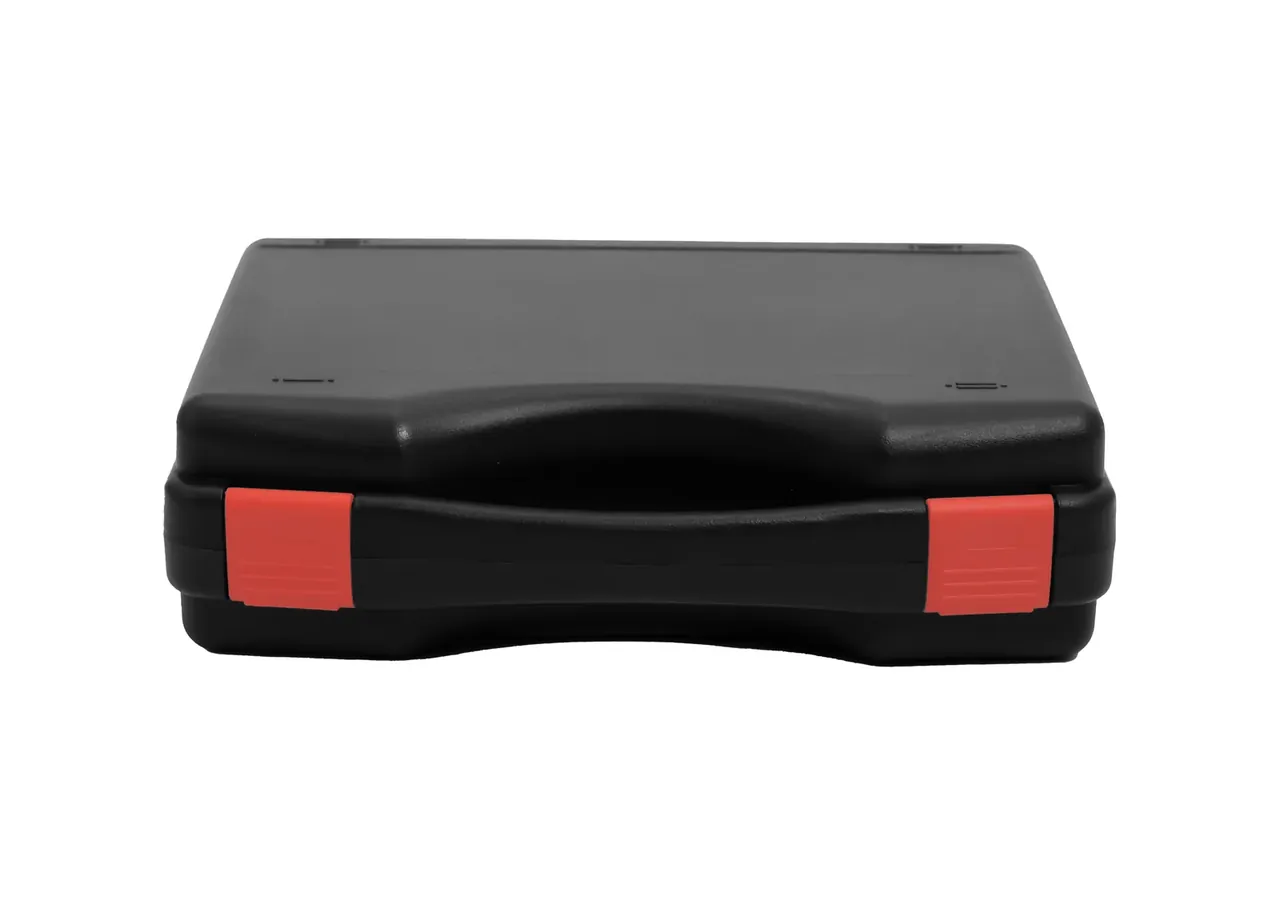
Quick answer: Returning Empty Cases works on load rate: a 2–3° taper and a 1:4 nest take one 40HQ from 312 to 688 units, 35% to 78%, at 0.5 mm pads and 3.7 h of labour.
Table of contents
- Three Ways to Return Empty Cases
- Nesting: Taper, Wall Thickness and Stack Ratio
- Folding: Hinge Life and Folded Thickness
- Disassembly: Pallet Count After Hardware Comes Off
- Load Rate, Volumetric Weight and Return Cost
- FAQ
1. Three Ways to Return Empty Cases
A 600 mm × 400 mm × 300 mm case with 2.8 mm walls weighs 7.8 kg empty, and the 60 L inside earns nothing on the way home. Returning Empty Cases turns on two numbers: slot consumed and hours of handling. Send 880 empties back and the arithmetic splits the options: 312 units in one 40HQ, or 688.
Loose palletising costs least in labour and most in freight: four cases per layer on a 1200 mm × 1000 mm pallet, three layers, 12 units at 1.04 m. Twenty-six pallets fill one 40HQ, so 880 units need 2.8 loads.
Nesting hands the void back. Every mouth is wider than its base, so walls ride on walls and each extra case adds only 20 mm; a pallet then holds 52 units at 684 mm.
| Method | Units per pallet | Stack height | Units per 40HQ | Handling per unit | Annual damage |
|---|---|---|---|---|---|
| Loose pallet | 12 | 1.04 m | 312 | 22 s | 1.2% |
| Nested | 52 | 0.68 m | 688 | 46 s | 2.8% |
| Disassembled | 45 | 0.57 m | 585 | 95 s | 4.5% |
Disassembly wins nothing: lids and bases need separate pallets, two pairing to 45 cases — half the pallet count, but 95 s per unit, and six trips a year spend 4,200 yuan extra.
2. Nesting: Taper, Wall Thickness and Stack Ratio
Taper decides whether cases nest at all: walls at 2–3° keep a 1.2–2 mm gap so units slide in cleanly, under 1.5° the mouths jam, and over 3.5° internal volume drops more than 6%.
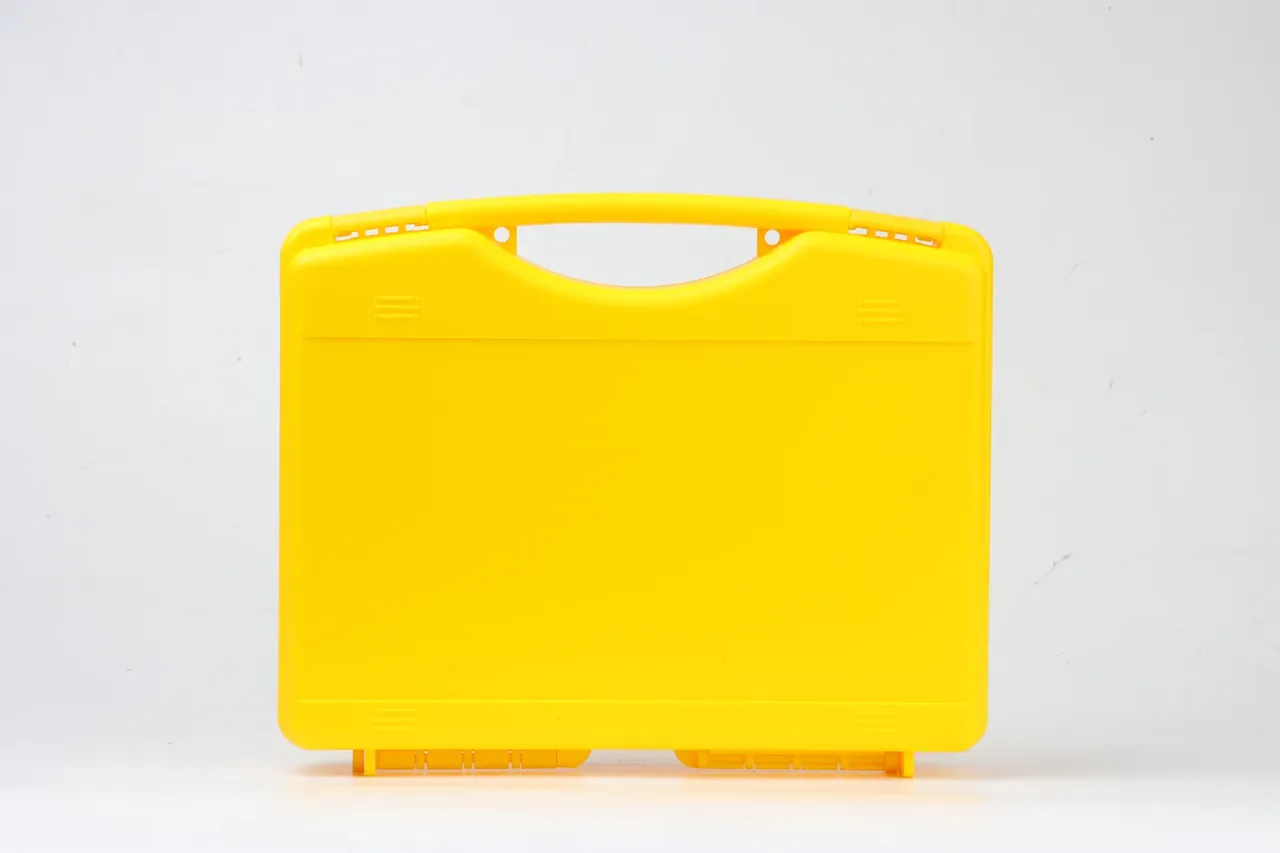
Wall thickness of 2.5–3.0 mm is the dividing line: below 2.5 mm walls bow and neighbours bite, pull-out force on a 40-unit stack climbing from 80 N to 260 N; above 3.0 mm the taper must open to 3.5° or the mouth will not enter.
The stack ratio counts units per pallet: 12 loose against 52 nested gives 1:4.3, inside the 1:3 to 1:5 band. Thirteen units to a stack reach 540 mm, four stacks hold 52 cases at 684 mm.
A nested stack never takes a second tier: its top is the case mouth, four edges sharing no plane, and a tier above ovals the lower mouths 0.3 mm within 24 h.
| Wall | Taper | Hardware | Nests? | Units per pallet |
|---|---|---|---|---|
| 2.0 mm | 2.0° | Snap latch | No | 12 |
| 2.5 mm | 2.5° | Snap latch | With pads | 48 |
| 2.8 mm | 2.5° | Steel latch | Remove liner | 52 |
| 3.2 mm | 3.5° | Alloy frame | Wider taper | 44 |
Pads are not optional: over a 1,200 km run unpadded walls rub a 0.2 mm scuff band, while 0.5 mm EPE keeps it under 0.05 mm.
3. Folding: Hinge Life and Folded Thickness
Folding is the third route: four hinged panels flatten a 300 mm case to 90 mm, 0.0216 m³, 30% of standing volume. It suits closed loops, and the cost sits in the hinge.
A polypropylene living hinge rates 3,000–5,000 flexes, which at two per trip means 1,500 trips. Temperature fails first: at −10 °C the hinge whitens at 1,200 flexes and snaps on the 1,300th.
Folded cases cannot nest, only lie flat: at 90 mm a pallet takes 11 layers, 44 units, 1.13 m, eight fewer than a nested pallet but with no liner to strip.
4. Disassembly: Pallet Count After Hardware Comes Off
Disassembly is the thorough option: strip two latches, two hinge pins and one handle, split lid from base, nest like parts 15 to a stack. A 300 mm case becomes a 150 mm lid and a 150 mm base, each stack 430 mm, three stacks holding 45 pieces at 574 mm.
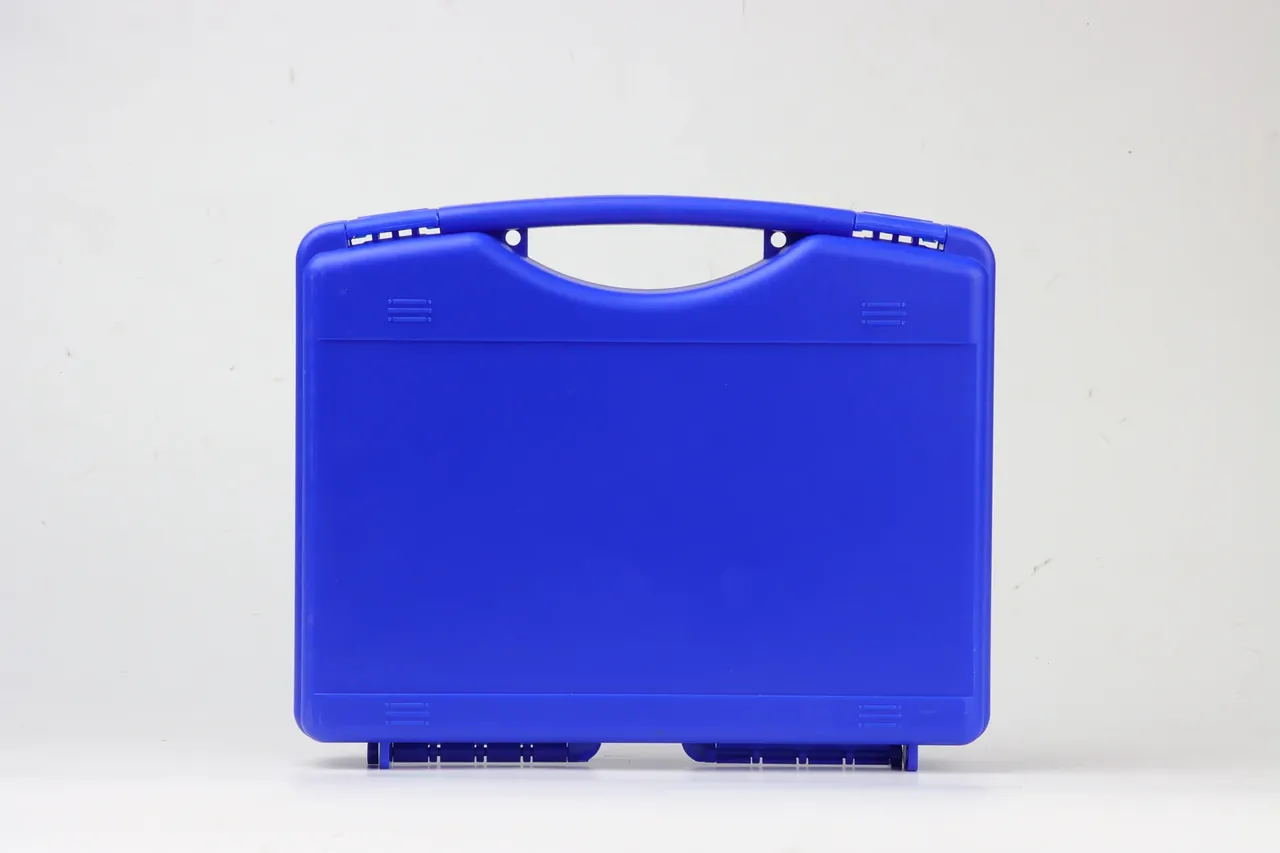
Teardown takes 28 s per case, 6.8 h for 880 units, and the hardware bags at 96 g per unit, 84 kg in two cartons.
Repeated teardown costs pin clearance: after three cycles the bore opens 0.1 mm, by the fourth reassembly the lid rocks 0.3 mm, and a case should retire past five cycles.
Sealing is re-tested on reassembly: 20 kPa over 60 s must not lose more than 2 kPa.
5. Load Rate, Volumetric Weight and Return Cost
Load rate is units carried back divided by units due back. Palletised loose, 880 empties give 312 in one 40HQ, 35%; nest thirteen pallets and leave one loose, and the same 40HQ carries 688, or 78%, with 192 units on the next batch.
The billing basis decides whether nesting pays. Air converts at 1:5000, so 1 m³ bills as 200 kg; sea LCL uses 1:6000, or 167 kg. Loose, a case takes 0.072 m³ and bills at 12 kg against 7.8 kg actual, a 54% surcharge; nested at 0.018 m³ it bills at 3 kg and reverts to actual weight.
Consolidate on a 30–45 day cycle: accumulating 200 empties at the customer site cuts the pickup share from 9 yuan to 4 yuan per unit, while 30 days is where both sides settle.
Washed cases need drying: 6 h of air drying brings internal humidity under 55%, and nesting damp cases grows mould that costs 30 yuan a case to clean.
Return freight runs 8–15% of project logistics, the only line a loading method compresses directly.
Conclusion
Returning Empty Cases reduces to one line drawn on taper and wall thickness. At 2–3° and 2.5–3.0 mm, nesting is the default: 52 units per pallet, a 78% load rate, scuffing under 0.05 mm with 0.5 mm pads. Where the taper cannot reach 2° or an alloy frame interrupts the wall, folding is the fallback at 44 units per pallet, and disassembly earns its place only when the hardware needs factory service. The test is not unit price but trips per year, leg distance and bore cycles.
This article discusses only the container (case body) side of specifications and design intent, and does not cover any handling, loading or use of the contents.
Related Reading
- How cases are packed: single box, pallet, container
- Container types and slot choices on China–Europe lanes
- Stacking layers and how corner guards share the load
- Trading case weight against case strength
Related Products
- 8 Series — Gun Cases; Military Equipment Cases; Camera Equipment Cases; Drone Cases; Watch Cases; Knife Cases; First Aid Cases; Electronics Equipment Cases
- WL8-2812 PP Gun Case — model WL8-2812
- All protective cases and toolboxes: 7 series, 158 models