

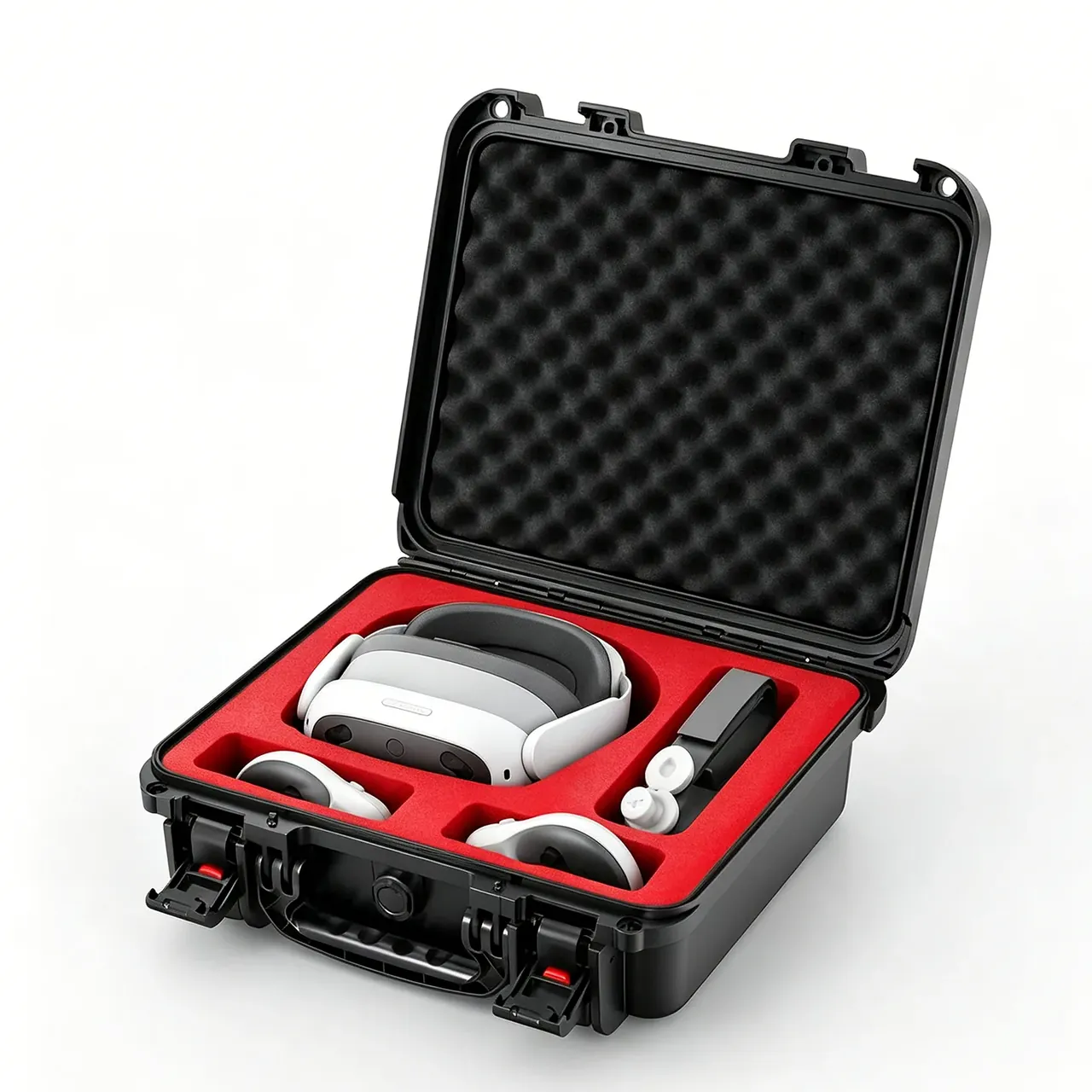
Quick answer: Epidemic sampling materials sealed transit container holds seams to 1.2 mm with R8 mm corners, so 500 wipes keep the print and seal edge bonded.
Table of contents
- The wipeable outer surface of an Epidemic sampling materials sealed transit container
- R8 mm corners and seams held to 1.2 mm
- A double-lip gasket at 25% compression and leak rate after wiping
- What 500 wipe cycles do to print and seal-edge adhesion
- 3000 open-close cycles, the 18 mm valve and the latches
- FAQ
1. The wipeable outer surface of an Epidemic sampling materials sealed transit container
Start with geometry. An Epidemic sampling materials sealed transit container has no upward-facing right-angle seams, so a wiping cloth never snags at a corner. Once the lid meets the shell, the seam stays at 1.2 mm or less on one plane, leaving no step where residue can collect. This boundary covers only the exposed skin of the case.
The dimensions fix how stiff that skin can be: 480 x 360 x 220 mm outside, 425 x 305 x 170 mm inside, 3.5 mm walls, 4.0 kg empty and 7.5 kg rated load. A thicker shell deflects less when the lid is pressed, so the seal edge is not levered open by repeated strokes. One continuous curve also spreads contact pressure along each pass.
The shell uses a fine grain rather than a mirror polish, deep enough to hold print ink yet shallow enough that 500 wipes will not scour it away. Print zones stay clear of the mould line and latch seats. The outer zoning of a protective case is drawn backwards from wipe frequency.
2. R8 mm corners and seams held to 1.2 mm
An Epidemic sampling materials sealed transit container takes R8 mm radii at all four exposed corners. A square inside corner cannot be reached by a cloth, so residue builds along it; R8 lets the cloth follow the whole arc without thinning the shell. The radius is moulded with the lid-to-shell closing line, not cut in afterwards.
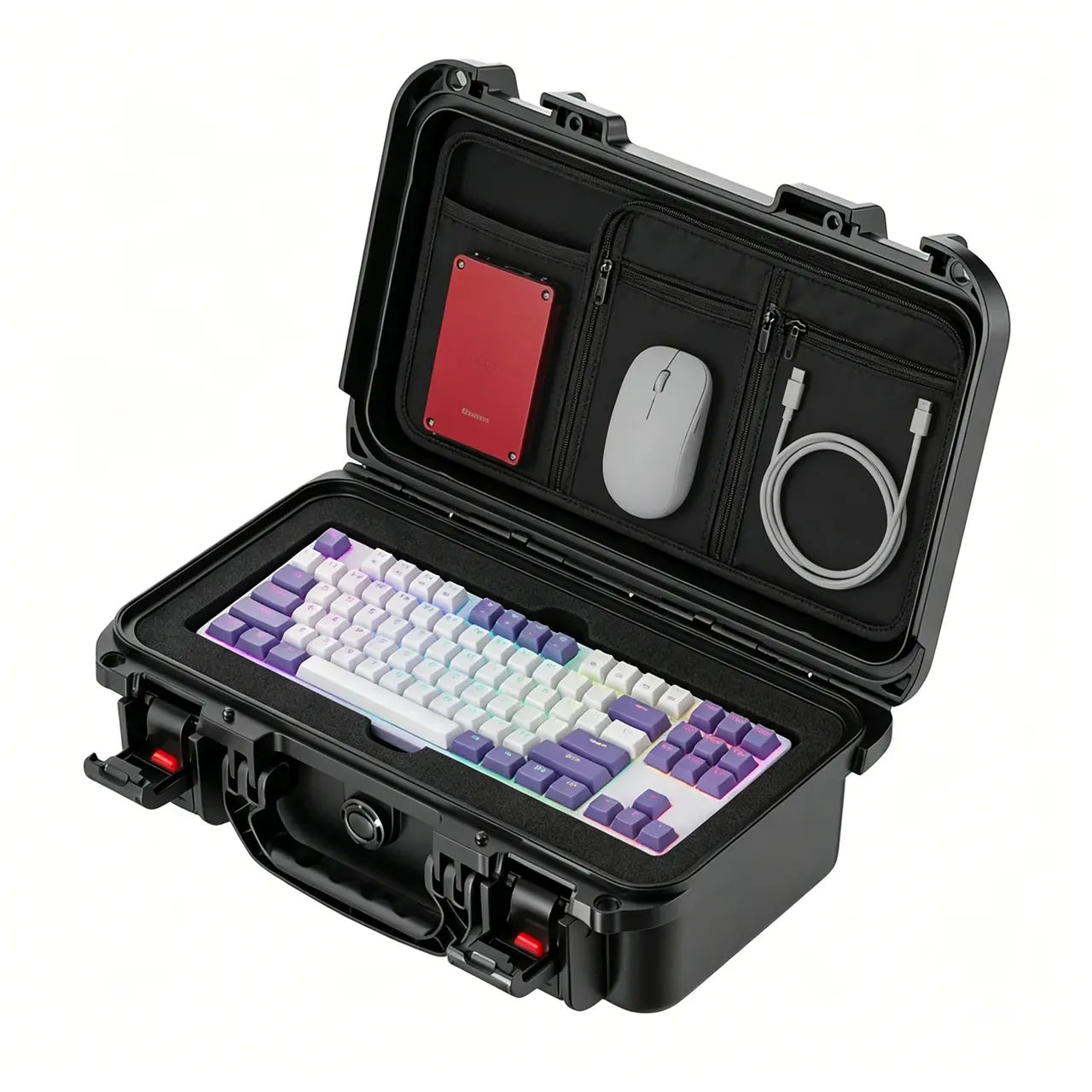
Holding the seam to 1.2 mm is the other half. The rim uses a single overlap, and a gauge checks the hairline gap segment by segment; any reading above 1.2 mm fails the batch. Paired with the double-lip gasket, that hairline keeps moisture outside the sealing face.
| Cleaning zone | Structural constraint | Acceptance value |
|---|---|---|
| Exposed lid corners | R8 mm moulded radius | Cloth follows without snagging |
| Shell closing line | Gap at 1.2 mm or less | Gauge passes every segment |
Radius and gap are two views of the same decision.
3. A double-lip gasket at 25% compression and leak rate after wiping
The rim of an Epidemic sampling materials sealed transit container carries a double-lip gasket set to 25% compression. Too little and a lid shift lifts the outer lip; too much and the lip takes a permanent set after 3000 open-close cycles. 25% keeps leak rate at or below 0.5 kPa/min after repeated wiping and opening.
Leak rate is checked after wiping, not before. After 500 cycles, print and seal-edge adhesion are inspected, then leak rate is measured by the same method, and both must pass. Only the rim is discussed, because the pressure difference acts on the shell-and-lid pair alone.
| Structural constraint | Failure mode | Limit |
|---|---|---|
| Double-lip gasket | Outer lip lifts | 25% compression |
| Lid closing | Permanent lip set | 3000 open-close cycles |
4. What 500 wipe cycles do to print and seal-edge adhesion
500 is the cycle count for the outer surface of an Epidemic sampling materials sealed transit container. The print zone and outer seal edge form one wipe band, stroked at fixed pressure and inspected every 100 cycles. Pass means no broken characters, no lifted seal edge, and leak rate still at or below 0.5 kPa/min.
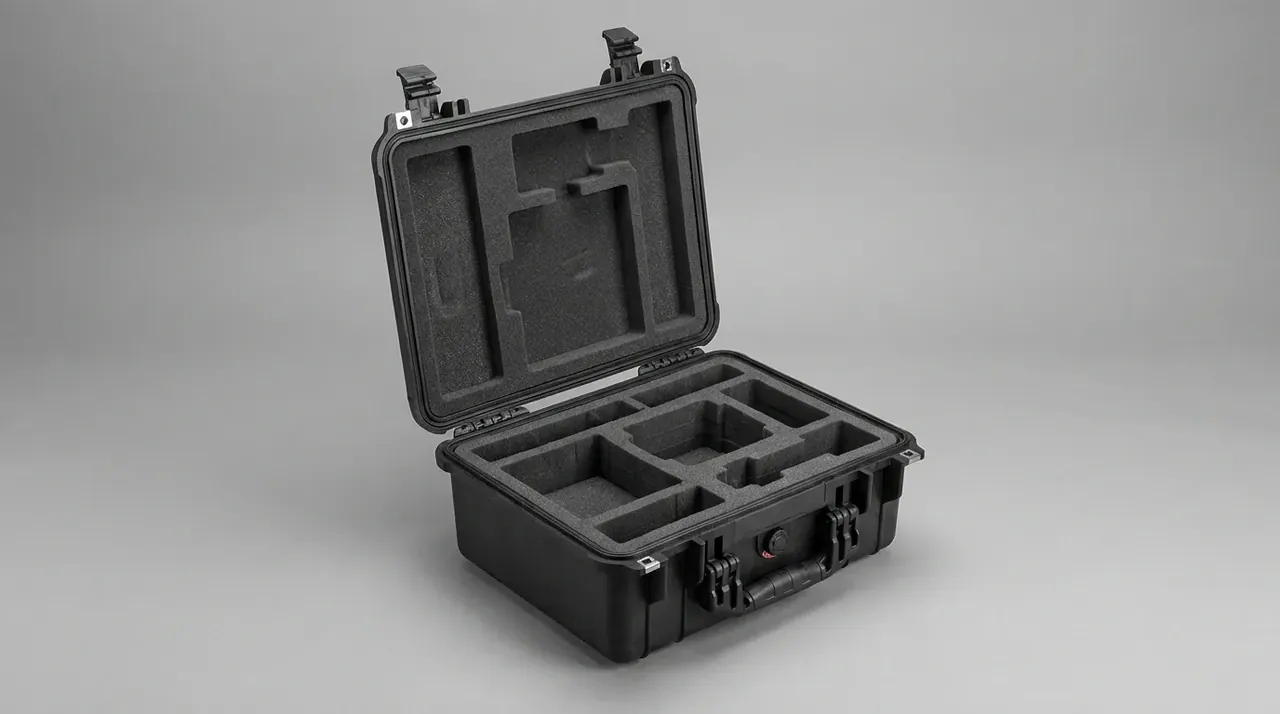
Print and seal edge are tested together because the lid takes the most load, and the ink layer sits close to the adhesive. The common rework item is not a cracked shell but early loss of these surface layers, which is why the count sits at 500. An Epidemic sampling materials sealed transit container is specified by surface endurance as much as by size.
| Acceptance value | Object | Condition |
|---|---|---|
| No broken characters | Grained lid face | 500 wipe cycles |
| Leak rate at or below 0.5 kPa/min | Closed pair | Retest after wiping |
5. 3000 open-close cycles, the 18 mm valve and the latches
The opening hardware of an Epidemic sampling materials sealed transit container is checked over 3000 cycles. Two latches each hold 340 N, pressing the lid onto the double-lip gasket; after the cycle life, retention must still hold 25% compression. An 18 mm valve in the shell wall equalises pressure so a wiped-and-closed lid is not forced open. IP67 corresponds to immersion and dust conditions verified by method, with an operating range of -10 to 50 C and a 1.0 m drop leaving the shell uncracked and latches engaged.
Read as one geometric part, an Epidemic sampling materials sealed transit container ties five quantities together: corner radius, seam width, print adhesion, leak rate and opening force. Change the radius and the wipe stroke moves. Change compression and latch force must be retuned. Change the gap and load on the seal edge shifts again. Move the print zone and the focus of the 500 cycles follows. JUNZHIJIA records all five at sample stage, and every lot is checked against the same card so readings compare across batches.
Conclusion
An Epidemic sampling materials sealed transit container turns a wipeable outer surface into measurable specifications: R8 mm corners, a 1.2 mm seam, 25% compression, 500 wipes and leak rate at or below 0.5 kPa/min. These figures restrain each other, so loosening any one breaks the wiping loop. Checking each reading against one card tells you more than a protection rating alone.
Related Reading
- Rim structure of a sealed specimen transit box
- Tolerance design of a case gasket groove
- Silicone, EPDM and PVC gasket materials compared
- Choosing a gasket-sealed protective case
Related Products
- 8 Series — Gun Cases; Military Equipment Cases; Camera Equipment Cases; Drone Cases; Watch Cases; Knife Cases; First Aid Cases; Electronics Equipment Cases
- WL8-2812 PP Gun Case — model WL8-2812
- All protective cases and toolboxes: 7 series, 158 models