

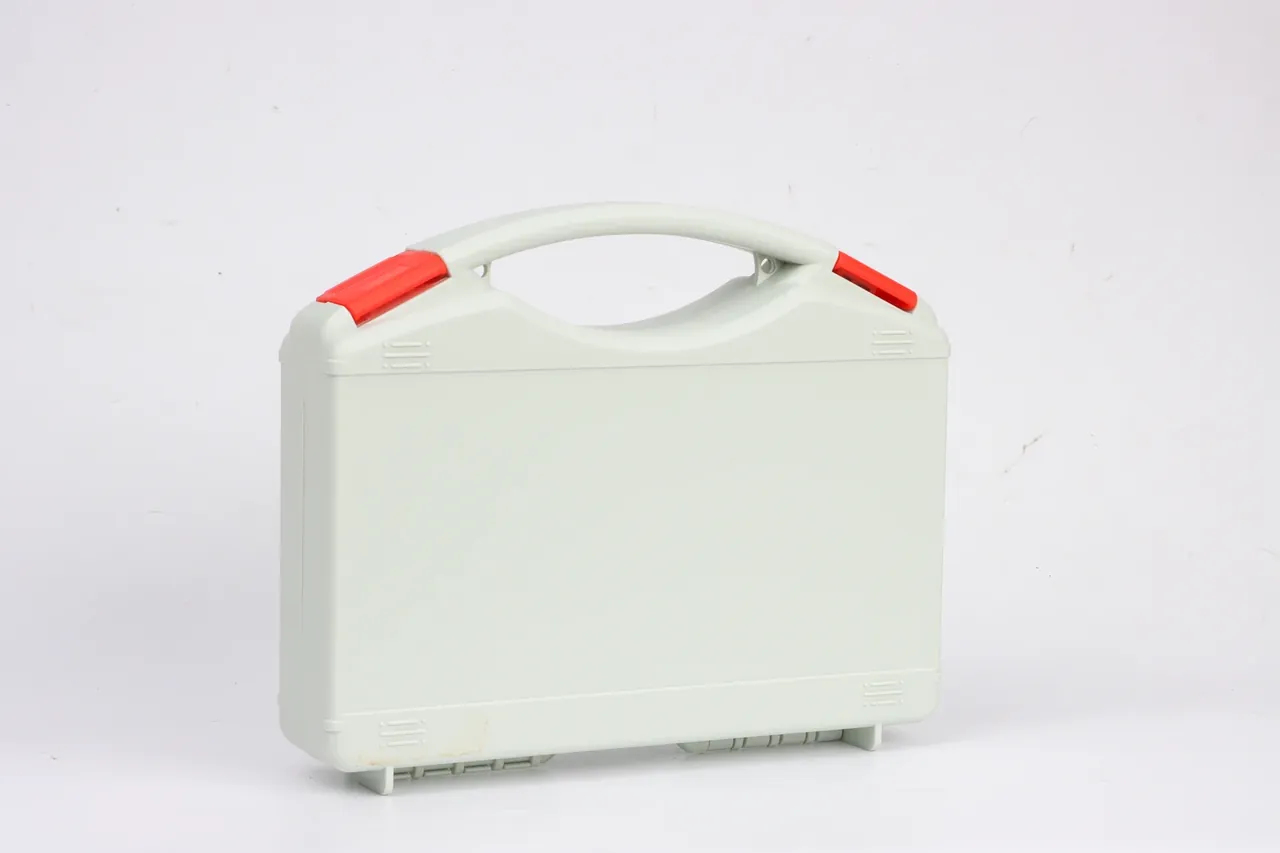
Quick answer: An Equipment Protection Case is serviced on a 90-day round with six checks, each judged against a number rather than a feeling. Gaskets are replaced at 36 months, foam at 24 months, and the IP rating is re-tested after every gasket change.
Table of contents
- Inspection cycles that match the environment
- Cleaning, solvents and drying the seal face
- Latches, hinge pins and the relief valve
- Replacement order: gasket, foam, body
- FAQ
1. Inspection cycles that match the environment
An Equipment Protection Case does not keep its rating for life. The IP6X and IPX7 claims in IEC 60529 rest on a gasket still at its designed compression; once the rubber stops springing back, the lid still clicks shut while the rating has lapsed.
Interval follows exposure: 180 days in a dry store, 90 days on vehicle or workshop duty, 30 days on a coast or in an open yard.
| Environment | Interval | What decides the verdict |
|---|---|---|
| Dry store, no direct sun | 180 days | Seal face, foam rebound |
| Workshop and vehicle duty | 90 days | Latch force, hinge play |
| Coastal, marine, open yard | 30 days | Corrosion, gasket hardness |
A dated schedule costs less than a repair after water gets in. Seal failure is never sudden: a chalky film appears, the lid feels sluggish, and only then does water pass. The record needs date, measured value and verdict.
2. Cleaning, solvents and drying the seal face
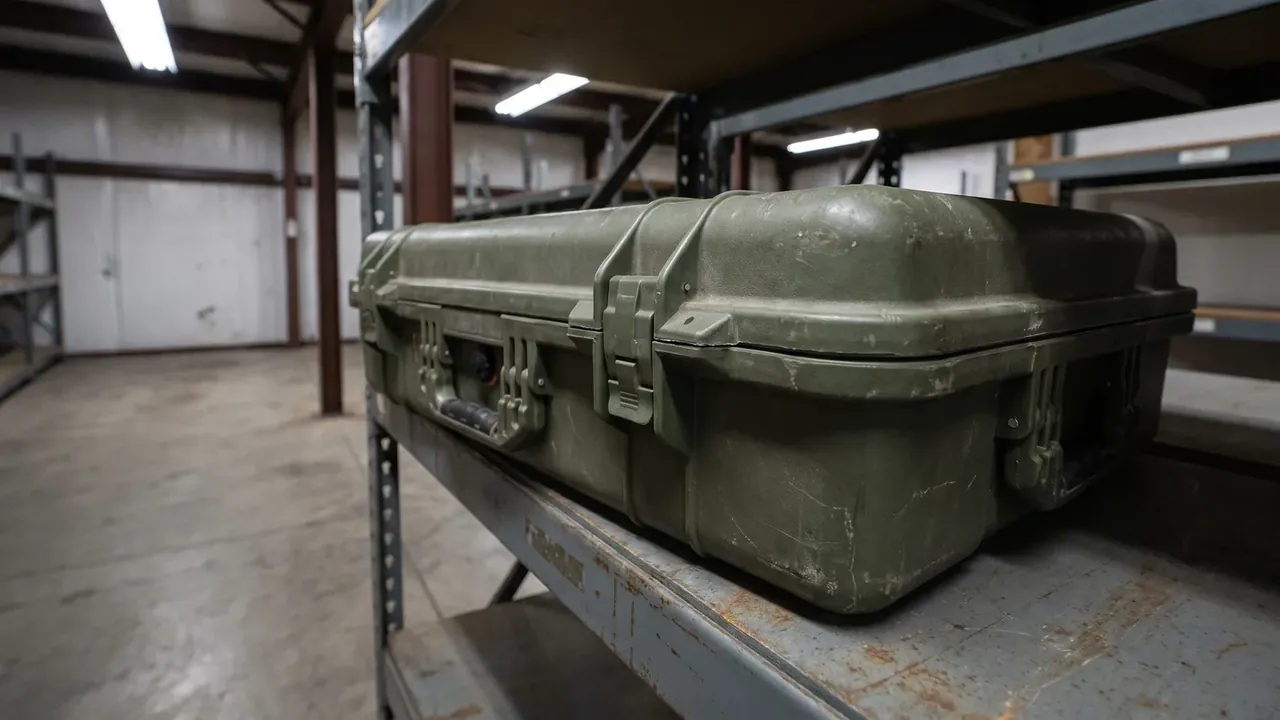
The seal face of an Equipment Protection Case is washed with water and a neutral detergent near pH 7. Acetone, thinner and chlorinated solvents swell ABS and polycarbonate and harden silicone rubber; the damage shows three months later, not on the first wipe.
Rinse water stays below 40 °C and 0.2 MPa, because a jet into the groove is a self-inflicted IPX6 test.
Wipe one way with a lint-free cloth.
Drying is not optional: thirty minutes at 40 °C or two hours in moving air. About 0.5 g of silicone grease per metre keeps the rubber from sticking but does not restore it.
Judge compression, not appearance. A 3 mm gasket should close to 2.1 or 2.2 mm, 25 to 30 percent; held above 2.4 mm it has collapsed, below 2.0 mm the latches are over-tight.
3. Latches, hinge pins and the relief valve
Metal parts on an Equipment Protection Case are checked with a feeler gauge and a force gauge, not with the eye.
- Latches: no 0.5 mm blade enters hook and keeper, and opening force is 60 to 90 N.
- Hinge pins: axial play under 0.3 mm; an ovalised bore past 0.5 mm means replacement.
- Relief valve: opens at 0.3 bar, must not weep in reverse, membrane at 24 months.
- Bumpers and feet: replace at a notch deeper than 2 mm; a worn foot changes stack load.
- Screws: re-torque hinges and keepers to 2.5 N·m; a stripped hole takes the next size plus an insert.
- Markings: re-mark a worn rating plate, because a report not tied to a body proves nothing.
A bulleted list beats a table on the bench: a missed line is visible at a glance.
4. Replacement order: gasket, foam, body
Life extension on an Equipment Protection Case follows a fixed order: gasket, re-test, foam, body. Reverse it and money goes into parts that were still serviceable.
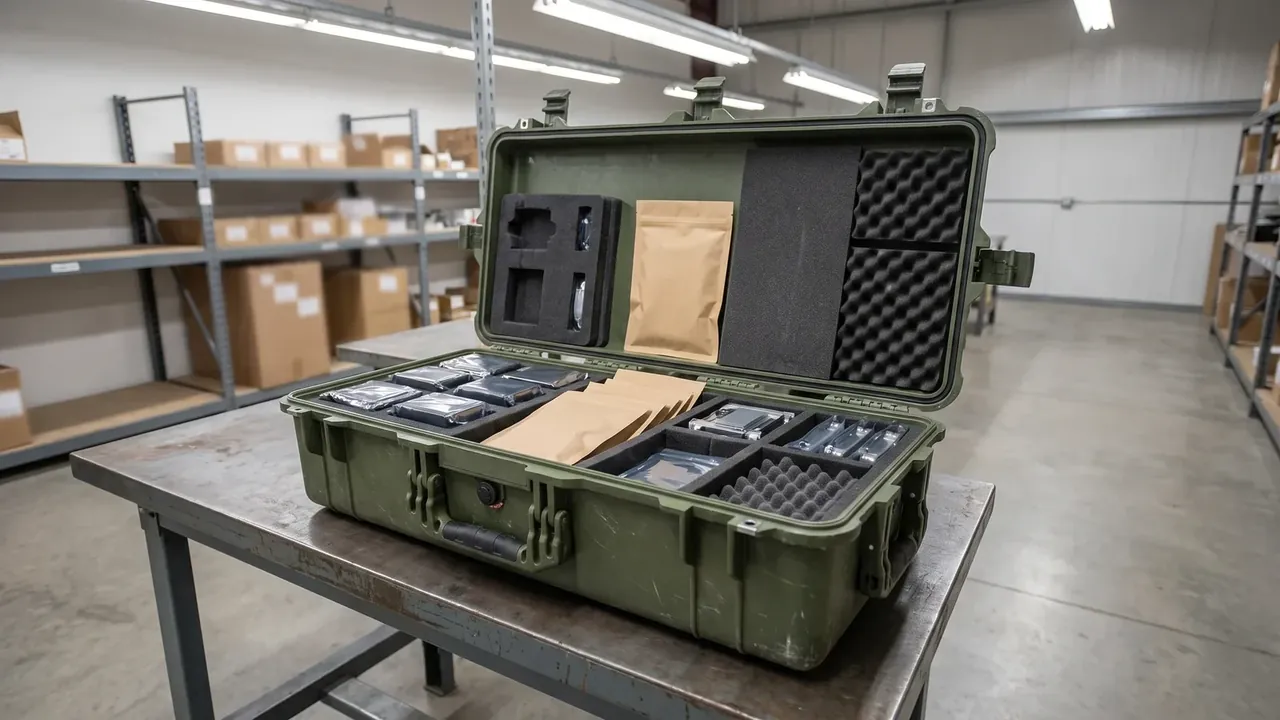
The gasket goes at 36 months regardless of looks: silicone past roughly 30 percent compression set no longer returns, and that threshold is almost invisible. Peel the strip in one piece after softening the adhesive with anhydrous ethanol.
Foam is replaced at 24 months. Polyurethane held at 40 °C for two years takes about 15 percent compression set, and once clamping force drops the equipment creeps inside the cavity.
The body is judged on cracks: one longer than 20 mm, or through the wall, retires the case; scratches do not affect structure.
| Part | Trigger | Interval | Re-test |
|---|---|---|---|
| Gasket | 30 percent compression set | 36 months | IPX7, 30 min at 1 m |
| Foam | 15 percent compression set | 24 months | Shake test with load |
| Valve membrane | Drift from 0.3 bar | 24 months | 0.3 bar hold, 1 min |
| Body | Crack over 20 mm | On inspection | Full structural check |
Salt spray is the check people skip: a coastal case gets a 48-hour salt spray sample every 12 months, and latch springs bloom first.
Conclusion
Care for an Equipment Protection Case is a schedule plus six limits: a 90-day round, a gasket at 36 months, foam at 24 months, each in millimetres, newtons or hours. Do the steps in order and a body serves one cycle longer than its paperwork suggests. Records that survive are what keep an Equipment Protection Case rated.
This article discusses only the container (case body) side of specifications and design intent, and does not cover any handling, loading or use of the contents.
Related Reading
- What an equipment case has to stop: impact, dust, heat and moisture
- Sealing and inspection of war reserve cases
- Cleaning and part replacement on hard-shell trolley cases
Related Products
- 8 Series — Gun Cases; Military Equipment Cases; Camera Equipment Cases; Drone Cases; Watch Cases; Knife Cases; First Aid Cases; Electronics Equipment Cases
- WL8-2812 PP Gun Case — model WL8-2812
- All protective cases and toolboxes: 7 series, 158 models