

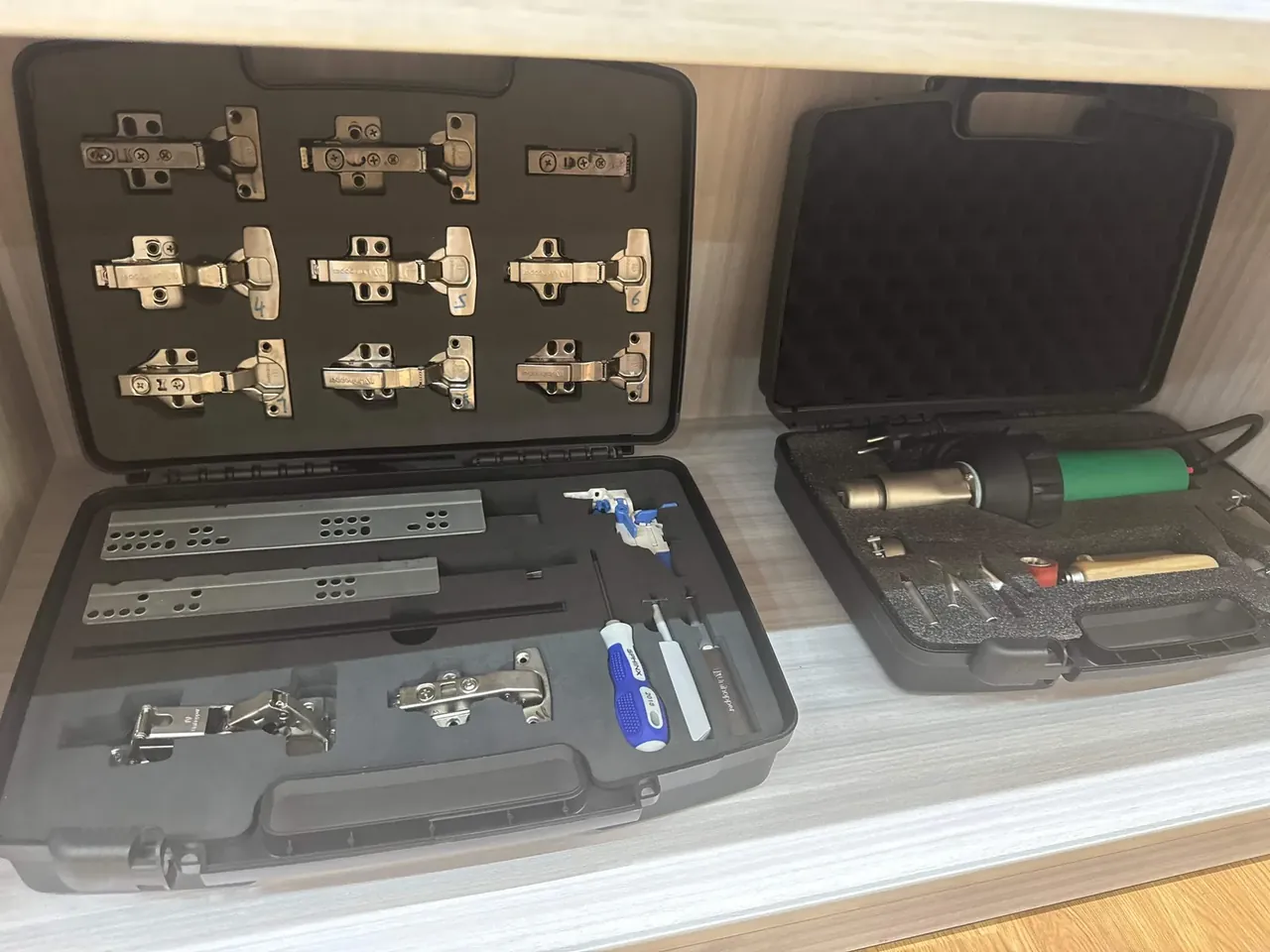
Quick answer: An equipment protection case works on three routes rather than three materials. Impact arrives through solids and is limited by usable travel; dust arrives on air and is limited by gasket squeeze and a vent; vapour arrives inside the air and is limited by cavity volume and desiccant mass.
Table of contents
- What an Equipment Protection Case Blocks
- Impact: Turning Drop Height into Deceleration
- Dust: What the Two Digits Separate
- Moisture: Where Condensation Comes From
- When the Defences Conflict
- FAQ
1. What an Equipment Protection Case Blocks
The shell gives the product its shape; protection comes from the layers inside it. Each hazard uses a different route, so each needs a different dimension. Impact is measured in millimetres of usable travel, dust in gasket squeeze, moisture in grams of water per cavity volume.
None of the three is visible from outside, which is why a case can look robust and still fail. Thick walls do nothing for a load clamped to a hard divider, and a wide gasket fails in a shallow groove.
| Hazard | Route in | What the drawing fixes |
|---|---|---|
| Impact | Base, through the liner | Foam travel and compression ratio |
| Dust | Gaps, carried by air | Gasket squeeze and vent path |
| Moisture | The air itself | Cavity volume and desiccant mass |
2. Impact: Turning Drop Height into Deceleration
An eight kilogram unit dropped 1.2 metres lands at 4.85 metres per second with about 94 joules. Spread over 40 millimetres of foam travel that is near 30 g; halve the travel to 20 millimetres and it doubles to 60 g. Travel decides the outcome, not wall thickness.
Compression ratio decides how much travel remains. Ten percent behaves almost rigidly, forty percent densifies and the force climbs. Stay between twenty and thirty percent with two to three millimetres spare, and treat a heavier payload as a new liner, not a thicker shell.
| Device mass | Energy at 1.2 m | Deceleration, 40 mm travel |
|---|---|---|
| 4 kg | 47 J | about 30 g |
| 8 kg | 94 J | about 30 g |
| 16 kg | 188 J | about 60 g as travel shrinks |
3. Dust: What the Two Digits Separate
The first digit covers solids and the second covers liquids. Level 6 is verified in a chamber holding 2 kilograms of talc per cubic metre under a 2 kilopascal vacuum for eight hours, then the interior is inspected. A cloth proves nothing.
Dust enters on pressure difference rather than through a visible gap. A warm case or an unheated cargo hold can put 0.1 bar across the gasket, lift it and draw dust inside. The vent exists to give that air a filtered path.
| Seal location | Failure mode | Field check |
|---|---|---|
| Lid corner | Contact line breaks at the radius | Feeler gauge, lid closed |
| Vent membrane | Clogged, no longer breathes | Hold to the light |
| Hinge boss | Bore becomes a bypass | Seal bore, retest |
4. Moisture: Where Condensation Comes From
At 30 degrees Celsius, saturated air holds about 30 grams per cubic metre, so a ten litre cavity at eighty percent humidity carries only 0.24 grams of water. Cool it by 15 degrees and relative humidity more than doubles, enough to reach the dew point on metal.
Size desiccant by lid cycles, not by months. Each opening brings back roughly 0.24 grams, so five grams of silica gel covers about twenty exchanges. A case opened daily needs a smaller cavity and a shorter open time, not a larger sachet.
5. When the Defences Conflict
A tighter seal raises the pressure difference, so the vent has to open, and the membrane becomes the only barrier to water. Thicker impact foam shrinks the cavity, so the same electronics warm the air faster and condensation arrives sooner.
Rank by the weakest point of the device. Shock first means low-density foam and soft edge stops; dust first means gasket squeeze and valve filtration; humidity first means smaller volume and desiccant on the coldest face. When all three matter, the case usually goes up one size.
Conclusion
The product blocks routes, not substances: impact through solids, dust through gaps, vapour through the air itself. Convert each route into travel, squeeze and grams, and protection stops being an argument about wall thickness. Once those numbers are fixed, colour and hardware are details, which is the order a competent equipment protection case is built in.
This article discusses only the container (case body) side of specifications and design intent, and does not cover any handling, loading or use of the contents.
Related Reading
- How shock absorbing liners work
- Sealing and rating checks for dustproof cases
- How a pressure equalisation valve works
- Absorption and regeneration in moisture proof cases
Related Products
- 8 Series — Gun Cases; Military Equipment Cases; Camera Equipment Cases; Drone Cases; Watch Cases; Knife Cases; First Aid Cases; Electronics Equipment Cases
- WL8-2812 PP Gun Case — model WL8-2812
- All protective cases and toolboxes: 7 series, 158 models