

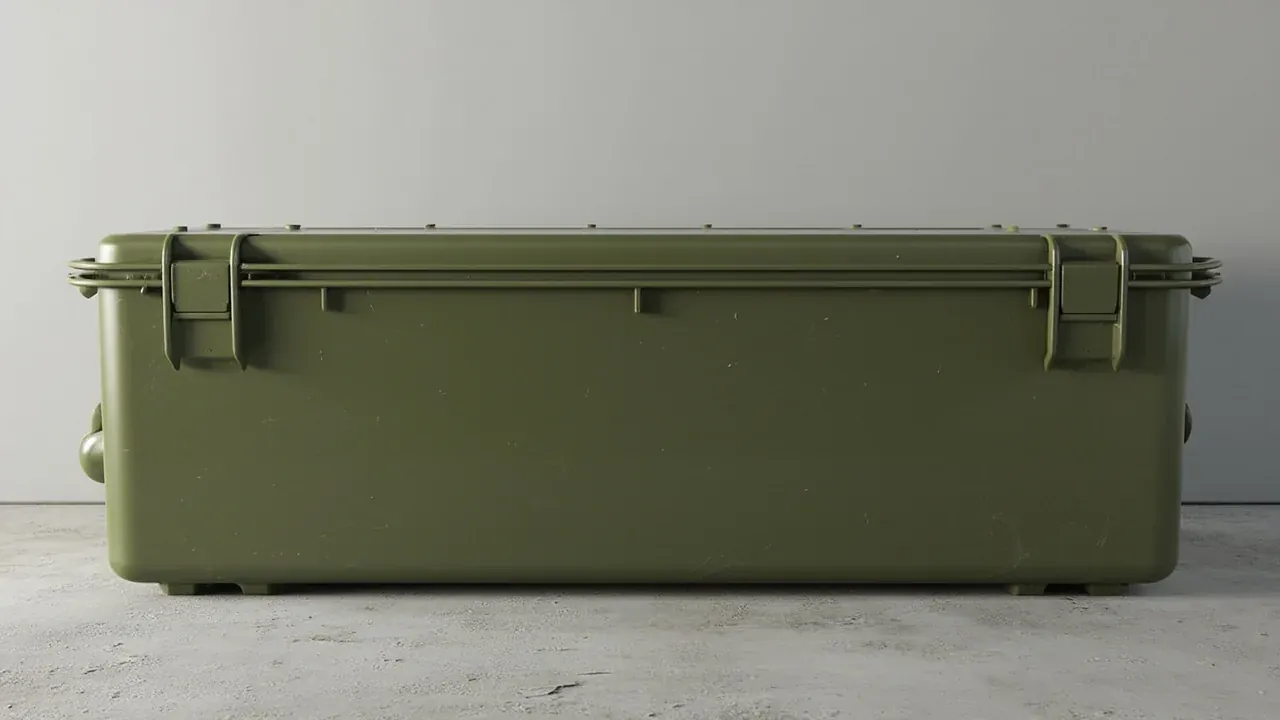
Quick answer: A war reserve case is sealed by procedure, not by pressing the lid shut. Four conditions are confirmed before the latches close, three numbers are written into the record, and the inspection interval is then set from leakage risk rather than from the calendar. Two measurements show whether the seal held over the term: desiccant weight gain and gasket compression set. Both need a baseline taken on the day of sealing.
Table of contents
- Four checks before a war reserve case is sealed
- The sealing job: desiccant, gasket and records
- How to set the inspection interval
- The order of an opening inspection
- Linking opening and re-sealing
- FAQ
1. Four checks before a war reserve case is sealed
A war reserve case stays open until four conditions pass: the rim seats a gasket, the gasket holds compression, the desiccant charge suits the cavity, and the record is ready. A failed item is replaced, not sealed over. A term runs for years, so a fault accepted in the first hour travels to the end of it.
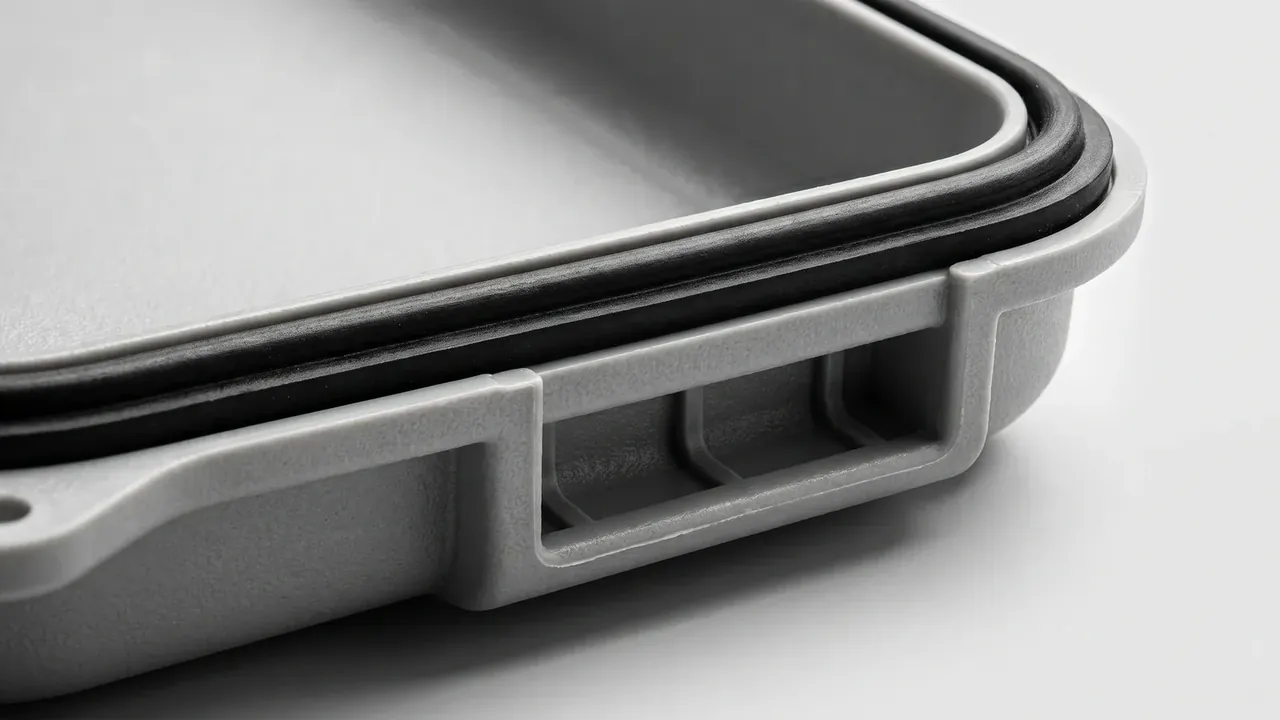
The rim groove must carry one continuous gasket, free of dried adhesive and grit, and the hollow rib at each corner is the thin-wall zone where cracks start. Compression set is measured on the bench, and past thirty per cent the gasket is replaced. A permanently flat part cannot be recovered by cleaning.
2. The sealing job: desiccant, gasket and records
Three actions leave three marks: weigh the desiccant, fasten the latches in order, file the record in three places. A short sequence is still easy to break. Desiccant dropped in after the lid is latched sits outside the cavity, the same as fitting none.
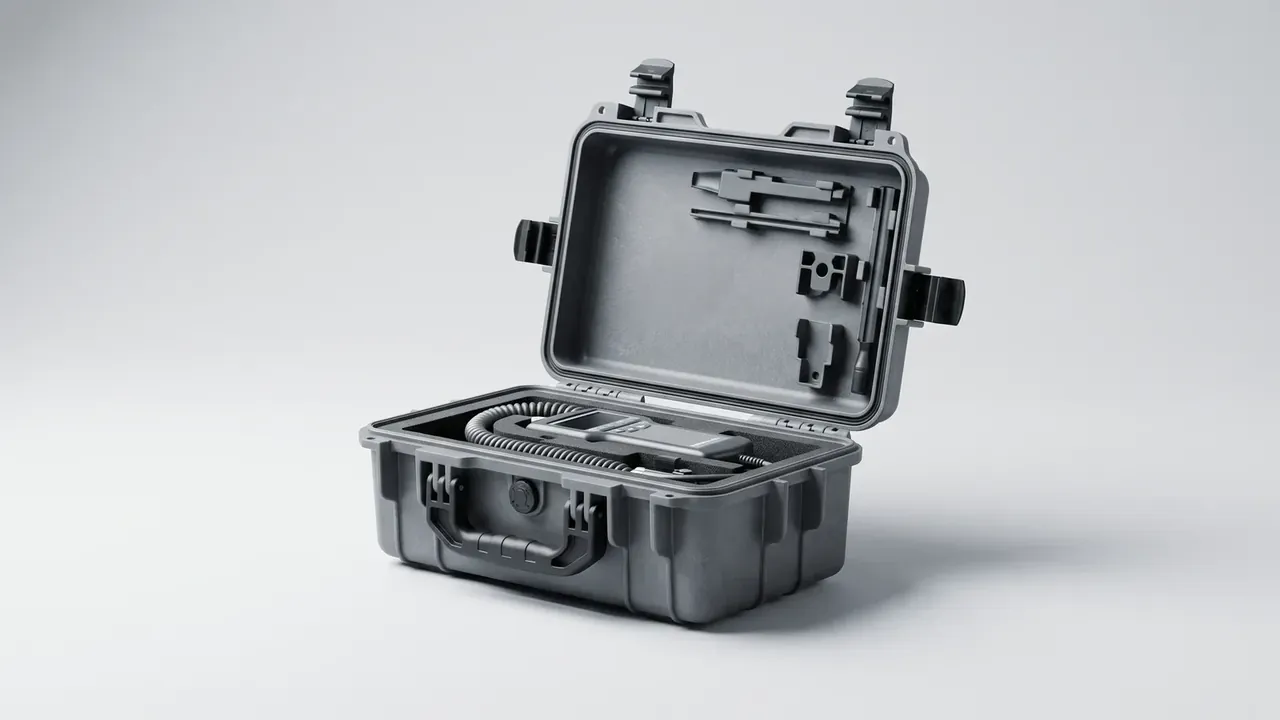
Liner and gasket interfere. Moulded clips and a base cut-out set how flat the liner sits; a proud clip lifts the rim until the gasket unloads. The desiccant bay sits clear of the compression line under a one-handed cover. Close corner to corner, press the mid-span, fasten in opposing pairs, then even the overlap.
3. How to set the inspection interval
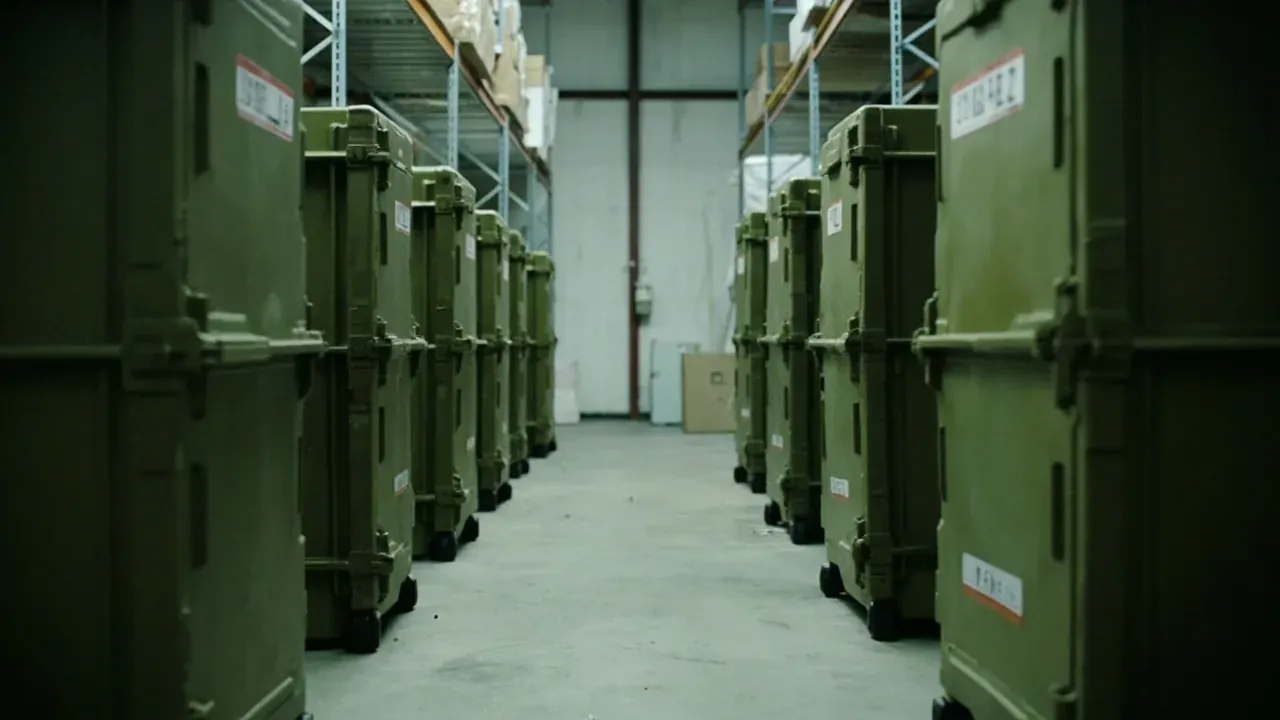
The interval follows leakage risk, not the calendar. An open shed can need three times the attention of a dry store. Grade the environment first, then let the last result move the case between grades.
| Storage | Walk-round | Opening | Escalate when |
|---|---|---|---|
| Climate-controlled | Quarterly | 24 months | Humidity high |
| General store | 2 months | 12 months | After any move |
| Open shed | Monthly | 6 months | Wide swing |
| Under observation | Monthly | 3 months | Two passes |
A walk-round stays outside: latches, corners, label recess, floor water. Only the opening inspection touches the gasket and weighs the desiccant. The table gives a ceiling; a case under observation moves down a grade at once.
4. The order of an opening inspection
The sequence is exterior, opening resistance, gasket, desiccant weight, inner wall, non-destructive first. Order is not cosmetic. Weigh the desiccant after the lid has stood open and the cavity has already breathed, and the reading means nothing.
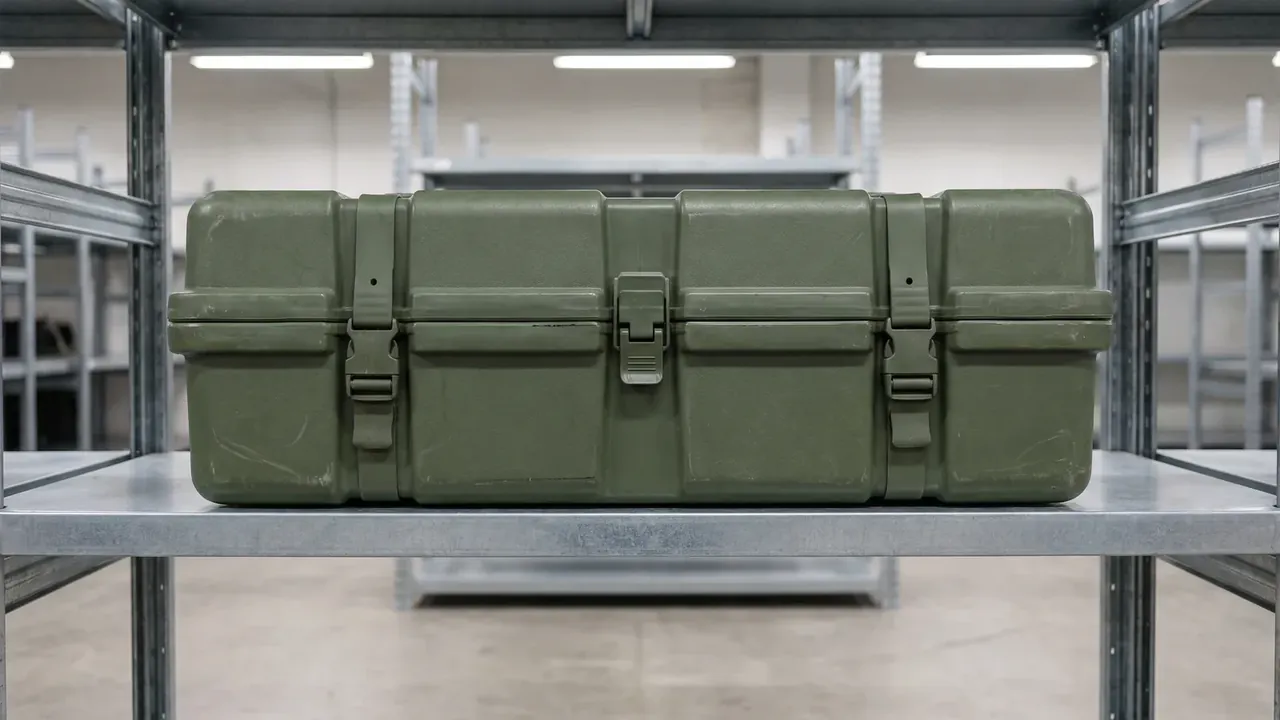
Latches, pins, corners and label come first; none disturbs the seal. A sound war reserve case gives a short hiss as the latches release; silence means the seal was lost, while heavy suction points to a blocked equalisation valve. The gasket is read for a continuous contact line, glazing and fold cracks. The inner wall closes the sequence, read for watermarks and base bow.
5. Linking opening and re-sealing
Opening is the first record of the next term, not sealing in reverse. Every part taken off needs a destination before the lid closes again: replaced, retained or scrapped. Left undecided, it is refitted by habit.
Release the centre latch first and the outer two after, so rim stress leaves gradually. A war reserve case left open past seventy-two hours has equalised with the room and is sealed as new, with a fresh gasket, charge and baseline. The recurring errors are refitting a compressed gasket and dating the new interval from the opening, not the re-sealing.
Conclusion
Sequence keeps a stored case sound: four checks, opposing latches, three records, a graded interval, five steps, and a new baseline inside seventy-two hours. Desiccant gain and gasket set carry the evidence.
This article covers container-side specifications and design implications only.
Related Reading
- What a war reserve case is: design requirements for long storage
- War reserve case selection: term, stacking and sealing trade-offs
- Gasket replacement and groove preparation
- Sealing and rotation planning for emergency reserve cases
Related Products
- 8 Series — Gun Cases; Military Equipment Cases; Camera Equipment Cases; Drone Cases; Watch Cases; Knife Cases; First Aid Cases; Electronics Equipment Cases
- WL8-2812 PP Gun Case — model WL8-2812
- All protective cases and toolboxes: 7 series, 158 models