

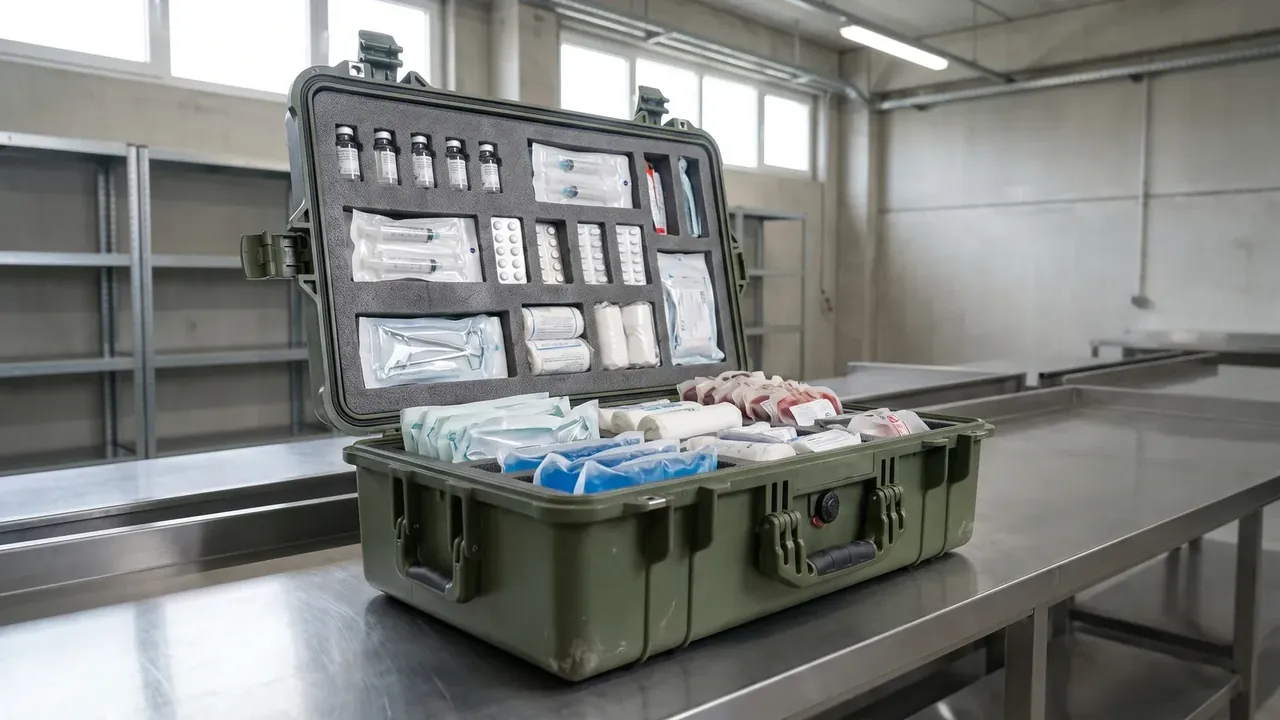
Quick answer: A war reserve case is a rigid box specified around a storage life, not a journey. It is judged on whether it still opens and seals after a decade on a shelf, not on how it survives one drop. Design order follows: storage period, gasket replacement path, then shell stiffness and stack height. Three details decide fitness: a gasket changed on its own, a vent cleaned in place, and a stack face that still locates under load.
Table of contents
- Definition and storage period
- How it differs from an ordinary storage box
- Sealing and moisture: desiccant, pressure, gaskets
- Shell and stacking under long-term static load
- Opening and resealing on site
- FAQ
1. Definition and storage period
A war reserve case is a rigid box built to stay closed for a defined period. The line against a transit box is time, not toughness: transits are counted in years, reserve cases in decades. Inputs are the storage period, the store environment and the way the lid comes off.
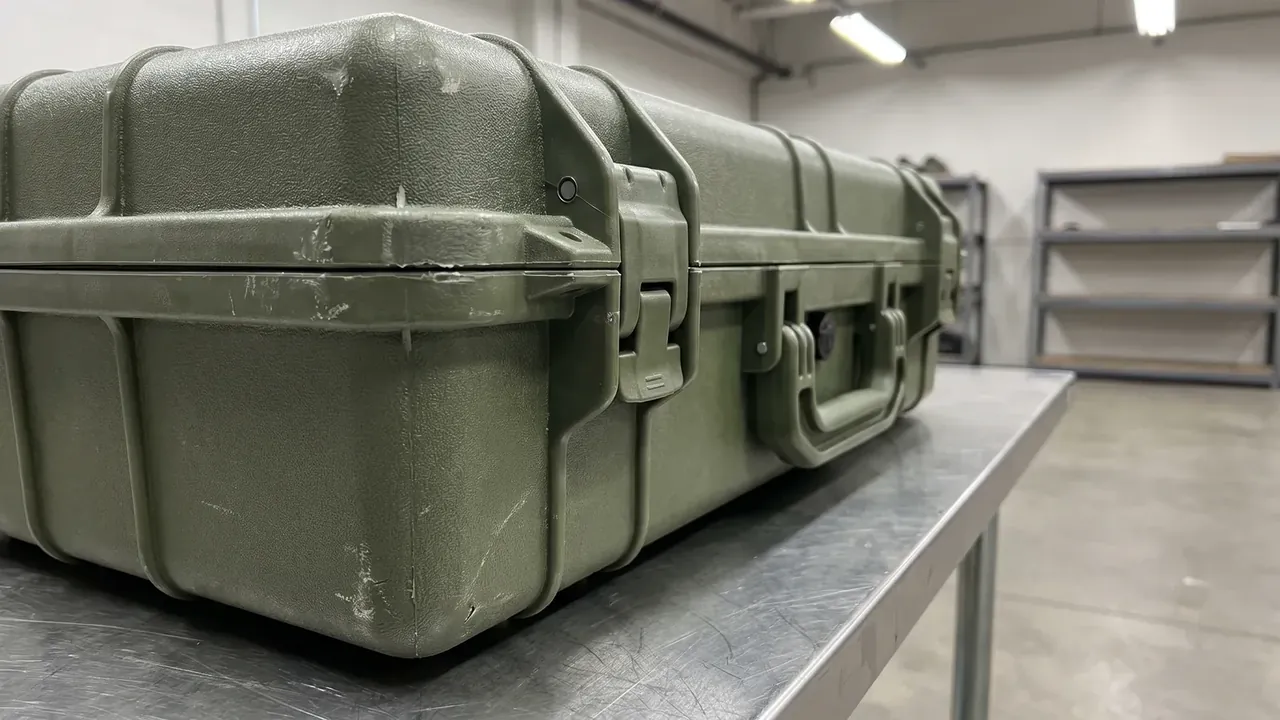
Periods fall into three bands: under three, five to ten, and beyond ten; what changes is gasket compound, not wall thickness. The shell is rotomoulded high-density polyethylene, thickened at corners, with a matte skin. Latches are stainless, not plated, because plating blisters over a decade.
2. How it differs from an ordinary storage box
The difference sits in the years when nothing happens. An ordinary box spreads performance across openings, so latches and hinges wear first. A reserve case barely moves, so failure arrives through the gasket and the shell.
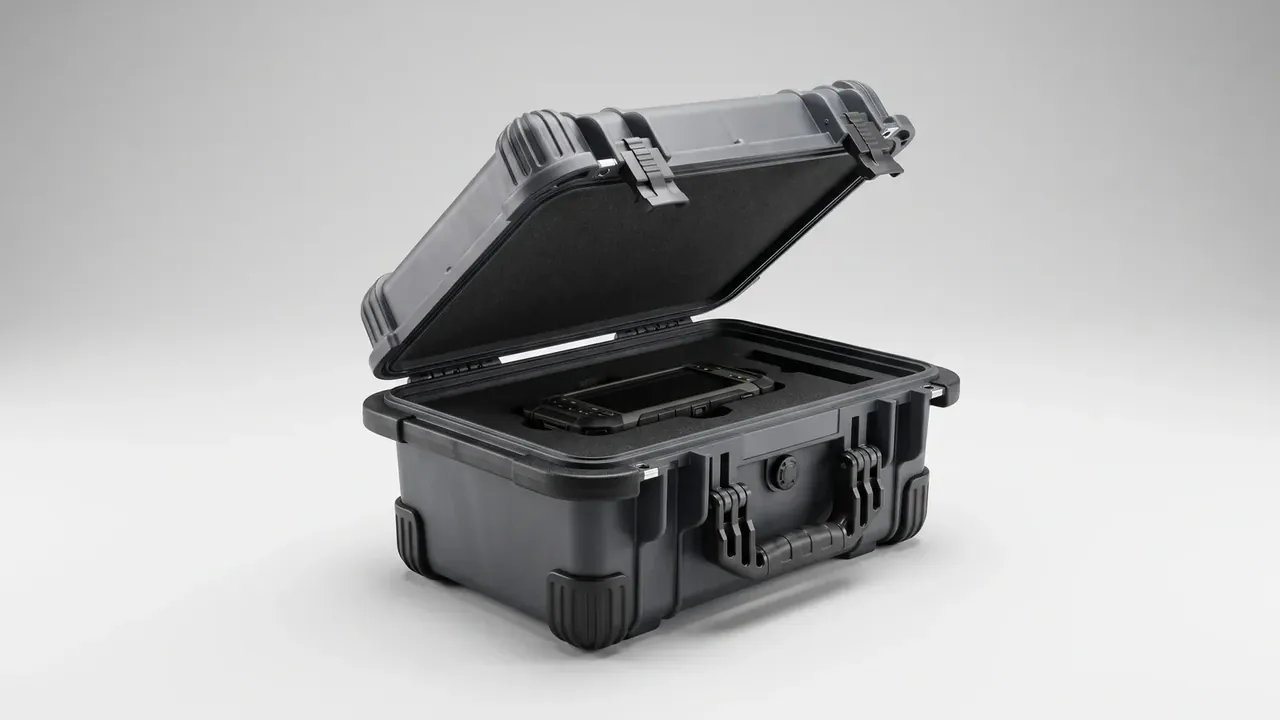
Lining shows the gap most clearly. Foam must survive a decade of compression, which rules out low-density polyurethane. The photograph shows grey foam in the lid and a pale seal line inside the rim.
| Item | Ordinary box | Reserve case | Why |
|---|---|---|---|
| Basis | Cycles | Years | Failure mode |
| Gasket | Bonded lip | O-ring | Service path |
| Latches | Plated steel | Stainless | Idle corrosion |
| Stack face | Shallow recess | Deep spigot | Alignment later |
3. Sealing and moisture: desiccant, pressure, gaskets
Sealing is the only property that falls steadily with time. Other figures are settled at build or change in one event, while the gasket loses compression year after year. The aim is a decline that can be measured.
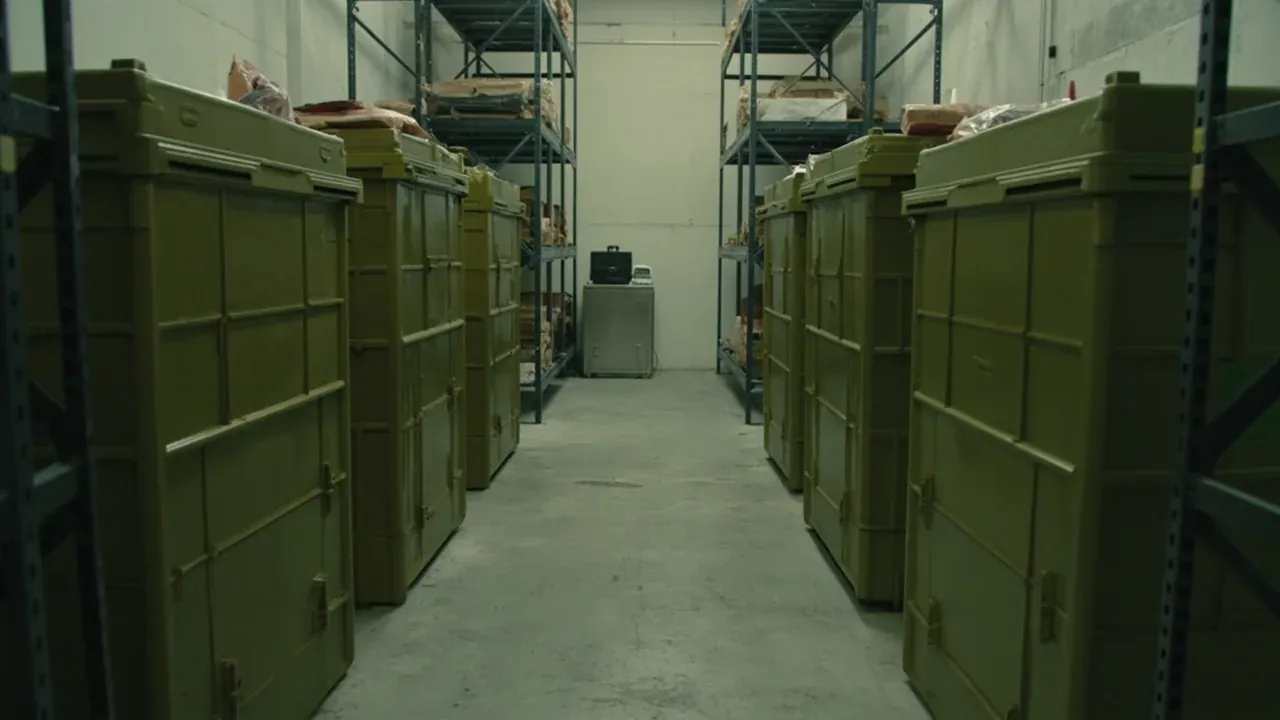
Cases stored in rows face upward, so dust and condensate land on the lid, and cartons above knock the rim. The groove therefore sits inboard of the split line. A round O-ring compressed to a third of its section recovers for ten years. Three barriers then work together, and none substitutes for another:
- The gasket blocks liquid water; EPDM for vapour, silicone for cold.
- A desiccant canister in its own lid compartment takes residual vapour.
- An ePTFE vent equalises pressure and blocks liquid water.
4. Shell and stacking under long-term static load
Under sustained load a plastic shell changes shape before it breaks. Creep sets the limit, not strength: a case at the bottom of a three-high stack can bow in five years, and the latches then misalign. Values come from allowable deflection across the storage period.
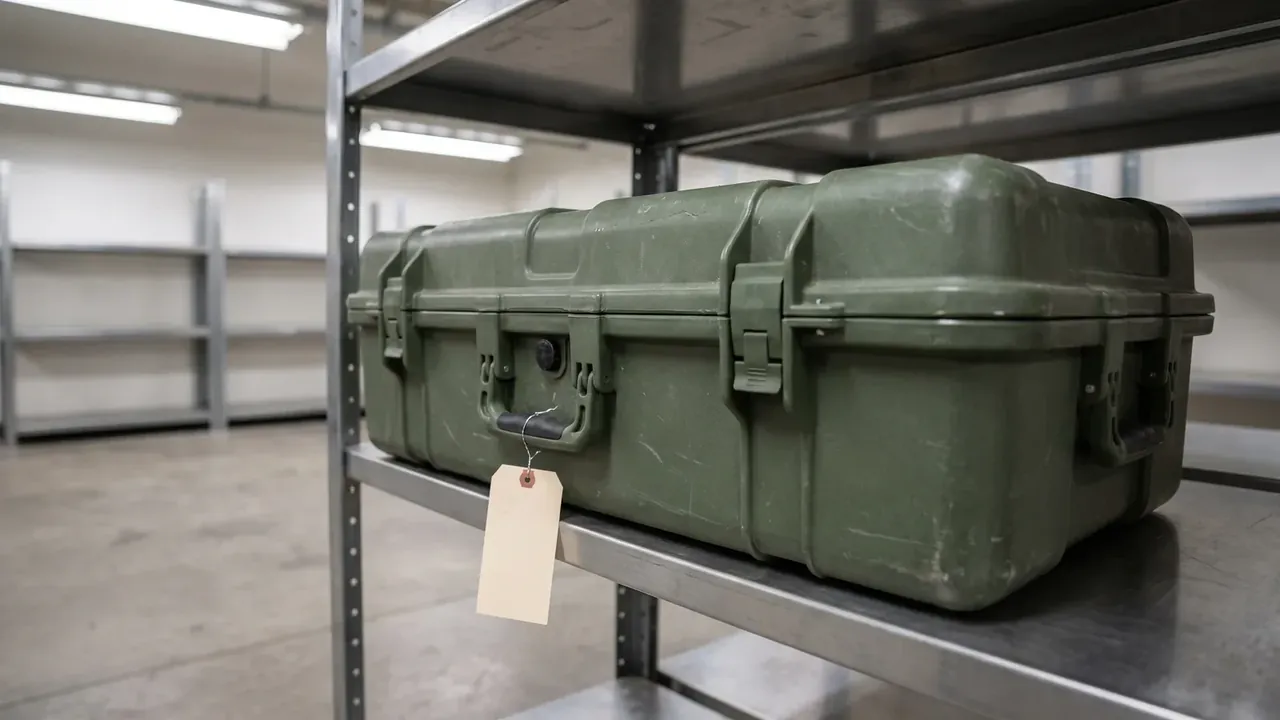
On a rack the case rests on two beams, and span sets the sag at mid-base, so beams belong under the rib nodes. The tag hangs from the handle because one on the lid face would be crushed. Recess and spigot engage eight to twelve millimetres; deeper lets grit hold them apart.
5. Opening and resealing on site
Opening is the hidden specification. A case sealed for ten years that needs a pry bar has wasted the sealing and stacking work. The target: two people, no special tools, ten minutes.
- Latches: four draw latches, one-handed, bushed pins
- Hinges: full-width pin type, pin withdrawable in place
- Gasket: O-ring replaced alone, groove unglued
- Desiccant: separate lid compartment, seal left intact
- Vent: threaded body, membrane removable
Resealing takes two actions: a new O-ring and a reset desiccant canister. A compressed gasket has already taken a set. Refitting it seeds a slow leak.
Conclusion
Specify in this order: storage period, gasket replacement path, shell creep, then stack height. The period sets the seal, the seal sets the structure, the structure sets the stack.
This article covers container-side specifications and design implications only.
Related Reading
- War reserve case selection: period, stacking, sealing
- Sealing and rotation for emergency reserve cases
- Pressure equalisation valves on sealed cases
- Gasket materials and how ageing shows up
Related Products
- 8 Series — Gun Cases; Military Equipment Cases; Camera Equipment Cases; Drone Cases; Watch Cases; Knife Cases; First Aid Cases; Electronics Equipment Cases
- WL8-2812 PP Gun Case — model WL8-2812
- All protective cases and toolboxes: 7 series, 158 models