

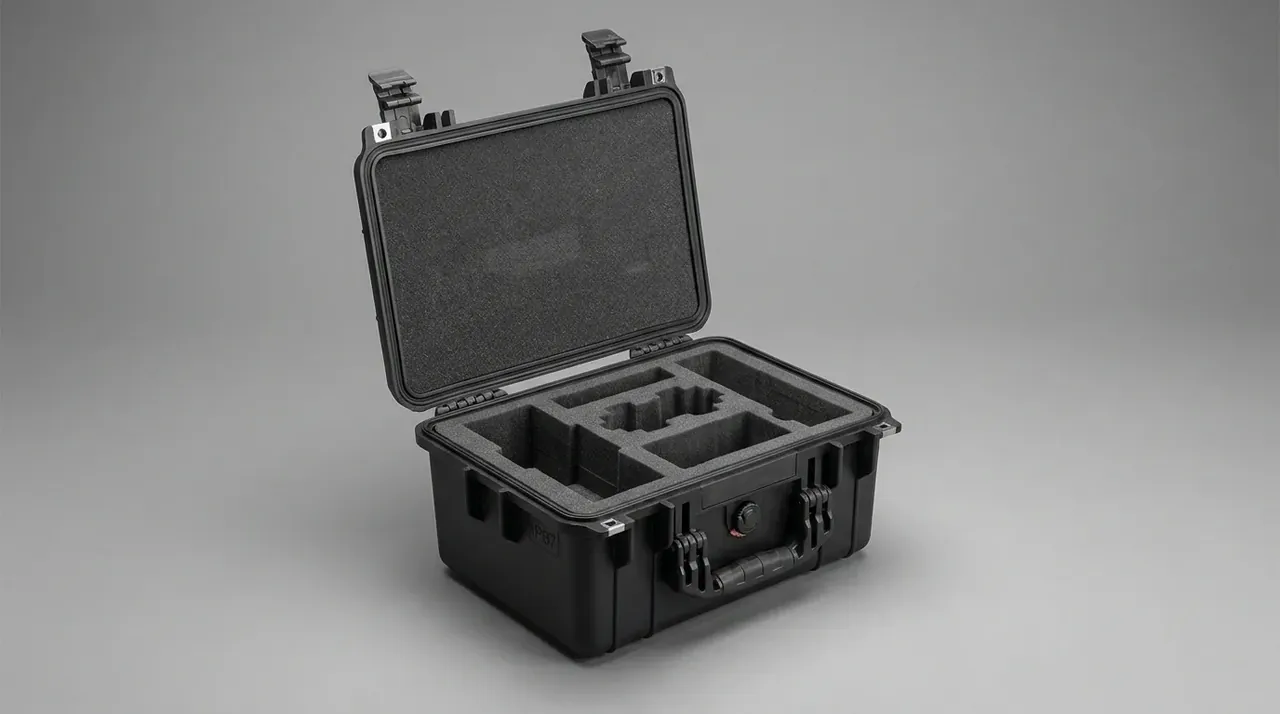
Quick answer: ESD anti-static plastic instrument case wholesale turns on batch spread: 200 units, 3.2 mm wall, all inside 10^6–10^9 Ω and decay under 2 s.
Table of contents
- Three break points in an ESD anti-static plastic instrument case wholesale order
- How 200 units all land inside 10^6–10^9 Ω
- Colour difference and two marking positions
- Squareness after eight-high stacking
- Forty-five days of tooling and a 3.2 mm wall
- FAQ
1. Three break points in an ESD anti-static plastic instrument case wholesale order
A single unit is bought on a sample; a batch is bought on the gap between unit 1 and 200. An ESD anti-static plastic instrument case wholesale order fixes 440 x 330 x 170 mm outside, 390 x 280 x 135 mm inside, a 3.2 mm wall and 3.1 kg empty once, and those numbers stop moving. What drifts is surface resistance, colour and marking position. Resistance follows how the conductive masterbatch disperses in the barrel, and morning and afternoon shots from one tool can sit half a decade apart. Colour drifts because pigment and antistatic agent are both small additions that fight each other. Marking position drifts on whether the jig moved with the tool.
Only the first is electrical; the other two are appearance and traceability, so an ESD anti-static plastic instrument case wholesale sheet needs a limit for each.
| Wholesale stage | Consistency risk | Control value |
|---|---|---|
| Compounding | uneven masterbatch, half a decade in one batch | 2 kg head sample per batch |
| Moulding | mould temperature shifts crystallinity | mould held to ±3 ℃ |
| Printing | jig drift gives two mark positions | jig numbered with the tool |
| Packing | edge crush changes squareness | diagonal spread 2 mm or less |
2. How 200 units all land inside 10^6–10^9 Ω
Surface resistance is a range, not a point. The target for an ESD anti-static plastic instrument case wholesale run is 10^6–10^9 Ω, three decades wide; keeping all 200 units inside it is the hard part. Split the range: 10^6–10^7 Ω is conductive enough that excess additive makes the shell brittle, 10^7–10^8 Ω is where most batches settle, and 10^8–10^9 Ω sits near the ceiling.
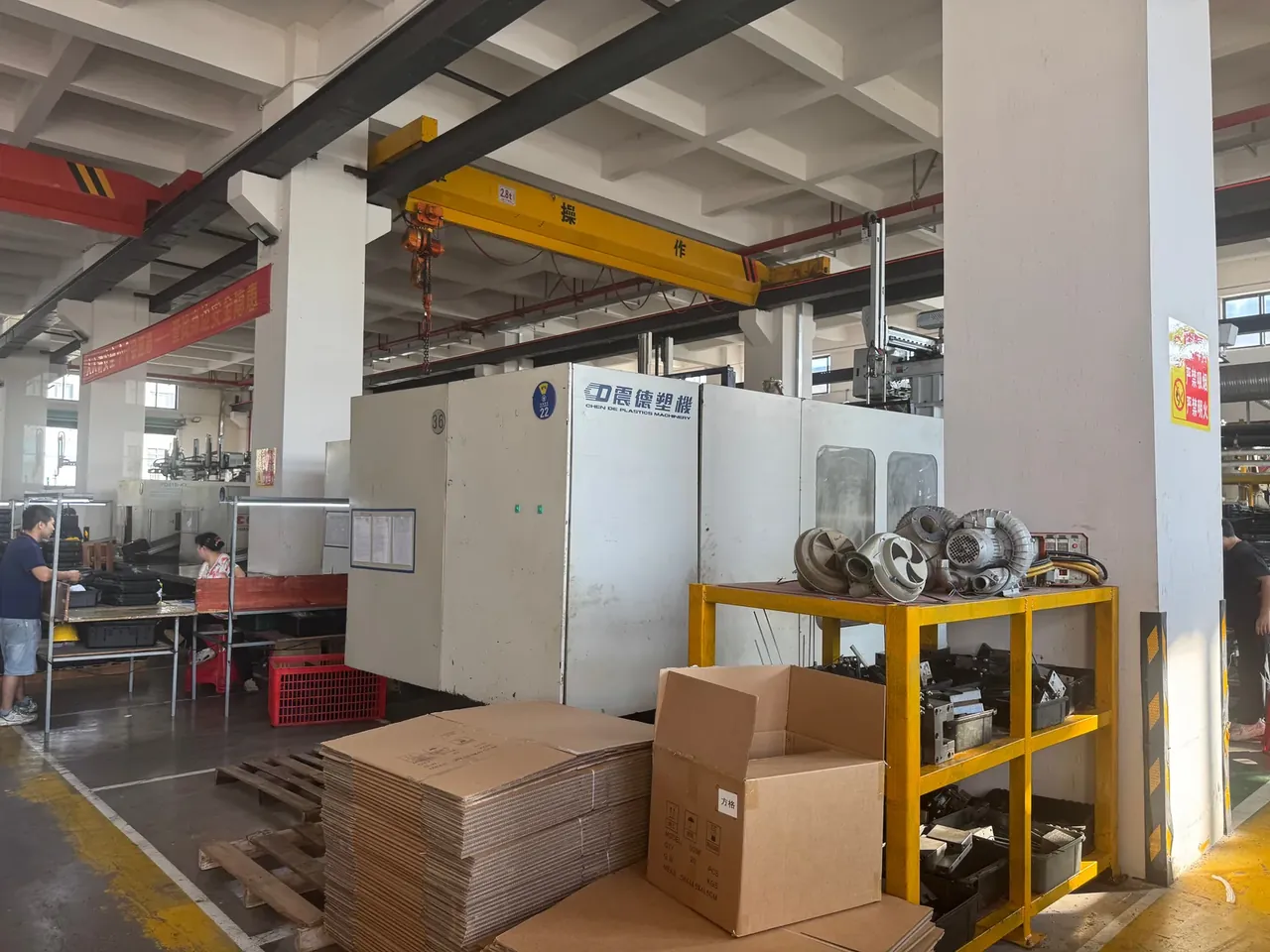
Sampling takes one unit per 50, so 200 units give four, each read at five points: two on the lid interior, two on the base, one on a side wall. All five must sit inside the range; one point outside doubles the sample, a second failure returns the batch.
Decay under 2 s is a separate criterion. Batches exist that pass resistance and fail decay: the additive migrates to the surface, forms a conductive film, and that film dies in dry air. An ESD anti-static plastic instrument case wholesale test reads decay at 23 ℃ and 12% RH first, then resistance.
Friction voltage under 100 V is the third check, read after the shell rubs against its film; above 100 V the unpacking discharge can damage parts.
3. Colour difference and two marking positions
Beige is the common colour at this grade and the hardest to hold. An ESD anti-static plastic instrument case wholesale batch is judged on colour inside the batch only: ten units at random, measured at D65 and 45°/0°, with the mean ΔE held to 1.0 and no single unit past 1.5.
The two antistatic marks sit on the drawing: one at the top right of the lid, one on a short side, both from the same jig. Position tolerance is ±1.5 mm, and two positions in one batch are not accepted.
| Consistency risk | Method | Limit |
|---|---|---|
| batch colour spread | 10 random units, D65, 45°/0° | mean ΔE 1.0 or less |
| single unit colour | same | ΔE 1.5 or less |
| mark offset | calliper from edge to type | ±1.5 mm |
| mark count | visual, every unit | 2, one missing rejects |
4. Squareness after eight-high stacking
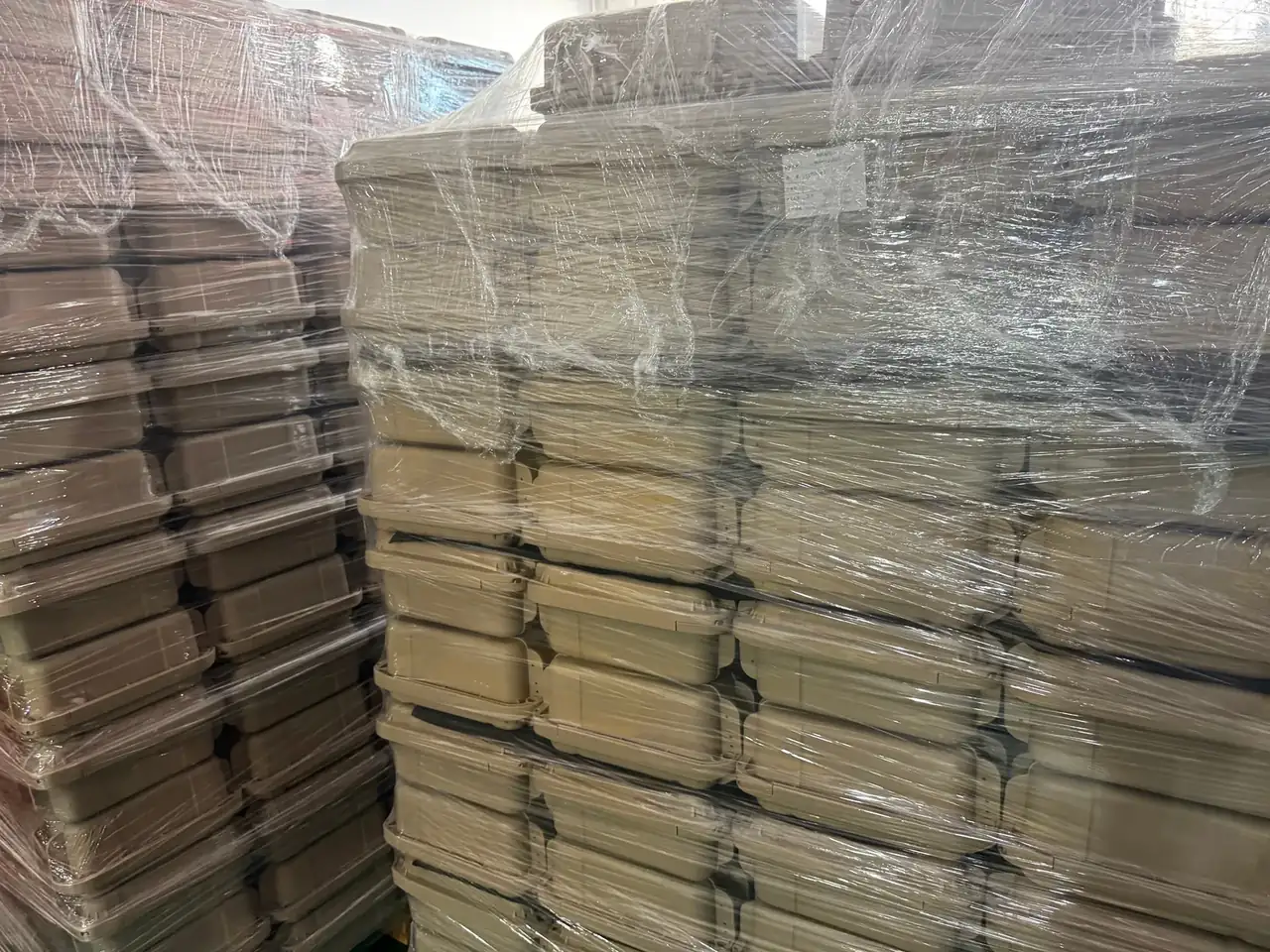
The first thing an inspector sees is not resistance but squareness. On an ESD anti-static plastic instrument case wholesale pallet at eight high the bottom lid carries seven units, 32.2 kg at 4.6 kg packed, over a 440 x 330 mm face at 0.22 kPa. Damage happens at the corners, where a half-position offset turns compression into shear and the 3.2 mm wall bulges first.
Packing does two jobs: a 2 mm corrugated sheet between units, and four wraps of film plus 120 mm corner boards. With both, an eight-high stack holds a 2 mm diagonal spread; without them the spread reaches 5 mm. Past 2 mm at the mouth or the base, lid and mouth offset by 0.5 mm and IP65 no longer holds.
IP65 means dust-tight and splash-proof, not immersion. Drop is 1.0 m on six faces; the working range is −10 ℃ to 55 ℃.
5. Forty-five days of tooling and a 3.2 mm wall
Lead time starts at tool sign-off, not at the purchase order. One tool set runs 45 days from cavity machining to acceptance and does not compress: ESD compound shrinks differently, so three trial rounds are the floor.
| Stage | Days | Content |
|---|---|---|
| Cavity machining | 25 days | electrodes, polish, first check |
| Trials and rework | 12 days | 3 rounds, shrink corrected |
| Etch and acceptance | 8 days | texture, marking jig, first article |
| Total | 45 days | 1 tool set |
The 3.2 mm wall is the production baseline for an ESD anti-static plastic instrument case wholesale run. At 2.8 mm the cycle shortens about 12% but the corners collapse under eight high; at 3.6 mm the shell goes from 3.1 kg to 3.5 kg and daily output drops a tenth. The 200-unit minimum spreads changeover, because below 200 the setting scrap passes 8%.
Conclusion
An ESD anti-static plastic instrument case wholesale acceptance comes down to four points: 200 units inside 10^6–10^9 Ω with decay under 2 s and friction under 100 V, two marks in the same place, a 2 mm diagonal spread after eight-high stacking, and 45 days of tooling. Put those on the sheet; otherwise nothing is agreed.
Related Reading
- How to choose an antistatic case
- Measuring surface resistance and decay
- Acceptance standards for antistatic plastic boxes
- How antistatic linings are made
Related Products
- 8 Series — Gun Cases; Military Equipment Cases; Camera Equipment Cases; Drone Cases; Watch Cases; Knife Cases; First Aid Cases; Electronics Equipment Cases
- WL8-2812 PP Gun Case — model WL8-2812
- All protective cases and toolboxes: 7 series, 158 models