

Quick answer: Four measurable actions settle an explosion-proof case on site: calipers on the rim, a feeler on the lid seam, a spring scale on latch effort, a scale for empty weight. In our run a 0.6 mm wall gap became a field repair within a quarter.
Table of contents
- Picking Three Samples Off the Shelf
- Round One: Thickness That Did Not Match the Weight
- Round Two: Lid Gap and Latch Effort
- The Plant Visit: Four Checks and Three Cases Returned
- FAQ
1. Picking Three Samples Off the Shelf
At nine the customer set three explosion-proof case samples on the bay floor and asked me to pick one for sectioning. All three bases lay flat.
We took one from the top, middle and bottom shelf. The three came from two molds, and the rim differed by 0.6 mm.
| Check point | Tool | Reject line | Three samples |
|---|---|---|---|
| Rim wall | Digital caliper | Below 6.0 mm | 6.2 / 5.6 / 5.9 |
| Rib root radius | Radius gauge | Under 8 mm | 8 / 5 / 7 |
| Lid seam | 0.3 mm feeler | Slides in 30 mm | yes / yes / no |
| Empty weight | Platform scale | Spread over 0.4 kg | 18.1 / 17.2 / 17.9 |
The second sample read 5.6 mm at the rim, which will not fail alone but points to a shortened hold time.
Wall thickness on an explosion-proof case is the reserve left after pressure rise and handling shock are priced in. That unit was also 0.9 kg lighter, and weight is the easier field check.
2. Round One: Thickness That Did Not Match the Weight
Round one delivered two units. The drawing called for 6.5 mm at the rim and 7.0 mm at the base; we sectioned one and measured 6.1 and 6.4.
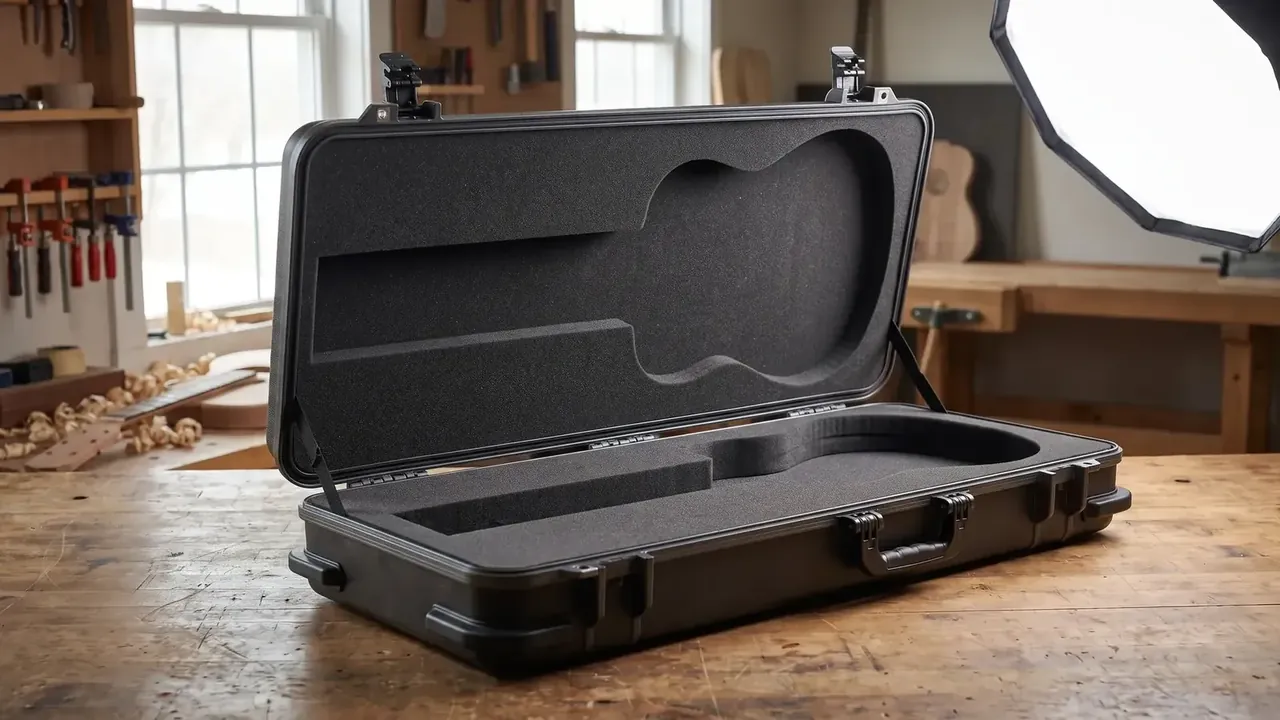
We asked whether both came off one mold. They did, but a batch of masterbatch had been swapped in between. That shifts melt flow, and rotational molding builds thickness by powder stacking on the hot surface, so rims and corners thin out first.
| Item | Drawing | Round one | Round two | Verdict |
|---|---|---|---|---|
| Rim wall | 6.5 mm | 6.1 | 6.4 | Pass |
| Base wall | 7.0 mm | 6.4 | 6.9 | Pass |
| Nine-point spread | 0.8 mm max | 1.5 | 0.7 | Pass |
| Empty weight | 19.0 kg | 17.6 | 18.8 | Pass |
The rejection note carried three items: rim and base values, the nine-point spread on one shell, and the diagonal difference of the interior floor. Once the 1.5 mm spread was on the table, charge weight rose from 11.5 kg to 12.2 kg.
3. Round Two: Lid Gap and Latch Effort
Round two passed on thickness and failed at the lid: of four draw latches, two only caught when someone pressed down. A latch that barely catches gives the gasket no stable compression.
- Run a 0.3 mm feeler around the perimeter: at most two insertion points, none over 15 mm.
- Pull each latch with a spring scale: 40 to 70 N. Under 40 N it opens in transit, over 70 N nobody closes it in gloves.
- Press the four closed corners: equal rebound, no hollow click.
- Keep the relief-side latches closer, 180 mm there against 260 mm on the other edges.
We set interference at the 55 N midpoint and grew the inner lid ribs from 12 mm to 14 mm so force spreads toward the middle. Re-measured, the spread between latches fell from 22 N to 6 N.
4. The Plant Visit: Four Checks and Three Cases Returned
The floor read 38 °C, with press and oven running and powder underfoot. I carried calipers, a feeler set, a spring scale and a 30 kg platform scale.
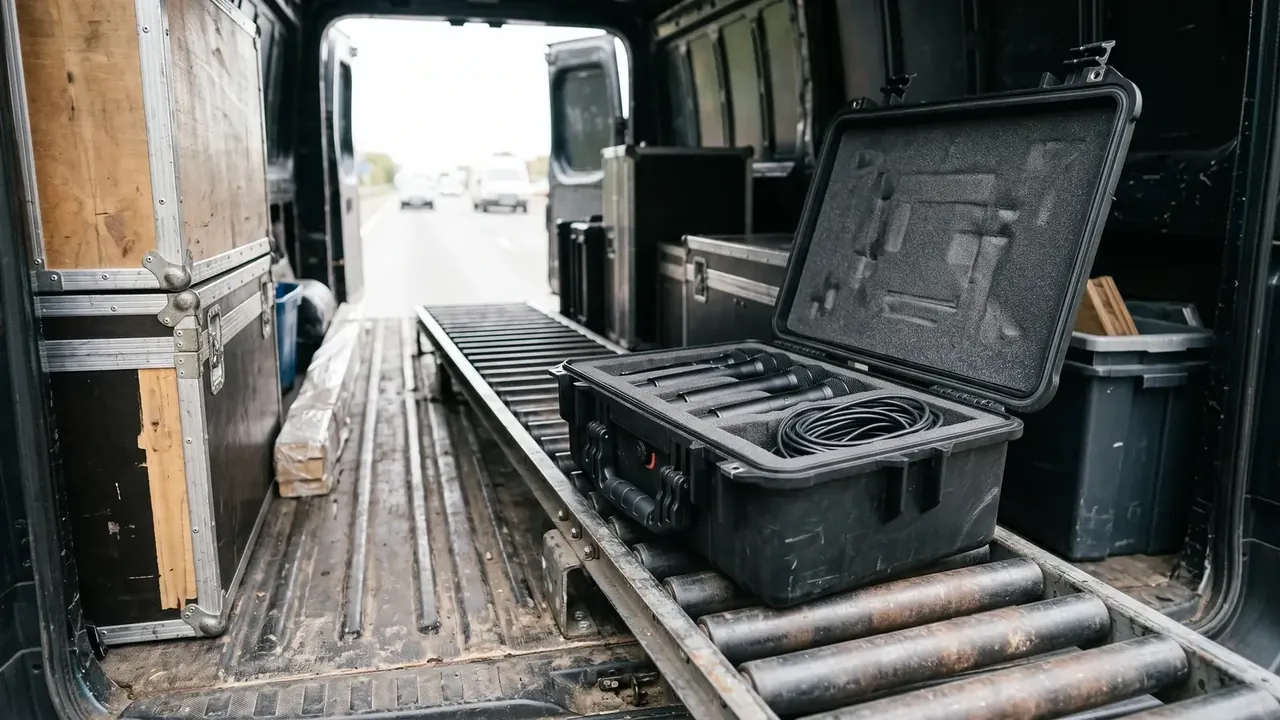
Four units stood lined up before loading, a convenient sample.
First, posture: if the relief face of an explosion-proof case points at a rack upright, stacking blocks it, and two of the four sat within 60 mm. Second, latch effort, which ran 31 to 63 N. Third, a re-weigh, since 0.5 kg off means the liner changed. Fourth, the nameplate, and one ran straight across the relief face.
| Rejection | Evidence on site | Consequence | Action |
|---|---|---|---|
| Relief face direction | 60 mm from upright | Vent path blocked | Re-stack |
| Latch effort | 31 N minimum | May release in transit | Adjust interference |
| Rim wall | 5.9 mm | Reserve short | Change mold number |
| Nameplate | Covers relief face | Hides marking, alters local wall | Relocate |
The customer thought the nameplate item fussy until I handed him the feeler and let him measure that patch himself. Straddling the relief face, a label rewrites local thickness and opening pressure, and receiving inspection never sees it. After the three went back we put the criteria on one sheet. Choosing an explosion-proof case is not about brochures; it is about whose four checks somebody else can repeat.
Conclusion
That visit left no group photo, only one sheet of criteria and three return notes. Whether an explosion-proof case is good is settled by whether the next person can repeat them.
This article discusses only the container (case body) side of specifications and design intent, and does not cover any handling, loading or use of the contents.
Related Reading
- What an explosion-proof case actually is
- Explosion-proof case versus a plain protective case
- Sealing logic behind dustproof case selection
Related Products
- 8 Series — Gun Cases; Military Equipment Cases; Camera Equipment Cases; Drone Cases; Watch Cases; Knife Cases; First Aid Cases; Electronics Equipment Cases
- WL8-2812 PP Gun Case — model WL8-2812
- All protective cases and toolboxes: 7 series, 158 models