

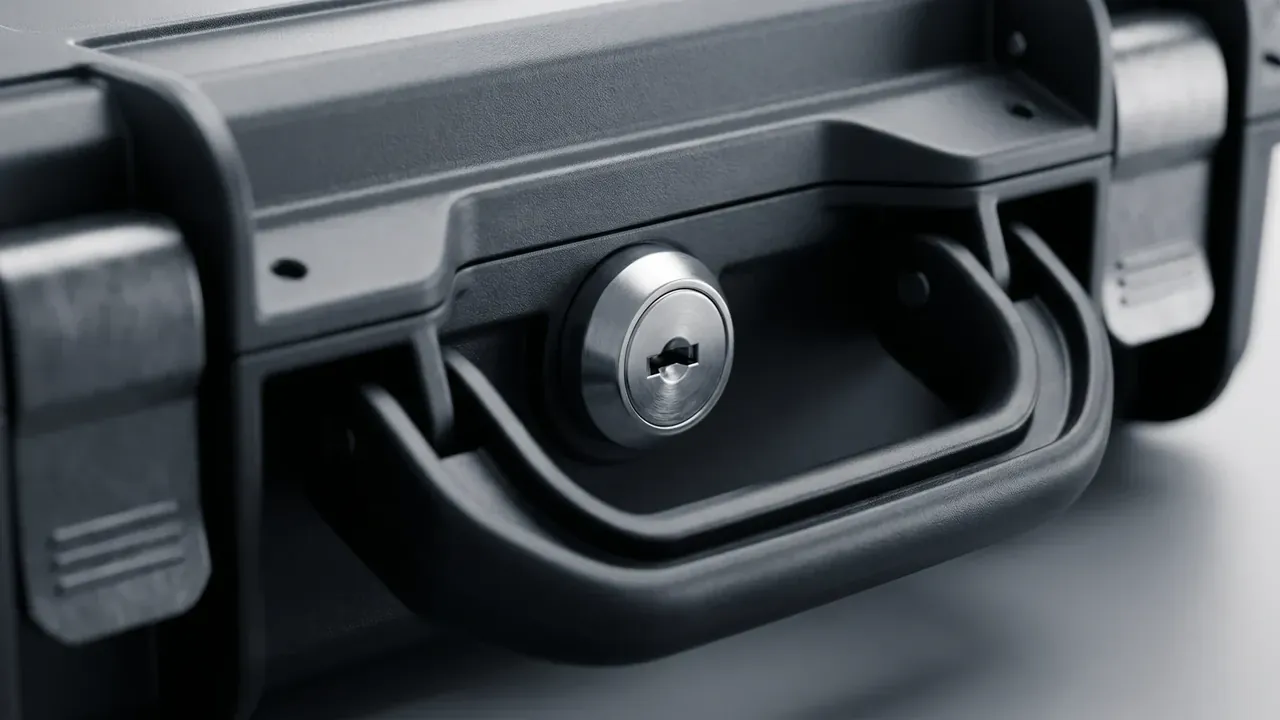
Quick answer: A maintenance plan holds only when the clock and the cut-off number are both written down. Three checkpoints and five measured limits decide whether an Explosive Container stays in service, gets new parts, or retires.
Table of contents
- Inspection Cadence: Three Clocks for an Explosive Container
- Lid and Latches: Four Points to Check Every Cycle
- Gasket and Interior Cleaning Rhythm
- Five Hard Lines That Force a Part Change
- Life Extension: Spares, Refurbishment, Records
- FAQ
1. Inspection Cadence: Three Clocks for an Explosive Container
At 07:40 the depot door rolls up and the duty officer walks the rack: a hand on each shell, a thumb press on every latch, a crouch for water lines. Twenty-four units take 15 minutes and the sweep is look, listen, touch. A shell 2 °C to 3 °C below ambient air means condensation overnight.
Intervals come from cycle count and stack height. Stacked 3 high at 72 kg full load, an Explosive Container puts 144 kg on its bottom lid, and 1,200 cycles a year double latch wear.
Frequency, duration and stop line:
| Tier | Trigger | Time | Main actions | Stop if |
|---|---|---|---|---|
| Pre-issue look | before dispatch | 40 s | latch seating, lid gap, label | latch not seated |
| Monthly check | every 30 days | 6 min | gasket, hinge clearance, vacuum | lid gap over 2 mm |
| Half-year review | every 180 days | 25 min | compression set, re-torque | set above 30% |
| Annual overhaul | every 12 months | 45 min | latch removal, torque, weighing | gain over 3% |
The half-year review gets skipped most: 25 minutes of downtime, yet it decides whether the shell still keeps moisture out.
2. Lid and Latches: Four Points to Check Every Cycle
A latch fails before anything else on an Explosive Container, and it is the only part an operator can judge bare-handed.
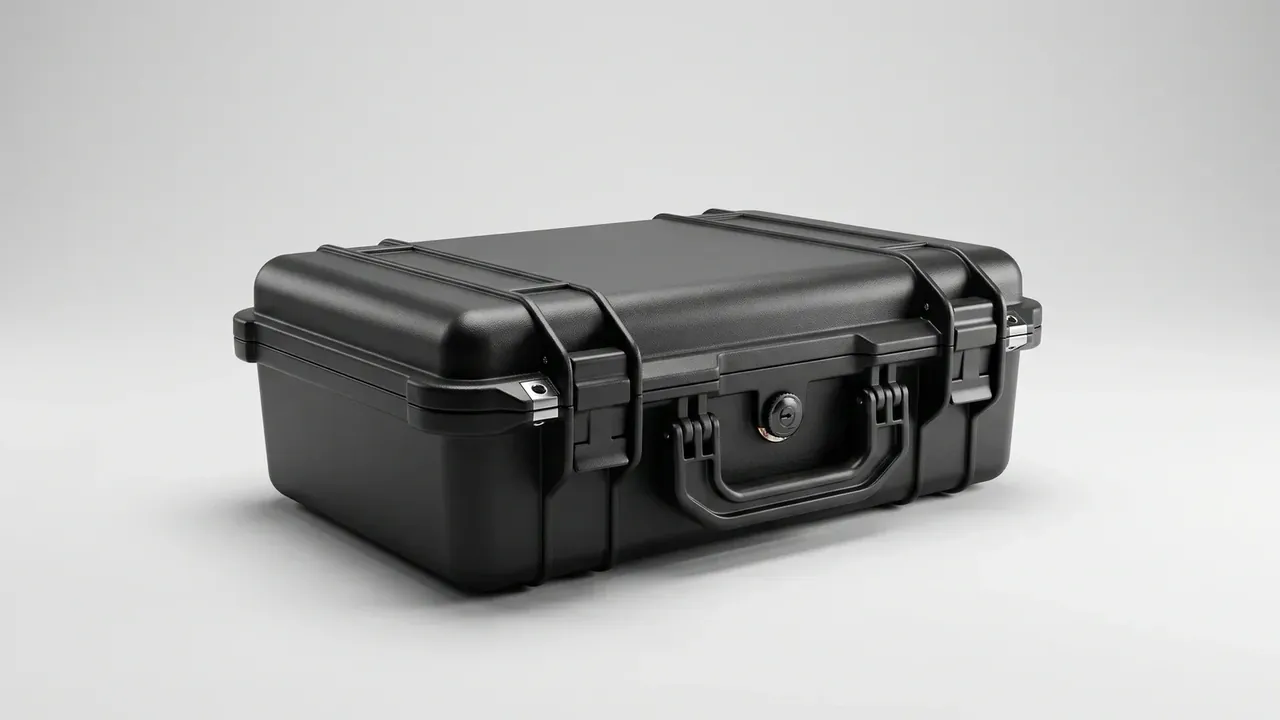
Tongue travel is 6 mm at full engagement; under 4 mm the keeper has collapsed. Keeper scoring past 0.3 mm justifies replacement. Hinge clearance takes a 0.5 mm feeler that should not enter. Lid contact takes a 2 mm feeler every 200 mm around the perimeter; wherever it slides in, the gasket is not compressed.
Bolts sit at 9 N·m, rechecked every 12 months, since over-torque cracks the nylon keeper. Silicone grease only, 0.3 g per point, every 90 days; mineral oil collects grit and turns a pin into paste in 30 days.
A lot of 60 units broke 7 latches in 18 months after the hinge line dropped 1.2 mm; a 1 mm shim bought 3 more years.
3. Gasket and Interior Cleaning Rhythm
The Explosive Container gasket is EPDM at Shore A 65, fitted at 25% to 30% compression. Too little and water creeps past; too much and the rubber takes a set. A 0.5 g silicone film every 90 days keeps it supple.
| Area | Tool | Setting | Never |
|---|---|---|---|
| Outer shell | soft brush, neutral detergent | pH 6 to 8, water under 40 °C | pressure washer into the lock |
| Gasket channel | swab, anhydrous ethanol | once per 90 days | oil as lubricant |
| Interior | dry cloth, vacuum | suction above 15 kPa | compressed air blow-down |
Hold store humidity at 65%. A 500 g silica pack swapped every 3 months dries in 2 hours and is reused 3 times. After a -40 °C to 70 °C cycle the gasket should recover in 5 s.
4. Five Hard Lines That Force a Part Change
A limit only works when it carries a number.
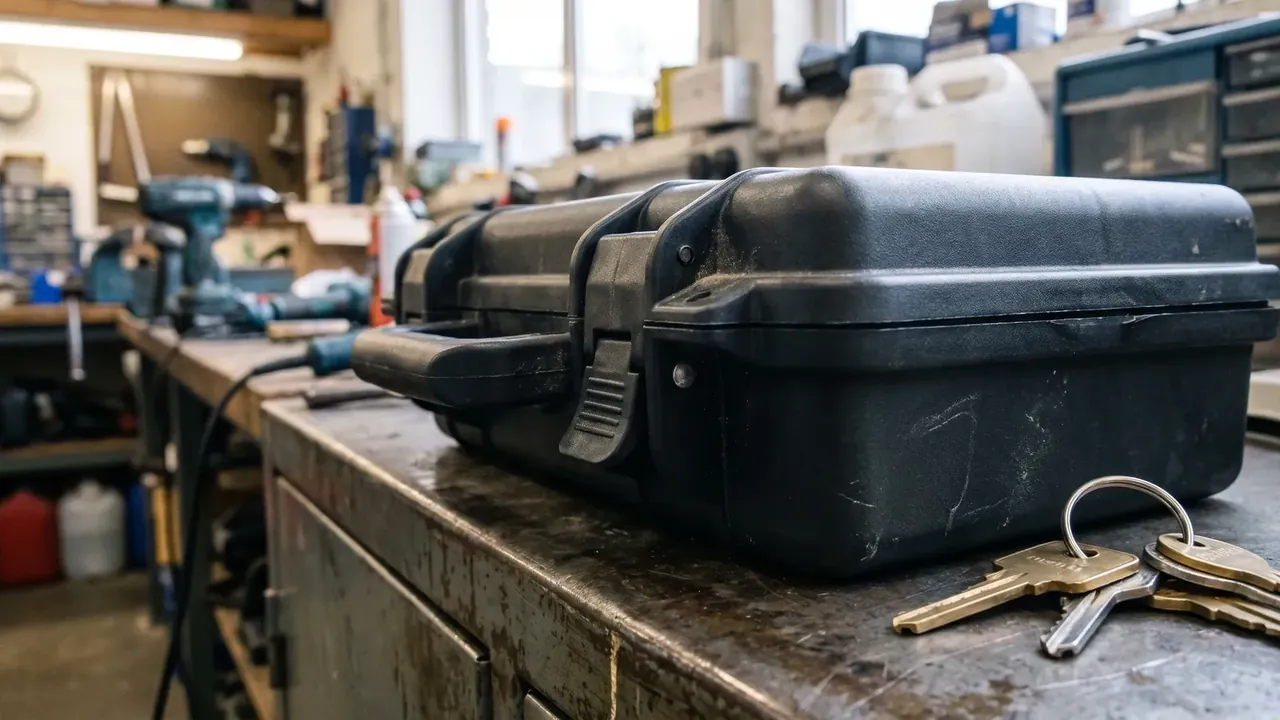
A crack of 25 mm retires the Explosive Container and triggers a static re-test at 1.5 times rated load. Wall thickness is sampled at 6 points, and a minimum 10% below build value ends service life. A latch under 1.5 kN static is replaced whole, never welded. Compression set above 30% means a full re-gasket. Coating is judged on 480 hours of salt spray, with rust over 5% forcing a recoat.
| Part | Limit | Instrument | Action |
|---|---|---|---|
| Shell | crack of 25 mm or more | steel rule, 10× loupe | out of service, 1.5× test |
| Wall | loss above 10% | ultrasonic gauge, 6 points | downgrade or retire |
| Hinge | pin wear of 0.5 mm | vernier, 0.02 mm | new pin at 9 N·m |
| Latch | pull under 1.5 kN | 5 kN load cell | replace as a unit |
| Coating | rust over 5% at 480 h | cross-cut knife | strip, recoat 80 µm |
Every reading carries a date and gauge ID. Quarterly sampling at 10% means 6 units from 60, about 90 minutes; one failure sends the lot back.
5. Life Extension: Spares, Refurbishment, Records
Spares for one Explosive Container come to 158: gasket 38, two latches 96, four pins 24 — against 1,480 new. Two spare sets still leave 1,164 unspent.
Refurbishment runs at 24 months: blast to 0.4 mm, recoat at 80 µm, cure 48 hours. The record holds 9 fields, from unit number to torque.
Over a 6-year life at 1,200 cycles a year, maintenance lands near 552 per unit, or 0.08 per use. At 9 years the same 552 spreads to 61 a year, or 0.05 per use.
Conclusion
Cadence, cleaning, part changes and life extension sit on one chain; a missing link wastes the rest. Put 30 days, 180 days and 12 months on the calendar, put 25 mm and 0.5 mm on the sheet, and the call stops depending on memory. Whether an Explosive Container reaches 9 years is the numbered entries in the log.
This article discusses only the container (case body) side of specifications and design intent, and does not cover any handling, loading or use of the contents.
Related Reading
- Acceptance tests and field measurement methods
- Inspection items for comparable storage cases
- How ammunition box seals and latches differ in service
Related Products
- 8 Series — Gun Cases; Military Equipment Cases; Camera Equipment Cases; Drone Cases; Watch Cases; Knife Cases; First Aid Cases; Electronics Equipment Cases
- WL8-2812 PP Gun Case — model WL8-2812
- All protective cases and toolboxes: 7 series, 158 models