

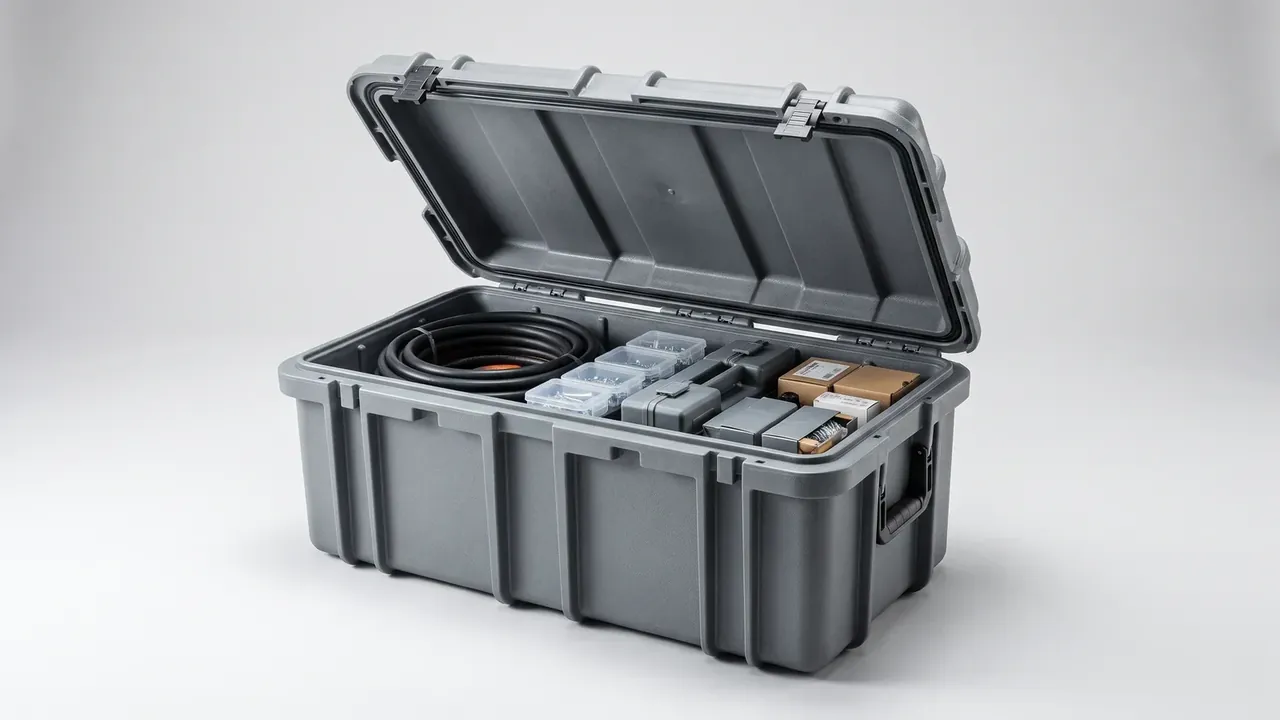
Quick answer: Fix five numbers before quoting: carry load per trip, piece count and shape, carry method, lock points, and the environment the case enters. Written into an enquiry, they make supplier answers comparable.
Table of contents
- Start with the Carry Load per Trip
- Compartments and Liner by Piece Count
- Carry Method Drives the Hardware
- Lock Points and Compliance Questions
- Ingress Rating and Batch Size Together
- FAQ
1. Start with the Carry Load per Trip
Carry load per trip is what leaves the store for one task, not the stock level; sizing by stock produces a case nobody wants to lift.
Three classes cover most work: 3 kg with a 300 x 210 x 130 mm cavity at 2.2 kg, 6 kg at 340 x 240 x 150 mm and 2.8 kg, 10 kg at 390 x 270 x 170 mm and 3.6 kg. Count the pieces, weigh one, add the two and apply a 1.2 margin. Grip strength falls about 30 percent after twenty minutes, and past 12 kg you need a box rather than a bigger case.
| Class | Load | Cavity | Empty weight |
|---|---|---|---|
| Small | 3 kg | 300 x 210 x 130 mm | 2.2 kg |
| Medium | 6 kg | 340 x 240 x 150 mm | 2.8 kg |
| Large | 10 kg | 390 x 270 x 170 mm | 3.6 kg |
2. Compartments and Liner by Piece Count
Piece count decides the compartments of an explosive storage case: up to four pieces, one bay with a movable divider; six to nine, fixed compartments; ten and above, a tray liner that lifts out whole.
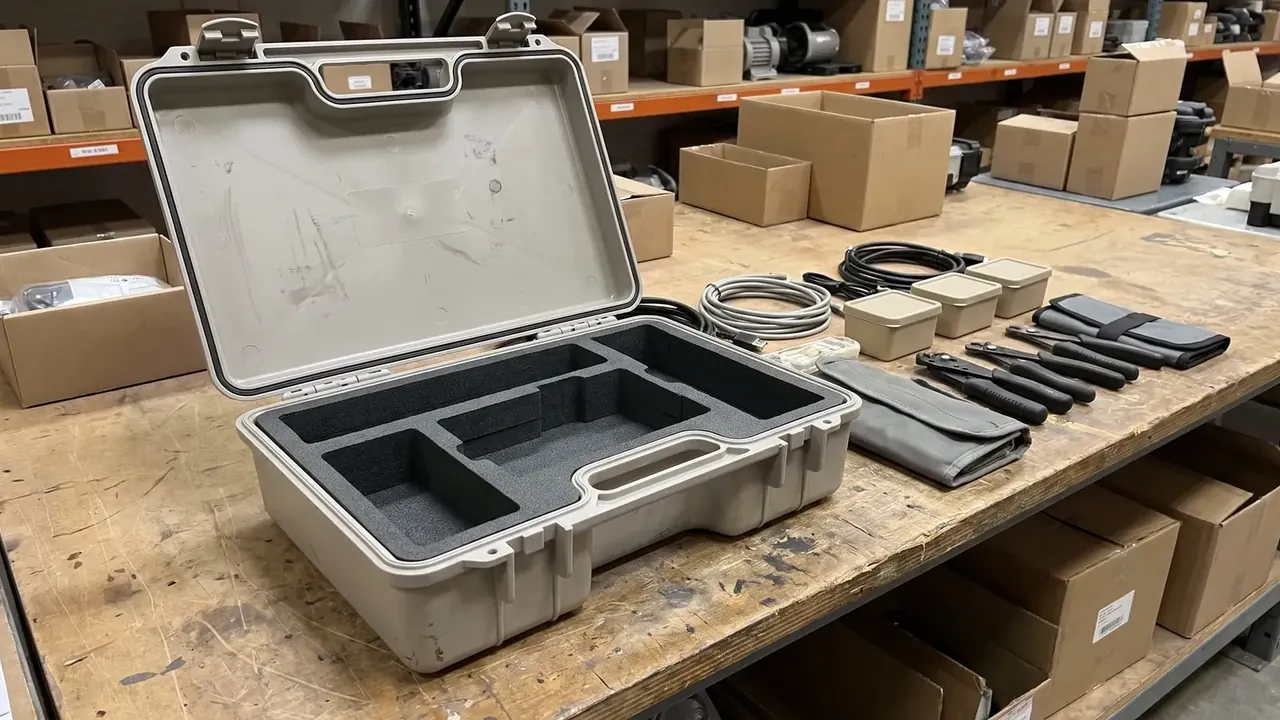
Measure the longest item for pocket length and the widest for width: length plus 1.5 mm, width plus 2 mm, with 6 mm pocket walls. EPE at 25 kilograms per cubic metre suits occasional use, EVA at roughly 30 percent more cost suits weekly opening, and XPE dents under heavy items. Start the liner at 25 mm and never skip the bottom layer.
3. Carry Method Drives the Hardware
One hand tops out at 8 kg, with a 500 N handle mount and a 28 mm grip that still works through a glove. Two shoulders move the load to anchor points on both sides, using 38 mm webbing and swivel buckles. A single shoulder carries about 60 percent on one side, so keep it under 6 kg.
Loaded centre of gravity should sit within 90 mm of the base; past 120 mm the case swings and hits the leg. Pack real items, then walk twenty metres, which settles more than a drawing.
4. Lock Points and Compliance Questions
Ask about locks at enquiry stage. Two independent 8 mm lock holes plus a 3 mm seal hole is the minimum, and one open lock must still leave the lid shut.
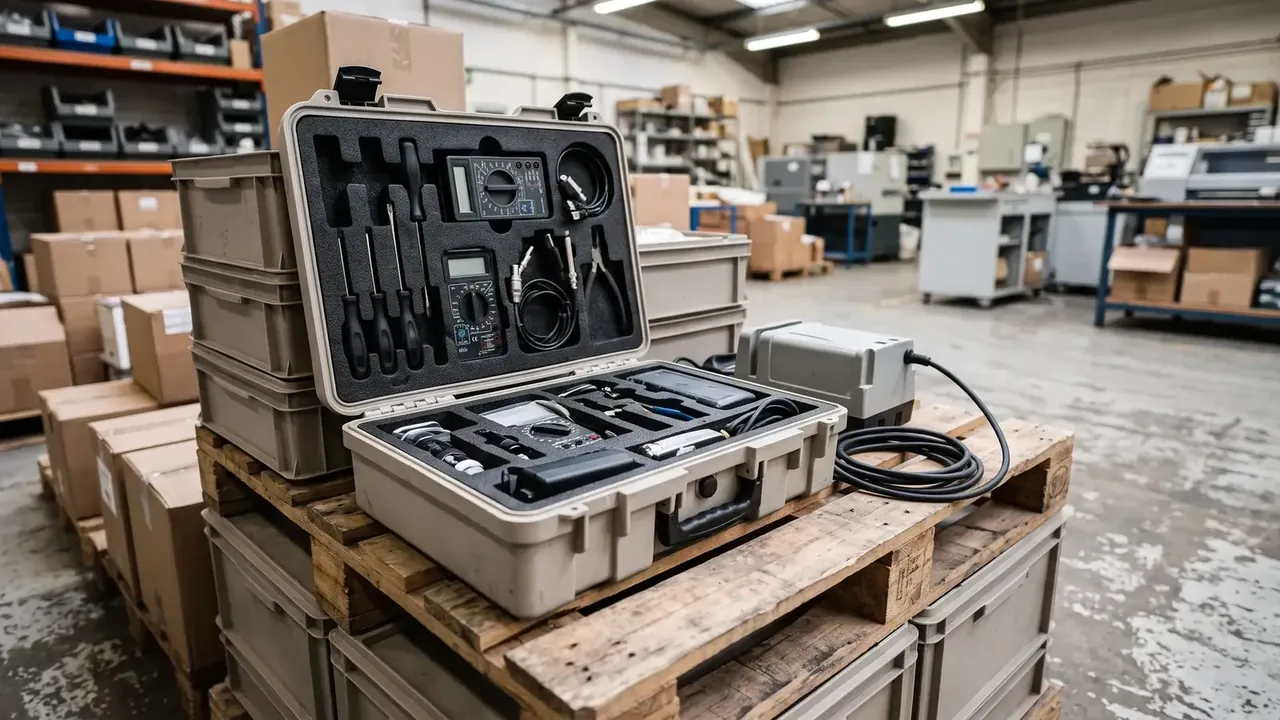
Agree first that the case is packaging and does not replace a permit. Three questions go to the supplier: road or air, what marking the carrier requires, and what record of opening the user needs. Serial numbers are the quiet failure, since silk print wears off, stamping damages the dissipative layer, and laser marking on a reinforcing pad is the usual compromise.
5. Ingress Rating and Batch Size Together
For an explosive storage case, IP67 means one metre of water for 30 minutes, IP65 jets, IP54 dust and splashes. A case moving between a boot, a store and a tent is covered by IP65; only river crossings or open nights justify IP67.
Write -25 to 55 degrees Celsius into the agreement: polypropylene goes brittle at the low end, the seal ages at the high end.
| Item | Common figure | Note |
|---|---|---|
| Ingress rating | IP65 or IP67 | IP67 only for water crossings |
| Temperature | -25 to 55 degrees Celsius | Both ends in the agreement |
| Drop sampling | 1.0 m, six faces | Loaded, one drop per face |
| Minimum order | 200 units | Three colours, two-colour print |
Two hundred units and 25 days is a normal range, and tooling spread over 3000 units means small batches cost more each. Build three first articles, run the drop and the opening cycle, then release the mould.
Conclusion
Choosing an explosive storage case is subtraction across five numbers: load class sets the size, pieces and shape set the liner, carry method sets hardware strength, lock points set the compliance interface, and ingress rating with batch size sets the cost. Fix them once and the specification is done in one round, which is why a well-chosen explosive storage case is mostly decided before the first quote.
This article discusses only the container (case body) side of specifications and design intent, and does not cover any handling, loading or use of the contents.
Related Reading
- Structure and craft of explosive storage cases
- Marking and acceptance rules for explosive storage cases
- Procurement and lead times for explosive storage cases
- Selection and configuration of explosive storage boxes
Related Products
- 8 Series — Gun Cases; Military Equipment Cases; Camera Equipment Cases; Drone Cases; Watch Cases; Knife Cases; First Aid Cases; Electronics Equipment Cases
- WL8-2812 PP Gun Case — model WL8-2812
- All protective cases and toolboxes: 7 series, 158 models