

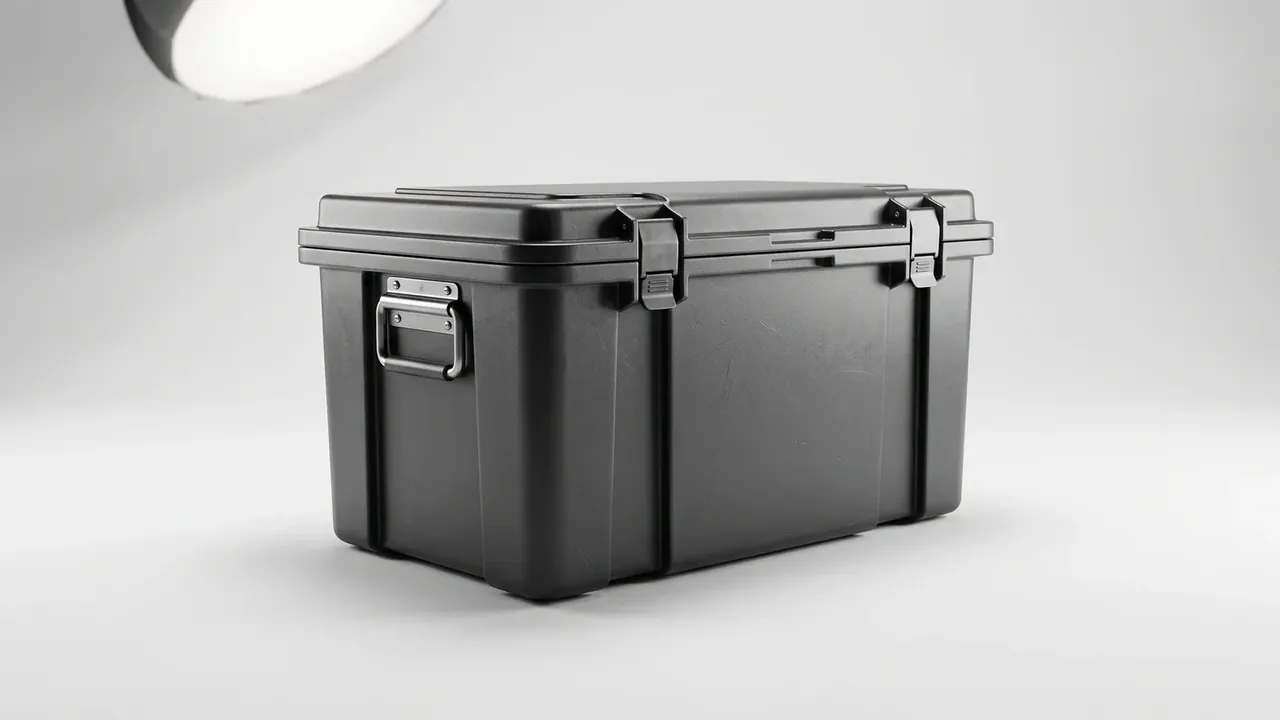
Quick answer: An explosive storage case quote covers resin, tooling, moulding, insert, hardware, testing and freight. Order quantity decides tooling amortisation, and lead time is six milestones added.
Table of contents
- What an Explosive Storage Case Inquiry Must Specify
- MOQ and Price Tiers
- Tooling and Sampling Costs
- Breaking Lead Time into Production Milestones
- Documents, Freight and Acceptance
- FAQ
1. What an Explosive Storage Case Inquiry Must Specify
Most inquiries fail on missing information, not on price. A supplier who guesses quotes from experience, and close-looking quotes can differ by whether insert, packing or freight is inside the number.
A comparable inquiry states nine things: dimensions and volume, unit weight and resin grade, wall thickness, latch type and count, insert material and layout, colour and finish, marking, packing, and delivery point with trade term.
| Quote line | Share of price | Usual dispute |
|---|---|---|
| Resin | 28 to 34 percent | Regrind ratio |
| Tooling amortisation | 8 to 14 percent | Refund if volume drops |
| Moulding | 20 to 26 percent | Cavities and cycle time |
| Insert | 10 to 16 percent | Die cost charged apart |
Weight matters: a 2.3 kg body and a 2.8 kg body differ by nearly twenty percent in resin cost. State annual volume and first order quantity; quote only “a few hundred” and pricing drifts to the cautious end.
2. MOQ and Price Tiers
MOQ follows cavity count and press tonnage, not sales preference. A 600 by 400 by 300 mm body on one cavity in a 650 t press cycles in about 90 seconds, and setup time spreads across the run. Two hundred units is the common floor.
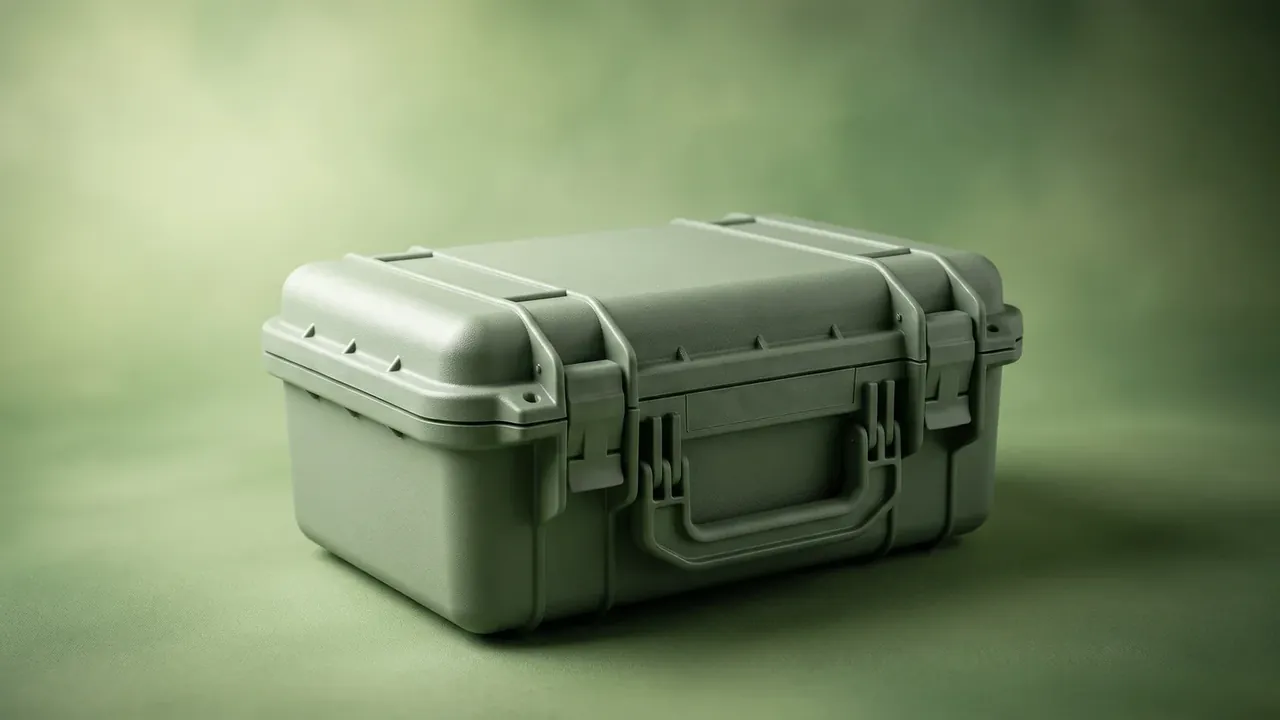
Tiers run from 200 to 499 at list, 500 to 999 near 0.94, 1,000 to 2,999 at 0.88, above 3,000 at 0.82, with tooling charged, halved, then absorbed. Watch whether tooling is refundable, insert and packing sit inside the price, and how overrun is priced.
A clause written as “returned once cumulative volume reaches 1,000” beats a headline free tooling offer, since that version is normally pre-loaded into the unit price.
3. Tooling and Sampling Costs
Tooling is quoted by mould size and steel grade. P20 suits tens of thousands of shots, 718H long runs where drift matters. A single-cavity mould for a 600 by 400 by 300 mm body lands near 36,000 RMB, and each extra cavity adds cost.
Sampling takes two forms. Printed prototypes need three to five days and show outline only. A trial shot takes about seven days and yields T1 parts that accept the insert and can be dropped or immersed.
Repair runs three to five days a round, so plan for two. T1 samples free with half the tooling credited on the first batch is the usual pattern, and the credit lapses if that batch is cancelled.
4. Breaking Lead Time into Production Milestones
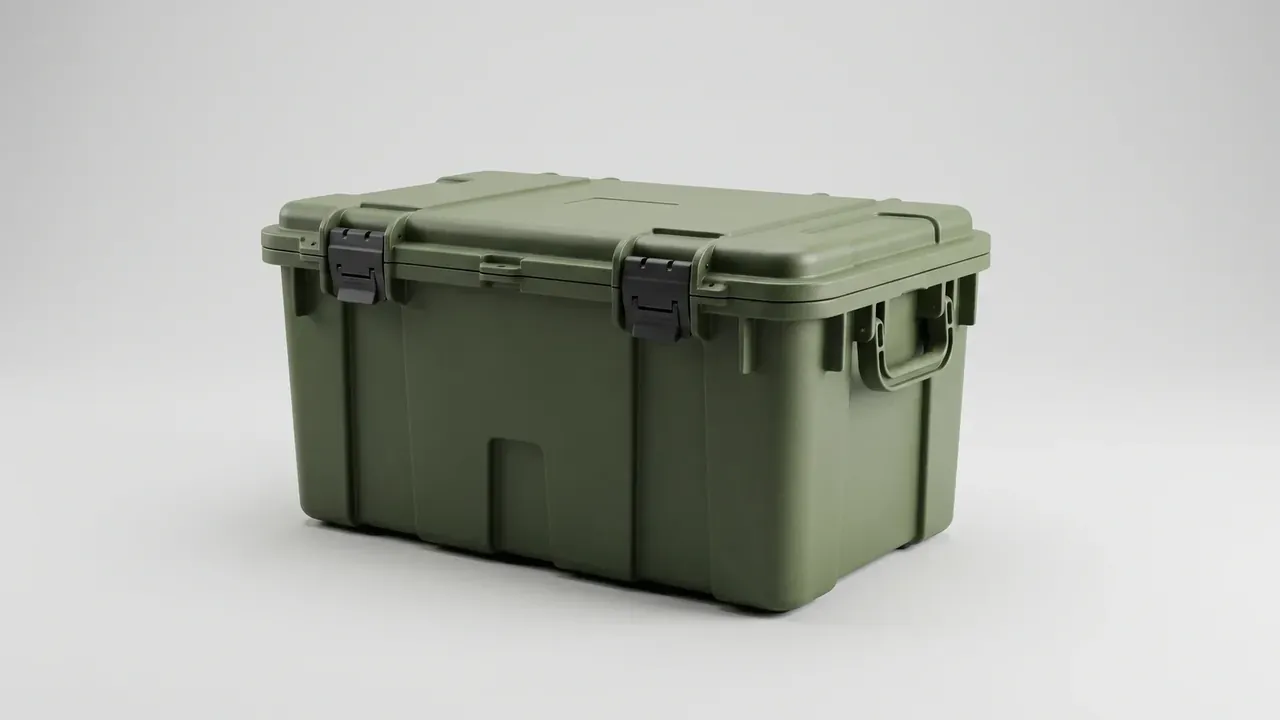
Lead time is six milestones added together, and writing them into the contract is what gives a delay an owner. “45 days from order” tells nobody anything once approval loops.
| Milestone | Days | Starts when |
|---|---|---|
| Tooling | 22 to 26 | Tooling payment lands |
| Trial and T1 samples | 5 to 7 | Mould closes first time |
| Sample approval | 3 to 5 | Samples ship |
| Production | 12 to 18 | Approval signed, resin in house |
| Inspection and dispatch | 3 to 5 | Production ends |
Start the clock on two conditions together: tooling payment and sample approval. With only one, a colour change quietly becomes supplier delay. Export orders add about 22 days of sea freight and 3 of customs, with inland haulage at two days per 800 km.
5. Documents, Freight and Acceptance
A finished explosive storage case cannot ship without paperwork: business licence, quality system certificate, material safety data sheet, packaging performance certificate, dangerous goods packaging use certificate, and the batch test report.
Freight moves as dangerous goods, so inland legs need qualified vehicles and escorts. Rates go on volume weight, and stacked cases compress little, so freight is underestimated. Price it as a separate line.
Tie acceptance to payment: 30 percent on order, 70 percent on the inspection report, 5 percent retained six months. The report lists batch, sample and a verdict per item, each pointing to a contract clause. Rework deadlines belong in the payment clause, or deductions have no footing.
Conclusion
Quote basis, tooling and milestone dates decide most of the argument before an order exists. Split the quote lines, write tiers and refund terms into the contract, bind lead time to two starting conditions, and explosive storage case procurement becomes a schedule.
This article discusses only the container (case body) side of specifications and design intent, and does not cover any handling, loading or use of the contents.
Related Reading
- Choosing an explosive storage case
- Comparing an explosive storage case with alternatives
- Field configurations for an explosive storage case
- Sizing an explosive storage case
Related Products
- 8 Series — Gun Cases; Military Equipment Cases; Camera Equipment Cases; Drone Cases; Watch Cases; Knife Cases; First Aid Cases; Electronics Equipment Cases
- WL8-2812 PP Gun Case — model WL8-2812
- All protective cases and toolboxes: 7 series, 158 models