

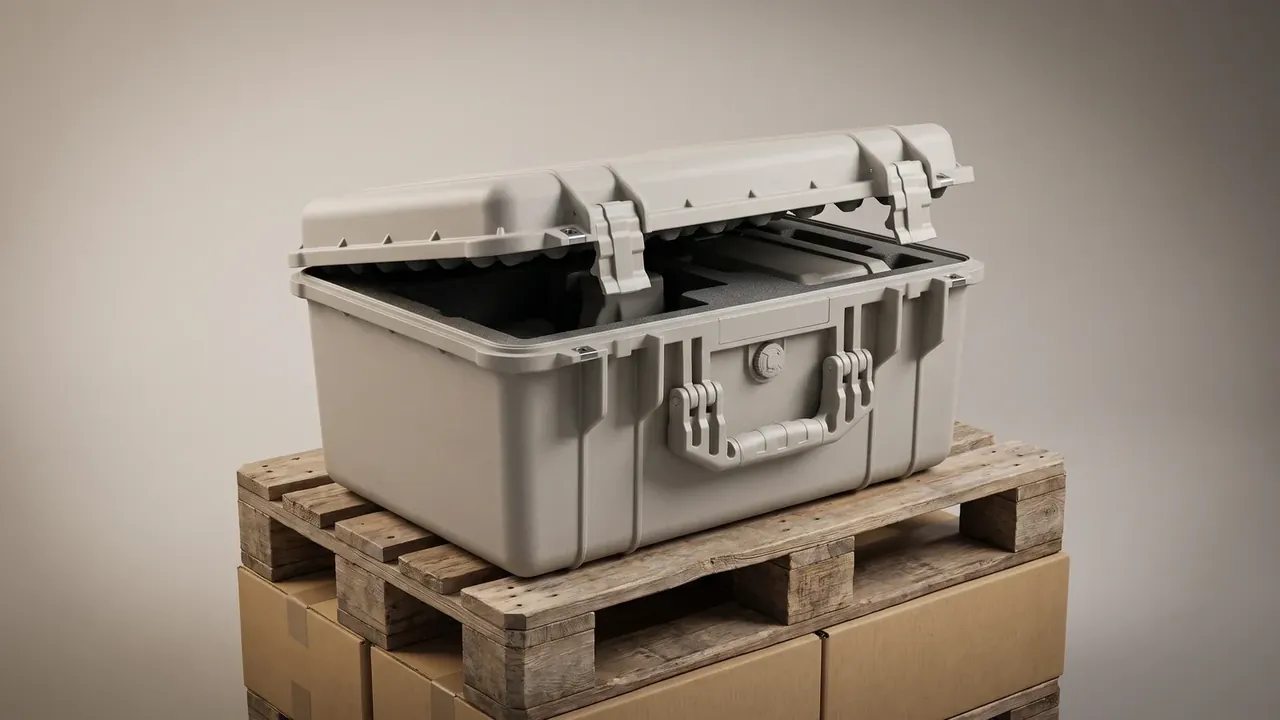
Quick answer: An explosive storage case differs from a tool box, a safe, a soft bag and a wooden powder box in six traits that must hold at once: flame behaviour, static control, forced entry, carry weight, traceability and cost.
Table of contents
- Explosive Storage Case and Four Rival Formats
- Flame Retardance and Static Control
- Locks, Hinges and Tamper Evidence
- Carry Weight Sets the Working Radius
- Five Year Cost and Paperwork
- FAQ
1. Explosive Storage Case and Four Rival Formats
An explosive storage case is quoted beside a tool box, a steel safe, a soft bag and a wooden powder box, and all five read alike. Six traits separate them, and a format that wins two usually pays in the other four.
| Format | Flame | Static | Entry | Carry |
|---|---|---|---|---|
| Explosive storage case | Afterflame under 10 s | 10⁶ to 10⁹ ohms | Catches, hasp, seal | 6.8 kg, one hand |
| Plastic tool box | Drips and burns | No path out | Single catch | 2.1 kg |
| Steel safe | No burn, sparks | Charge builds | Full frame | 12.4 kg, two up |
| Soft carry bag | Fabric burns | None | Zip | 0.9 kg |
| Wooden powder box | Burns, takes damp | Humidity drift | Hasp splits | Screwed handle |
Traceability is skipped most often. It asks whether the shell can carry a record: a moulded number pad, a seal slot, a latch line readable with the lid closed.
2. Flame Retardance and Static Control
Steel will not burn, but steel on steel builds charge with no path out. Recycled tool boxes drip and burn past 20 seconds. Wood swings between 8 and 16 percent moisture, and in a dry month its resistance climbs until the static path is gone. The case pairs a flame package with conductive filler: afterflame under 10 seconds, resistance near 10⁶ to 10⁹ ohms.
Neither figure shows at goods-in. Probe floor, side wall and inner lid, and accept the result only when all three sit in one decade. Ask for afterflame and afterglow separately.
3. Locks, Hinges and Tamper Evidence
Steel wins on entry and loses on mass: 12.4 kg against 6.8 kg at equal volume, capping the radius at a few hundred metres. A zip gives way and the wood around a hasp splits under a bar. The middle path is two catches, a hasp for a 4 mm padlock and a 3.2 mm seal hole.
| Closure | Pry | Record | Time to open |
|---|---|---|---|
| Single catch | Low | None | 3 s |
| Padlock in hasp | Medium | None | 15 s |
| Padlock plus seal | Medium | Yes | 40 s |
| Combination lock | Medium high | Partial | 20 s |
| Full locking frame | High | Yes | 60 s |
Latch strength is not a security rating: the catch keeps the lid shut in a drop, the seal hole proves an opening happened.
4. Carry Weight Sets the Working Radius
The practical line sits near 22 kg loaded. Below it one person moves the case; above it the job needs two people or a trolley. A soft bag weighs under 1 kg and protects nothing; a safe spends half the payload on its own shell; a screwed-on wooden handle fails at the screws. The case moulds its handle into the shell and proof-loads it at 2.5 times the rating.
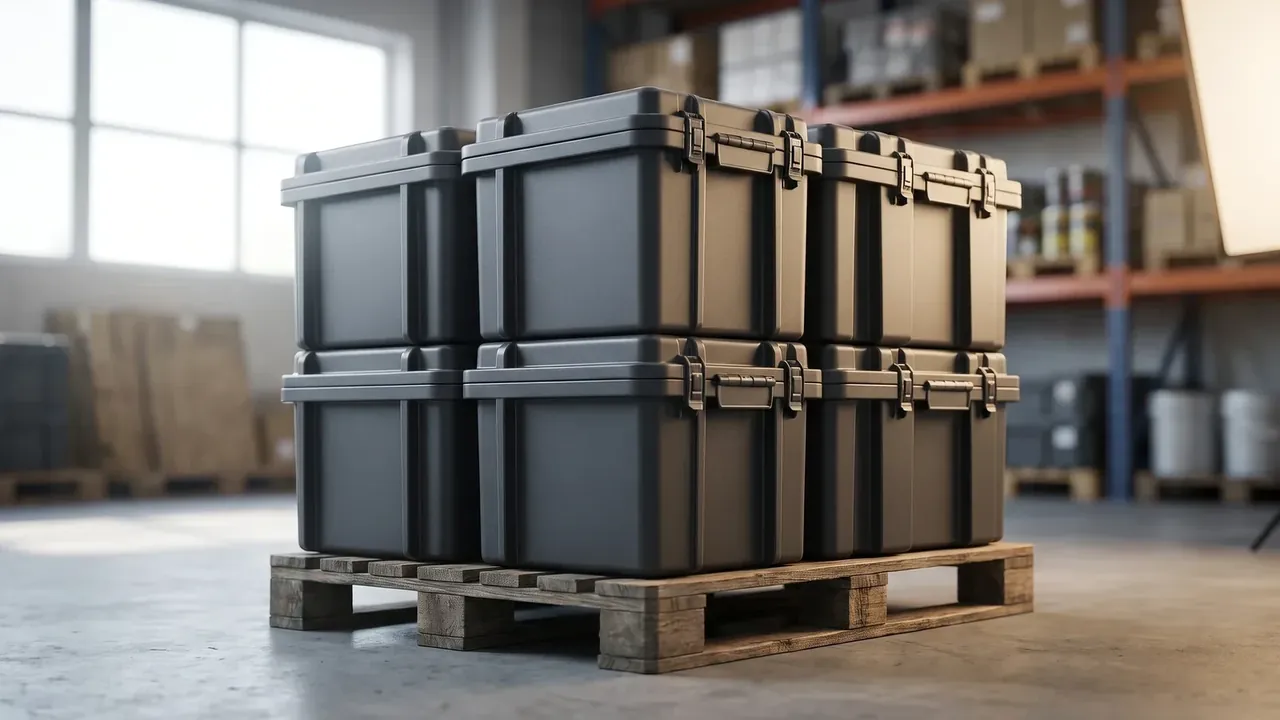
Carry style then constrains layout: a one-person case needs its centre of gravity near the mid-axis, so compartments cannot be asymmetric.
5. Five Year Cost and Paperwork
Priced once, the substitutes win. Priced across five years of replacement, inspection and handling labour, the order reverses: a recycled tool box embrittles in about two years and is replaced twice; a wooden box swells and loses its seal; steel adds a second pair of hands.
Compliance carries no discount: a material test report, a flame rating and a batch number decide whether the case enters acceptance.
Conclusion
None of the four substitutes is wrong; each solves a real problem. Tool boxes are cheap, safes are rigid, bags are light, wooden boxes are everywhere. An explosive storage case earns its price by compressing six traits into one shell. Write the working radius and the acceptance requirement down first, and the choice stops depending on a quotation. The question is never which box is better, but which explosive storage case clears flame, static and traceability together.
This article discusses only the container (case body) side of specifications and design intent, and does not cover any handling, loading or use of the contents.
Related Reading
- How explosive storage boxes compare with alternatives
- Field configuration points for storage cases
- Routine checks and service life management
- Explosion proof cases against standard shells
Related Products
- 8 Series — Gun Cases; Military Equipment Cases; Camera Equipment Cases; Drone Cases; Watch Cases; Knife Cases; First Aid Cases; Electronics Equipment Cases
- WL8-2812 PP Gun Case — model WL8-2812
- All protective cases and toolboxes: 7 series, 158 models