

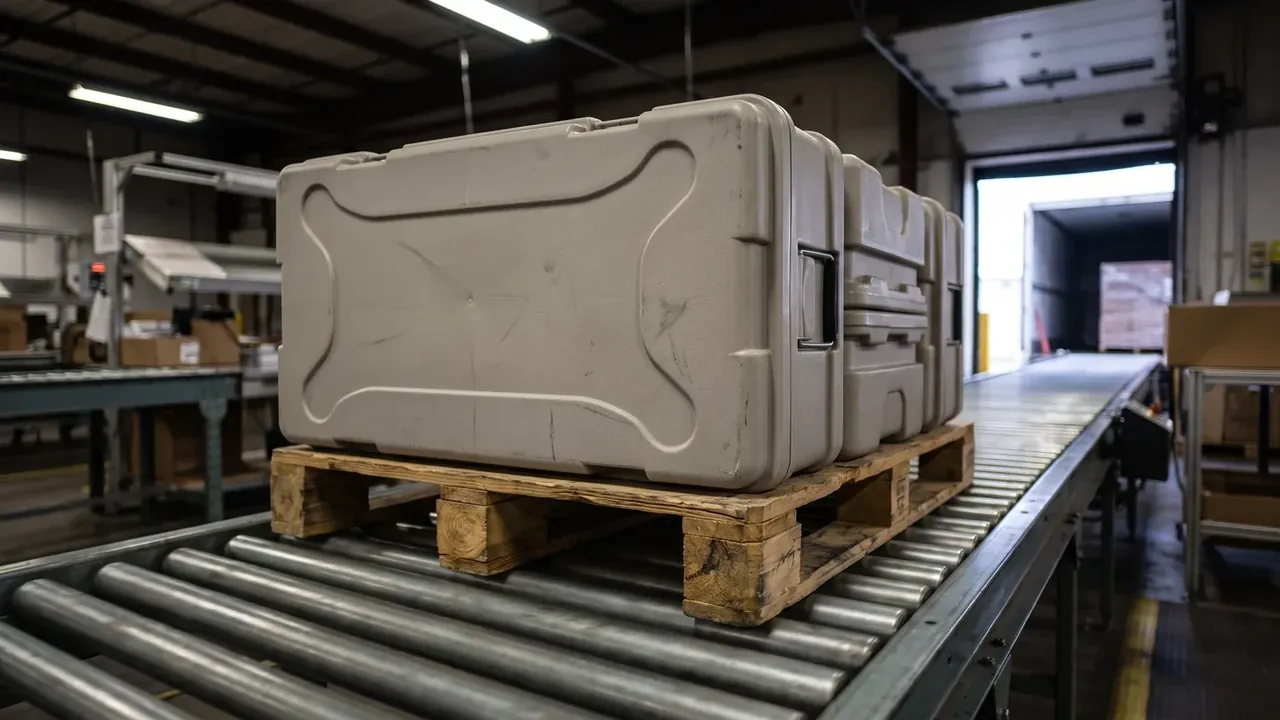
Quick answer: Five numbers decide an explosive storage case: envelope size, wall thickness, rated load, surface resistance and catch force. Fix the loaded weight first, the cavity second, then close the load gap with wall and ribs.
Table of contents
- Explosive Storage Case Specifications Start With Five Numbers
- Size and Compartments Must Follow the Contents
- Wall Thickness Against Rated Load
- Static and Flame Clauses for the Contract
- Latch Strength and Carry Hardware
- FAQ
1. Explosive Storage Case Specifications Start With Five Numbers
A specification for an explosive storage case runs to pages, yet five numbers decide it: envelope size, wall thickness, rated load, surface resistance and catch force. They pull against each other, so the job is choosing which to fix first.
| Item | Typical band | How it is judged |
|---|---|---|
| Envelope | 400 × 300 × 180 mm | Calipers, 3 points |
| Nominal wall | 3.0 to 4.5 mm | Ultrasonic gauge, nine points |
| Rated load | 20 to 30 kg | Uniform load, 24 hours |
| Surface resistance | 10⁶ to 10⁹ ohms | 500 V, three probes |
| Catch force | 400 to 600 N | Static pull to value |
Start with loaded weight: 22 kg marks the single-person limit, 40 kg the two-person one. Fix it and the empty shell is capped, so wall and ribs trade inside that cap. Specs that open with wall thickness end up too heavy to lift.
2. Size and Compartments Must Follow the Contents
400 × 300 × 180 mm is the common mid-size envelope, with a cavity near 360 × 262 × 152 mm. The gap is not waste: ribs, radii and draft take 8 to 12 mm. Subtract two walls from the outside and the cavity comes out that much too large, so foam cut to it will not drop in.
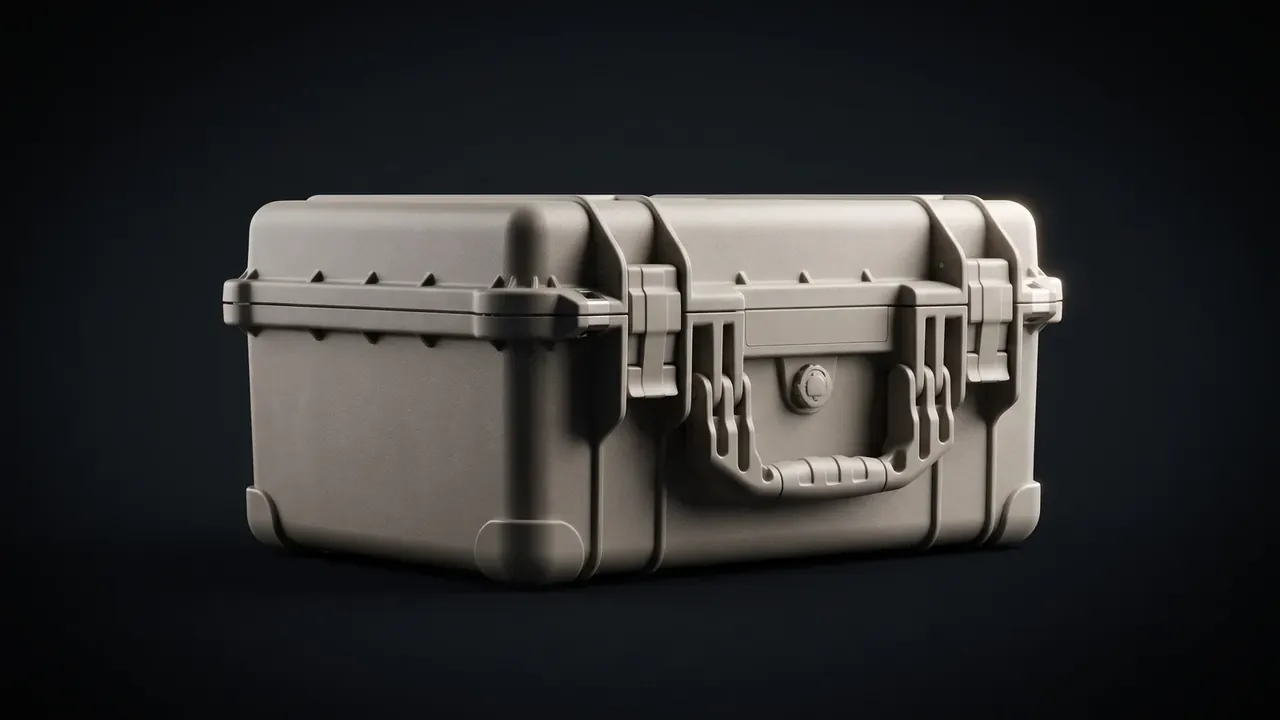
Six compartments put dividers at 4 mm with cells near 82 mm and tolerance of ±1.5 mm, so the insert lands in one piece; nine compartments lose a tenth of usable volume to dividers.
Stacking adds a constraint on every explosive storage case: base and lid bearing faces must line up, or the third tier presses on a rib edge.
3. Wall Thickness Against Rated Load
A 4.0 mm nominal wall, 5.5 mm at corners and a 3.2 mm floor minimum balances mass against stiffness. At 25 kg stacked three high, the bottom case carries 75 kg on corners and handle roots, not the floor panel. Moving to 4.8 mm adds 12 percent weight for under 8 percent more crush resistance.
Load is not a function of wall alone: rib spacing, fillet radius and the handle transition shift the bearing point toward a seam. Read the residual set after 24 hours: sag at the floor centre means a thin wall, corner distortion means the ribs are behind.
4. Static and Flame Clauses for the Contract
A resistance clause without test conditions is not a clause. Write 500 V, three probes (cavity floor, mid wall, inner lid) and a 10⁶ to 10⁹ ohm band at each. Without them, one case reads two orders of magnitude apart in two labs.
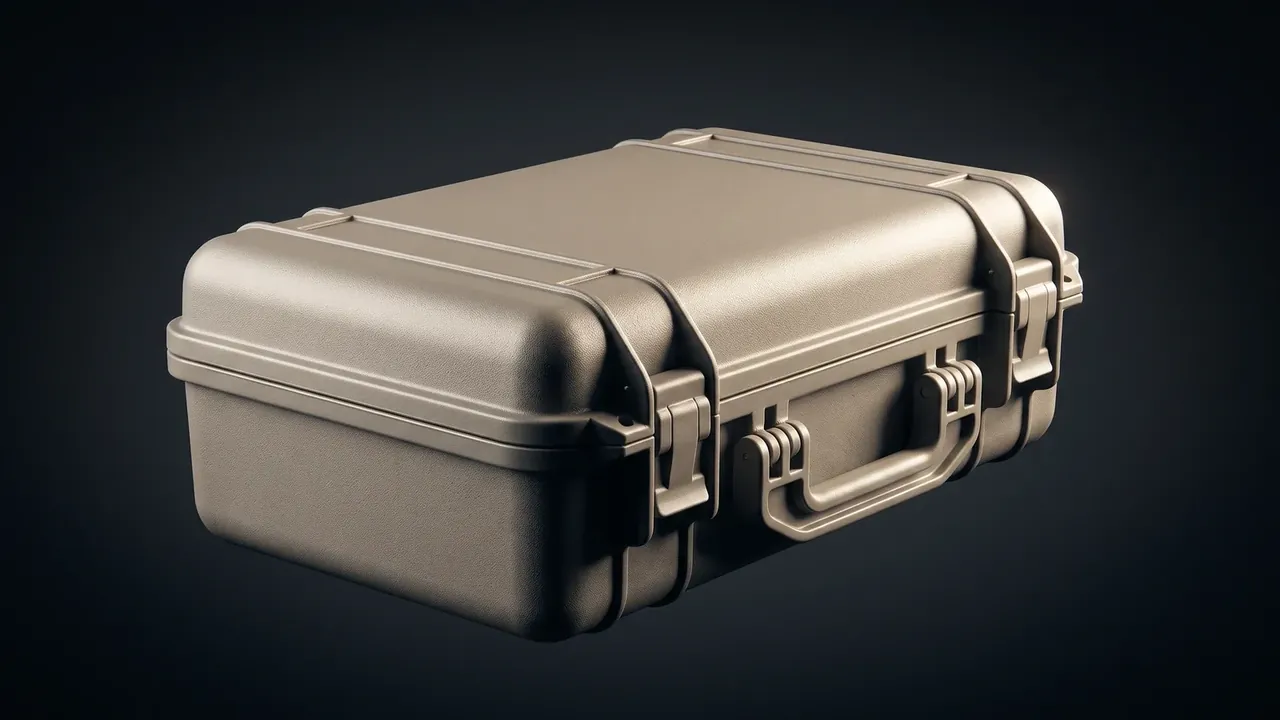
Flame needs three entries: oxygen index of at least 28 percent, UL94 V-0, and glow wire at 750 °C with ignition and extinction times. Sample thickness belongs in the same sentence; ratings do not transfer.
5. Latch Strength and Carry Hardware
Latch data splits into three figures: 480 N holding force per catch, six hinge pins, an 8 mm shackle hole. Each maps to a separate failure, catch pulled open, hinge torn out, shackle sheared, so one strength number hides all three.
| Acceptance item | Value | Method |
|---|---|---|
| Catch | 480 N | Static pull, 60 s |
| Handle | 60 kg | Loaded lift, 10 min |
| Sealing | IP67 | 1 m water, 30 min |
| Cycling | -20 to 60 °C | Five cycles |
Handles follow the action: 60 kg static on a 25 kg load proves the root transition, wheels at 40 kg over 5000 cycles prove the axle mount. Attachments fail at the joint, so load there.
Conclusion
Sizing an explosive storage case means turning carrying, stacking and testing constraints into numbers in that order: loaded weight sets the envelope, contents set the cavity, wall and ribs carry the load, test conditions settle acceptance. A sound document beats a long parameter list: every line can be measured again. The explosive storage case that works is rarely the one with the finest numbers, but the one whose numbers can all be re-tested.
This article discusses only the container (case body) side of specifications and design intent, and does not cover any handling, loading or use of the contents.
Related Reading
- Selection steps and decision order for storage cases
- Compliance clauses a storage case must meet
- Procurement flow from enquiry to final drawing
- Selection points for explosive storage boxes
Related Products
- 8 Series — Gun Cases; Military Equipment Cases; Camera Equipment Cases; Drone Cases; Watch Cases; Knife Cases; First Aid Cases; Electronics Equipment Cases
- WL8-2812 PP Gun Case — model WL8-2812
- All protective cases and toolboxes: 7 series, 158 models