

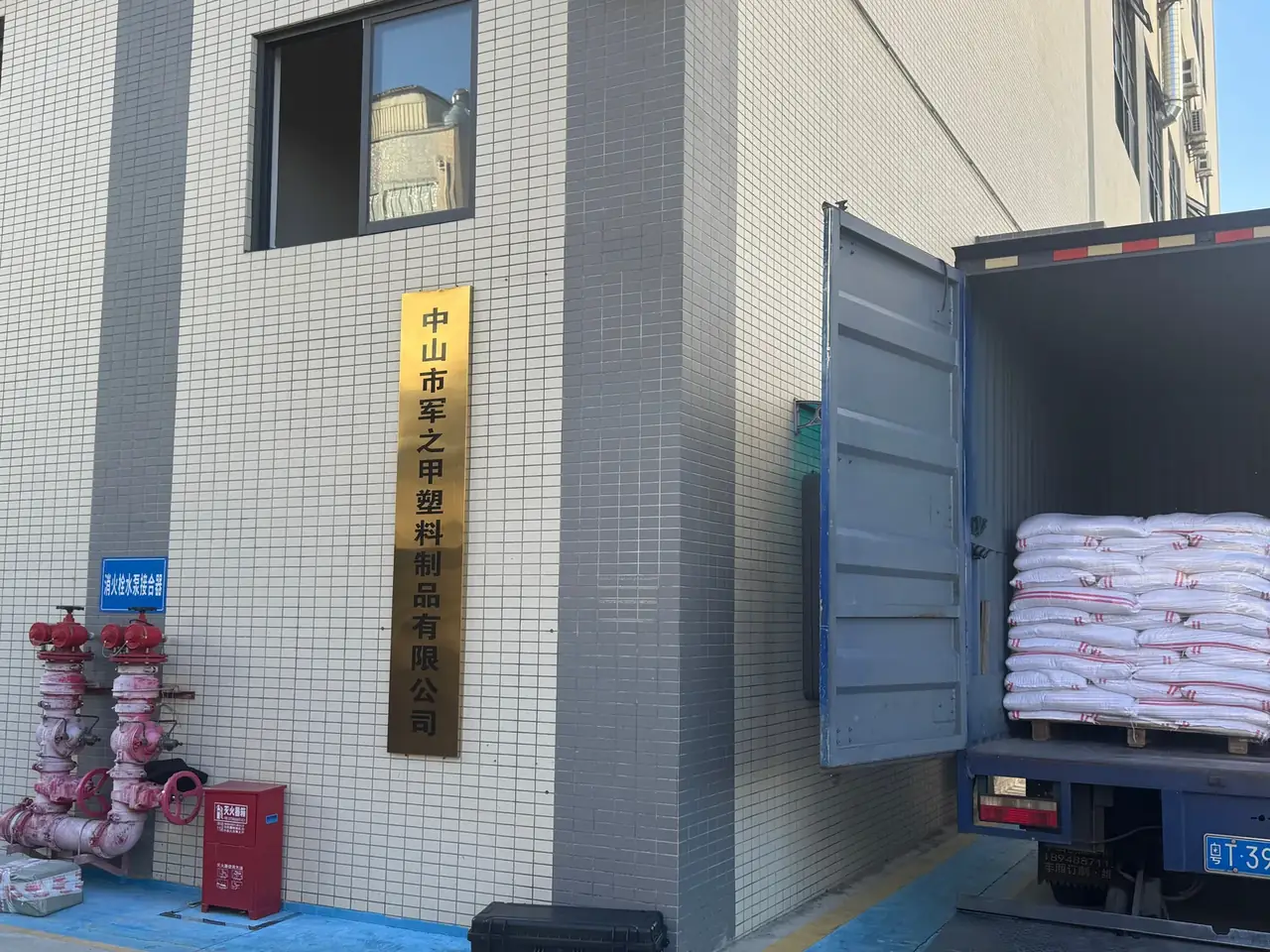
Quick answer: An Extreme temperature resistant military tool case is checked after 4 h at -40 C: a 1.2 m drop keeps corners intact and lid force stays within 55 N.
Table of contents
- Low-temperature embrittlement limits of the Extreme temperature resistant military tool case
- Seal hardness and compression recovery at low temperature
- Corner assessment after a frozen six-face drop
- Measuring points and readings on the lid-opening rig
- Re-inspection sequence after thermal cycling
- FAQ
1. Low-temperature embrittlement limits of the Extreme temperature resistant military tool case
The embrittlement limit measures retained impact toughness after cooling. An Extreme temperature resistant military tool case works from -40 C to 65 C, with low-temperature impact strength governing the corners and the lid frame checked for softening at the high end. Outer size 660 x 470 x 300 mm, cavity 590 x 400 x 235 mm and wall 4.6 mm set section stiffness; an empty 8.4 kg and a rated 15 kg load set the energy the corners absorb. The boundary is drawn from cold-tested specimens, since a room-temperature notched impact figure cannot be extrapolated to -40 C.
| Temperature step | Hold time | Reading taken |
|---|---|---|
| -40 C | 4 h | Corner impact retention and cracking |
| -20 C | 2 h | Seal hardness recovery |
| 25 C | 1 h | Baseline lid-opening force |
| 65 C | 4 h | Lid frame softening |
2. Seal hardness and compression recovery at low temperature
The seal is the most temperature-sensitive part of an Extreme temperature resistant military tool case. The mouth uses a Shore A 55 strip at 24 percent assembled compression, closing the gap for an IP67-method comparison without lifting lid-opening force too high. At -40 C reduced chain mobility drives hardness up and slows recovery, so the strip cannot refill the gap at once. A twin-lip profile splits the risk: the main lip holds static sealing, the secondary lip covers the lag.

Recovery is measured after 4 h at -40 C by opening the lid at once, comparing the recovered strip section with its pre-compression value, and checking the difference against a room-temperature baseline. Keeping it inside the band around 24 percent stops a stiffened strip from jacking the lid frame off the mouth.
| Seal stage | Hardness and compression | Cold-condition focus |
|---|---|---|
| Main mouth lip | Shore A 55 / 24% | Recovery lag and gap |
| Secondary lid lip | Shore A 55 / 18% | Cover during main-lip lag |
| Latch seat pad | Same material as shell | Preload after cold shrinkage |
| Lid compression frame | 4.6 mm wall | Deflection under hardening reaction |
3. Corner assessment after a frozen six-face drop
Freezing and dropping must run together. An Extreme temperature resistant military tool case is conditioned 4 h at -40 C, then dropped 1.2 m onto six faces within a fixed window; corners must not crack and the shell must not show a through-crack. The window matters because the surface warms fast once the box leaves the chamber. The order runs base, lid, two long sides and two short sides, with the shared corner edges drawing most attention.
The criterion concerns the box alone: no corner crack, no latch release, no lid pop-open.
The mouth seal is checked against the IP67 dust and water method, and a 72 h salt-spray run looks for corrosion at latch seats and hinges; neither replaces the cold drop. A rigid floor and a 15 kg ballast at the cavity centre keep corner loading reproducible.
4. Measuring points and readings on the lid-opening rig
Lid-opening force is the clearest cold usability figure. The Extreme temperature resistant military tool case caps it at or below 55 N: after 4 h of freezing, a steady lift at the lid front-edge mid-point must log a peak under that value. Behind the cap sits the sum of seal hardness and latch preload.
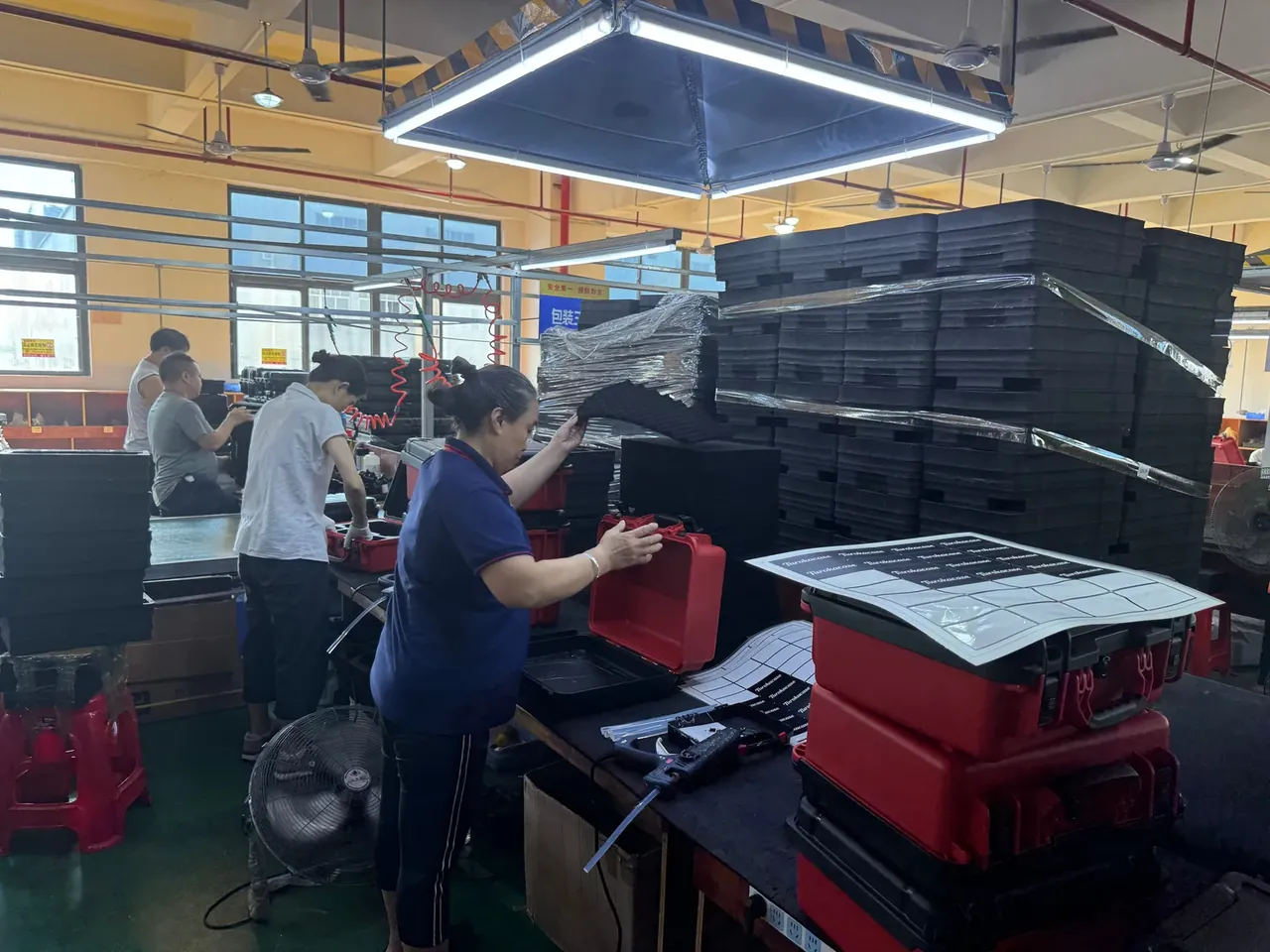
The rig gauges the front-edge mid-point and two latch positions, then envelopes the three peaks. Latches are released in diagonal order; any cold decay in the 450 N per-unit holding force shows first as scatter. The lid is re-measured 20 min after closing to see the force fall back as the seal recovers.
| Force reading | Gauge position | Acceptance rule |
|---|---|---|
| Lid-opening <=55 N | Front-edge mid-point | Single peak within cap |
| Latch 450 N | Four corner latch seats | Per-unit holding floor |
| Return difference | 20 min after closing | Force decay after recovery |
5. Re-inspection sequence after thermal cycling
A single frozen drop describes one batch at one moment; thermal cycling shows the fatigue trend. The Extreme temperature resistant military tool case is cycled 20 times between -40 C and 65 C, holding at each end until the shell section is uniform rather than timing by air temperature. Inspection starts with appearance, looking for shell micro-cracks and lid-frame warp. The seal comes next, with compression compared against the 24 percent baseline, since hardening or poor recovery appears there first. Lid-opening force is re-measured to confirm the peak still sits within 55 N and scatter has not grown. A sampled 1.2 m drop follows, focused on corners, because post-cycle embrittlement is cumulative. Latches are checked last, with the 450 N holding force, clearance and opening feel back in their original bands.
Compression and force are judged in one round so a pass on one cannot mask drift on the other. The 72 h salt-spray and IP67-method results are filed as background, and JUNZHIJIA follows this order in outgoing inspection.
Conclusion
Cold reliability in the Extreme temperature resistant military tool case rests on retained impact strength, seal hardness and lid-opening force. A 1.2 m six-face drop with intact corners after 4 h at -40 C, plus an opening force within 55 N, are two measurable lines; the re-inspection order after 20 thermal cycles keeps them steady between batches. JUNZHIJIA builds its shell-side specification around these readings.
Related Reading
- Thermal cycling from -40 C to 70 C and case readings
- Verifying an IP67 working temperature range
- Corner cracking criteria in cold drop tests
- Seal ageing and compression recovery checks
Related Products
- 8 Series — Gun Cases; Military Equipment Cases; Camera Equipment Cases; Drone Cases; Watch Cases; Knife Cases; First Aid Cases; Electronics Equipment Cases
- WL8-2812 PP Gun Case — model WL8-2812
- All protective cases and toolboxes: 7 series, 158 models