

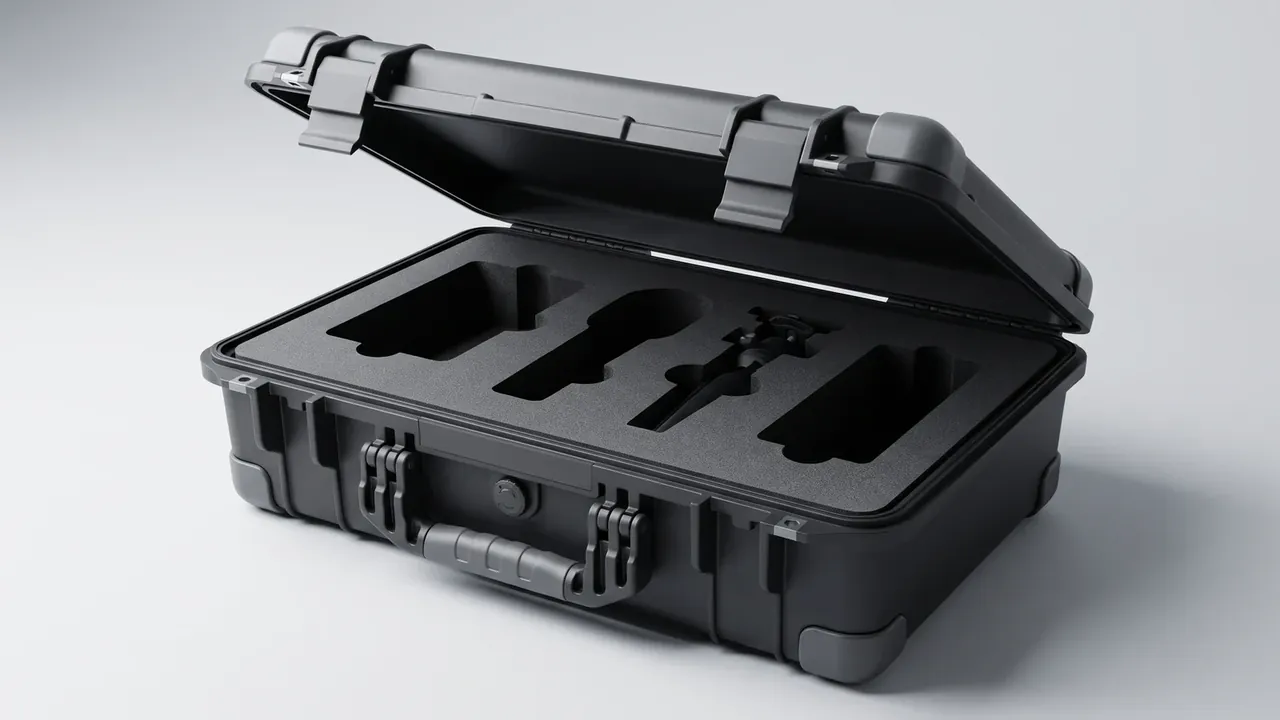
Quick answer: A fiber optic splice plastic case is chosen on five measurable points: tray bending radius, gasket compression, latch and drop behaviour, foam retention, and price against the installation window. All five can be checked on a sample in an afternoon.
Table of contents
- Fiber Optic Splice Plastic Case: Start With Bend Radius
- Seal Compression and Air Pressure Test
- Latch Count and Drop Height
- Foam Inserts That Hold the Splice Trays
- Cost, Lead Time and What to Trade
- FAQ
1. Fiber Optic Splice Plastic Case: Start With Bend Radius
A fiber optic splice plastic case is judged first on its slack tray radius, not wall thickness. Single-mode fibre is coiled at 30 mm; G.657 allows 15 mm, but splice slack is still coiled at 30 mm. A tighter tray loads the fibre permanently.
Coil a real pigtail in the sample, measure it, add 20 mm of clearance, keep a 5 mm gap to the lid foam, and pick the tray from the fibre count, not the shell.
| Tray diameter | Slack capacity | Fibre count | Typical use |
|---|---|---|---|
| 120 mm | 3.5 m | 12 | Drop cable entry |
| 180 mm | 8 m | 24 | Floor distribution |
| 240 mm | 14 m | 48 | Branch backbone |
| 300 mm | 22 m | 72 and above | Room termination |
2. Seal Compression and Air Pressure Test
Gasket compression decides whether the case is watertight. Nitrile and silicone seals run at 40 to 50 Shore A: below 20% it never seats, above 35% it takes a set.
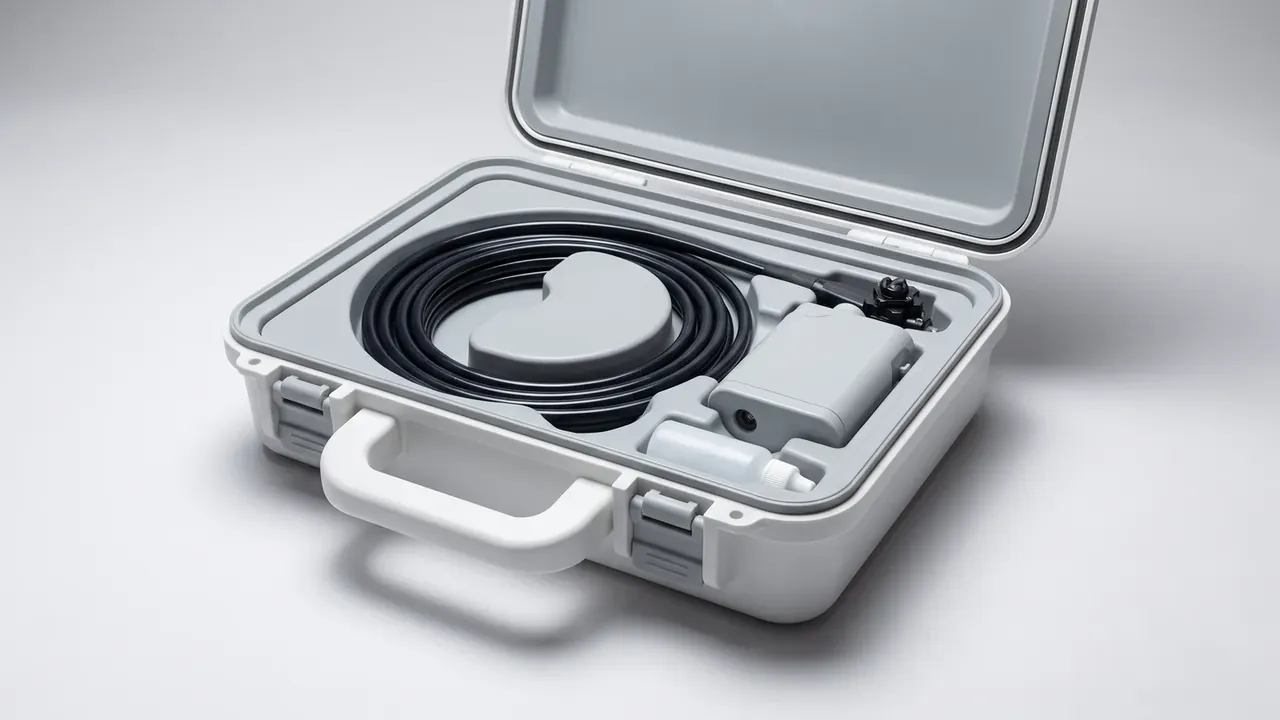
Inflate the closed fiber optic splice plastic case to 30 kPa, hold 60 seconds, accept a drop under 1 kPa. Ports, latch seats and handle bosses leak most, since each puts a hole in the wall. Retest at -20 °C after 4 hours, while the gasket is stiff.
3. Latch Count and Drop Height
Latch count follows case length: below 600 mm two latches at 150 N hold the lid flat, past that four share the load at 110 N.
Drop at 1.2 m onto six faces, then check lid shift beyond 1 mm, latches that opened, and corner cracks; an 8 mm radius resists it better.
| Latches | Pull force each | Lid shift after drop | Case length |
|---|---|---|---|
| 2 | 150 N | 0.6 mm | Under 600 mm |
| 2 plus centre catch | 130 N | 0.9 mm | 600 to 800 mm |
| 4 | 110 N | 0.4 mm | Above 800 mm |
4. Foam Inserts That Hold the Splice Trays
Inside the fiber optic splice plastic case, trays, sleeves and tools each need a pocket, or movement in transit pulls finished splices apart. EVA at 30 kg/m³ or PE at 35 kg/m³ works, cut 1 mm undersize so interference holds the part.
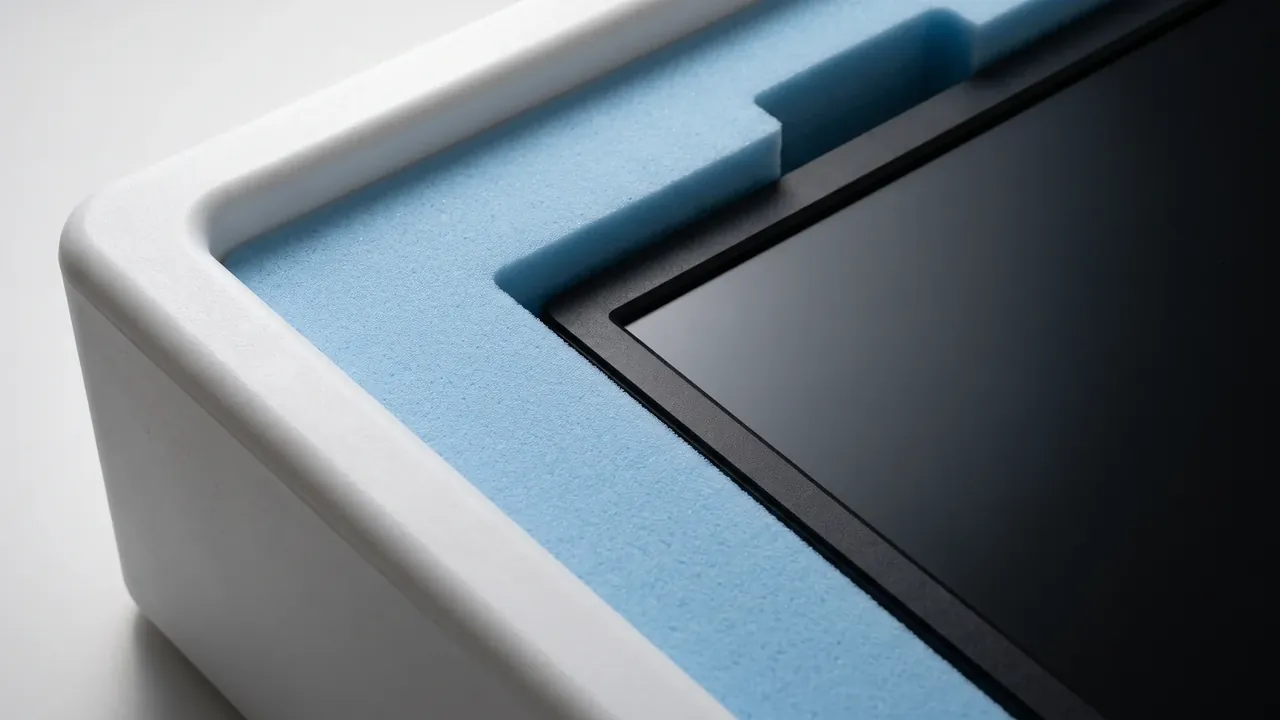
Routed from one block, pocket tolerance holds at plus or minus 0.5 mm, suiting a splicer or OTDR. A laminated stack costs 30% less but opens along the glue line. The lid pad compresses the foam about 20%.
5. Cost, Lead Time and What to Trade
A 30% spread between quotes is normal, driven by wall, insert process and tooling. Moving from 3.0 mm to 3.5 mm adds 12% to material, and 80 kg on the lid for 24 hours sags a 3.0 mm shell over 2 mm.
Existing tools ship in 20 days; a new tool adds 25 to 30 days. With a fixed window, take a slightly thinner standard case rather than betting on a mould.
| Check | Tool | Pass value | Time |
|---|---|---|---|
| Tray radius | Tape measure | 30 mm minimum | 2 minutes |
| Air pressure | Pump and gauge | 30 kPa held 60 s, drop under 1 kPa | 15 minutes |
| Latch pull | Force gauge | 110 N minimum | 8 minutes |
| Foam pocket | Calipers | 1 mm smaller than the part | 6 minutes |
Conclusion
The decision comes down to five numbers measurable on a sample: tray radius, gasket compression, latch and drop result, foam retention, and price against lead time. The first four decide whether the box works; the fifth decides whether the project lands on schedule. That is the whole method behind specifying a fiber optic splice plastic case.
This article discusses only the container (case body) side of specifications and design intent, and does not cover any handling, loading or use of the contents.
Related Reading
- Electronic equipment cases in test and field work
- Sealing and test standards for waterproof hard cases
- Specifications and tolerances for custom foam inserts
- How to choose a protective case size
Related Products
- 8 Series — Gun Cases; Military Equipment Cases; Camera Equipment Cases; Drone Cases; Watch Cases; Knife Cases; First Aid Cases; Electronics Equipment Cases
- WL8-2812 PP Gun Case — model WL8-2812
- All protective cases and toolboxes: 7 series, 158 models