

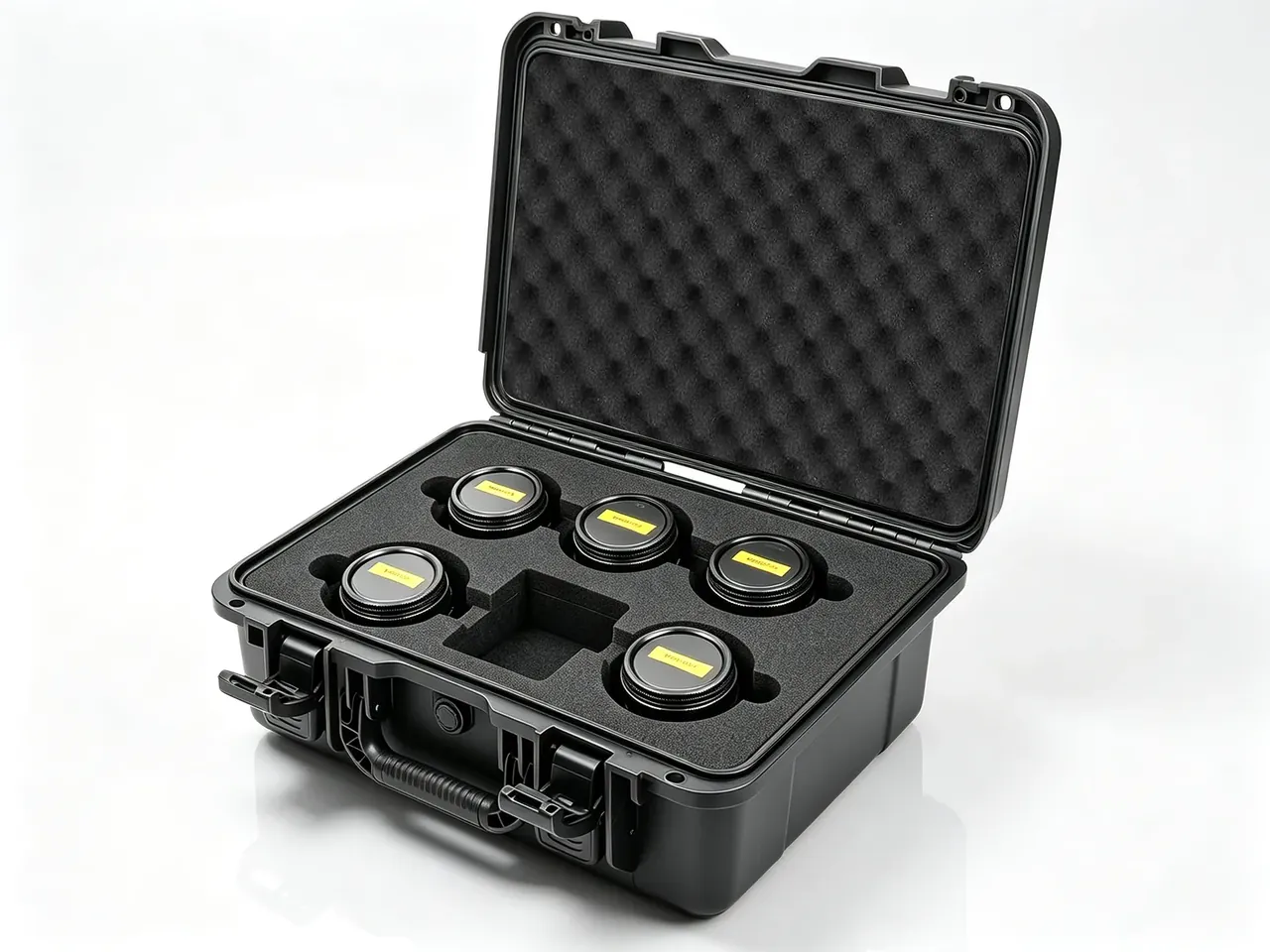
Quick answer: Case field airtight test needs 0.3 kPa, a 60 s hold and a 0.05 kPa drop or less, and runs on a hand pump with a 0.25 class gauge.
Table of contents
- Where the 0.3 kPa and 60 seconds come from
- Reading a 60 s hold against a 0.05 kPa drop
- When there is no air supply: three substitutes
- Vacuum at −20 kPa and 5 mL/min to locate a leak
- The three repair points inside 15 minutes
- FAQ
1. Where the 0.3 kPa and 60 seconds come from
The bench gauge reads 0 to 10 kPa, one division per 0.05 kPa. At 0.3 kPa the needle sits on the sixth division and stays legible; at 0.1 kPa it sits on the second, where reading error eats half the criterion. That is why case field airtight test starts at 0.3 kPa.
The conversion is clean too: 30 mm of water equals 0.3 kPa, so a clear hose filled to 30 mm is a gauge when none is at hand. The 60 second hold follows line rhythm, since one retest takes four minutes and at 180 s a crew never clears 40 cases in a shift.
The threshold is back-calculated. A 25 L interior holds 74 mL of extra air at 0.3 kPa, so a 0.05 kPa drop equals 12 mL, or 12 mL/min across the minute. The figure is an equivalent leak rate, not a round number.
2. Reading a 60 s hold against a 0.05 kPa drop
Pressurise to 0.3 kPa, wait 10 seconds, then start the clock; those seconds let hose and case equalise, and skipping them turns settling into apparent leakage. Record the start value and the 60 second value only. The needle hunts ±0.01 kPa, and staring at it invents a trend.
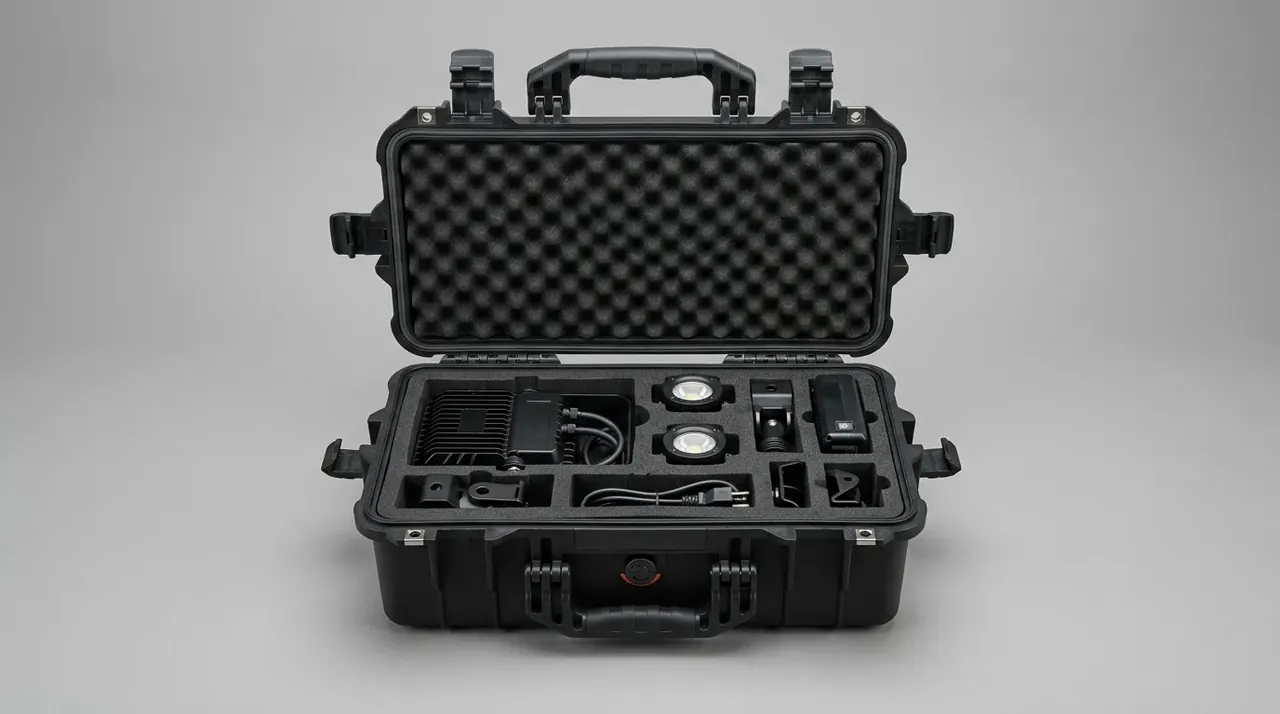
Temperature is the largest field disturbance. A case moved from a 5 °C store into a 25 °C shop warms, its air expands, and pressure creeps 0.006 kPa per 10 °C within the minute, the same order as the criterion. Soak two hours until the shell sits within 2 °C of ambient.
| Shell-to-ambient difference | Apparent rise in 60 s | Field correction |
|---|---|---|
| 0 °C | 0 kPa | Read directly |
| 5 °C | 0.003 kPa | Raise start pressure by 0.003 kPa |
| 10 °C | 0.006 kPa | Raise start pressure by 0.006 kPa, or soak longer |
| 20 °C | 0.012 kPa | Stop, soak 2 hours, restart |
Touching the shell is the quickest rough check: colder than the palm means the case has not settled and the reading stays out of the log. Hose length counts too, since a 1 m hose holds 30 mL, 0.12 percent of a 25 L interior, so crews standardise on 0.5 m.
3. When there is no air supply: three substitutes
A compressor is usually missing on site. A hand pump, a hand vacuum pump and a water column each let case field airtight test produce a judgeable reading, with accuracy falling in that order.
The hand pump is the general tool: nozzle on the relief port, a three-way valve and a 0.25 class gauge in line, then 8 to 12 strokes to 0.3 kPa. Output is pulsed, so a 20 mL buffer bottle on the third leg settles the needle.
The vacuum pump reverses direction. Draw to −20 kPa, close the valve, wait 30 seconds and accept 1 kPa of rebound; it reaches failure modes that pressure cannot. Both directions need a seal, a 2 mm silicone square spring-clipped over the port, since a curled patch falls to zero in 10 seconds.
The water column is crude and dependable: 30 mm in a clear hose, 60 seconds, a fall of 5 mm or less, since 5 mm of water is about 0.05 kPa.
| Method | Equipment | Pressure reached | Resolution | Where it fits |
|---|---|---|---|---|
| Hand pump | Pump, three-way valve, gauge, 20 mL buffer | 0.3 kPa positive | 0.01 kPa | Shop bench |
| Hand vacuum pump | Vacuum pump, gauge, seal patches | −20 kPa negative | 0.5 kPa | Checking rim seating |
| Water column | 0.5 m clear hose, rule, water | 0.3 kPa static | 1 mm of water | Outdoors, no power |
Readings cannot be compared across methods: a hand pump may show 0.04 kPa where the column shows 6 mm, since a column has no buffer volume.
4. Vacuum at −20 kPa and 5 mL/min to locate a leak
Vacuum reverses seating. Pressure pushes the lid out and the gasket against the groove wall; vacuum pulls the lid in and draws the gasket toward the mouth. Each direction catches half the failure modes, so pressure passes or fails the case and vacuum finds where.
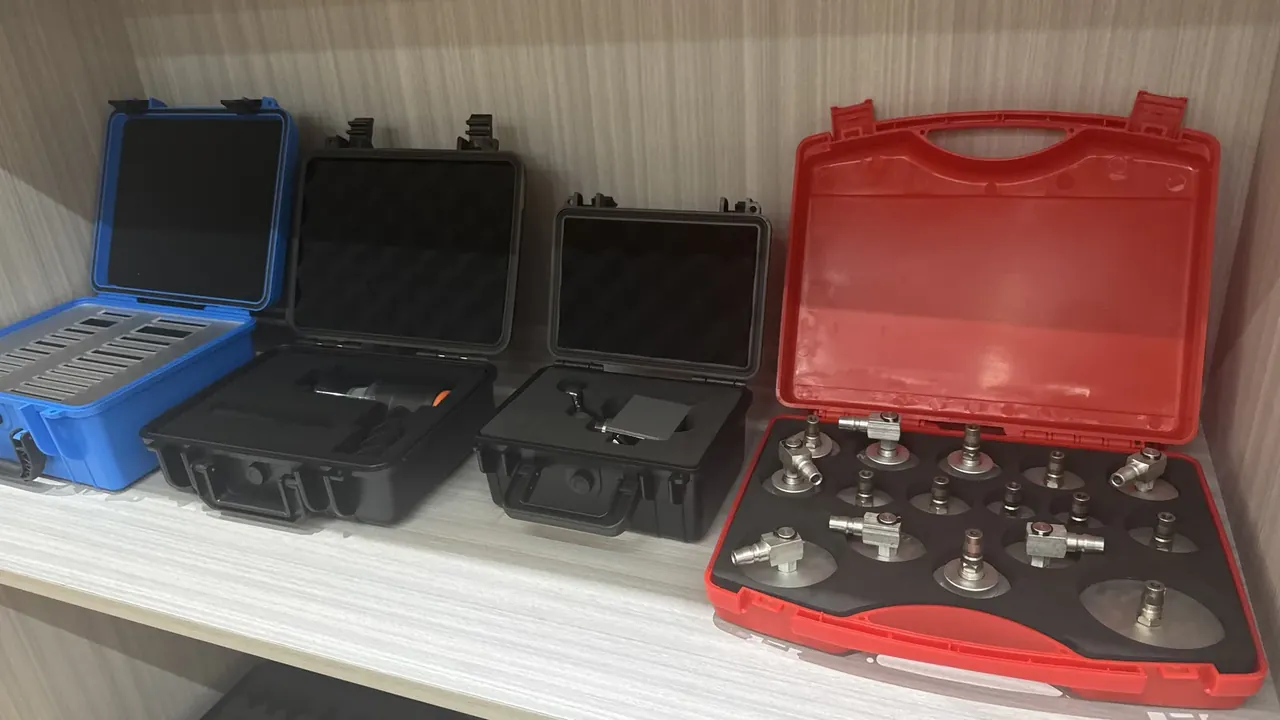
Draw to −20 kPa, close the valve, watch for 30 seconds. A rebound above 3 kPa means one spot along the rim is not seated; a reading that stays under −10 kPa puts the leak at the valve or a latch.
Locating is a flow question. A 5 mL/min leak loses 5 mL a minute, invisible on the gauge but visible in soap, where a 2 mm bubble forms about every 10 seconds. A 5 percent dish soap solution works; a clean 20 seconds rules a spot out.
Segment isolation narrows the search. Mask both latches and the valve with 50 mm tape, retest after each, and the mask that changes the drop most holds the main leak. Three masks take 6 minutes, less than stripping a case.
5. The three repair points inside 15 minutes
A failed reading does not call for new parts. Ranked by frequency: a gasket rolled from its groove at 6 minutes, a flattened valve O-ring at 5, an offset latch seat at 4. Fifteen in total.
Lift the gasket loop out, clean the groove, press it back, then run a finger round the channel, where a bump means it is not seated. Fit the same O-ring size and tighten to 1.2 N·m. Loosen the latch seat at two screws, push it flush with the shell, retighten.
| Point | Typical failure | Action | Time | Retest |
|---|---|---|---|---|
| Gasket | Rolled in groove, local lip | Lift out, clean, reseat | 6 min | 0.3 kPa positive |
| Relief valve | O-ring flattened, core sticking | New O-ring, 1.2 N·m | 5 min | −20 kPa vacuum |
| Latch | Seat offset, low clamping | Loosen, align, retighten | 4 min | Positive test, 3 cycles |
Order cannot be reversed. A retest only says pass or fail; a repair has to say where, and one vacuum check often avoids a full gasket replacement. Retest within 10 minutes, while the new gasket settles.
Conclusion
Whether a site can run case field airtight test is a question of a closed loop, not of equipment. Confirm the shell is within 2 °C of ambient, fit a 0.5 m hose, pressurise to 0.3 kPa, hold 10 seconds, then pass the case at 0.05 kPa or less. Over the line, retest under −20 kPa; if the rebound passes 1 kPa, mask the ports in stages and back-calculate at 5 mL/min.
The decision table runs to three rows, and those rows settle three things: the criterion is not fooled by temperature, the leak is not fooled by pressure, the repair is not fooled by habit.
This article discusses container-side specifications and design implications only, and does not cover any handling, loading or use of the contents.
Related Reading
- Air leak test by pressure drop: reading the result
- Pressure decay method step by step
- When to replace a case gasket: compression, not age
- Can a case latch be replaced on its own
Related Products
- 8 Series — Gun Cases; Military Equipment Cases; Camera Equipment Cases; Drone Cases; Watch Cases; Knife Cases; First Aid Cases; Electronics Equipment Cases
- WL8-2812 PP Gun Case — model WL8-2812
- All protective cases and toolboxes: 7 series, 158 models