

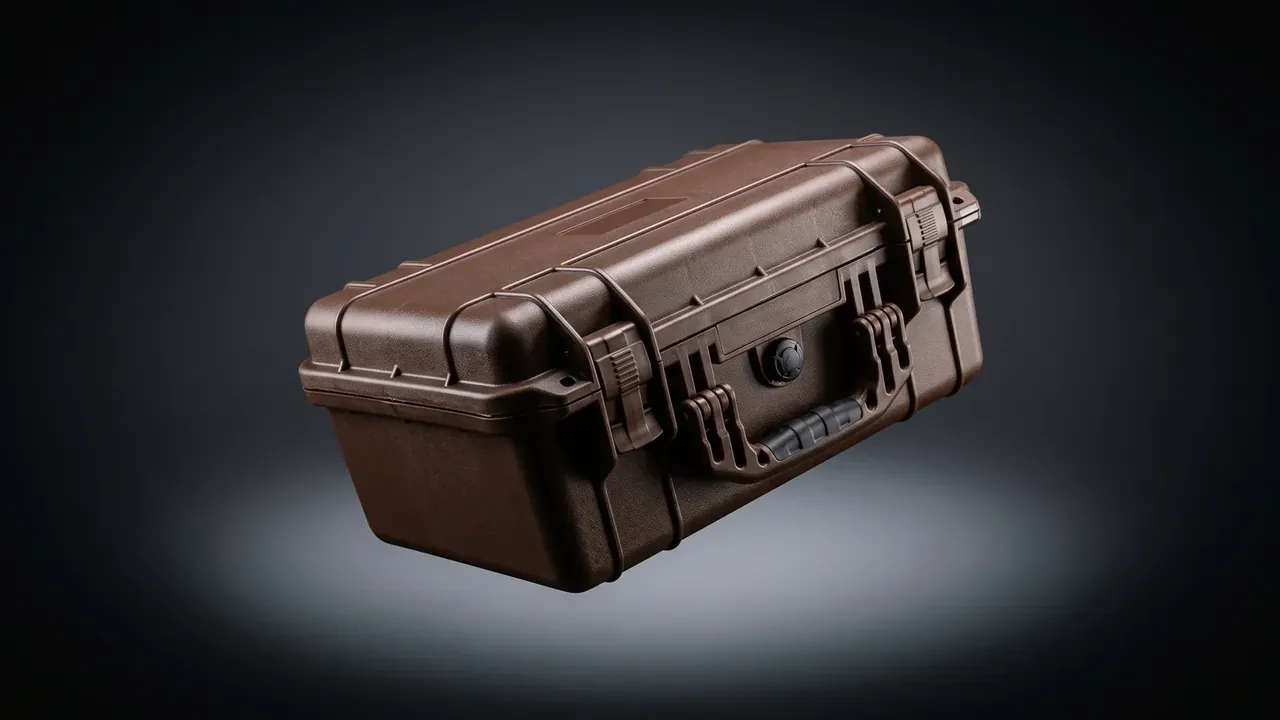
Quick answer: A Field Armoury wins nothing outright: 97 kg lighter than a fixed steel cabinet and ten times quicker to move, at the cost of prying time falling from five to two minutes.
Table of contents
- What a Field Armoury Is Measured Against
- Protection and Theft Resistance: Where the Gap Sits
- Mobility: Weight, Strip-Down and Transfer Cost
- Environment: Temperature, Humidity, Salt Spray, Dust
- Capacity, Upkeep and the Verdict
- FAQ
1. What a Field Armoury Is Measured Against
Set a Field Armoury beside its alternatives and the comparison collapses into plate thickness. Five measurable lines say more: prying time, sealing and immersion, weight and transfer labour, temperature and salt spray, five-year cost.
| Option | Hand tools | Sealing | Weight | Volume | 5-year cost |
|---|---|---|---|---|---|
| Fixed steel cabinet | 5 min plus | no damp control | 118 kg | 90 L | 6400 |
| Timber cabinet | 1 min | none | 42 kg | 120 L | 3800 |
| Tool chest | 30 s | none | 16 kg | 60 L | 2650 |
| Soft bag | no lock | scuff | 2.4 kg | 45 L | 1560 |
| Field Armoury | 2 min | IP67 | 21 kg | 108 L | 2950 |
The lines do not add up: steel leads one by double and trails another tenfold; the bag reverses that. This unit sits mid-way, first in nothing and last in nothing, priced between a tool chest and steel.
2. Protection and Theft Resistance: Where the Gap Sits
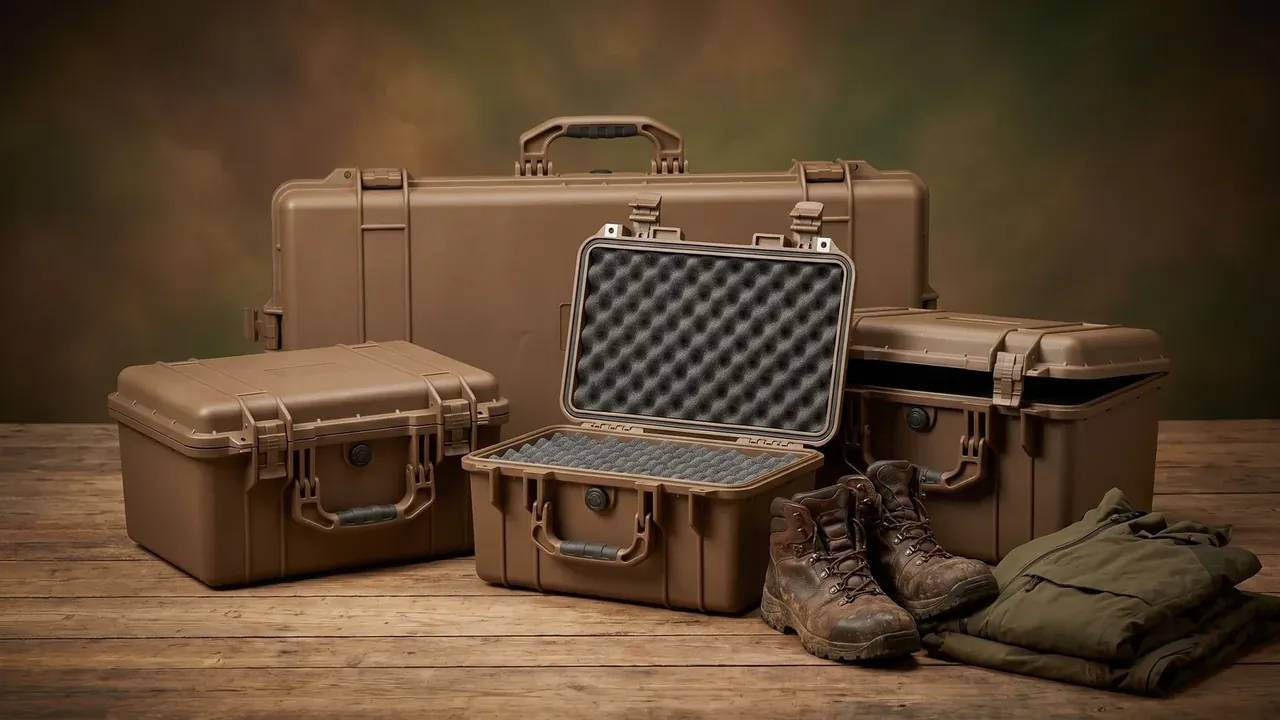
A fixed steel cabinet resists through 1.5 mm cold-rolled plate and three bolts behind the door, spreading load into the frame; a pry bar needs five minutes. The shell of a Field Armoury is rotomoulded polyethylene at 6 mm, worth two, but its lock points avoid thin areas, so it still locks after entry.
Timber fails at the fixing: four screws into 18 mm plywood, and one kick takes the lock seat with the chips. A 0.8 mm tool chest rolls its edge in thirty seconds; a bag has a zip.
Damp is the second line: steel rusts above 60 percent humidity, 480 hours of salt spray is the divider, plywood at 12 percent moisture grows mould in 30 days, and IP67 costs a gasket pressed home.
3. Mobility: Weight, Strip-Down and Transfer Cost
At 118 kg a steel cabinet needs three people, a pallet truck and the anchors cut out, ninety minutes per transfer. At 21 kg a Field Armoury goes store to truck in eight minutes with one person.
Six shelves and dividers come out in four minutes and stack a third lower; steel internals are welded in. Timber at 42 kg lifts two-handed but swells after a wet season.
4. Environment: Temperature, Humidity, Salt Spray, Dust
The unit runs from minus 40 to 70 °C without embrittling. Steel loses impact toughness at minus 20 °C and the door gasket hardens before the plate does.
Plywood deforms at 85 percent humidity within 15 days. Steel shows red rust at 480 hours; this unit passes clean but fades at 18 months under UV. Dust punishes the seal, so the face is wiped before each opening.
5. Capacity, Upkeep and the Verdict
Capacity means usable volume: steel 90 L, timber 120 L, tool chest 60 L, bag 45 L, this unit 108 L. Timber is largest and 300 mm deep, so nothing long fits; 380 mm depth stands a 700 mm item upright. Upkeep runs by replacement, from two touch-ups a year to one gasket at eighty.
| Option | Purchase | Moving, 5 years | Upkeep, 5 years | Total |
|---|---|---|---|---|
| Fixed steel cabinet | 4200 | 1900 | 300 | 6400 |
| Timber cabinet | 1800 | 600 | 1400 | 3800 |
| Tool chest | 900 | 400 | 1350 | 2650 |
| Soft bag | 260 | 0 | 1300 | 1560 |
| Field Armoury | 2600 | 200 | 150 | 2950 |
The verdict splits by use: fixed and theft-first, steel; three transfers a year with rain and dust, this unit; indoor storage on a budget, a tool chest; a bag only when carried.
Conclusion
Each alternative wins one line: steel prying, timber volume, tool chest price, bag weight. A Field Armoury wins none and still reaches usable on all five, which is how it replaces steel on the move and a tool chest in the rain. Pick the line you cannot concede, then check the margin left for a Field Armoury.
This article discusses only the container (case body) side of specifications and design intent, and does not cover any handling, loading or use of the contents.
Related Reading
- How a field armoury is built and how it sits on site
- Capacity, locking and mobility when choosing
- Military firearm storage cases against the alternatives
- Metal tool chests against the alternatives
Related Products
- 8 Series — Gun Cases; Military Equipment Cases; Camera Equipment Cases; Drone Cases; Watch Cases; Knife Cases; First Aid Cases; Electronics Equipment Cases
- WL8-2812 PP Gun Case — model WL8-2812
- All protective cases and toolboxes: 7 series, 158 models