


Quick answer: Keep a Field Armoury serviceable by measuring five slow variables on weekly, quarterly and annual cycles: locks and access records, hinge pin clearance, gasket and desiccant state, rack distortion, body corrosion. Each one gets a gauge and a replacement limit.
Table of contents
- How Often a Field Armoury Should Be Inspected
- Locks, Hasp and Access Records
- Hinges, Pin Clearance and Door Sag
- Gaskets, Desiccant and Dry-Air Modules
- Corrosion, Rack Distortion and Scrapping Limits
- FAQ
1. How Often a Field Armoury Should Be Inspected
A cabinet fails in stages: gasket first, then half a millimetre of hinge drop, then a door lifted to reach the third lock point. A Field Armoury inspection sheet cuts that drift into intervals, each asking: is this item inside its limit?
Weekly is the user's, five minutes, exceptions only. Quarterly is the stores team's, with feeler gauge, rule and hygrometer, filed for 24 months. Annual is part level, ending in a keep-or-replace verdict.
| Cycle | Main items | Gauges |
|---|---|---|
| Weekly | door swing, lock engagement, condensation | torch, eyes |
| Quarterly | pin clearance, bolt travel, humidity | feeler gauge, rule |
| Annual | torque, rust, deflection | torque wrench, ultrasonic gauge |
2. Locks, Hasp and Access Records
Locks are the most handled part of a Field Armoury and lose accuracy first. Three-point closure pairs two bolts with a central lock; bolt travel is 18 mm, frame engagement 12 mm, or a pry bar wins while the lock still tests fine.
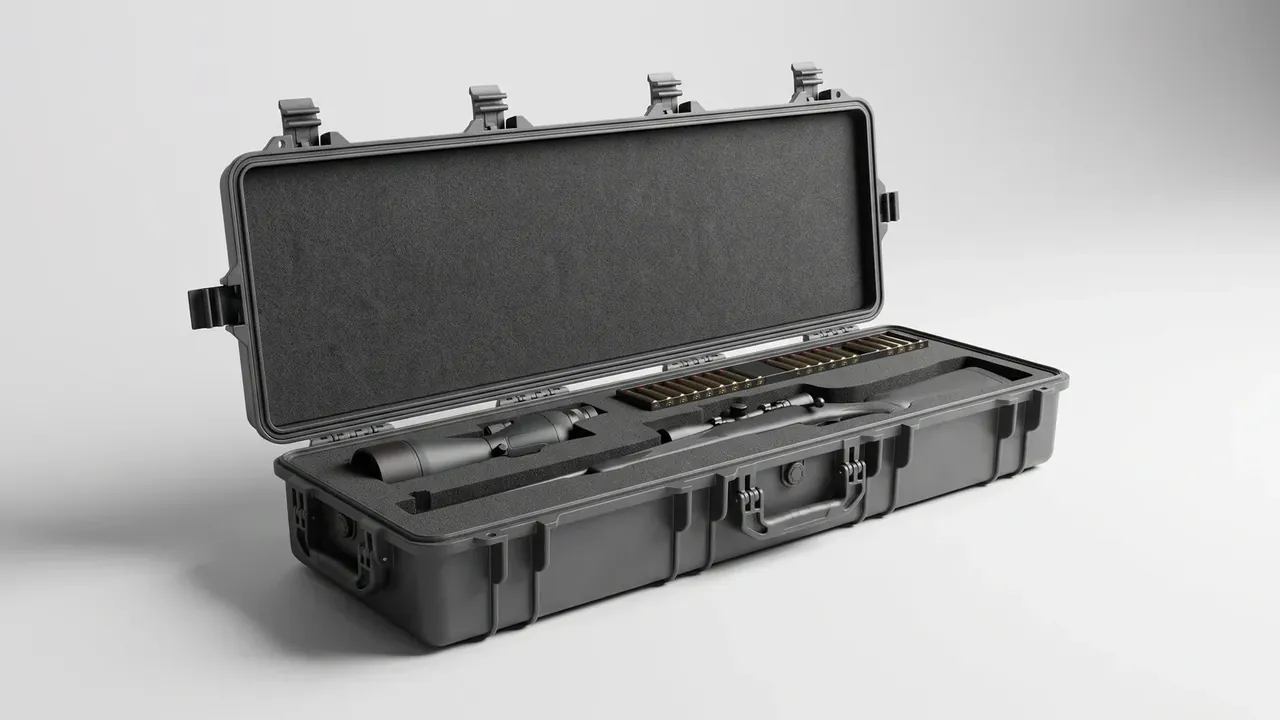
An 11 mm hasp eye takes a 10 mm shackle with a millimetre of slack, so the lock still opens after corrosion.
Access records are maintenance: a key log kept 24 months, an electronic log exported every 30 days. After 300 openings at one point, 1.5 mm of lost bolt travel calls for adjustment.
Replacement limits: any failed lock point, key force above 30 N, a sluggish bolt return.
3. Hinges, Pin Clearance and Door Sag
Pin clearance decides alignment. A new Field Armoury runs 0.3 to 0.5 mm per side, enough for the door to seat under its own weight; past 1.2 mm it needs a nudge, and past 2 mm the bore is oval and the hinge pair goes.
Sag is read 1 m up the free edge, before and after lifting: above 3 mm it is hinge drop, not gasket. Screws are M8 at 22 N·m, and one that lost 15 percent is replaced rather than retightened, or the threaded seat pulls out of the frame.
4. Gaskets, Desiccant and Dry-Air Modules
Judge the gasket of a Field Armoury by compression set: a sample compressed 30 percent for 24 h that recovers below 80 percent is finished. Hardness follows, a 65 Shore A strip reading above 75 A with no spring left in it.
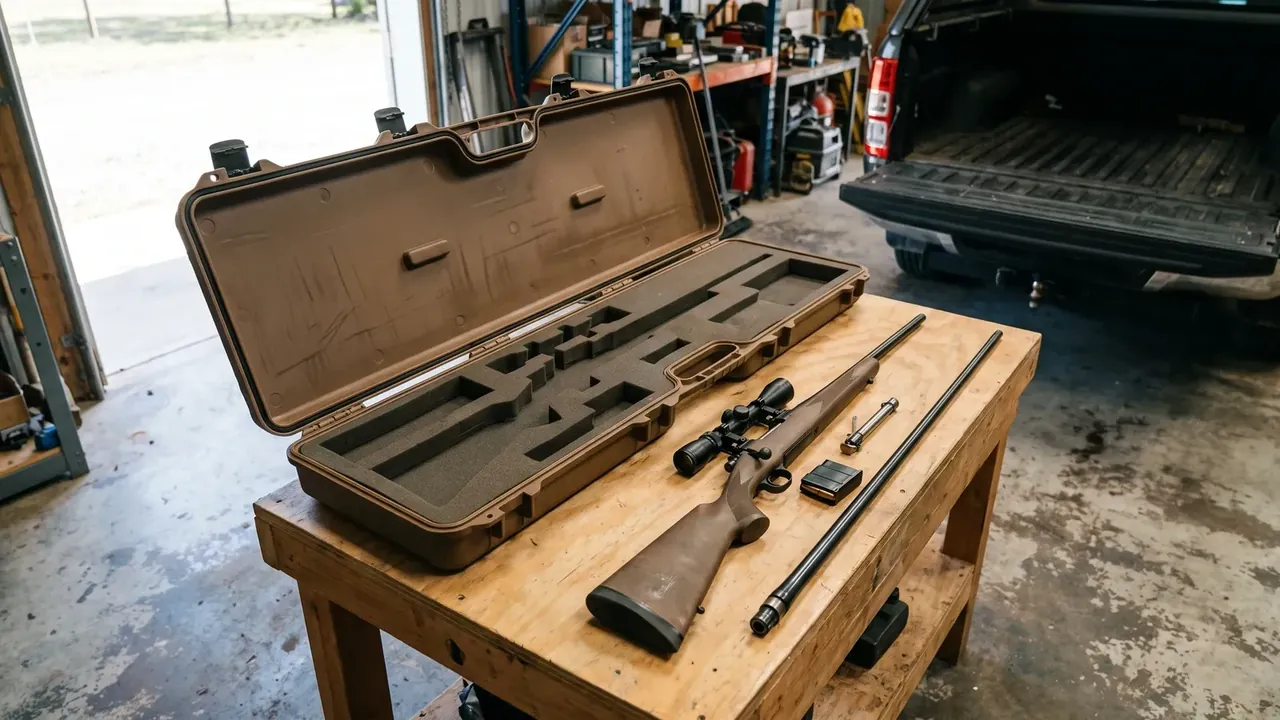
The dryer follows the humidity record. Above 60 percent RH for 72 hours, check the gasket first and the vent filter second. Silica gel regenerates at 120 °C for 2 h at 25 percent moisture, 8 cycles a batch.
Vent and dryer are separate duties: the filter changes every 6 months, every 3 in dust.
5. Corrosion, Rack Distortion and Scrapping Limits
Rust on a Field Armoury starts where coating breaks. A spot above 25 mm², or rust over 0.5 percent of the surface, is ground back and recoated; a pit past 0.3 mm needs a thickness reading. Below 80 percent of nominal, 2.0 mm down to 1.6 mm, a panel is no longer structure.
A shelf loaded for 72 h is read at mid-span: past span/200, 3 mm on a 600 mm shelf, it has yielded. Column straightness above 6 mm out of 1 m means the body is out of square.
| Part | Method | Scrap limit |
|---|---|---|
| Panel | ultrasonic, 5 points per face | under 80 percent nominal |
| Shelf | loaded 72 h, mid-span | over span/200, 3 mm at 600 mm |
| Column | 1 m rule on the face | above 6 mm |
| Floor anchor | torque recheck | M10 under 40 N·m, stripping |
An M10 anchor goes in at 45 N·m, rechecked yearly; a 10 percent loss is retightened, a spinning anchor relocated.
Conclusion
Lock records show who opened what, pin clearance shows whether the door still lines up, gasket recovery shows whether dryness holds, rust and deflection show how much body is left. Put those readings on weekly, quarterly and annual sheets and a replacement stops being an argument, so one shift can hand Field Armoury maintenance to the next.
This article discusses only the container (case body) side of specifications and design intent, and does not cover any handling, loading or use of the contents.
Related Reading
- What a field armoury is and where the cabinet boundary sits
- Choosing a cabinet by capacity, locking and mobility
- How to read specification figures for a weapon storage cabinet
- Routine maintenance points for a war reserve case
Related Products
- 8 Series — Gun Cases; Military Equipment Cases; Camera Equipment Cases; Drone Cases; Watch Cases; Knife Cases; First Aid Cases; Electronics Equipment Cases
- WL8-2812 PP Gun Case — model WL8-2812
- All protective cases and toolboxes: 7 series, 158 models