

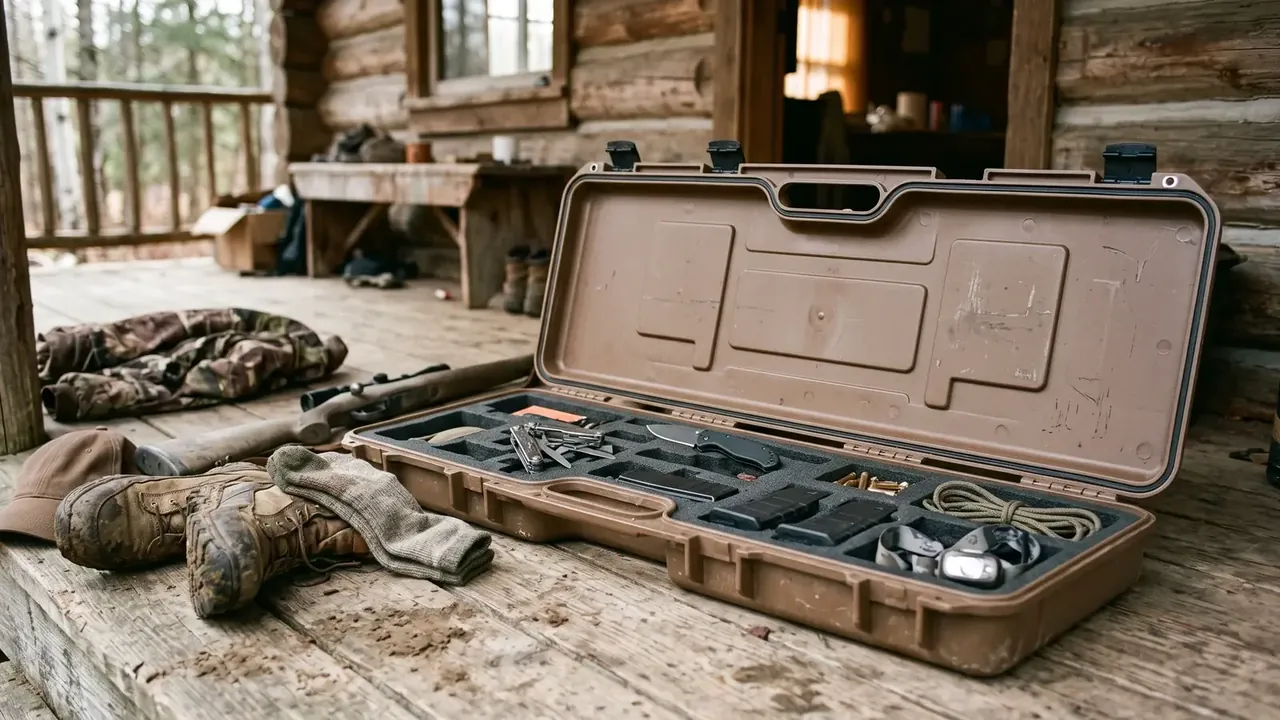
Quick answer: Set a Field Armoury from the outside in: outer size fixed by vehicle width, door opening and pallet; cavity derived from three dimension chains; thickness split by duty, door in bending and sides in shear; load stated separately for shelf, cabinet and lifting.
Table of contents
- How the Dimension Chain for a Field Armoury Is Set
- Steel Thickness and Self-Weight
- Capacity per Cabinet and Shelf Load
- Total Load and Transport Tie-Down Points
- Protection and Lock Grades
- FAQ
1. How the Dimension Chain for a Field Armoury Is Set
Most sheets fail on the cavity: draw it, add walls outward, and the outer size lands at 1203 mm, which stops at a 1200 mm door. A Field Armoury chain runs inward, outer size fixed by vehicle, door and pallet, cavity left over.
On a 1200 x 600 x 1800 mm double-door cabinet, width is 1200 less two 2.0 mm sides, two 25 mm returns and two 2 mm gaps: 1142 mm, rounded to 1140. The return holds a 9 mm gasket groove, 8 mm bolt hole, 8 mm bend.
| Direction | Outer | Deductions | Cavity |
|---|---|---|---|
| Width | 1200 mm | sides 2.0 x 2, returns 25 x 2, gaps 2 x 2 | 1140 mm |
| Height | 1800 mm | top 2.0, base 2.5, feet 96 | 1680 mm |
| Depth | 600 mm | door 3.0, back 1.5, gap 4, channel 16 | 575 mm |
Tolerances stand alone: outer ±2 mm, cavity ±1.5 mm, gap 3 ±0.5 mm.
2. Steel Thickness and Self-Weight
Thickness follows duty. A door is a cantilever bending about the hinge, stiffness rising with the cube of thickness, so 3.0 mm; sides in shear 2.0 mm; top 2.0, base 2.5, back 1.5.
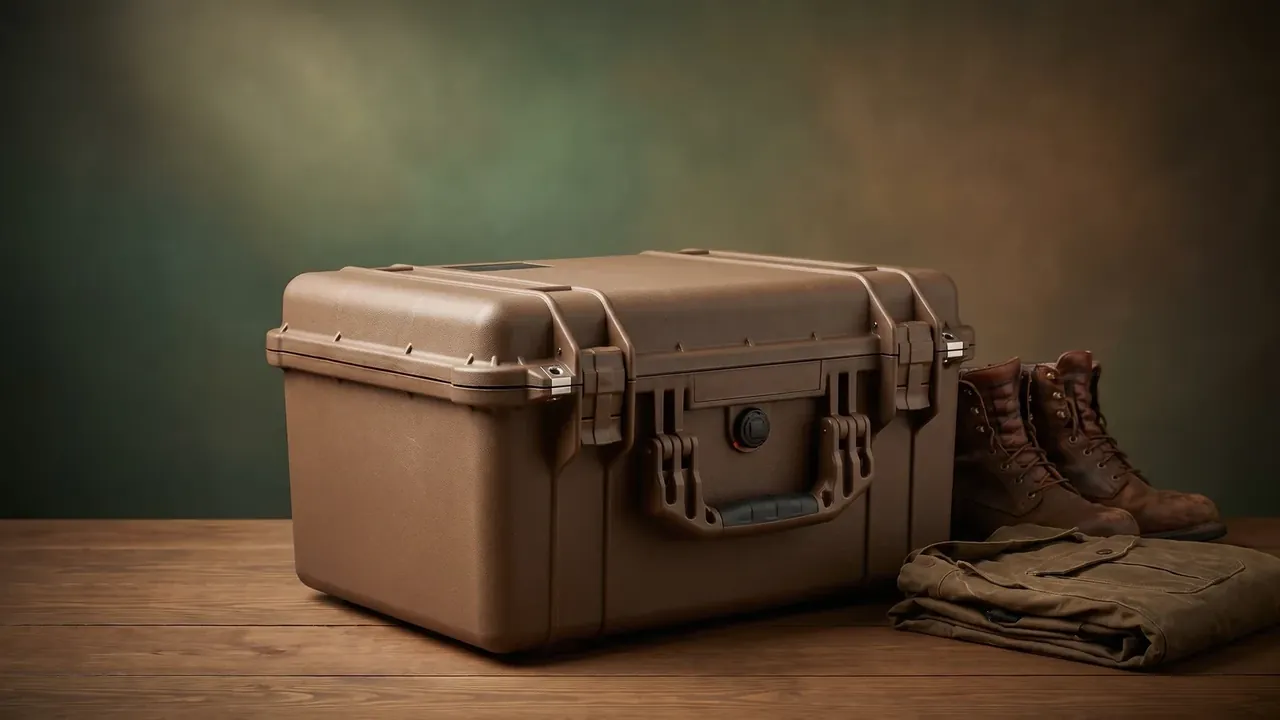
An empty Field Armoury weighs 186 kg. Door 2.0 to 3.0 mm costs 12 kg and pulls free-edge sag from 4.6 to 2.1 mm; a side from 2.0 to 1.5 mm saves 14 kg but grows bulge from 0.9 to 2.4 mm.
Weight must match handling: 186 kg is no two-person lift, so four eyes or two castor sets, and eye pads thicken to 4.0 mm.
3. Capacity per Cabinet and Shelf Load
A 1140 x 575 x 1680 mm cavity is 1.1 m³, yet stowage is set by shelves: four at 400, 390, 380 and 360 mm, board and rib taking the difference.
| Level | Clear height | Uniform | Patch load |
|---|---|---|---|
| 1 | 400 mm | 60 kg | 25 kg |
| 2 | 390 mm | 60 kg | 25 kg |
| 3 | 380 mm | 50 kg | 20 kg |
| 4 | 360 mm | 50 kg | 20 kg |
Shelf load needs two figures: 60 kg spread over the board, or 25 kg in a 100 x 100 mm patch at mid-span, which bows the same. Cabinet rating is not their sum; the body is rated 240 kg.
4. Total Load and Transport Tie-Down Points
At rest, 186 kg of body plus 240 kg of load is 426 kg over four feet, 107 kg each, on M12 anchors at 60 N·m.
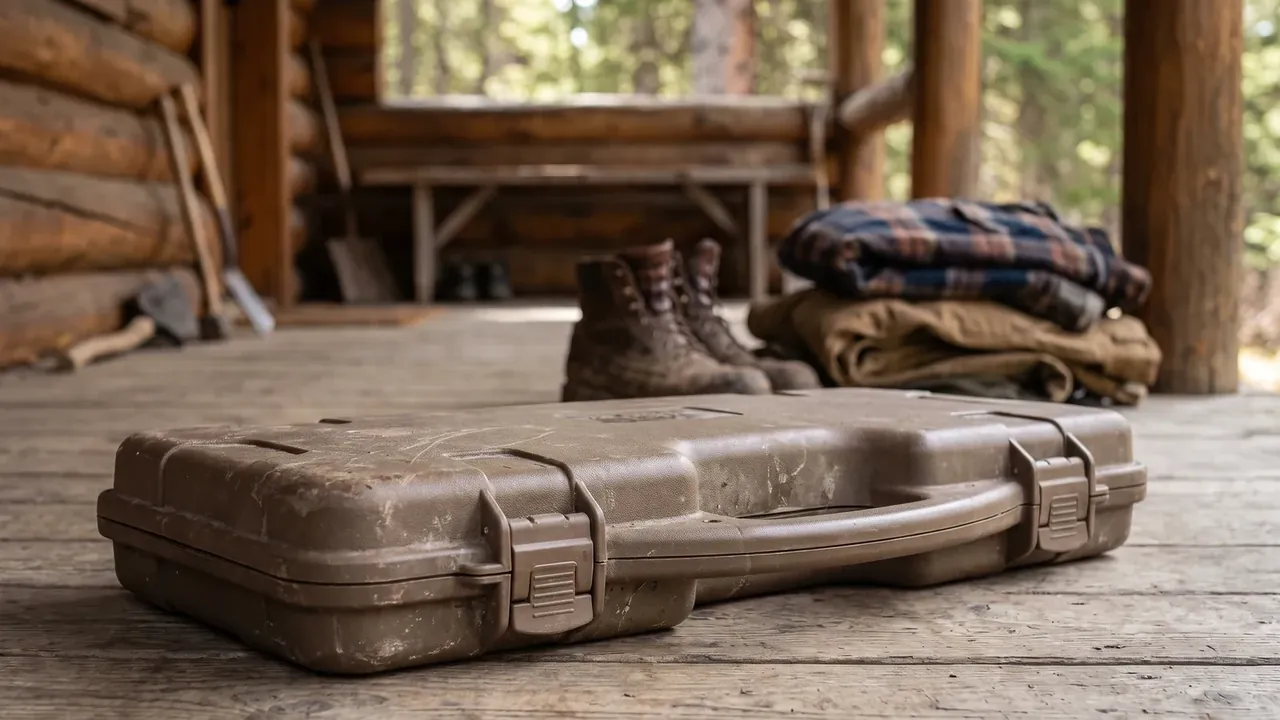
Lifting is set by the eyes: four rated 500 kg carry 123 kg at 60 degrees, a factor of four; at 90 degrees each takes 151 kg and the 2.0 mm top panel dents first.
Three tie-down figures belong in the sheet: four 25 x 70 mm lashing holes, straps at 2000 daN, and a 0.8 g longitudinal case turning 426 kg into 3.3 kN.
5. Protection and Lock Grades
Protection is decided at the door gap. IP54 is dust grade 5 plus splash 4, from two EPDM seals with a 6 mm drain cavity. IP55 needs a sill channel, since a thicker seal drives water inward.
Salt spray is quoted at 480 h coastal, 240 h inland. Locks follow EN 1300, grade B routine, grade A high-value. A padlock uses a 12 mm shackle in a 14 mm eye.
| Item | Base | Upgraded |
|---|---|---|
| Protection | IP54 | IP55, sill channel |
| Salt spray | 480 h | 720 h |
| Lock | EN 1300 B | EN 1300 A |
| Padlock | 12 mm | 14 mm |
Conclusion
Three chains hold a Field Armoury specification together: dimensions fix the cavity, thickness fixes weight and stiffness, load figures fix shelves and lifting points. Keep tolerances on separate lines, publish uniform and patch loads side by side, put sling angle and impact acceleration in the annex, and the Field Armoury specification is finished.
This article discusses only the container (case body) side of specifications and design intent, and does not cover any handling, loading or use of the contents.
Related Reading
- What a field armoury is and where the cabinet boundary sits
- Choosing a cabinet by capacity, locking and mobility
- How custom military firearm storage boxes are built
- How to read specification figures for a heavy-duty protective case
Related Products
- 8 Series — Gun Cases; Military Equipment Cases; Camera Equipment Cases; Drone Cases; Watch Cases; Knife Cases; First Aid Cases; Electronics Equipment Cases
- WL8-2812 PP Gun Case — model WL8-2812
- All protective cases and toolboxes: 7 series, 158 models