

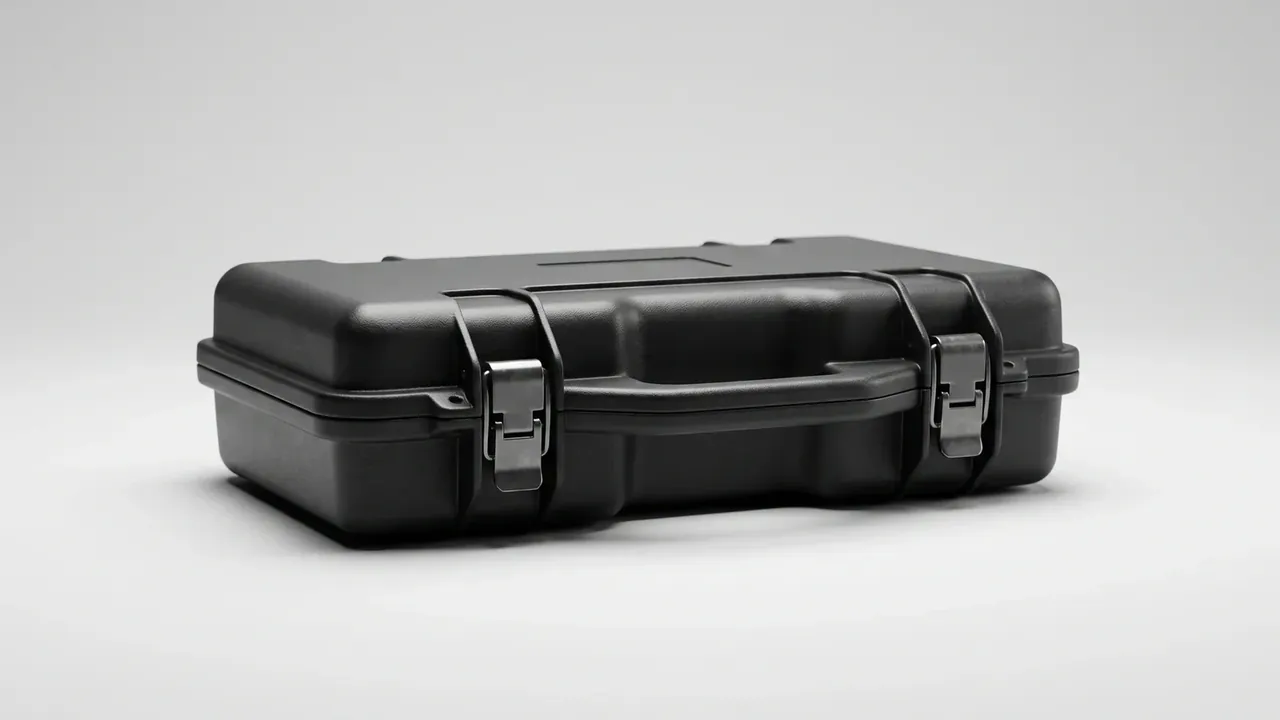
Quick answer: Judge Firearm Cases by workflow fit, not wall thickness. Five tests cover frequency, units per case, cycle time, stacking and spares, each with a usable threshold.
Table of contents
- Five Decision Tests for Firearm Cases, Ordered by Workflow
- Test One: Opening Frequency Sets Shell and Carry Style
- Tests Two and Three: Units per Case and Opening Cycle
- Test Four: Stacking Layers and Warehouse Footprint
- Test Five: Spare Parts Cycle and Serviceability
- FAQ
1. Five Decision Tests for Firearm Cases, Ordered by Workflow
Buyers compare resin grade, wall thickness and ingress rating first, because those print largest in a brochure. The real disagreements sit between workstations: lid cycles, layers allowed, gasket life.
The tests follow order of use: frequency sets shell and carry, units set cavity, cycle time sets hinge support, stacking sets lid stiffness, spares decide replaceability.
| Test | Measure | Threshold | On-site check |
|---|---|---|---|
| Frequency | Lid cycles per shift | Under 20 standard latches, over 40 heavy hinge | Shadow one shift |
| Units | Units per case | 4 flat, 8 and above two tiers | Trial layout |
| Lid angle | Self-supporting angle | 100 degrees or more | Open an empty case |
| Stacking | Layers allowed | 4 layers, lid carries 4 times load | Inspect a base case |
| Spares | Gasket interval | 24 months, tool-free swap | Ask for the part number |
2. Test One: Opening Frequency Sets Shell and Carry Style
A case opened twice a week can afford a thin shell; one opened a dozen times a day wears hinge pins twenty times faster. Annual openings divided by 250 working days decide between single-wall moulding and hollow blow moulding for Firearm Cases.
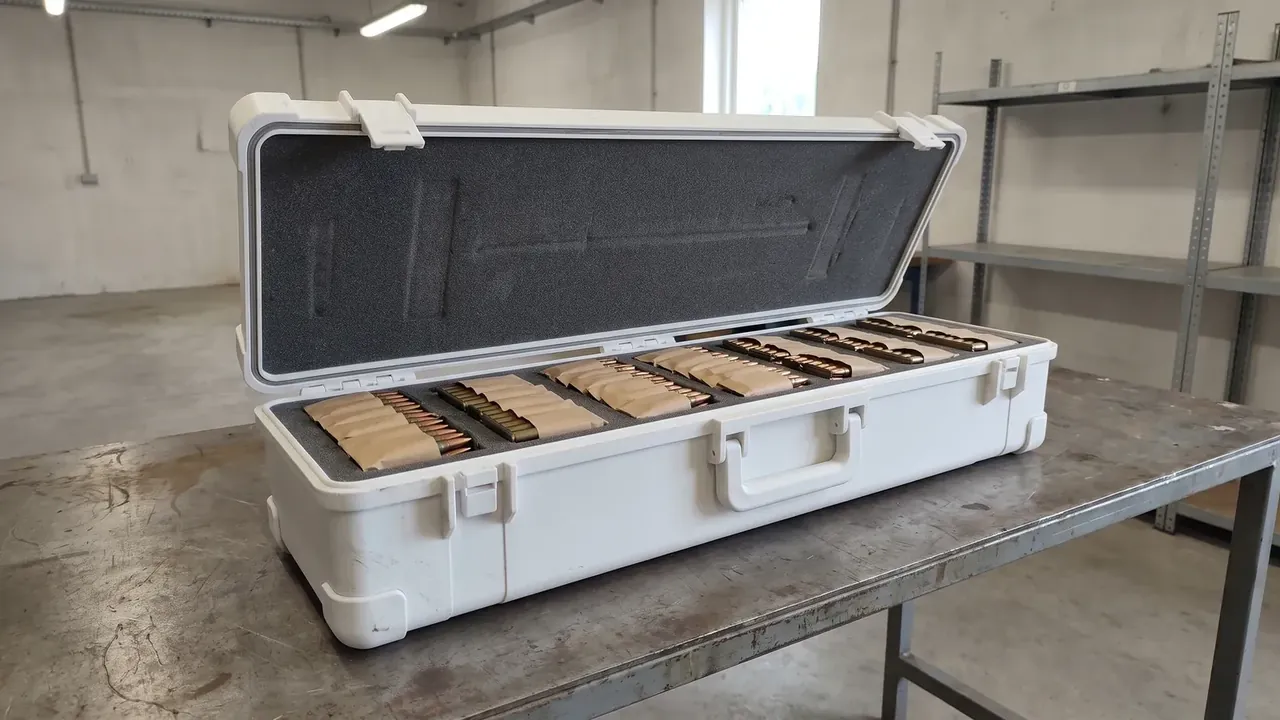
Under 200 metres a moulded handle works and the empty case stays below 25 percent of loaded weight; beyond that, wheels earn their 1.8 kg and the share reaches 35 percent. In vehicles, one-direction latches loosen under vibration and open a 0.5 mm gap within 200 km.
3. Tests Two and Three: Units per Case and Opening Cycle
Four units sit flat in one layer, cavity length being the longest unit plus 15 mm each side; eight units need two tiers, about 40 percent more cavity height, and the case takes two hands.
| Units | Cavity length | Divider | Form |
|---|---|---|---|
| 1 to 2 | Longest plus 30 mm | Foam slots | Hand case |
| 3 to 4 | Longest plus 30 mm | Slots plus one divider | Hand case |
| 5 to 7 | Longest plus 45 mm | Insert plates | Two-hand lift |
| 8 and above | Longest plus 60 mm | Two-tier tray | 40 percent taller |
Insert plates suit changing layouts but cost 4 mm each, so an eight-unit case loses 32 mm of usable length.
Cycle time is hidden inspection cost. A lid that will not hold above 90 degrees turns a 6-second check into 11, or 250 extra labour hours a year across 200 daily cases.
4. Test Four: Stacking Layers and Warehouse Footprint
At four layers the bottom lid carries 36 kg from three loaded cases at 12 kg each. Without lateral ribs a Firearm Cases lid creeps 2 to 3 mm within six months and the gasket stops sealing.
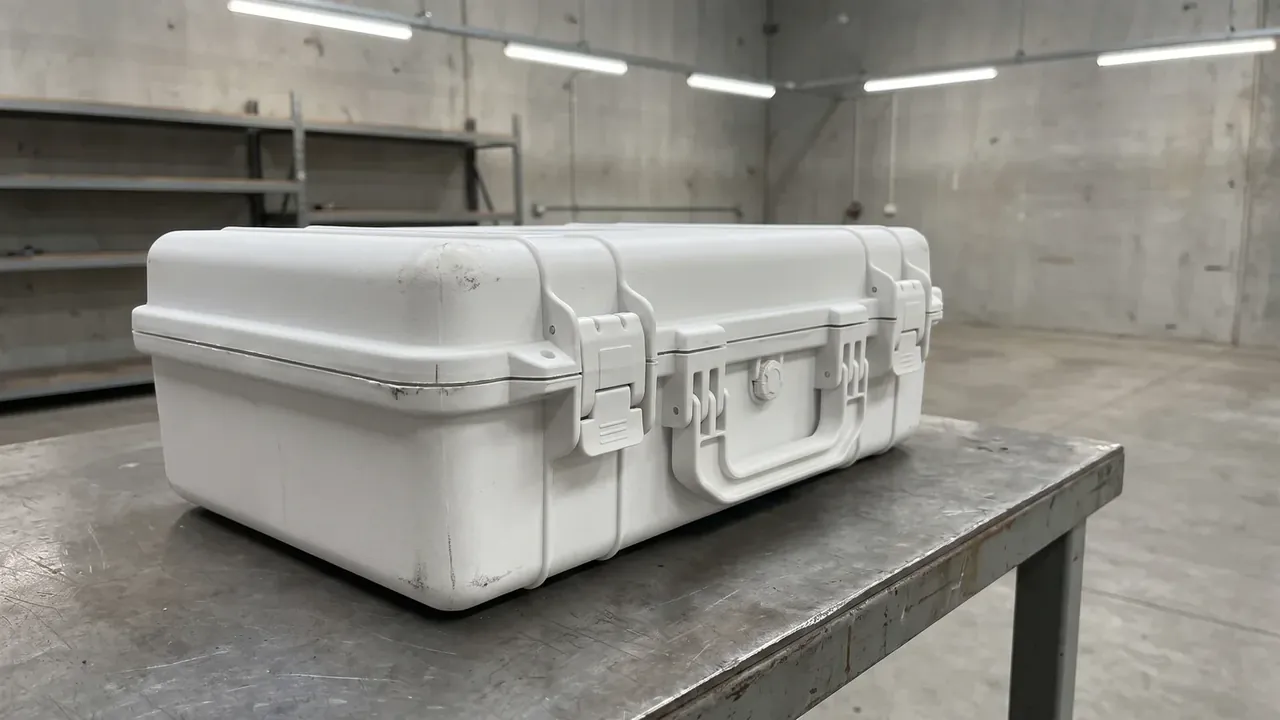
Recessed feet dropping into the groove below hold lateral drift within 5 mm, for 3 to 5 percent extra unit cost.
5. Test Five: Spare Parts Cycle and Serviceability
Gaskets harden at about 24 months, foam sheds from 18 months, and a 40-cycle shift wears a hinge pin out by year three.
| Wear part | Interval | Warning sign | Confirm first |
|---|---|---|---|
| Lid gasket | 24 months | Stiff rubber, light at the joint | Profile and spare price |
| Foam insert | 18 months | Shedding, soft walls | Separate part, fixing |
| Hinge pin | 3 years or 30,000 cycles | Lid shifts 2 mm sideways | Removable, spare kit |
Separate spares and a tool-free swap keep the case serviceable: eight years brings three gaskets, five foam sets and two pins, near 15 percent of price.
Conclusion
The five tests ask one question in different ways: how long this Firearm Cases stays in your process, how often it opens, and who lifts it. Inside the thresholds, no certificate justifies extra spend; outside them, pay for that item alone. Put all five into the acceptance sheet, and choosing Firearm Cases becomes auditable rather than a matter of opinion.
This article discusses only the container (case body) side of specifications and design intent, and does not cover any handling, loading or use of the contents.
Related Reading
- How a firearm storage case is laid out
- Comparing shell materials for protective firearm cases
- Cavity length and foam layout for rifle cases
- Selection dimensions for tactical hard cases
Related Products
- 8 Series — Gun Cases; Military Equipment Cases; Camera Equipment Cases; Drone Cases; Watch Cases; Knife Cases; First Aid Cases; Electronics Equipment Cases
- WL8-2812 PP Gun Case — model WL8-2812
- All protective cases and toolboxes: 7 series, 158 models