

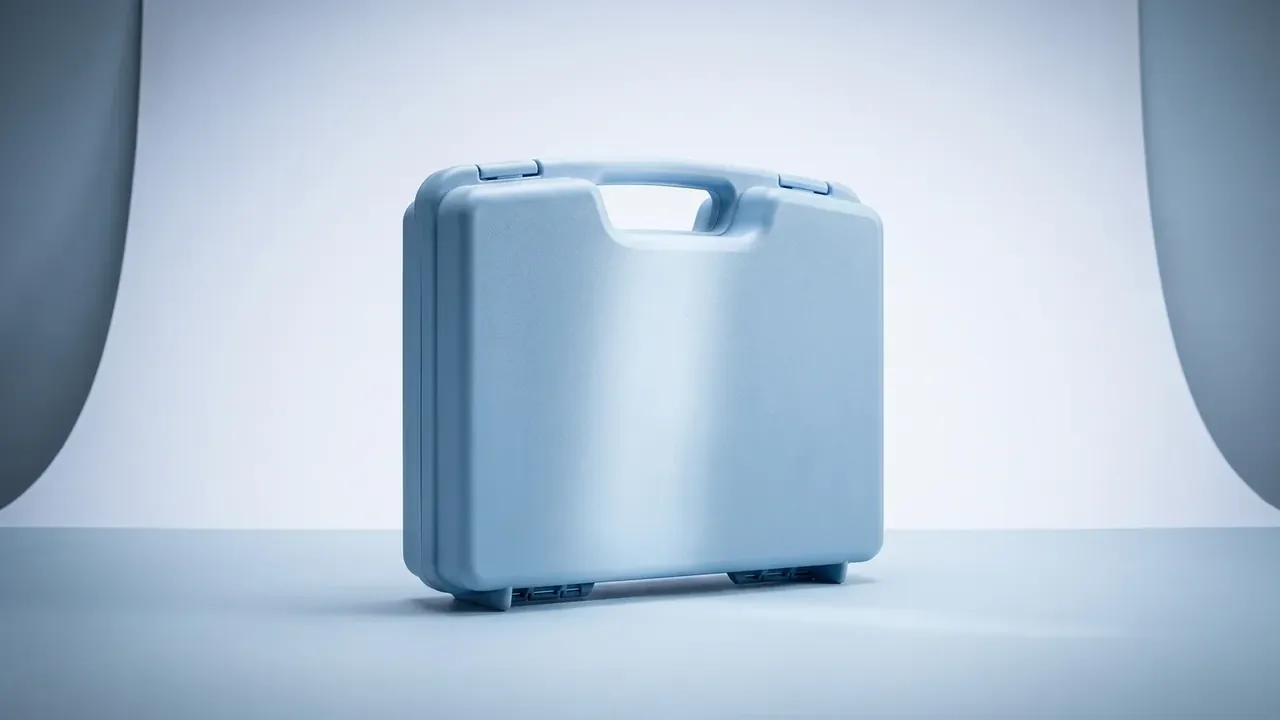
Quick answer: Start with five numbers instead of a price: cavity clearance around the item, the loaded weight one person can carry, the sealing and vibration levels actually tested, stack tiers and forklift access, and whether the marking traces to a batch.
Table of contents
- Cavity Dimensions Against Equipment Length
- Weight and One-Person Carry
- Sealing and Transport Vibration
- Stacking, Forklift and Pallet Handling
- Marking and Batch Traceability
- FAQ
1. Cavity Dimensions Against Equipment Length
Size the cavity from the item's largest outline plus clearance, not from a nominal length on a price list. Start at 20 mm on length, ten at each end, 15 mm on width and 10 mm on height: that clearance pays for the insert and fingers, and without it a firearm transport case grips the item too tightly to lift.
Measure the same way each time: locate the item at three points, read maximum length, width and height with accessories, then read cavity diagonals. A diagonal difference above 3 mm means a twisted body. The rim radius, usually R8, consumes another 8 mm of usable width.
| Item length | Cavity length | Common mistake | Result |
|---|---|---|---|
| 700 mm | 720 mm | Buying a 700 mm cavity | No room for the insert |
| 1000 mm | 1020 mm | Buying 1050 mm | Excess gap, fore-and-aft movement |
| 1200 mm | 1220 mm | Ignoring the rim radius | Usable length falls short |
2. Weight and One-Person Carry
Loaded weight, not empty weight, decides the format. Eighteen kilograms is a sensible ceiling for one person and 35 kg for two, above which a wheel set or a two-handle layout belongs on the drawing. Distance matters: 50 m and 500 m do not carry the same load.
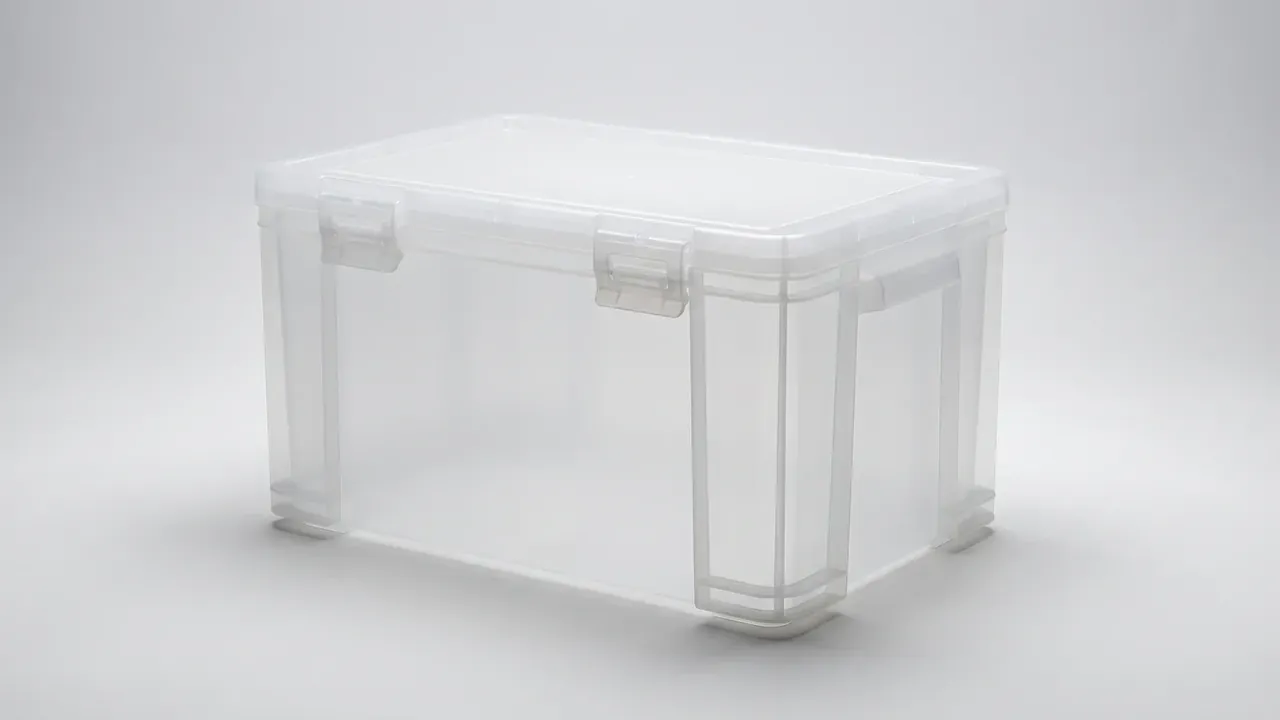
Split the total for a firearm transport case into shell, insert and payload. The shell takes 25 to 35 percent, the insert follows from density and volume, and the rest is payload. Rate handles at 50 kg static, since a lift doubles the load for a moment.
| Loaded weight | Carrying method | Structural focus |
|---|---|---|
| 12 to 18 kg | One person, medium distance | Centred handle, low centre of gravity |
| 18 to 35 kg | Two-person lift | Symmetrical side handles |
| Above 35 kg | Wheels or forklift | Reinforced bosses, wear pads |
Hand carry above 35 kg moves the damage into latches and rim flanges, where inspection will not see it.
3. Sealing and Transport Vibration
Write the test condition, not the word waterproof. IP67 on a firearm transport case means 30 minutes at one metre with no water in the gasket groove, which covers road snow, rain and short fords; ship or yard storage needs the groove and vent reviewed.
Vibration is skipped more often than drop. Run random vibration at 10 to 500 Hz and 1.5 g for 30 minutes per axis, after a 5 to 200 Hz resonance sweep. Most long bodies resonate between 30 and 50 Hz, where a truck floor excites them, and there the insert rubs marks into the finish.
4. Stacking, Forklift and Pallet Handling
Talk about real storage tiers. Three tiers means 280 kg on the bottom firearm transport case for 48 hours, with residual deflection under 3 mm, testing lid stiffness and foot contact area at once.
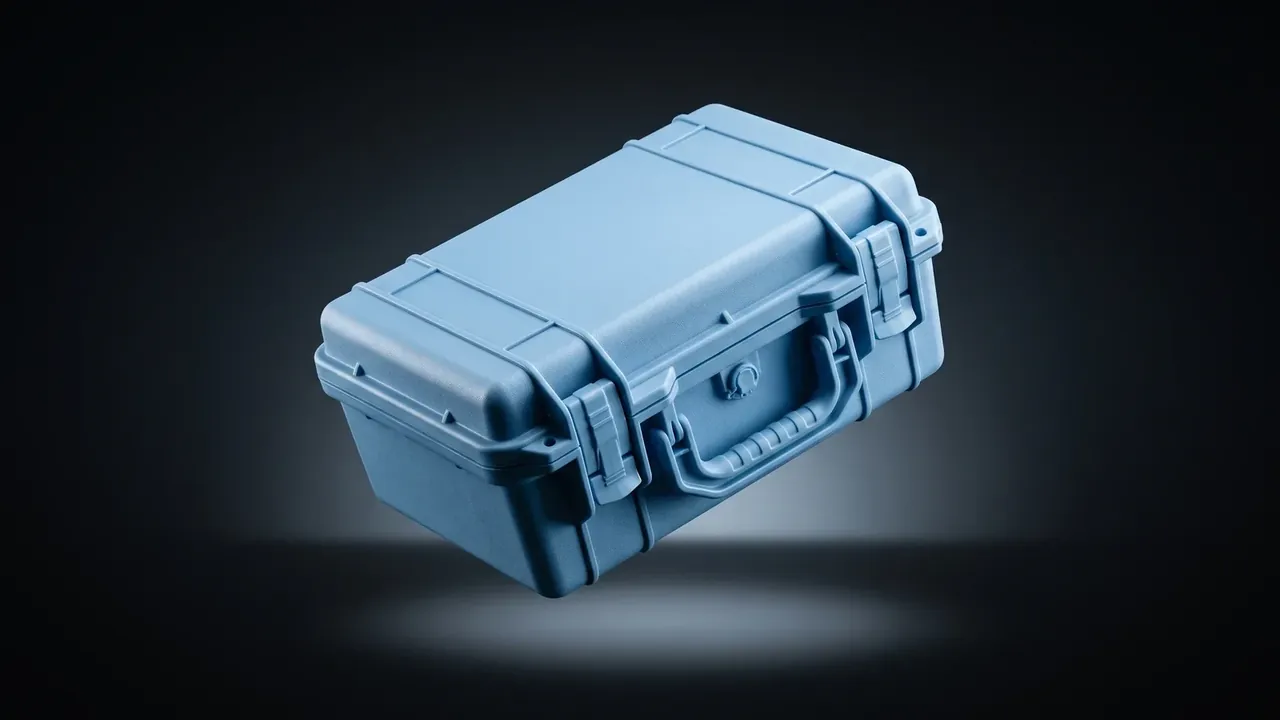
Forklift handling of a firearm transport case is three dimensions: entry at 100 mm above the floor, fork centres at 600 mm for common pallets, feet at least 40 mm wide so the case does not dent the pallet.
Latches carry no stack load. Store cases on their sides and the weight sits on one row of catches, whose jaws creep and close loosely within six months. Write lid up, three tiers maximum.
5. Marking and Batch Traceability
Marking is settled at order stage. The smallest readable unit is a 15 mm square code laser-marked on the side wall, rated from minus 30 to 70 degrees Celsius; labels need 48 hours of salt spray.
| Mark | Carrier | Position | Acceptance |
|---|---|---|---|
| Batch code | Laser marking | Upper side wall, 50 mm from base | Scan reads an 8-digit batch |
| Size and load | Screen print | Lid face | Visual check plus adhesion test |
| Trace label | Self-adhesive | End recess | Scan after 48-hour salt spray |
Granularity drives after-sales cost: a batch code tied to shift and resin grade isolates a cracking issue in one run, while a month-only code means recalling a quarter.
Conclusion
The hard part is fixing five numbers early: clearance, weight ceiling, sealing and vibration, stack and forklift rules, marking depth. Then every quote is measured with one ruler, and the firearm transport case choice becomes reviewable rather than instinctive.
This article discusses only the container (case body) side of specifications and design intent, and does not cover any handling, loading or use of the contents.
Related Reading
- How a firearm transport case is built
- Where transport cases are used
- Transport cases against other formats
- firearm-transport-case-specifications
Related Products
- 8 Series — Gun Cases; Military Equipment Cases; Camera Equipment Cases; Drone Cases; Watch Cases; Knife Cases; First Aid Cases; Electronics Equipment Cases
- WL8-2812 PP Gun Case — model WL8-2812
- All protective cases and toolboxes: 7 series, 158 models