

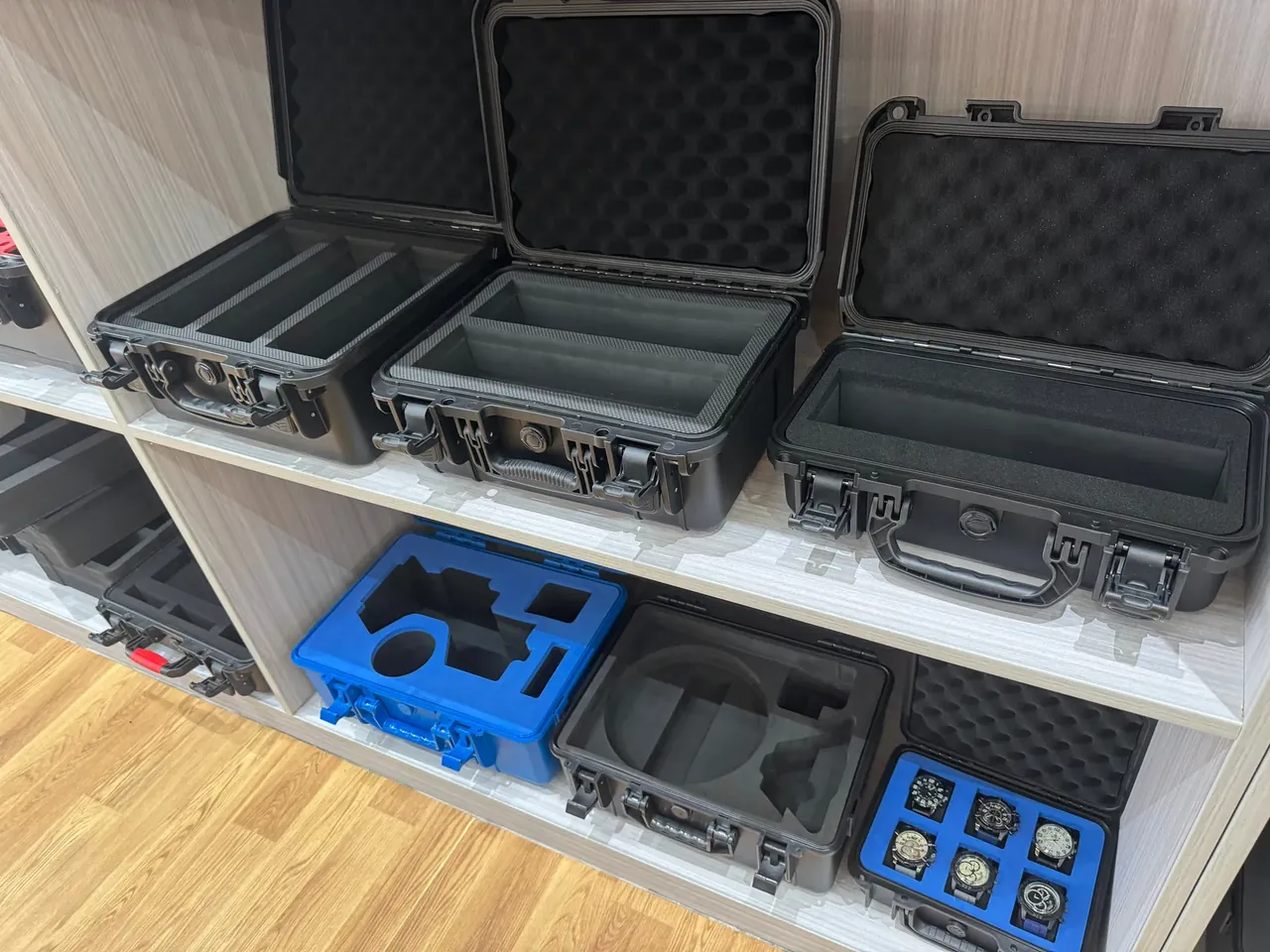
Quick answer: A first-aid equipment storage case cuts its cavity into 24 numbered slots over four rows and six columns, and counts the whole box inside 90 s.
Table of contents
- The Slot Inventory on a First-Aid Equipment Storage Case
- Numbering Rules and Colour Coding
- Single-Use Seals and Opening Traces
- Count Route and Seconds per Box
- Slot Values for the Response Crew
- FAQ
1. The Slot Inventory on a First-Aid Equipment Storage Case
The failure that matters is not a short load but a long search, and the slot number exists for the moment the lid comes up. A first-aid equipment storage case has a cavity of 415 × 295 × 150 mm cut into 24 slots, four rows by six columns, each about 69 × 74 mm clear, with walls moulded in the same shot as the shell, 460 × 340 × 190 mm outside at a 3.7 mm wall.
The slots are not equal in use. The front row sits under the hinge and meets the eye as the lid rises; the middle rows need the head down; the back row runs along the front edge of the base.
| Slot tier | Where it sits in the case | Order at count time |
|---|---|---|
| Front row | Under the hinge, seen on opening | First sweep, no lifting |
| Middle rows | Two rows across the centre | Head down, slot by slot |
| Back row | Along the front edge of the base | Hand to the bottom, last |
2. Numbering Rules and Colour Coding
Numbers take one letter and two digits on a first-aid equipment storage case: rows A to D, columns 01 to 06, running A01 to D06 for exactly 24 groups. Three characters is a constraint, not a style. The window is 60 × 20 mm, type above 14 mm will not sit in the frame, and smaller type disappears in dim light.
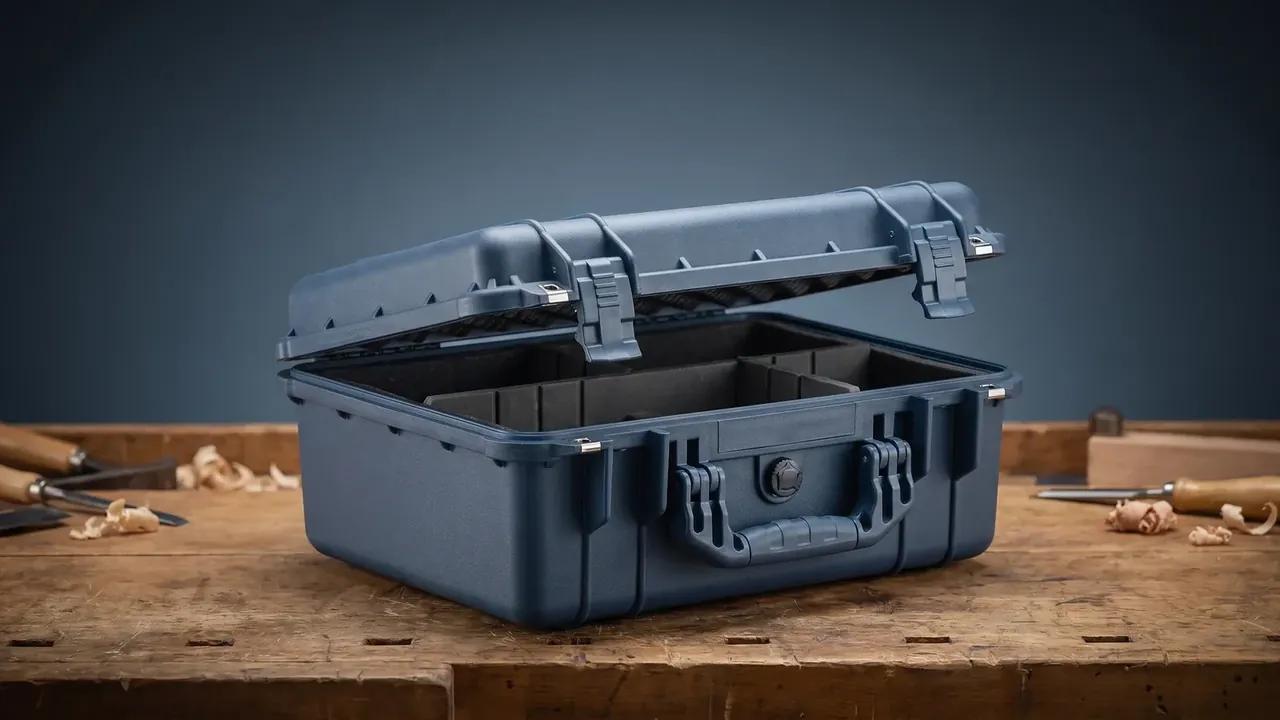
Five colours, no more. Without a reference a person separates about ten hues, shelf lighting takes a share, so five is the ceiling; two more and red against orange trade places. The bands divide five item types: long, square, flat, round and accessory.
The gain is measured. Five colours cut counting time by 50 to 70 per cent against a single colour and errors by about three quarters, if the patch is large enough to read. The band fills half of each 60 × 20 mm window, the characters the rest, under a 2 mm clear cover.
Numbers wear: characters are moulded 0.4 mm deep, and at 0.1 mm the row is re-struck rather than patched.
3. Single-Use Seals and Opening Traces
One seal passes through two holes, lid edge and body, and breaks at 25 N. The figure is deliberately low: it parts in the hand, the break stays in the neck, and the neck says whether the case has been opened and how often.
Pull-tight seals usually run 150 to 250 N and need a blade. A higher break force resists tampering and costs a dozen seconds at every opening, plus a step to collect the offcut. A first-aid equipment storage case takes 25 N because opening speed beats resistance: the seal stops an unrecorded opening, not a determined hand.
The holes sit 90 mm apart so the seal pulls straight; a diagonal pull moves the break point. Seal numbers match the case number, and the offcut drops into a 6 mm channel inside the lid.
4. Count Route and Seconds per Box
The count on a first-aid equipment storage case follows an S: front row left to right, the middle folded back, the back row left to right. One pass covers 24 slots without the eye doubling back, the fold at the second middle row.
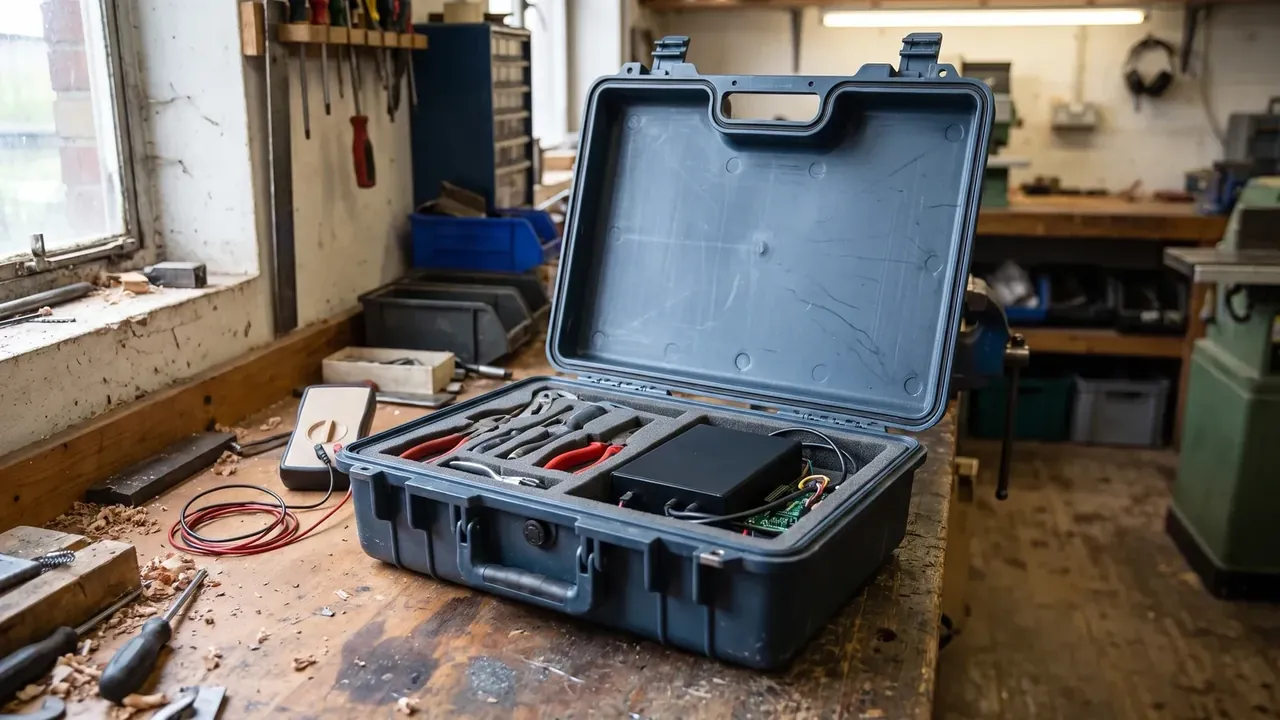
Finding one target among N items takes about 1 + N/6 seconds; with 24 slots mixed, one item costs about 5 s, and five colours leave about five slots sharing the target colour, which brings it to 1.8 s. Across 24 slots, plus opening, seal and record, the box lands inside 90 s.
| Count round | What happens | Time |
|---|---|---|
| First | Lid up, look for empty slots | About 10 s |
| Second | Slot by slot against the colour bands | 40 to 60 s |
| Third | Check numbers, seal and record | About 20 s |
These are three sections of one route: the first finds the gap, the second counts, the third leaves the trace.
5. Slot Values for the Response Crew
The slot tier for a first-aid equipment storage case is the one that still counts the box inside ninety seconds at twenty-four slots; beyond that the contents belong in two cases.
Three settings move together: slot count, number length and colour bands. Going from 24 slots to 30 adds a row, A01 to E06, still three characters, but clear space drops to about 60 mm and the window has to grow with it.
| Count seconds | What it suggests | Action |
|---|---|---|
| Under 45 s | Route clean, bands legible | Leave as is |
| 45 to 90 s | One or two slots hunted for | Check for worn numbers |
| Over 90 s | Colour coding has failed, slots too dense | Split the box or renumber |
The shell brings its own figures. After 4,900 open and close cycles the hinge pin develops clearance and the cover stops pressing on the windows; six high suits empty cases and three loaded ones; IP65 covers jets only, so the holes are dried before a new seal goes in. At 3.4 kg empty it carries in one hand upstairs, which is why the slots stay small: more slots mean a bigger shell.
Conclusion
The efficiency of a first-aid equipment storage case lives in the slots, the numbers, the colour bands and the seal rather than in wall thickness. Twenty-four slots, 24 three-character numbers, five bands for five item types and a 25 N hand-tear seal — with those aligned, a full count fits inside 90 s. Denser slots are not easier; a stronger seal is not more reliable.
Related Reading
Related Products
- 8 Series — Gun Cases; Military Equipment Cases; Camera Equipment Cases; Drone Cases; Watch Cases; Knife Cases; First Aid Cases; Electronics Equipment Cases
- WL8-2812 PP Gun Case — model WL8-2812
- All protective cases and toolboxes: 7 series, 158 models