

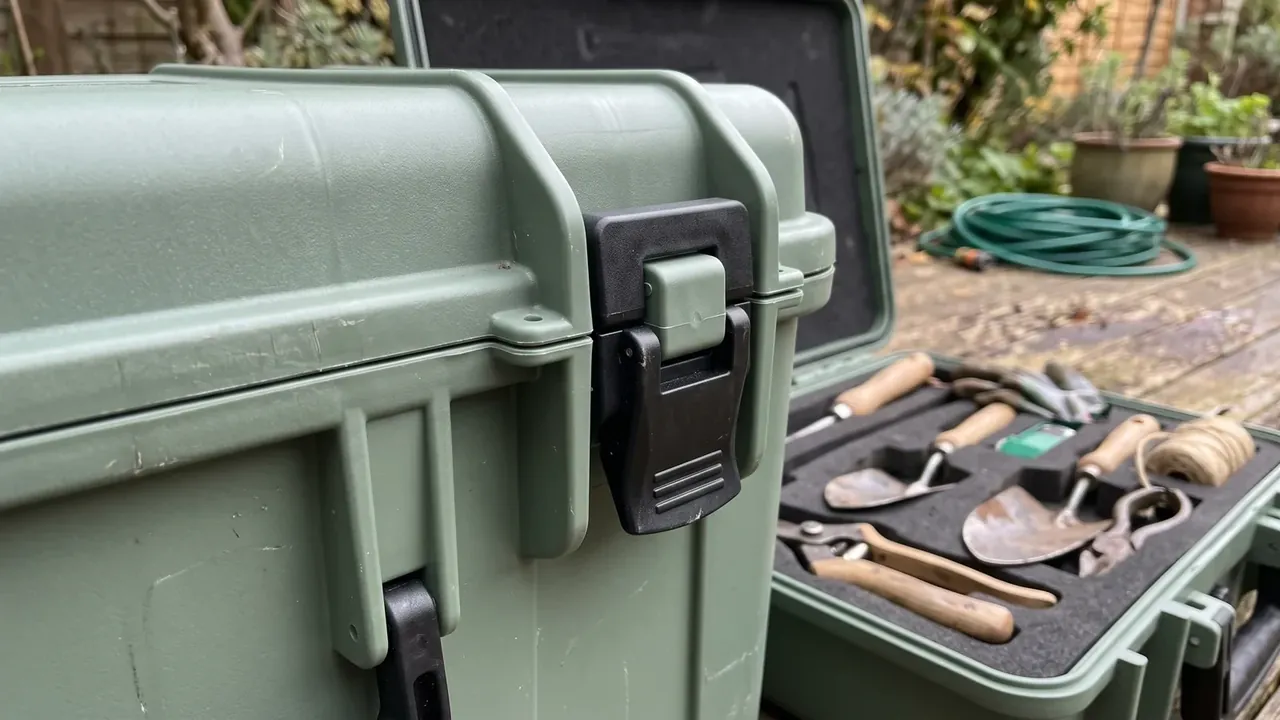
Quick answer: An emergency equipment storage case meets a five-minute call only when three things are fixed in advance: where it parks, which tier it sits on, and which way the lid opens. One pumping station store room shows how the window, the label, four-tier loads, tape and the seal hole add up to a 90-day interval.
Table of contents
- The five-minute route at a pumping station
- A viewing window and a three-line label
- Load distribution across four shelf tiers
- Tape, seals and a 4 mm seal hole
- Scenario, configuration and inspection interval
- Four assembly mistakes
- FAQ
1. The five-minute route at a pumping station
At 02:17 the phone rings. The river has climbed 0.6 m in forty minutes and the sump needs a second portable pump. From the call to water in the discharge pipe the station allows five minutes, leaving under two and a half for gear.
The store room sits 46 m away, behind two door sills and down twelve steel steps, unlit.
Carry an emergency equipment storage case along that route twice in the dark and the surplus detail shows up. A brand plate proud of the lid catches a door frame. A corner radius under 8 mm chips on the step nosing. A handle with no relief behind it leaves no room for a gloved finger. None of it shows on a datasheet; all of it eats the two and a half minutes.
2. A viewing window and a three-line label
A 120 by 80 mm window sits on the short side of the lid, over compartment one. It was the station's first request, and it answers one question with the lid shut: is compartment one empty?
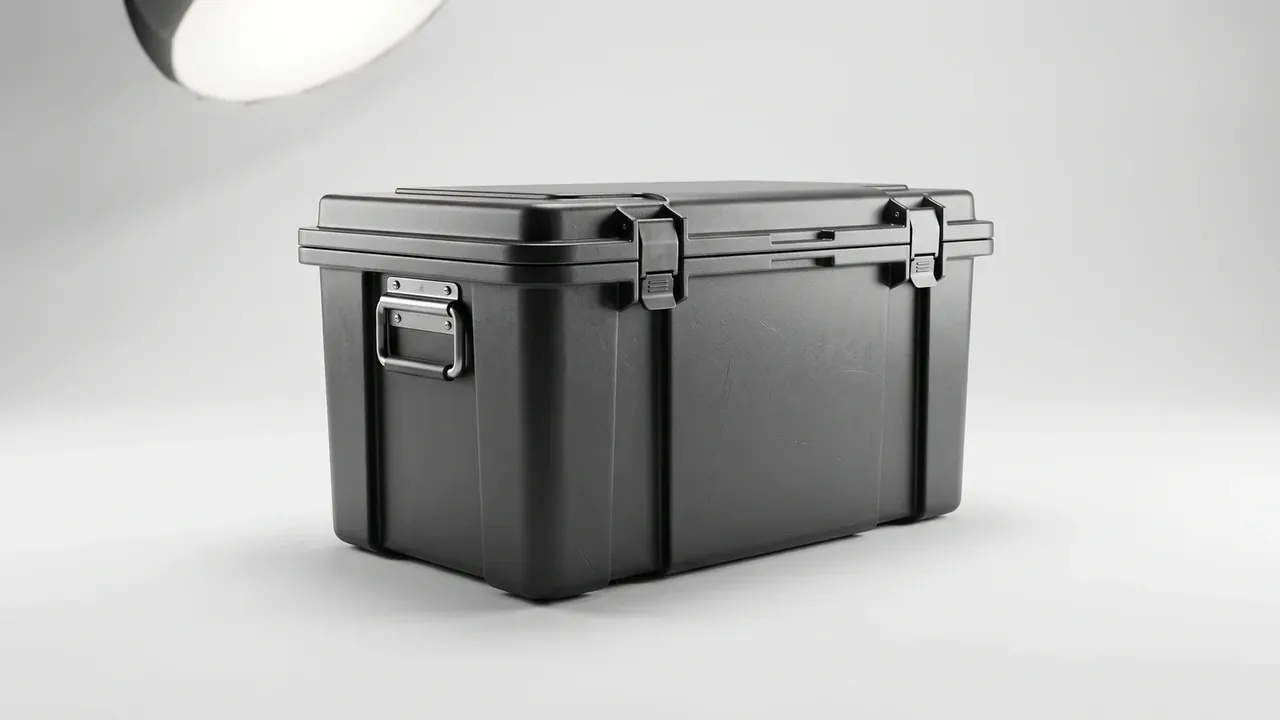
The emergency equipment storage case label runs beside the window, pressed into a 2 mm groove so handling does not rub it off. Three lines: case number, seal number, next inspection date. Item names stay off, since items change with the season and the number does not.
Lettering is cut at 6 mm, readable from two metres.
A label of a dozen lines is a label nobody reads. The detail belongs in the compartment layout, where a gap reports a missing item faster than wording.
3. Load distribution across four shelf tiers
The rack is 1800 mm clear, four tiers 420 mm apart. The emergency equipment storage case sits on tiers three and four, within reach; tier one holds spares and full cases, rated 80 kg because two full cases usually stack there.
| Tier | What goes there | Rated load | Retrieval order |
|---|---|---|---|
| 4 | Light cases and empties | 40 kg | Last |
| 3 | Full cases in daily use | 60 kg | First |
| 2 | Empties and inserts | 50 kg | Never |
| 1 | Spares and heavy cases | 80 kg | Second |
Set a tier and leave it. Adding a fifth level is the usual mistake: tier three climbs past 1900 mm and retrieval time doubles.
The emergency equipment storage case also needs a fixed orientation: lid out, handle up, short side on the stop bar.
4. Tape, seals and a 4 mm seal hole
Night retrieval leans on two anchors: a 50 mm strip of engineering-grade tape down each short side at handle height, and a 25 mm strip across the lid front to show the opening direction under a low beam.
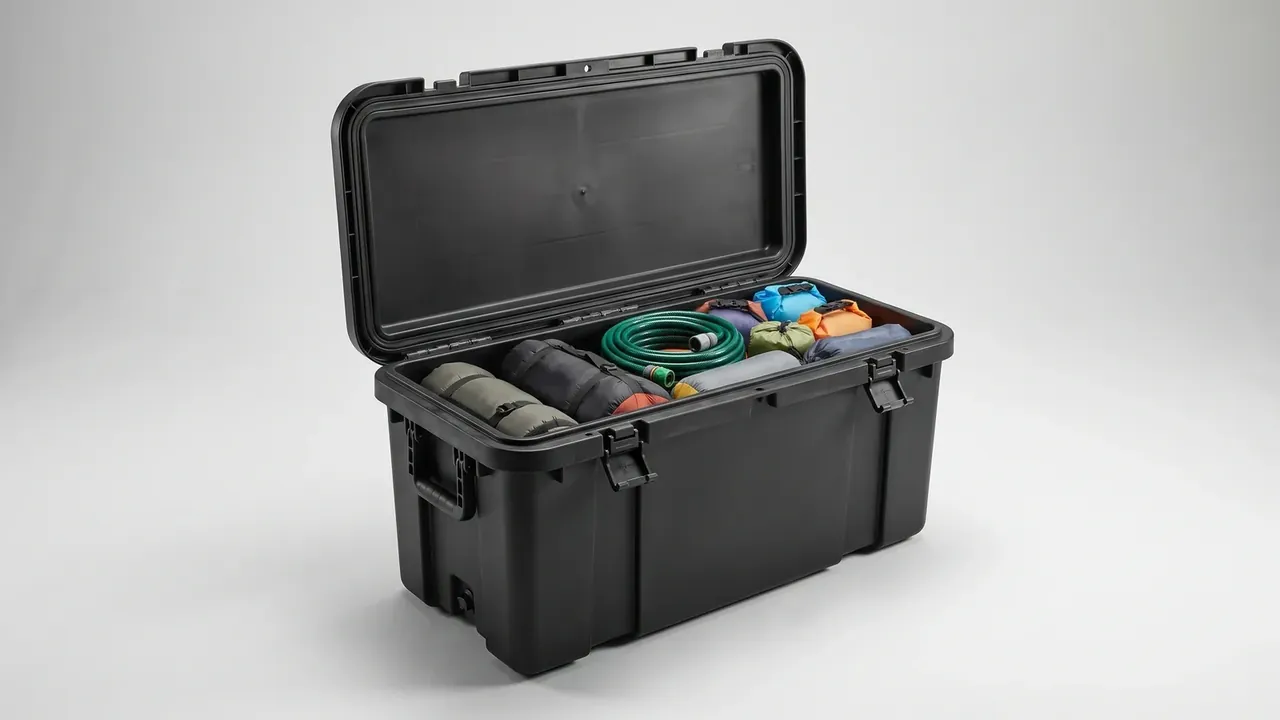
A traceable seal runs from the handle base around the latch, both ends into one 4 mm hole, crimped over a disposable wire, last two digits facing out so a torch sweep reads them.
Two latches sit 240 mm apart; with one closed, a full case shifts the lid a millimetre fore and aft, and a few hundred lifts wrinkle the gasket at the corners.
Wipe the tape area with isopropanol first. Polypropylene carries mould release, and adhesive lifts within six months.
5. Scenario, configuration and inspection interval
| Scenario | Configuration | Inspection |
|---|---|---|
| Station control room | Four-tier rack, tier three in use | 90 days |
| River bank post | Bench bracket, single case | 60 days |
| Mobile pump truck | Two straps over the case body | 30 days |
| Repair staging point | 120 mm pallet, unfixed | End of shift |
Intervals for an emergency equipment storage case follow how often it opens, not how old it is. The control room unit opens twenty times a year, so 90 days is enough; the truck unit rides on suspension and needs 30; a staging point disperses after each job, so the count is per shift.
Write the date on the third label line, not in the duty log.
Before the wet season, check three things: tide marks on lower cases, mud on the tape, wire cut and re-crimped. Twenty minutes a station.
6. Four assembly mistakes
- Lifting by the handle: rated for static carrying, so a crane hook pulls the rivet pad through.
- Greasing the gasket: pliable for a week, then dust cures into a shell that will not compress.
- Leaving the insert loose: a full case lifts it, the lid closes crooked, and every retrieval starts by pressing it down.
- Bonding the window inside: condensation builds between the layers and the window fogs over.
Conclusion
The five-minute call shapes the case rather than describing a figure. Fix the parking spot, the tier and the lid direction, add the window, the label, the tape and the seal hole, and retrieval time gains a floor you can repeat. Measure the route before you specify an emergency equipment storage case.
This article discusses only the container (case body) side of specifications and design intent, and does not cover any handling, loading or use of the contents.
Related Reading
- Industrial case scenarios
- Emergency supply deployments
- Camera case routes
- Electronic setups
- Long-item rack fitment
Related Products
- 8 Series — Gun Cases; Military Equipment Cases; Camera Equipment Cases; Drone Cases; Watch Cases; Knife Cases; First Aid Cases; Electronics Equipment Cases
- WL8-2812 PP Gun Case — model WL8-2812
- All protective cases and toolboxes: 7 series, 158 models