

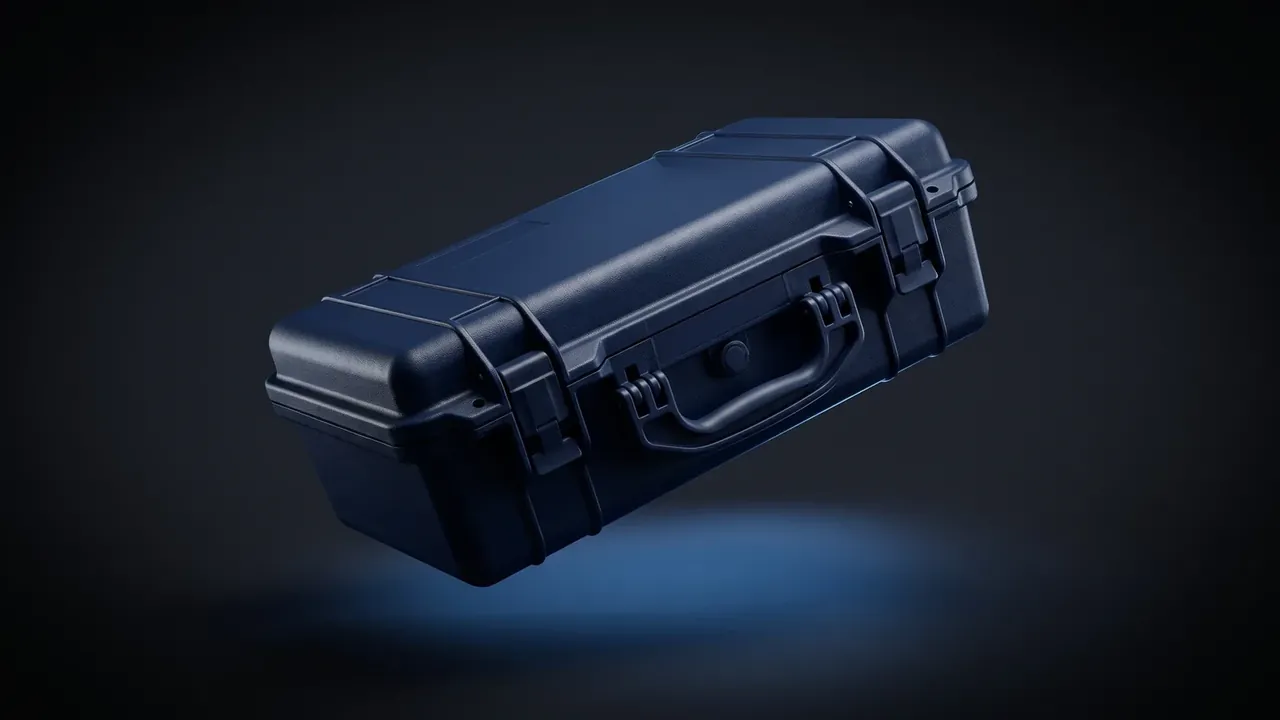
Quick answer: Site performance depends on three matches — mounting point, access path and sealing — not nominal volume. Six settings follow, each with one number to accept.
Table of contents
- Fixed points in vehicles and aircraft cabins
- Access paths on shop floors and sites
- Sealing choices for vessels and cold chains
- Ground posture at a temporary aid point
- FAQ
1. Fixed points in vehicles and aircraft cabins
A mounting point decides whether the case travels or stays put. Vans and cabins share one problem: low-amplitude, high-frequency vibration, so plastic latch hooks fatigue before the body. One hour of sweep to Method 514.8, category 4, exposes it — whitening at the hook root means the wall is wrong.
Cabin use adds pressure. At cruise the cabin sits near 2,400 metres equivalent, about 75 kPa absolute, so Method 500.7 is set to that figure, not sea level. A gasketed interior lifts the lid as the latches release, hence the equalising valve on cabin units.
Write ingress protection to IEC 60529. IP65 is level 6 dust plus level 5 jets: hose spray, never immersion. Call IP65 waterproof and nobody dares test it, so the clause dies.
| Setting | Mounting | Clause | Number to accept |
|---|---|---|---|
| Ambulance | Underseat drawer plus strap | 514.8, cat. 4 | one hour, no whitening |
| Cabin | Bulkhead bracket plus valve | 500.7 | opens at 75 kPa |
| Service truck | Sidewall plate | IEC 60529 | IP65, 6.3 mm nozzle |
| Carry | Handle plus strap | static load | twice loaded weight |
The weakest is the truck plate: it holds the back only and the lower edge hangs free, so every bump swings the case around it and the hinge takes torque, not tension.
2. Access paths on shop floors and sites
A site case is judged on seconds from alarm to dressing in hand. Three nodes are measurable: distance to the casualty, hands to open, depth of the first item.
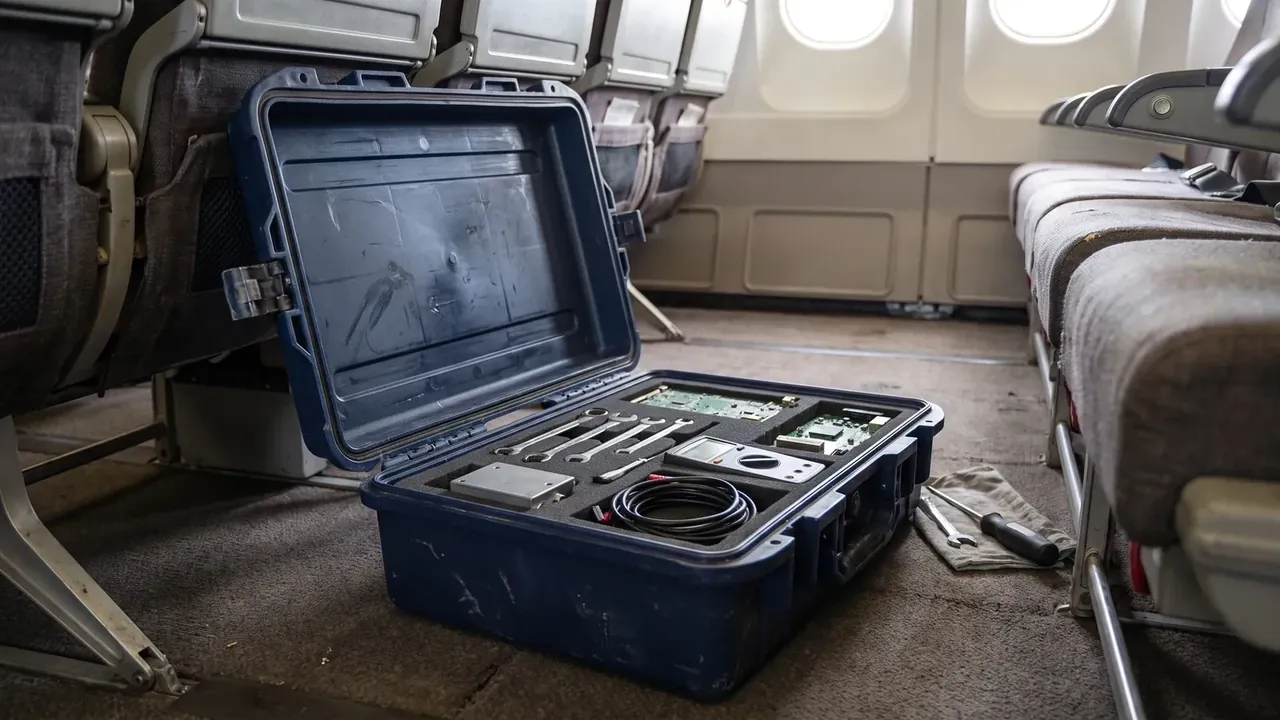
Below 105 degrees the lid falls back when released, so opening takes two hands; on a site that matters, because one person is usually alone. A detent hinge holds the lid at any angle and adds two wear parts. Site dust speeds that wear, since grit lodges in the teeth. Specify metal detent plates on both sides, not plastic teeth on one. The lid liner strip loosens too, and then the gasket loads unevenly and leakage starts at one corner.
Depth of the first item follows wall thickness. A 3.2 mm wall, plus foam and liner, loses about 20 mm against the nominal interior, so a tourniquet at the bottom doubles the time.
3. Sealing choices for vessels and cold chains
Salt spray and low temperature are opposite stresses, and one body survives both through gasket pairing, not extra thickness. Neutral salt spray runs 48 hours, read on latch springs and hinge pins; the coated shell tells nothing, since rust starts inside the pin.
- Gasket: 25 per cent compression, 60 Shore A, liftable as a full ring;
- Salt spray: 48 hours neutral, no red rust on pins;
- Cold: four hours at minus 25 C, then a 1.2 m drop onto concrete, no brittle latch failure;
- Deck mounting: four M6 bolt positions, never a single strap;
- Venting: lid opens by hand at 30 kPa differential, seal intact after reseating.
The trap is the moment of opening. Carry it from a minus 25 degree store into a warm room, the shell condenses at once while the interior stays dry, and opening then sends water into the foam. Ten minutes in a transition zone, or a one-way valve, is the fix.
4. Ground posture at a temporary aid point
A temporary aid point has no bench, so the case goes on the floor. Posture decides whether the lid holds itself up.
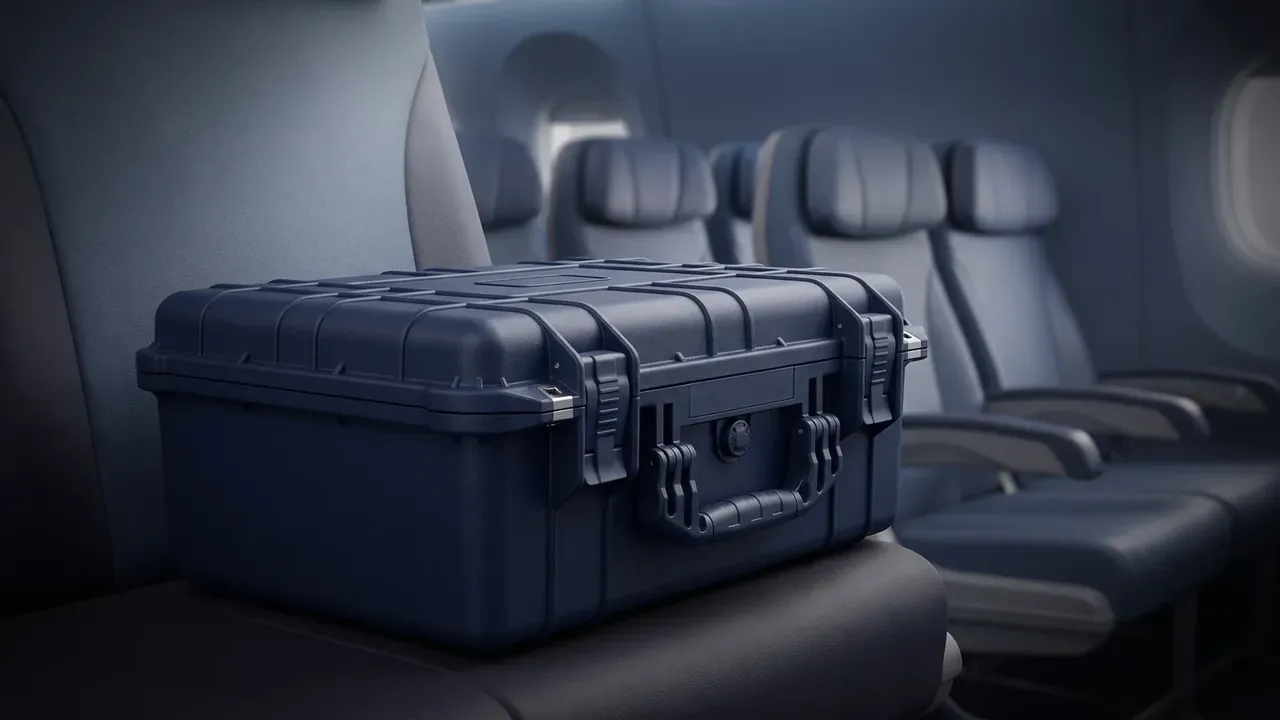
When the lid will not hold, people pin it with a knee, the case tips, and floor water runs into the latches. Open to the stop and let go; if it stays up, it passes.
| Posture | Practice | Risk | Number to accept |
|---|---|---|---|
| Flat | set down directly | water and grit at latches | 15 mm under the base |
| On its side | leaned on a wall | side wall deforms | 40 kg side load |
| Stacked | two units high | lower lid pressed open | 90 kg on top, 24 hours |
| Hung | hooked to scaffolding | swinging impact | hanger at three times load |
Stacking is where warehouses get caught: the lid seals by pulling the gasket down with the latches, so top load lands on latches and rim. After 90 kg for 24 hours the gasket keeps a set.
Conclusion
Field fit comes down to four lines: a mounting point that blocks rotation, an access path that opens with one hand, sealing written separately for jets and for differential, and a ground posture that keeps the base off the floor. All four accept a number. Set the clauses from the site first, and the first aid kit case will still work the first time it is needed.
This article discusses only the container (case body) side of specifications and design intent, and does not cover any handling, loading or use of the contents.
Related Reading
- How to set layers, sealing and marking
- First aid case and medical case: separate jobs
- Fixing and reaching a road case on tour
Related Products
- 8 Series — Gun Cases; Military Equipment Cases; Camera Equipment Cases; Drone Cases; Watch Cases; Knife Cases; First Aid Cases; Electronics Equipment Cases
- WL8-2812 PP Gun Case — model WL8-2812
- All protective cases and toolboxes: 7 series, 158 models