

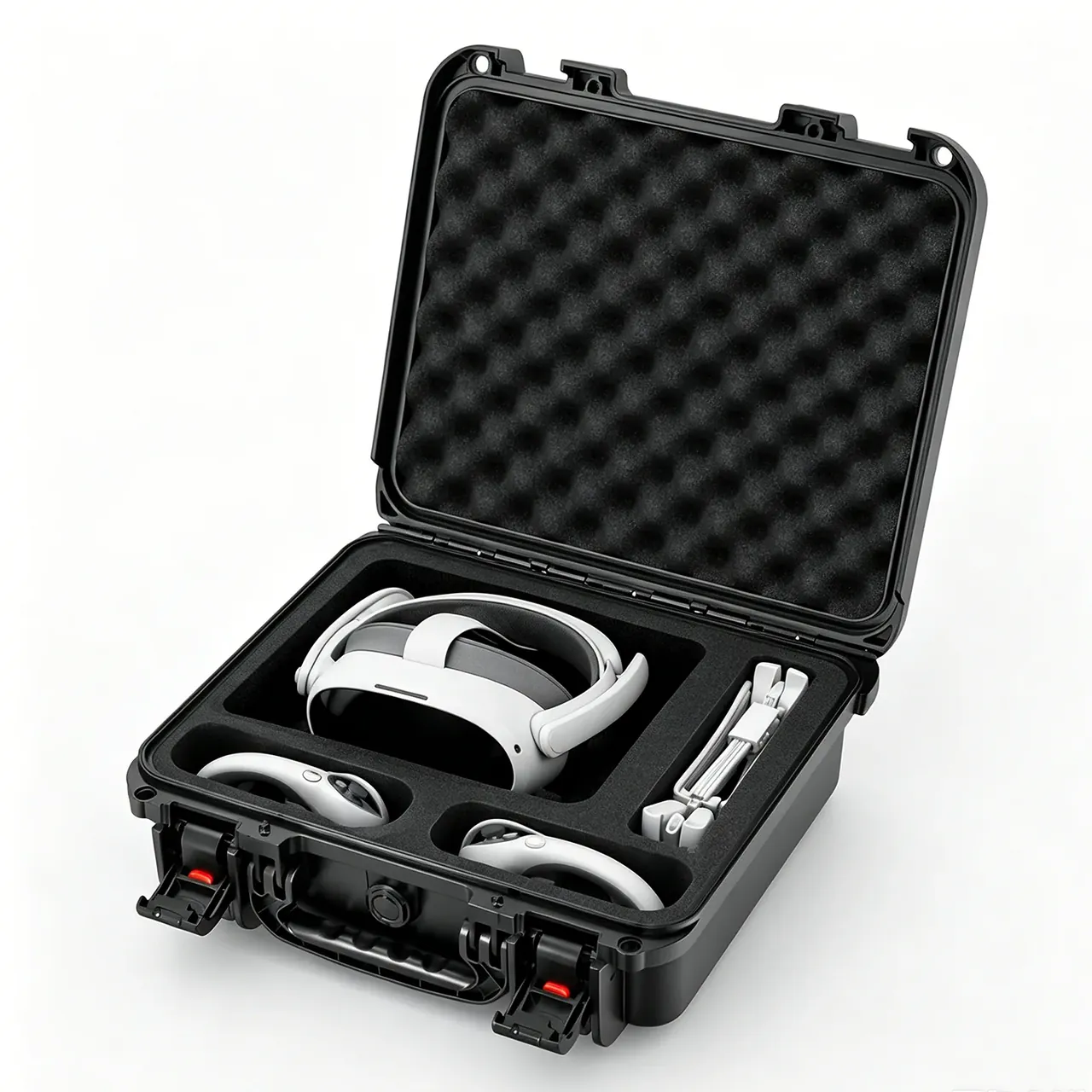
Quick answer: A case spare kit stocked with 12 part numbers used only 3 in two years; five parts cover 92% of replacements for 3% of case value.
Table of contents
- Start with replacement frequency
- Gasket: 3 m per roll
- Latches: two per set
- Wheels and hinge pins
- Pressure valve at 0.3 kPa
- Stock depth, colour and shelf life
- FAQ
1. Start with replacement frequency
One production line stocked its case spare kit with 12 part numbers. Two years of repair logs show three were consumed: gasket, latches and wheels. The other nine took under 8% of replacements and held 41% of the stock value.
That is the usual mistake, a kit built from the parts list instead of the failure list.
Five parts cover 92% of replacement events, which is why 12 shrink to five. Each carries a failure sign you can see, not a "might fail".
| Part | Pack unit | Failure sign | Replace when |
|---|---|---|---|
| Gasket | 3 m roll | Dent will not recover | 1 mm dent in groove |
| Latch | 2 per set | White root on arm | Tongue worn 0.5 mm |
| Wheel | 4 per group | Bright worn edge | 2 mm offset wear |
| Hinge pin | 4 mm, 10 per bag | Groove on pin | 0.3 mm end play |
| Valve | 1 per bag | Stuck diaphragm | No rebound in 5 s |
At 3% of case value the kit cannot be a full backup. Backing up all 20 part numbers ties up 18% of the case price, and 76% of those parts never move before scrapping.
Counting from the fleet is simpler: 100 cases need 11 replacements a year, and three plants sat within 15% of that ratio.
2. Gasket: 3 m per roll
The groove runs 1.84 m around a case, so a 3 m roll cuts 1.6 cases; plan on 1.5 to hold a 10% joint allowance. A 45° scarf joint overlaps 6 mm, and cutting short scraps the roll.
A gasket does not fail by breaking, it fails by losing rebound. Press a used strip for 5 s; recovery slower than 2 s means replacement. The visible sign is a 1 mm dent in the groove showing as a thin line when the lid closes.
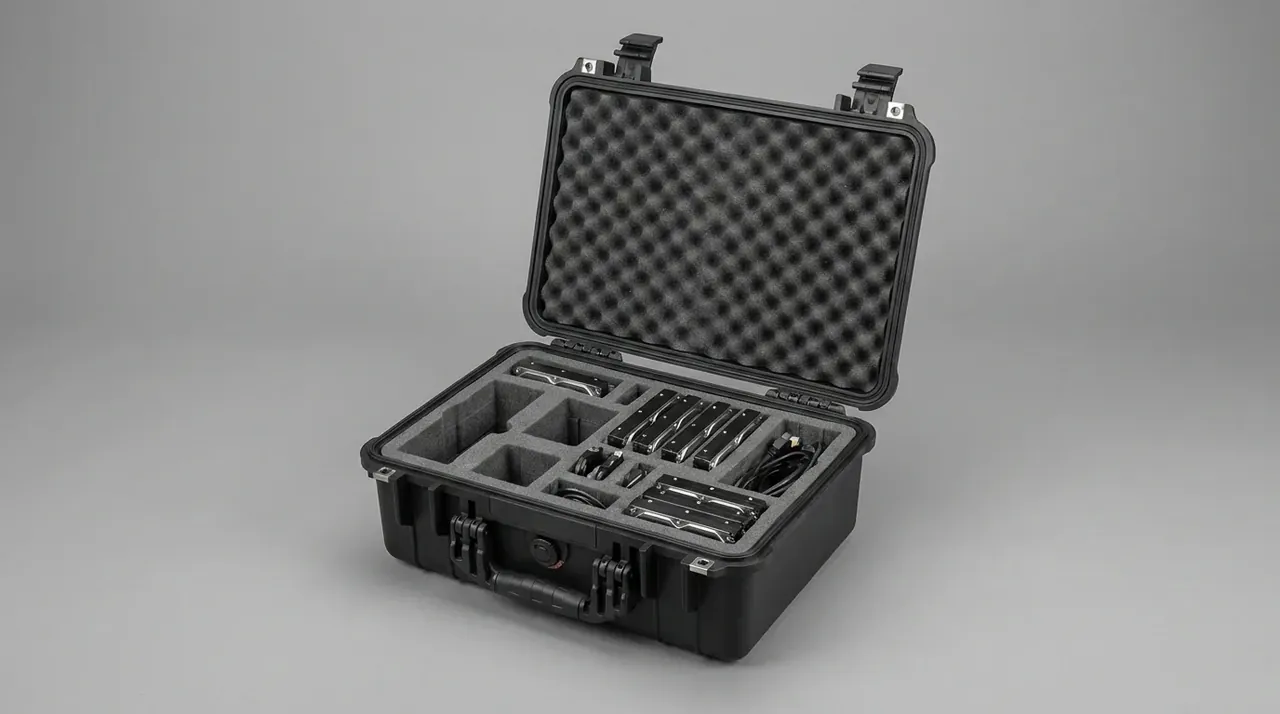
Clean the groove first. Grit presses a 0.3 mm hard spot into the new strip. Brush the groove twice, wipe with ethanol, wait 5 min.
Two profiles exist, D-section for a 3 mm deep groove and P-section for daily opening. Put one in a kit, never both.
Shelf life is 24 months, stored flat and dark. A hard crease loses half its modulus and flattens within three months of fitting.
3. Latches: two per set
Latches ship two per set, one per end of the lid. The arm flipped most fails first while the other runs two more years, so sites consume single units rather than sets.
Read the root of the arm. A white root means the resin has yielded; once the tongue wears 0.5 mm the closing feel goes light and a palm on the lid shows 1 mm of play.
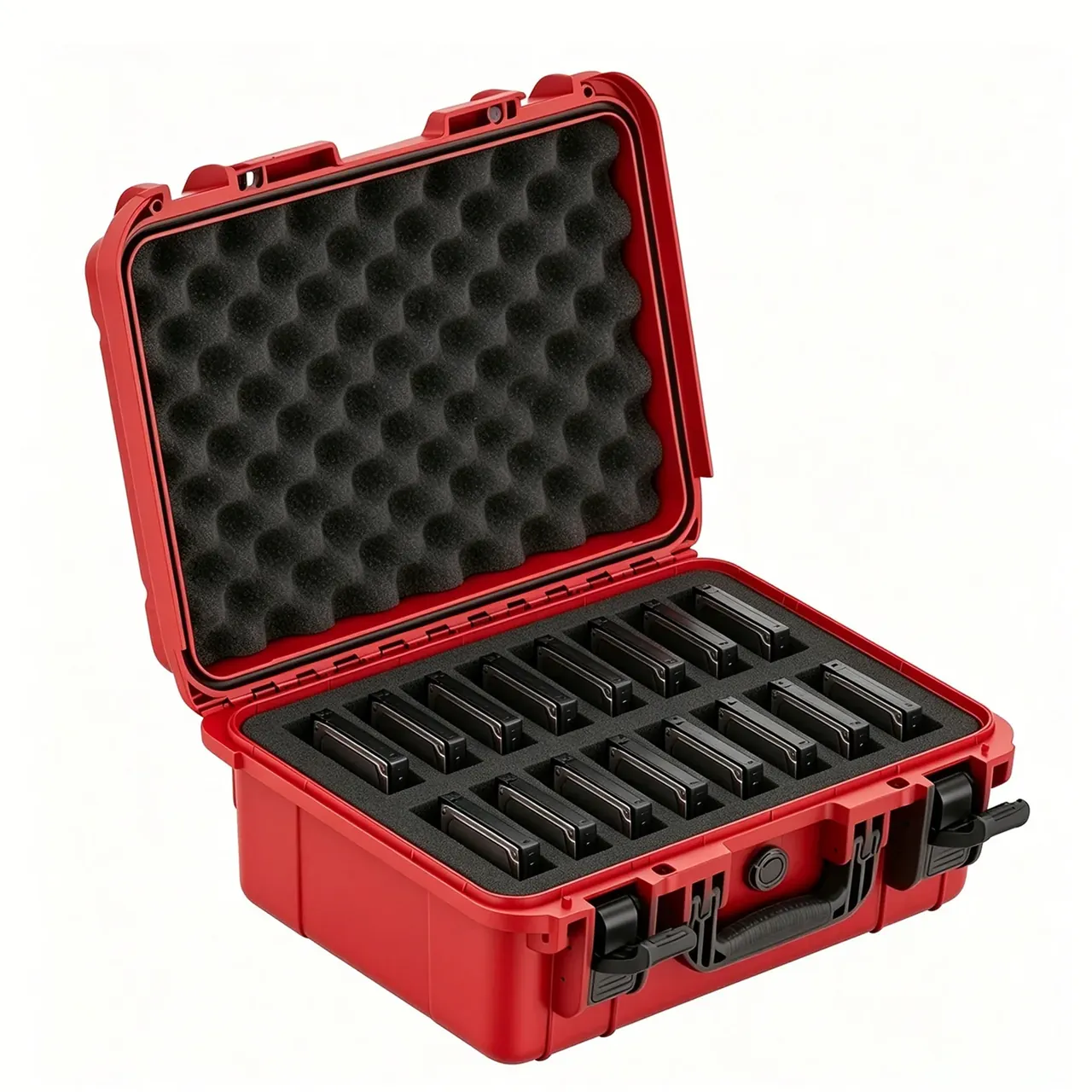
Replacing one latch costs a colour match, since two batches apart read light and dark on the same lid. Stock six from one batch, enough for three cases at once.
A swap takes about 30 s with no tools, which is the reason latches belong in the kit.
4. Wheels and hinge pins
Wheels ship four to a group because wear is never even. Trolley duty loads the rear pair harder, so after eight months a rear rim is often 2 mm down while the front shows 0.8 mm.
Replace the worn one alone and the case leans 3°, then tracks to one side as you pull it. Change pairs on the same side, keeping diameters within 0.5 mm left to right.
A 50 mm wheel runs near 75 Shore A. Past 0.4 mm of bore wear a new wheel still wobbles.
Hinge pins are the cheapest of the five and the easiest to forget. Replace a 4 mm × 26 mm pin once a 0.1 mm groove appears, because the groove reams the hinge boss; by 0.3 mm of end play a new pin no longer saves the lid. Coastal sites take 316 rather than 304, at 40% more per pin and three times the life.
5. Pressure valve at 0.3 kPa
The valve opens at 0.3 kPa, low enough to defeat by mouth, and it is the only path that keeps a sealed case from deforming under temperature swing.
Once the diaphragm sticks the differential moves to the gasket. A case leaving a 35 ℃ truck into a 5 ℃ cold store develops negative pressure that pulls the seal into the groove, and the pop on opening is the gasket being torn away.
Test it by pressing the diaphragm for 5 s. No rebound, or a sticky one, means replacement.
The case spare kit carries a single valve because it almost never fails, yet failure takes the whole case out of service. Age hardens the silicone until 0.3 kPa cannot lift it, and a torn diaphragm leaves the vent open; neither state shows before dispatch.
6. Stock depth, colour and shelf life
Stock depth follows cases in service, not historical consumption. Four sets per 100 cases comes from two years of logs: 100 cases need 11 replacements a year, and four sets cover twelve months.
| Cases in use | Kits | Months covered | Holding pattern |
|---|---|---|---|
| 50 | 2 | 14 | Single store |
| 100 | 4 | 12 | Two stores |
| 300 | 10 | 11 | Main plus site |
| 500 | 16 | 10 | Main plus two sites |
Colour is a batch problem. Write the batch on the back of each bag and check it before opening.
Only the gasket carries a shelf life, 24 months. An older strip is not unusable, it is unverified: dent-test it and scrap it past 0.5 mm.
A case is replaced rather than repaired on three lines: a shell crack over 50 mm, a chipped hinge boss, or a groove that no longer closes flat. A softer rule is three replacements inside a year, which means the case is working outside its design duty.
Conclusion
A case spare kit earns its place by being accurate, not complete. Five parts carry five visible criteria: a 1 mm dent in the groove, 0.5 mm off the latch tongue, 2 mm of offset wheel wear, 0.3 mm of hinge end play, and a diaphragm that fails to rebound in 5 s. Put those lines on the replacement form and the decision stops needing experience. The ratios are as simple: four sets per 100 cases, one gasket roll per 1.5 cases, latches six at a time from one batch, wheels in pairs, pins ten to a bag, one valve. Held under 3% of case value, that kit neither runs dry nor piles up.
| Part | Per kit | Criterion | Storage |
|---|---|---|---|
| Gasket | 3 m roll | 1 mm dent | Flat, dark, 24 months |
| Latch | 2 | Tongue 0.5 mm | One batch, six spare |
| Wheel | 4 | 2 mm offset | Change in pairs |
| Hinge pin | 10 | 0.3 mm play | Dry, rust free |
| Valve | 1 | No 5 s rebound | Away from grease |
This article discusses container-side specifications and design implications only, and does not cover any handling, loading or use of the contents.
Related Reading
- Replacing and choosing case latches
- Gasket ageing and replacement criteria
- Wear parts and spares planning for cases
- How a case pressure relief valve works
Related Products
- 8 Series — Gun Cases; Military Equipment Cases; Camera Equipment Cases; Drone Cases; Watch Cases; Knife Cases; First Aid Cases; Electronics Equipment Cases
- WL8-2812 PP Gun Case — model WL8-2812
- All protective cases and toolboxes: 7 series, 158 models