

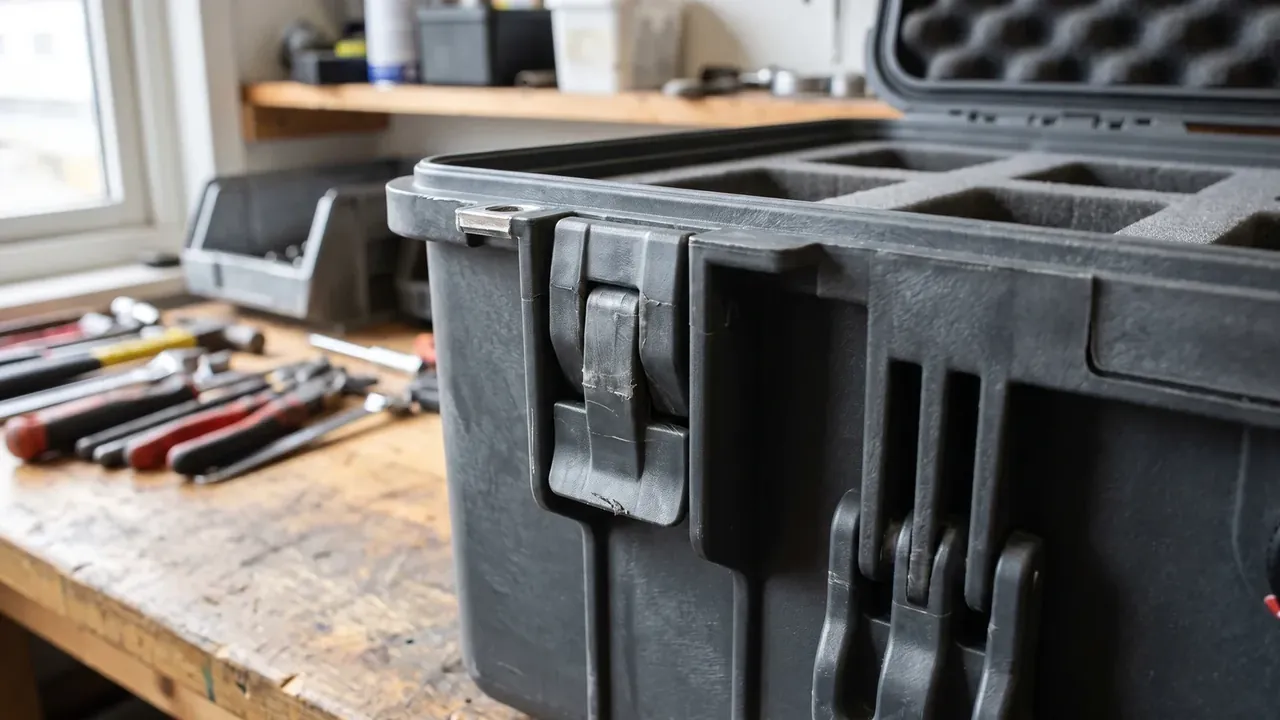
Quick answer: Foam cutting lands mostly in case inserts, in five shapes: a solid block cut for one part, layers stacked to different depths, a pluck grid, local blocks, and multi-pocket layouts. The scenario fixes shape, density and thickness.
Table of contents
- Where Foam Cutting Lands: Five Pocket Shapes
- Weapons and Instruments: Solid Cut and Interference
- Test Gear: Layered Depth and Cable Channels
- Film, Drones and Panels: Multi-Pocket Layouts
- Medical and Emergency: Wipeable, Cold and Colour
- FAQ
1. Where Foam Cutting Lands: Five Pocket Shapes
Nine in ten foam cutting jobs end as a case insert, yet pocket shapes differ sharply. Weapons need one solid block that grips the outline, instruments need three depths, tools need a grid of squares, film gear needs a dozen pockets in one box.
Shape follows the part, never the process. Count pieces, measure the largest outline and the thinnest section, then pick density and thickness.
| Scenario | Pocket shape | Foam and density | Thickness |
|---|---|---|---|
| Weapons | Solid block, interference | EVA 55 kg/m³ | 75 mm, three layers |
| Test gear | Stacked, three depths | EVA 45 or PE 38 | 22 to 55 mm |
| Film gear | 8 to 12 pockets | EVA 45 plus convoluted | 30 to 60 mm |
| Comms panels | Flat sheet, corner blocks | PE 30 | 25 mm |
| Tool sets | Squares, 2 mm gap | EVA 45 or EPE 30 | 20 to 40 mm |
2. Weapons and Instruments: Solid Cut and Interference
In foam cutting, a long hard part sits in EVA at 55 kg/m³, cut 1.5 mm under its outline. Below 45 kg/m³ the same interference loosens in summer heat, and every reload needs a fresh shove.
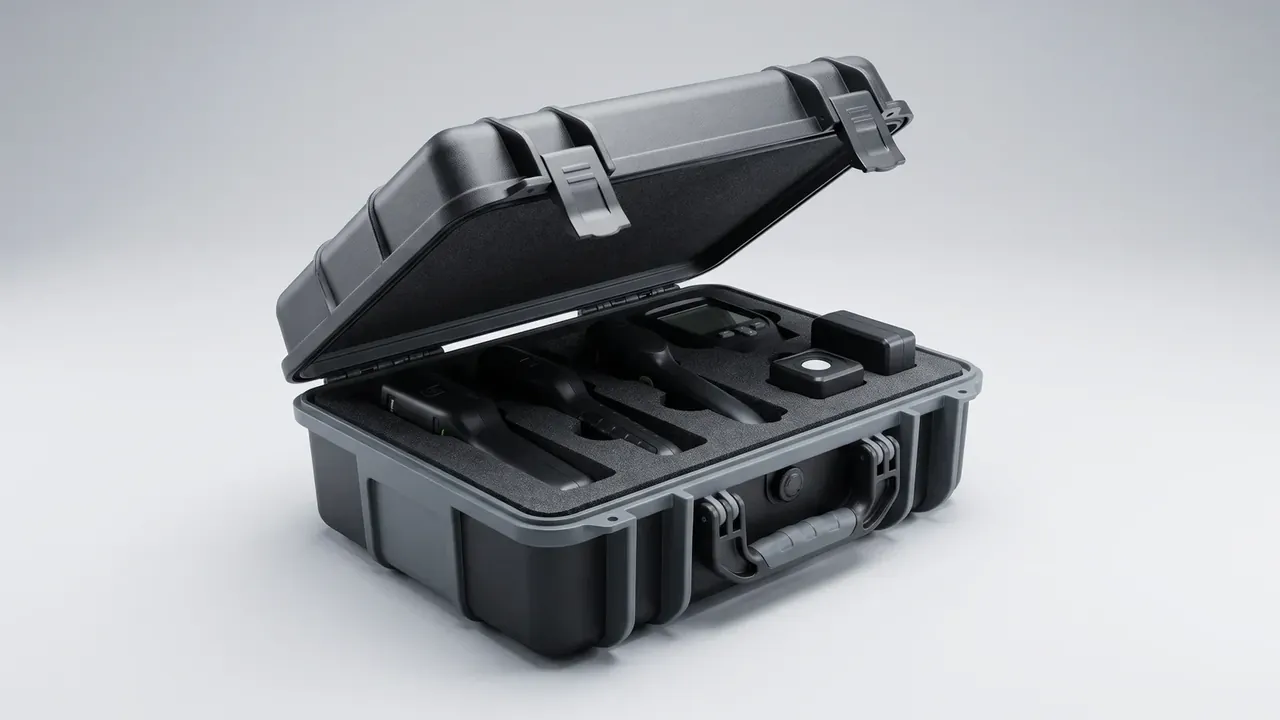
Layers run 20, 30 and 25 mm: base, cradle, convoluted lid foam, 75 mm total. Against 90 mm of internal height that leaves 15 mm of preload; under 10 mm the part still travels.
Failure starts at the mouth: after 500 insertions the edge collapses 0.8 mm and half the grip goes, so the mouth keeps 3 mm of straight wall.
3. Test Gear: Layered Depth and Cable Channels
An instrument arrives with probes, a supply and cables, so pockets run at 55, 38 and 22 mm, built from a 20 mm base sheet with blocks bonded on top.
Foam cutting leaves cable channels 12 mm wide and 15 mm deep, with a bend radius of at least 25 mm. Tighter puts a hard kink in the cable, and the core breaks after about three months.
Instrument foam is compressed 12 to 18 percent. Under 12 it does not carry the mass; over 18 the panel must be forced in and calibration drifts.
4. Film, Drones and Panels: Multi-Pocket Layouts
Film cases carry 8 to 12 pockets: body, lenses, batteries, cage. Lenses stand upright with 2 mm radial clearance; lying flat loads the barrel.
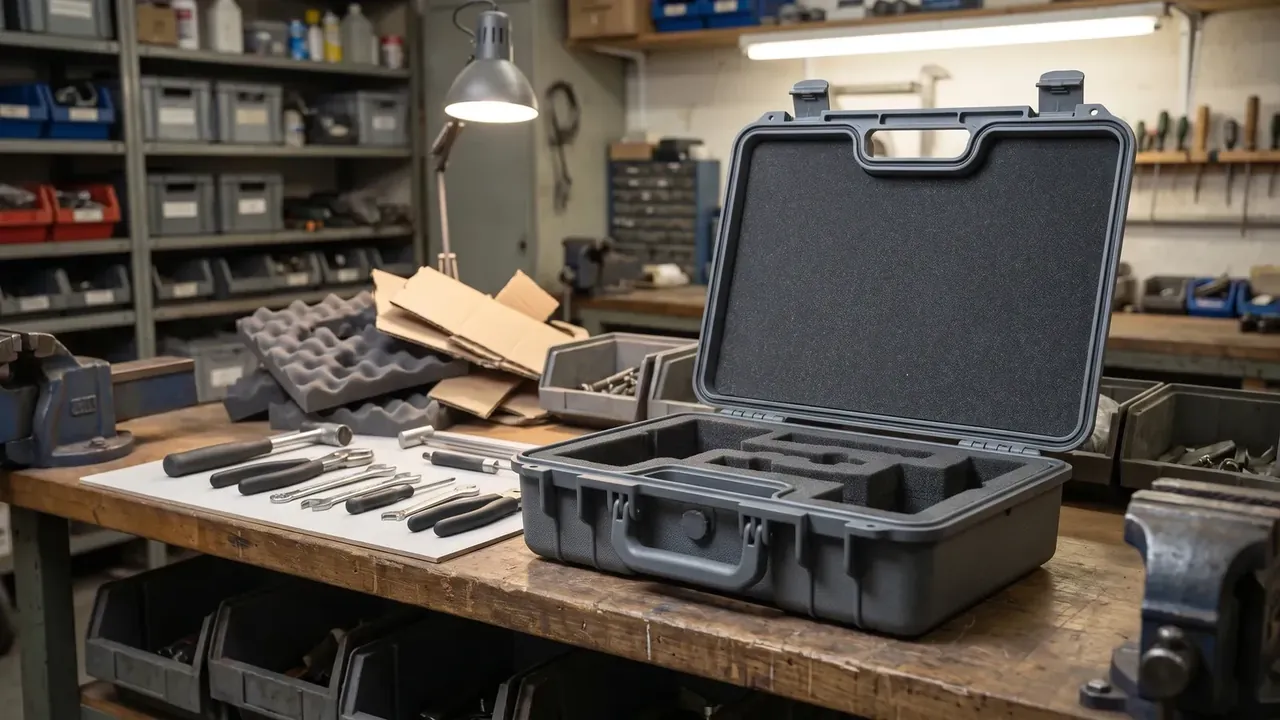
A drone takes six pockets with 12 mm ribs, each arm cut 2 mm over its folded size. Ribs under 8 mm tear during cutting, and a torn block is scrap.
Comms panels use a 25 mm sheet with four corner blocks, saving 40 percent of material, at the cost of 1 to 2 mm of slide.
5. Medical and Emergency: Wipeable, Cold and Colour
Medical foam cutting must be wipeable: closed-cell EVA or PE, cleaned with 70 percent alcohol 50 times. Open-cell foam absorbs the spill, and one leak makes the pocket permanently dirty.
Emergency stock is judged cold: 48 hours at -25 °C, then out, and no cracking. Standard EPE stiffens at that temperature and splits along the mouth on the first drop, so low-temperature EVA is specified.
| Scenario | Failure mode | Countermeasure | Check |
|---|---|---|---|
| Medical | Cannot be cleaned | Closed-cell EVA, 50 wipes | Colour after wiping |
| Emergency | Cold cracking | Low-temp EVA, 48 h at -25 °C | Drop after removal |
| Tools | Oily spanner will not fit | 2 mm gap per pocket | Invert when loaded |
| Film gear | Barrel under load | Lens upright, 2 mm radial | 72 hours loaded |
Tool sets are divided by piece count with a 2 mm gap; below 1 mm an oily spanner will not enter and the user levers it, which lifts the wall. Colour follows use: dark grey hides marks, pale foam shows a missing tool.
Conclusion
Weapons want grip, instruments depth, film gear upright lenses, drones ribs, medical kits a surface that survives wiping and cold. Get the shape wrong and density cannot rescue it; applications are decided inside each case, by the parts and how they lift out.
This article discusses only the container (case body) side of specifications and design intent, and does not cover any handling, loading or use of the contents.
Related Reading
- Density, hardness and pocketing on custom foam inserts
- Field problems when fitting an insert
- Foam storage: humidity, stack height and rotation
- Comparing foam cutting methods by accuracy and batch
Related Products
- 8 Series — Gun Cases; Military Equipment Cases; Camera Equipment Cases; Drone Cases; Watch Cases; Knife Cases; First Aid Cases; Electronics Equipment Cases
- WL8-2812 PP Gun Case — model WL8-2812
- All protective cases and toolboxes: 7 series, 158 models