

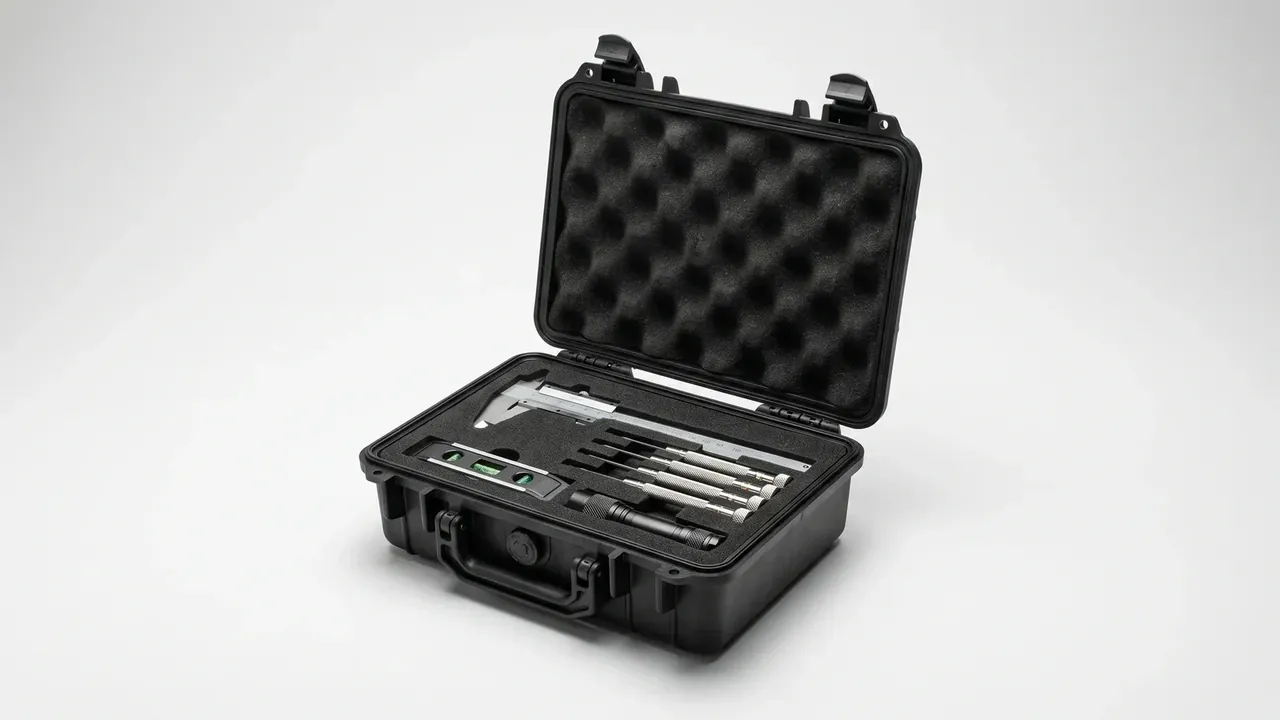
Quick answer: Square-meter pricing for foam cutting only works on plain sheet stock cut in straight lines; once pockets, bonding and tolerances enter the drawing, switch to a per-piece price with tooling amortised, and fix die ownership plus four dimensional limits in the order.
Table of contents
- Why Square-Meter Quotes Do Not Reconcile for Foam Cutting
- Tooling Fees and MOQ Arithmetic
- Tolerances, Layers and Bonding in the Order
- Lead Time, Samples and Payment Milestones
- FAQ
1. Why Square-Meter Quotes Do Not Reconcile for Foam Cutting
A 600×400 mm insert quoted at 380 RMB per square meter and at 12 RMB per piece ends up about thirty percent apart on the same purchase order. The difference is not margin; the square meter erases the cut path entirely.
Foam cutting cost follows three lines: path length, material density and layer count, and time spent clearing waste. Area averages all three into one number.
| Basis | Unit | Where it fits | What it hides |
|---|---|---|---|
| Square meter | RMB per m² | Sheet stock, straight knife cuts | Path length, waste clearing, bonding |
| Die set | RMB per set plus per piece | Complex shapes, steady volume | Revision fees, die life |
| Per piece with tooling | RMB per piece | Sample through to production | MOQ, die ownership |
Change one material grade and the numbers stop being comparable. EVA at 60 kg/m³ and PE at 38 durometer, both 30 mm thick, differ by roughly double in cutting resistance, so they cannot share a price.
The first question in any enquiry should be density and hardness, not unit price.
2. Tooling Fees and MOQ Arithmetic
Die cost is the line most often waved through as a sunk expense. A 600×400 mm steel-rule die quotes at 1,200 RMB with a life of about 5,000 strokes; at an MOQ of 60 sets it amortises to 20 RMB per set, and at 600 sets it drops to 2 RMB. The same die produces a tenfold spread.
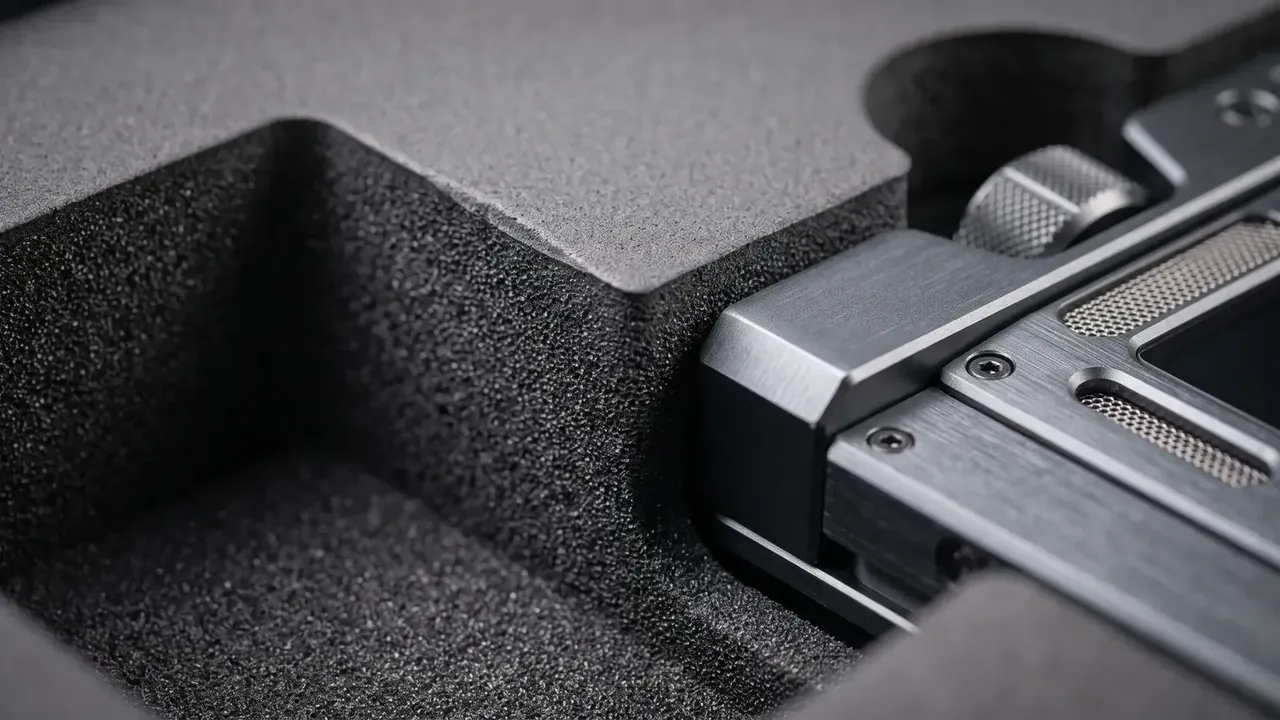
Die ownership belongs in the order, or every supplier change means buying tooling twice. First, title sits with the buyer, and the die ships with the last batch or moves under a written storage agreement. Second, revision fees are charged by modified area, so changing one round hole should not cost the price of a new die. Third, the supplier reports when a die approaches 5,000 strokes, letting the buyer choose between repair and replacement. Without those three lines, tooling cost resets at every model change.
When MOQ will not move, check whether two parts can share a die: where two inserts share an outline and differ only in the centre pocket, one die plus a revision lands about forty percent below a new tool.
3. Tolerances, Layers and Bonding in the Order
Before writing a tolerance into an order, decide whether it is a cutting tolerance or an assembly tolerance; the two are not equally tight.
- Thickness: 30 mm stock accepted at ±0.5 mm, beyond which the sheet changes
- Hole diameter: ±0.8 mm for round, relaxed to ±1.2 mm for square
- Pocket depth: ±1.0 mm, with deep pockets needing a second setup
- Flatness: 1.5 mm per meter, since most bowing comes from bonding
- Layers: three maximum, with the adhesive layer held at 0.15 mm
- Kerf: about 0.15 mm on laser, 0.3 mm on waterjet
Every added layer stacks another tolerance.
Above three layers, milling one block is steadier than bonding, though yield falls from about 85% to 60%; that trade belongs in the price.
4. Lead Time, Samples and Payment Milestones
Seven days for samples and twelve for production is the normal rhythm for 30 mm EVA.
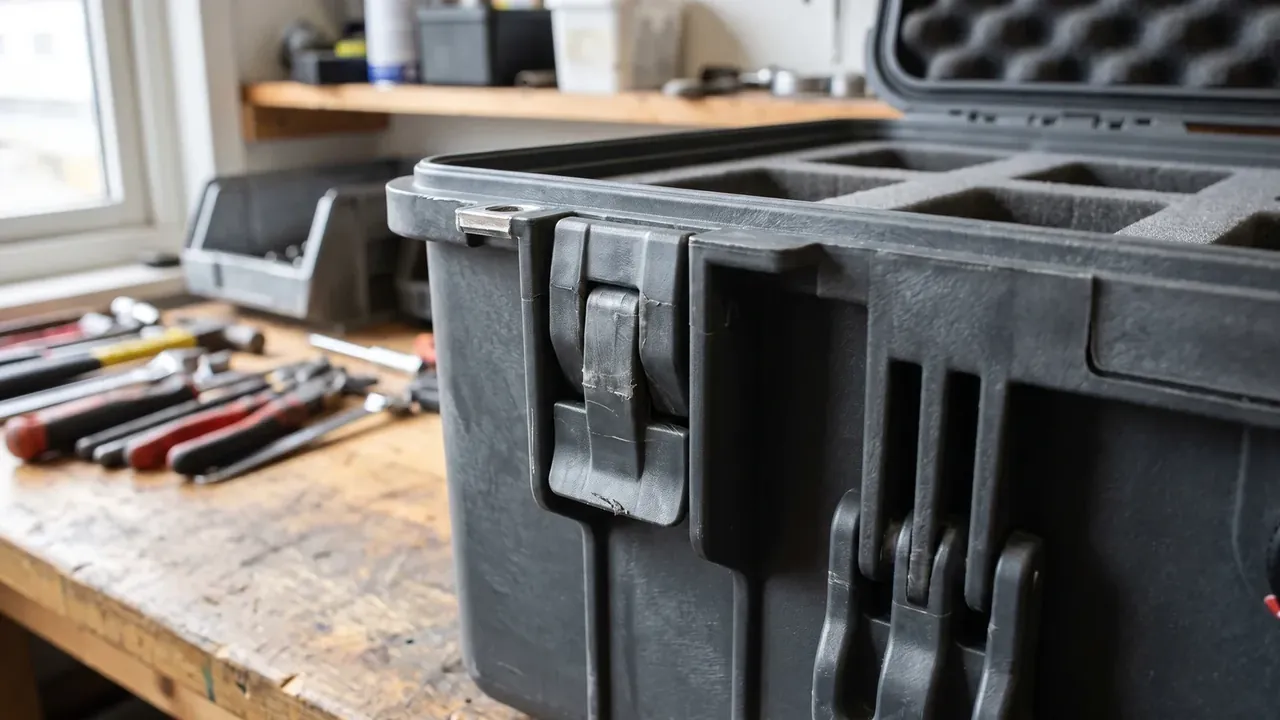
The cost most often underestimated is the machine time that sampling and revisions consume. A sample fee of 800 RMB for three sets, credited in full at 300 production sets, is easier to agree than free samples. A 45-day credit term should start at the signed inspection sheet rather than the ship date. Keep the die invoice apart from the goods invoice, so a die still sitting in the supplier plant cannot hold up a shipment. Write the inspection rule too: 5% of each batch sampled with a floor of 10 pieces, and a dimensional failure returns the batch. Two consecutive failed batches entitle the buyer to third-party inspection at the supplier's cost.
| Stage | Days | Verifiable output |
|---|---|---|
| Drawing and path review | 1 | Cut path, waste plan, material confirmation |
| Sampling | 7 | Three sample sets plus a dimensional report |
| Die build and approval | 5 | Die acceptance sheet, first struck part |
| First production run | 12 | Full inspection record for the first 200 pieces |
| Batch delivery | Weekly | Sampling report and packing list per batch |
Conclusion
Pricing by square meter is convenient arithmetic, not reliable arithmetic. With die ownership, four dimensional limits, a twelve-day production node and a creditable sample fee in the order, foam cutting quotes become comparable.
This article discusses only the container (case body) side of specifications and design intent, and does not cover any handling, loading or use of the contents.
Related Reading
- The full sequence inside foam cutting
- Cost comparison across foam cutting methods
- How to weight a supplier scorecard
Related Products
- 8 Series — Gun Cases; Military Equipment Cases; Camera Equipment Cases; Drone Cases; Watch Cases; Knife Cases; First Aid Cases; Electronics Equipment Cases
- WL8-2812 PP Gun Case — model WL8-2812
- All protective cases and toolboxes: 7 series, 158 models