

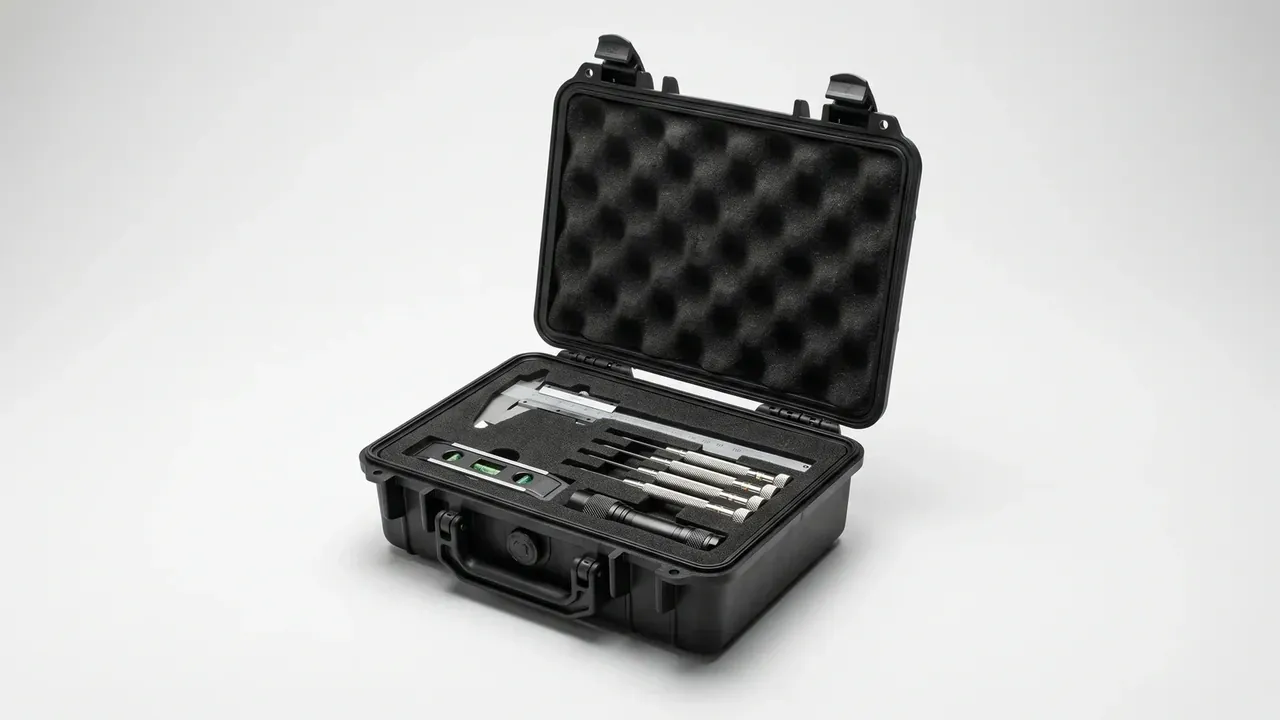
Quick answer: Five things decide a foam-lined protective case: foam family, density, layer count, compression and rebound, and the fit between insert and shell. Unit weight, step height and shipping mode settle all five in one pass.
Table of contents
- Which Foam Family Sits Inside the Foam-Lined Protective Case
- Density Follows Unit Weight, Not Feel
- Layer Count Follows Step Count
- Compression and Rebound Decide the Grip
- Five Criteria on One Sheet
- FAQ
1. Which Foam Family Sits Inside the Foam-Lined Protective Case
Most of the difference between two foam-lined protective cases sits in the cut block, not the shell. The same shell with different foam may carry twice the weight. Start with the item: weight, steps, handling frequency.
Three families cover nearly every order. Expanded polyethylene is closed cell, light, slow to recover and cheapest. Ethylene vinyl acetate is closed cell too, but dense and clean-cutting. Polyurethane is open cell, softest and fastest, best against curved faces.
| Foam | Density | Best cavity use |
|---|---|---|
| Expanded polyethylene | 25 to 35 kg per cubic metre | Light parts, one-way transit |
| Ethylene vinyl acetate | 60 to 90 kg per cubic metre | Precision parts, daily handling |
| Polyurethane | 25 to 40 kg per cubic metre | Lid pressure, curved faces |
2. Density Follows Unit Weight, Not Feel
Density is kilograms per cubic metre. It sets how hard a cavity wall pushes back and how heavy the loaded case becomes. Fingers tell soft from firm, not density: two foams that feel alike can differ by thirty percent.
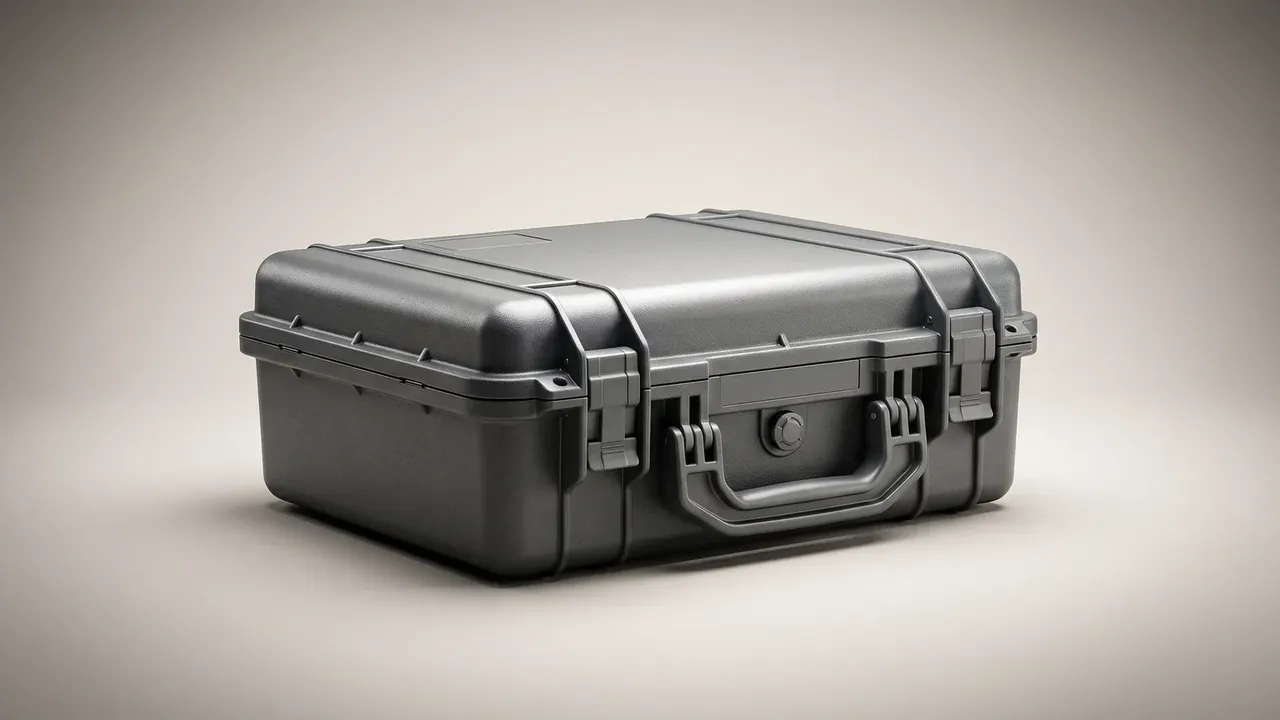
Band it at 30 for parts under one kilogram, 45 for one to five, 60 to 75 above. Mixed loads follow the heaviest item, because the wall fails there first. Check with a sample: 200 by 200 by 50 mm is 0.002 cubic metres, so 90 grams reads 45 kg per cubic metre. Cut from the middle, not the densified edge. Too low collapses cavities, too high lets shock bypass them.
3. Layer Count Follows Step Count
Layers give every height a surface to rest on. A flat part needs one sheet; a flange or connector needs its own, or it hangs free and takes the shock at its root.
Two layers cover most builds, three cover instruments with accessories. Use 10, 15 and 20 mm sheet, keep the stack under sixty percent of internal depth; at 45 mm, a case under 75 mm deep leaves no finger room.
| Layer build | Step height | Minimum depth |
|---|---|---|
| Single sheet | Under 5 mm | 60 mm |
| Two layers | 5 to 25 mm | 70 mm |
| Three layers | 25 to 50 mm | 75 mm |
4. Compression and Rebound Decide the Grip
Compression ratio is the interference measured against foam thickness. A foam-lined protective case wants twenty to thirty percent: less and the item shifts, more and the lid needs force while the latch tongue wears.
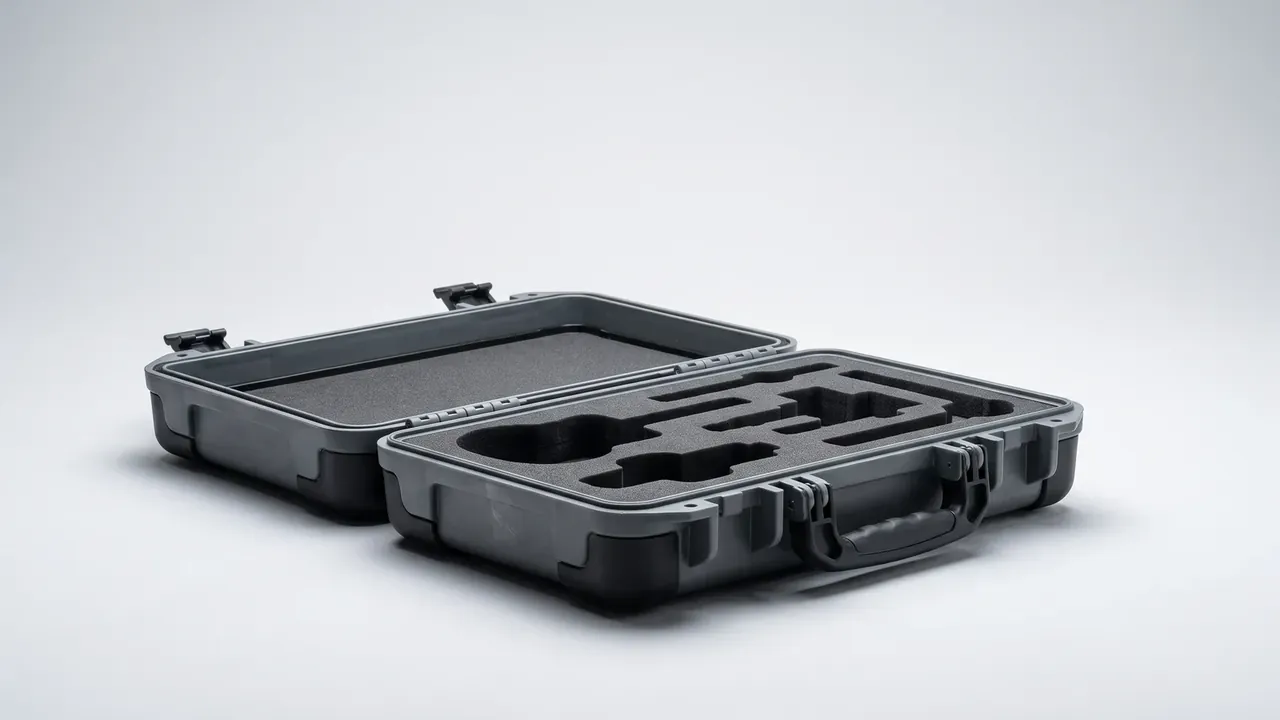
Polyurethane recovers within 1.5 seconds, expanded polyethylene in about 3, ethylene vinyl acetate almost instantly with little travel. Split interference: 2 mm sideways, 3 mm in depth. Judge replacement by permanent set; after 2000 cycles a wall down eight percent is due.
5. Five Criteria on One Sheet
The order matters. Family sets direction, density sets load, layers shape, compression feel, and the shell interface comes last. On a foam-lined protective case, latch count follows weight: two to 20 kg, four above, and the vent valve must clear the handle swing. Hot melt is rated to 60 °C, while a ship deck reaches 70 °C and lets the glue creep.
| Criterion | Decided by | Check on site |
|---|---|---|
| Foam family | Handling frequency | Thumbnail press, watch crumbs |
| Density | Unit weight band | Cut, weigh, convert |
| Layer count | Steps on the item | Lay down, count outlines |
| Compression | Interference, recovery | Close, shake, listen |
| Shell interface | Total weight | Lift by handle, watch seats |
Four lines on the enquiry sheet: unit weight, step height, daily handling count, shipping mode and peak temperature.
Conclusion
Family first, then density by unit weight, layers by step count, compression by handling rhythm, shell interface last. Skip one and trial samples settle it. Put all five numbers on the sheet and the foam-lined protective case is properly specified.
This article discusses only the container (case body) side of specifications and design intent, and does not cover any handling, loading or use of the contents.
Related Reading
- Comparing foam cutting methods
- Materials and cavity cutting for custom foam
- How a foam insert is fitted into a case
- Choosing a protective case size band
Related Products
- 8 Series — Gun Cases; Military Equipment Cases; Camera Equipment Cases; Drone Cases; Watch Cases; Knife Cases; First Aid Cases; Electronics Equipment Cases
- WL8-2812 PP Gun Case — model WL8-2812
- All protective cases and toolboxes: 7 series, 158 models