

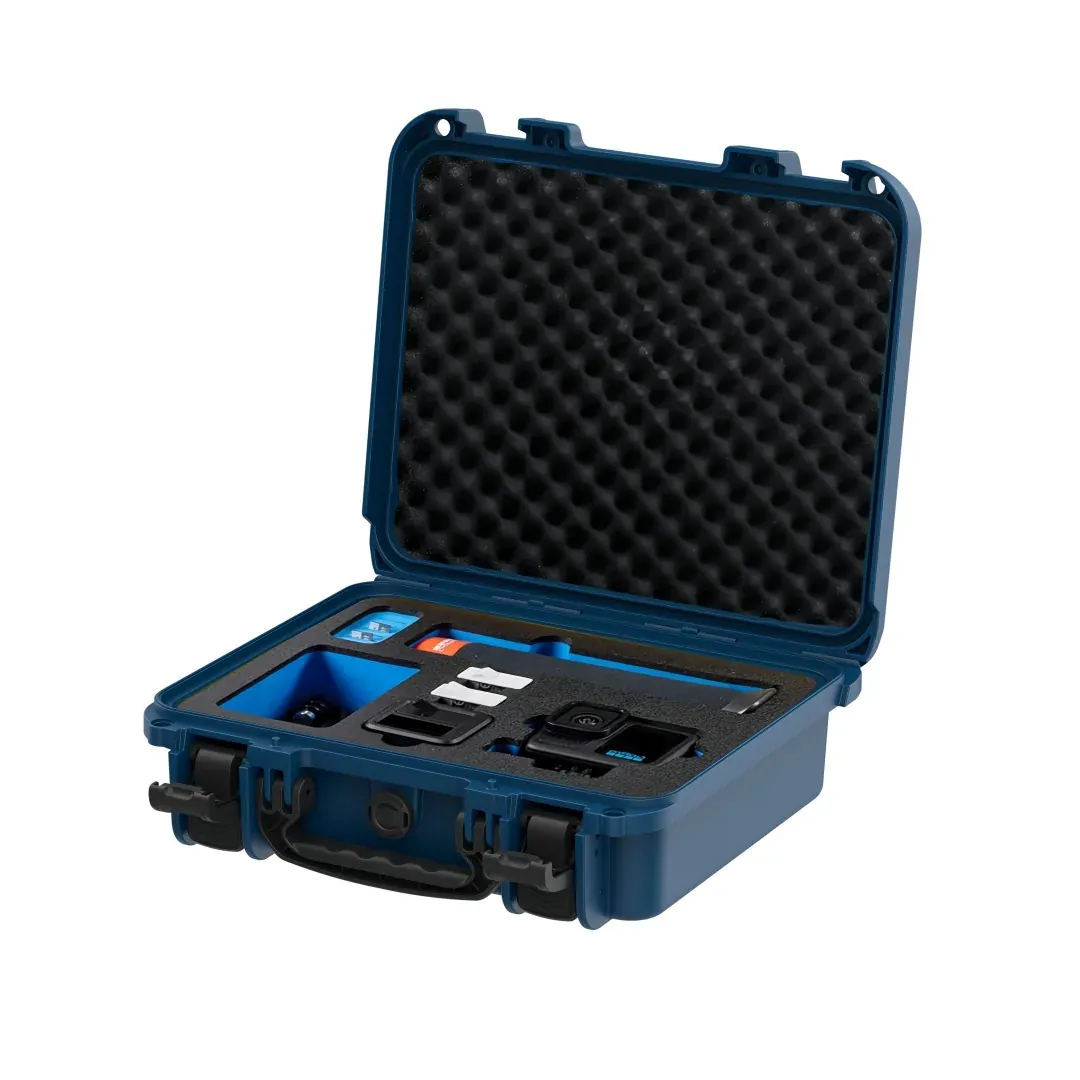
Quick answer: Foldable PP Trunk Organizers meet heat first: 70 °C for 6 h, with the long edge growing no more than 1.5 mm before the lid hits the tonneau.
Table of contents
- In-Car Conditions for Foldable PP Trunk Organizers
- Seams and Drainage in the Waterproof Liner
- Dimensional Stability at 70 °C
- Anti-Slip Ribs and Emergency-Braking Shift
- Trunk Headroom and Lid Opening
- FAQ
1. In-Car Conditions for Foldable PP Trunk Organizers
Three things hit a trunk box at once: sun, vibration and one hard brake. Foldable PP Trunk Organizers meet them as temperature, oscillation and inertia, loads that land on different parts of the shell.
Cabin temperature is a band: near 25 °C in a garage, 70 °C in summer sun, −20 °C at a winter cold start. Across it the folding joint must stay tight and the lid must not bow.
Road vibration is low in frequency and small in amplitude, working on the joint between base and wall. Braking is the opposite: rare but sharp, acting between the grip ribs and the centre of mass. The joint sits where those loads overlap, which is why its wall thickness matters more than the shell.
| Cabin temperature | Typical situation | What the shell does |
|---|---|---|
| around 25 °C | garage or shaded parking | stable size, joint tight |
| 70 °C | 6 h in summer sun | long edge grows, lid clearance shrinks |
| −20 °C | winter cold start | material stiffens, latch feels tight |
Volume and outline are fixed together. A 40 L box needs a 500×350×300 mm footprint, folding to 500×350×90 mm and saving 210 mm of height; only with that base area can ribs and joint sit apart.
Heat is hardest: it changes size rather than shape, and size is what the headroom margin was budgeted against.
2. Seams and Drainage in the Waterproof Liner
On Foldable PP Trunk Organizers the liner hangs inside the shell, 0.35 mm thick, held by a pressure strip and four corner clips so it lifts out for rinsing. The film does not pass water; the seams decide whether the liner holds.
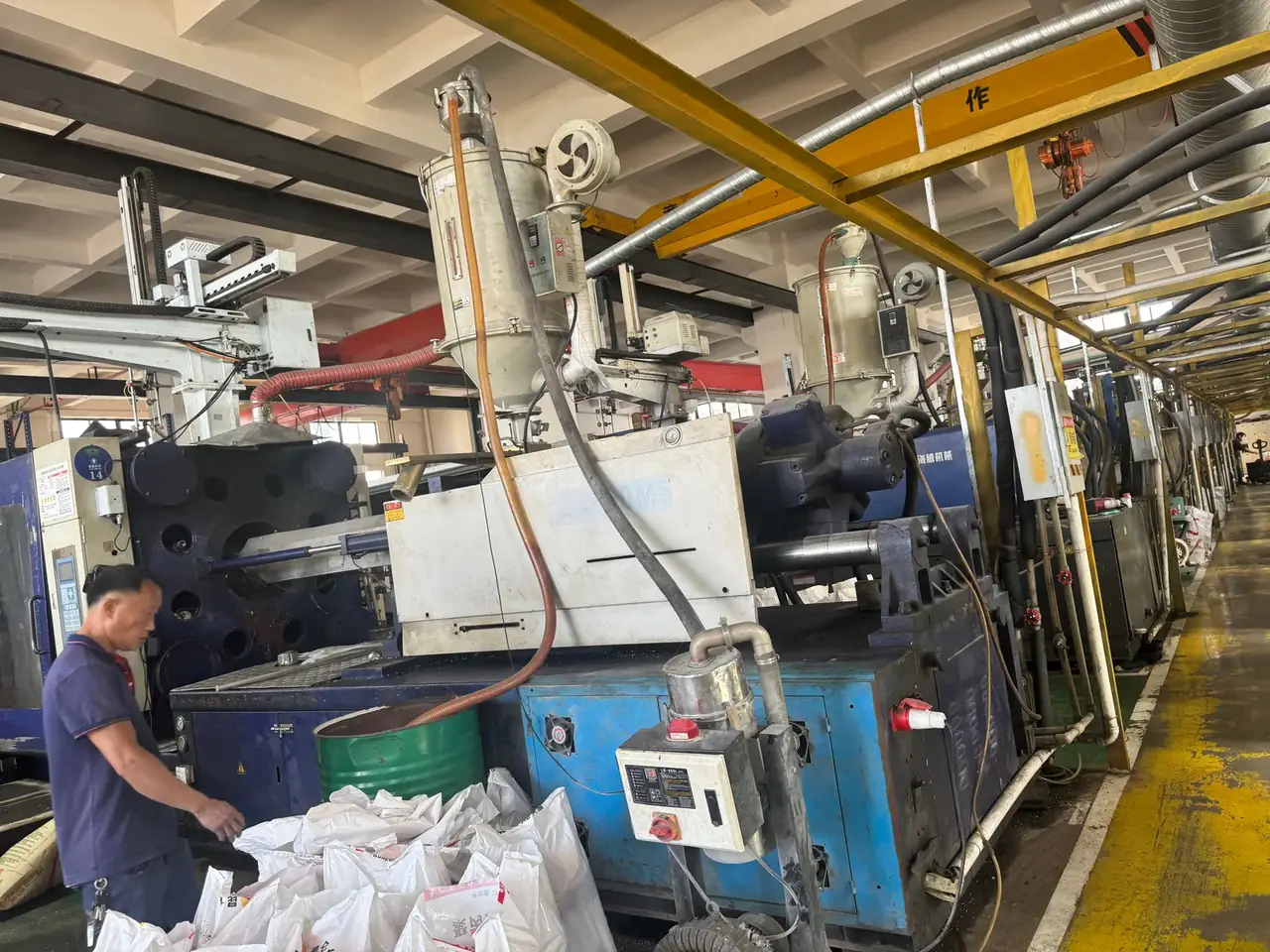
Each seam is made twice: a heat weld, then a taped strip over its edge. The weld is 8 mm wide and the passes are offset 5 mm, so a pinhole in the first is covered by the second. Seams keep away from corners, where stress lifts the tape first.
Drainage sits at the lowest point: a φ6 mm port in one corner takes a screw plug with an O-ring. Raise it 2 mm and water stays inside; lower it and the plug fouls the base rib.
Folding compresses the liner, so 10 mm of clearance is left between liner and fold line. Without it the seam bends on every fold and the tape lifts around cycle 300.
3. Dimensional Stability at 70 °C
For Foldable PP Trunk Organizers the check point is 70 °C for 6 h. PP expands with heat, so a 500 mm edge lengthens with every degree; from 25 °C to 70 °C the growth must stay within 1.5 mm, or the lid presses on the tonneau.
A 2.6 mm wall balances growth against weight. At 3.0 mm absolute growth rises slightly, since more material expands; at 2.2 mm the joint loosens first. The shell is rated −20 °C to +80 °C, the extra 10 °C covering hot spots in a parked car.
Measure by holding the box at 70 °C for the full 6 h, then reading three points along the long edge within 30 s of removal and subtracting the 25 °C figure. A folded thickness that grows from 90 mm to 93 mm will not stand upright under a shelf.
4. Anti-Slip Ribs and Emergency-Braking Shift
On Foldable PP Trunk Organizers the grip ribs run 3 mm high across the base, perpendicular to the car's long axis. Taller ribs lift the centre of gravity; shorter ones fail to bite into carpet and lose contact area.
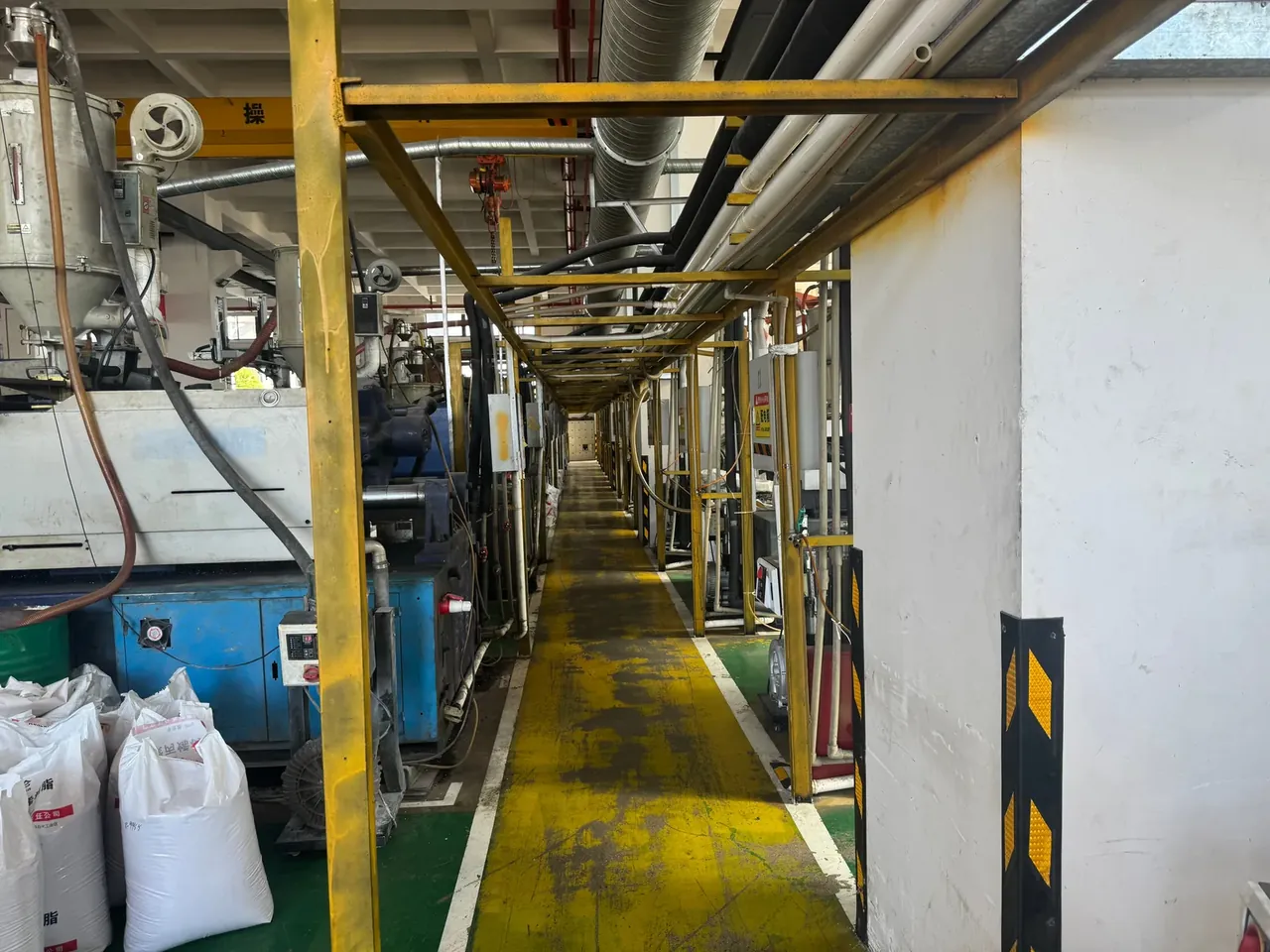
Braking is taken at 0.8 g on a sled, with shift kept within 15 mm. Movement has two sources: slip between ribs and carpet, which dominates, and elastic give in the shell, which shows only at the 15 kg rated load.
| Shift | Braking level | Shell-side result |
|---|---|---|
| under 5 mm | 0.3 g normal slowing | ribs hold, no visible move |
| around 10 mm | 0.5 g firmer braking | slight slip, settles back |
| within 15 mm | 0.8 g emergency stop | accepted limit |
On a hard stop the joint takes shear. Once pin and bore carry 0.3 mm of play, each stop loosens it a notch and the shift grows, so rib grip and joint tightness are judged together.
5. Trunk Headroom and Lid Opening
Foldable PP Trunk Organizers are measured against 320 mm of headroom and a 300 mm open height, leaving 20 mm for lid trim and tonneau. Below 10 mm the box touches the lid over bumps and the lid closes onto the rim.
Folded to 500×350×90 mm it stands beside the trunk wall, using height instead of floor area, held without a bracket. It stands on a side edge, so that edge needs a larger fillet.
| Headroom fit | Margin over open height | Verdict |
|---|---|---|
| 280 mm | not enough | folded or laid flat only |
| 320 mm | 20 mm spare | standard fit, lid closes |
| 360 mm | 60 mm spare | two stacked, upper clear |
Lid swing needs a figure too. Any box front within 120 mm of the hinge axis is swept by the lower edge as the tailgate lifts; moving the box back 40 mm puts that sweep into empty space.
Conclusion
Foldable PP Trunk Organizers are framed by four numbers: 70 °C for 6 h keeps edge growth within 1.5 mm, 0.8 g keeps shift within 15 mm, 320 mm of headroom leaves 20 mm over a 300 mm open height, and a 2.6 mm wall with a 0.35 mm liner carries the folding duty.
Related Reading
- Hard Case and Carton in Cross-Border Transit
- Case-Side Measures against Sea-Freight Moisture
- Choosing a Gasket Material
Related Products
- 8 Series — Gun Cases; Military Equipment Cases; Camera Equipment Cases; Drone Cases; Watch Cases; Knife Cases; First Aid Cases; Electronics Equipment Cases
- WL8-2812 PP Gun Case — model WL8-2812
- All protective cases and toolboxes: 7 series, 158 models