

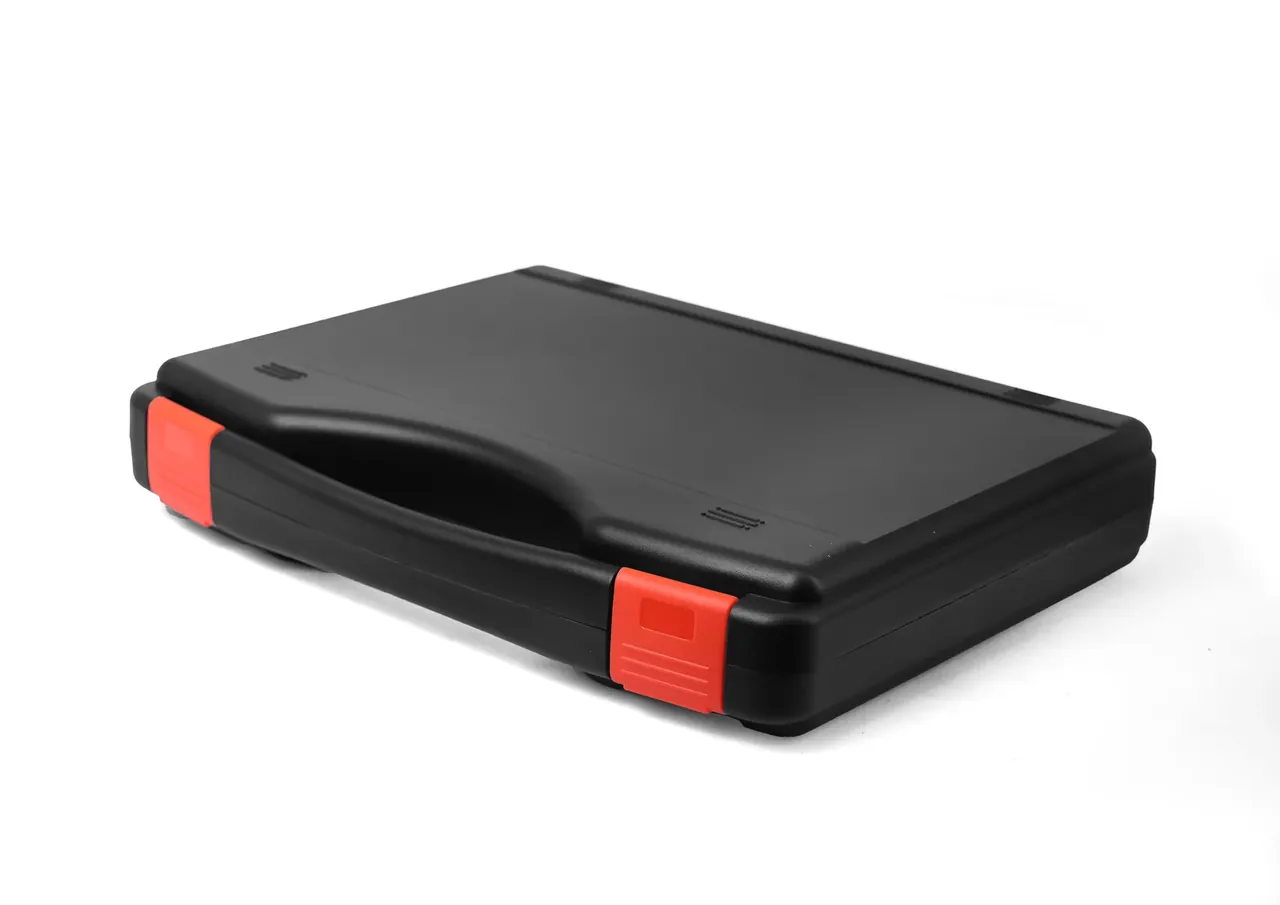
Quick answer: A case gasket is compared on one number, compression set at 70 °C for 24 h: silicone 20% or below, EPDM 25% and TPE 35% under GB/T 7759. At 100 °C the gap widens to 25%, 35% and 50%, so the material follows the hottest service temperature before hardness and compression ratio are set.
Table of contents
- One Measure for Case Gasket Comparison
- Compression Set at 70 °C and 100 °C
- Hardness, Compression Ratio and Cold Rebound
- How Each Material Fails
- Cross-Section, Groove Width and Ozone Ageing
- Replacement Criteria and Selection Table
- FAQ
1. One Measure for Case Gasket Comparison
Only compression set puts every case gasket material on one ruler. A B-type specimen is compressed to 75% of its thickness, held 24 h at 70 °C, released for 30 min and measured, and whatever does not return is permanent. Silicone reads 12% to 18%, EPDM 15% to 22%, TPE 25% to 32%, provided all three run in one oven on one batch.
Tensile strength and hardness get quoted too, but their conditions differ and a change of rig changes the number. Compression set locks temperature, time and ratio.
The sealing face is a long groove on the parting line rather than a B-type specimen, so compression ratio bridges the two: 25% on the test piece, 25% to 35% in the groove.
2. Compression Set at 70 °C and 100 °C
Seventy degrees matches a cabin, a trunk or a sunlit case interior, and there the three sit closest. All of them clear the 20%, 25% and 35% lines, and only the margin differs.
At 100 °C the ranking holds and the gaps open: silicone moves to 20% to 25%, EPDM to 28% to 35%, and TPE to 42% to 50%, where it no longer recovers and leaves a flattened band 30 min after release. Silicone and EPDM only split above that point, silicone holding under 30% at 150 °C while EPDM ages faster from 120 °C.
| Material | 70 °C × 24 h | 100 °C × 24 h | Hardness, Shore A | Cold rebound limit | Relative price |
|---|---|---|---|---|---|
| Silicone VMQ | 12%–18% | 20%–25% | 50–60 | -55 °C | 100 |
| EPDM | 15%–22% | 28%–35% | 55–65 | -45 °C | 70 |
| TPE (SEBS) | 25%–32% | 42%–50% | 50–60 | -35 °C | 80 |
The rebound limit is the temperature at which sealing fails, not cracking, and it decides more applications than the set figures.
3. Hardness, Compression Ratio and Cold Rebound
Hardness sets the force needed to close the lid. A 50 Shore A silicone cord needs about 0.35 MPa of face pressure at 25% compression; a 65 Shore A EPDM cord needs 0.55 MPa, so latch clamp force rises 8% or the lid edge lifts 0.2 mm and the leak test fails.
Compression ratio is a design variable, not a material property. A groove cut to 30% of cord diameter keeps the case gasket at three-tenths compression for years, running 3 to 5 points above the specimen figure; pull it back to 25% and body tolerance has to hold ±0.2 mm.
Cold rebound decides the application. Silicone recovers at -55 °C, EPDM at -45 °C, and TPE stiffens below -35 °C, so in a -40 °C cold store a TPE case gasket stays flat after the first closure.
4. How Each Material Fails
Silicone fails by bleeding, not ageing. Low-molecular siloxane volatilises above 150 °C and condenses as a film on lenses and displays inside the case; a 200 °C post-cure of 4 h pulls volatiles from 1.5% to 0.3% and adds about 0.6 CNY per metre. Tear strength near 8 kN/m is the other weakness, so a groove edge nicks the cord and a 10 mm nick leaks.
EPDM wins on weather and ozone and loses on oil. After 70 h in mineral oil at 100 °C it swells more than 60% by volume, bulges out of the groove and stops sealing, and one wipe with an oily glove halves its life. Bonding to a PP body is poor, so overmoulding needs a primer.
TPE fails on heat. SEBS-based TPE runs to 90 °C continuously and softens after 48 h at 100 °C, where set reaches 50% and never recovers. It costs 20% less and bonds to PP directly, removing adhesive backing and hand laying, but only below 80 °C.
5. Cross-Section, Groove Width and Ozone Ageing
The cross-section sets how much tolerance the seal absorbs. An O-profile needs 25% to 30% compression before it seals, so a 0.2 mm groove error leaks. A D-profile seats a flat face on one side and seals at 20%, doubling the tolerance, while a double-lip profile seals in two stages at 15% more closing force.
Groove width is 1.15 times the cord diameter: a 6 mm cord takes a 6.9 mm groove, and the 0.9 mm of clearance lets rubber displace sideways instead of bulging. Squeeze it to 1.05 times and the cord shears at a corner within three months.
| Profile | Sealing compression | Groove width | Application |
|---|---|---|---|
| O-profile | 25%–30% | 1.1 × cord | Fixed lids, rarely opened |
| D-profile | 20%–25% | 1.15 × cord | Standard protective cases |
| Double lip | 20%–25% | 1.2 × cord | Frequent opening, dust ingress |
After 500 h to GB/T 16422.3, silicone and EPDM show grade 0 surface cracking while TPE reaches grade 2, and all three gain 3 to 5 Shore A, which reads as a firmer seal that seals worse.
6. Replacement Criteria and Selection Table
Three criteria end the life of a case gasket, and any one is enough: compression set above 40%, hardness more than 10 Shore A above the original, or measured groove compression under 15%. Calipers and a durometer settle all three on site.
| Application | Material | Hardness | Criterion |
|---|---|---|---|
| Indoor storage | TPE | 50–55 Shore A | 70 °C set ≤35% |
| Outdoor at -40 °C | Silicone | 55–60 Shore A | Rebound to -55 °C |
| Frequent opening | Double-lip EPDM | 55 Shore A | Set ≤30% after 20,000 cycles |
| Food-contact requirement | Platinum-cured silicone | 50 Shore A | Passes food-contact testing |
Selection runs temperature first, compression ratio second and cost last. Below -35 °C, TPE is out; above 90 °C, EPDM gives way to silicone.
Conclusion
The order for a case gasket is temperature, compression ratio, then cost, and compression set is the ruler that lines the three up. At 70 °C for 24 h silicone holds 20% or better, EPDM 25%, TPE 35%; at 100 °C the 25%, 35% and 50% spread splits the uses, silicone for hot cabins and -40 °C sites, EPDM for standard cases, TPE only below 80 °C.
This article discusses only the container (case body) side of specifications and design intent, and does not cover any handling, loading or use of the contents.
Related Reading
- Sealing Materials Compared: Silicone, EPDM and Polyurethane
- Gasket and O-Ring Materials: Size, Hardness, Media
- Gasket Ageing and Replacement in the Field
- Case Seal Ageing: From Compression Set to Leak Failure
Related Products
- 8 Series — Gun Cases; Military Equipment Cases; Camera Equipment Cases; Drone Cases; Watch Cases; Knife Cases; First Aid Cases; Electronics Equipment Cases
- WL8-2812 PP Gun Case — model WL8-2812
- All protective cases and toolboxes: 7 series, 158 models