

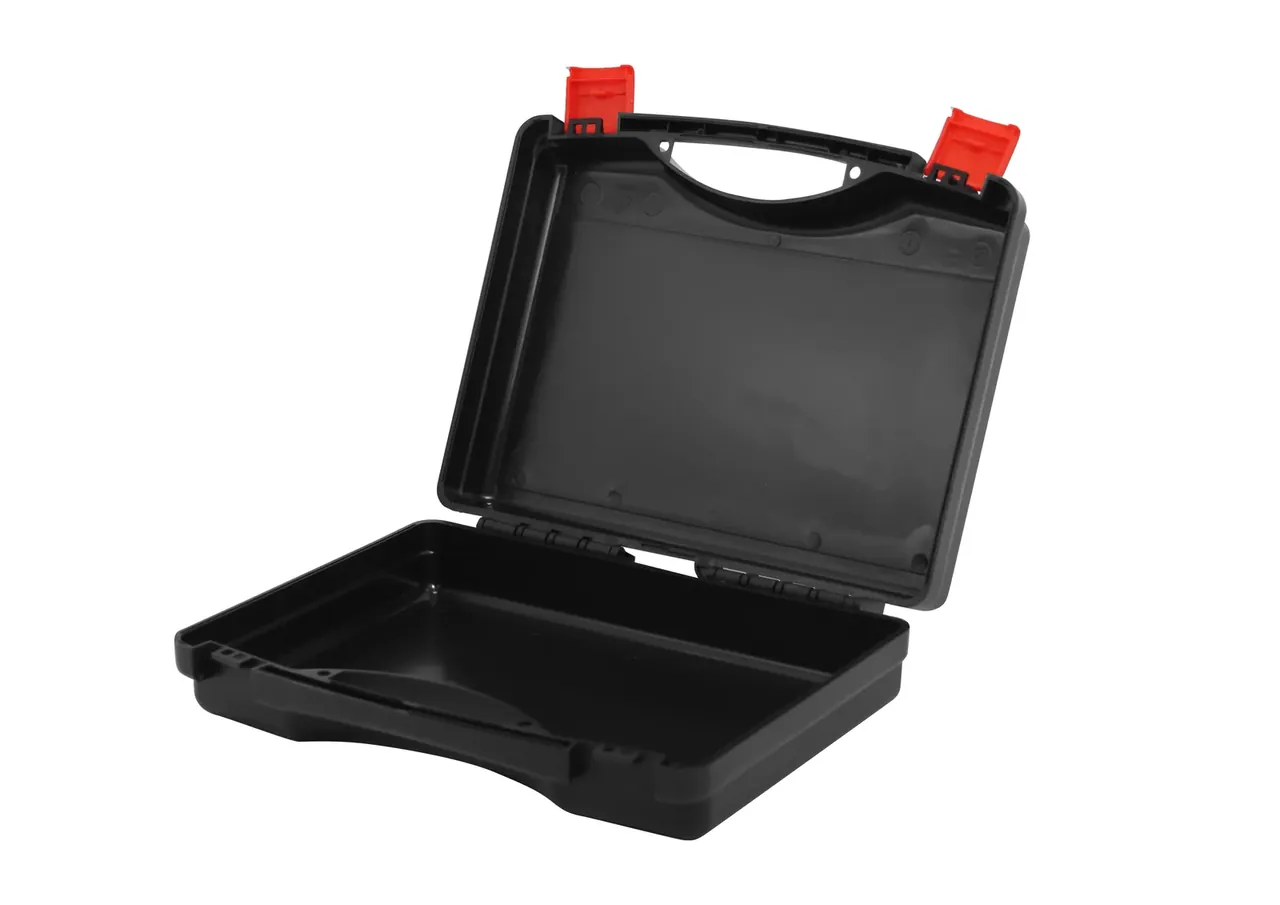
Quick answer: Sea Freight Cases lose their seal to three physical points inside a 40-foot box: night condensation, 18-layer stack load and 30 days of salt fog.
Table of contents
- Condensation: the 45 °C to 20 °C Gap
- Desiccant Dose: 20 g/m³ of Volume
- Stack Load: 18 Layers, 400 kg
- Pallets and Salt Fog
- The 48 Hours Before Packing
- Vacuum Bags and USD 1.10
- FAQ
1. Condensation: the 45 °C to 20 °C Gap
A 40-foot high cube runs 12.03 m long and 2.39 m high inside. On an equatorial run the steel roof hits 45 °C at noon and falls to 20 °C after dark, so relative humidity climbs from 60% to 95% and the case skin collects the difference.
Air at 45 °C and 60% RH holds 39 g of vapour per cubic metre. At 20 °C saturation allows 17.3 g, leaving 21.7 g to condense, which is 0.6 L to 1.2 L a night across 110 m² of wall. Vapour enters at the O-ring face and valve membrane, not through 5 mm of PP at under 0.02 g a day. Thirty days at sea is thirty cycles, and net silica uptake falls to 40% of rated, so Sea Freight Cases are judged on swing and dwell time rather than average humidity.
| Time | Air temp | RH | Dew point | Case skin |
|---|---|---|---|---|
| 06:00 | 20 °C | 95% | 19 °C | Wet all over |
| 12:00 | 45 °C | 60% | 35 °C | Dry |
| 00:00 | 24 °C | 88% | 22 °C | Running water |
2. Desiccant Dose: 20 g/m³ of Volume
Silica gel holds 22% of its weight at 25 °C and 80% RH, but only 12% at 40 °C. With 45 °C by day, a charge works at half its room-temperature efficiency.
Dose on interior volume, never on the whole container volume. A sealed case takes 20 g/m³. Paper cushioning or EVA foam means ×1.5, since both sit at 8% to 10% moisture; no vacuum bag means ×3.
| Interior volume (m³) | 20 g/m³ (g) | Paper ×1.5 (g) | No vacuum ×3 (g) |
|---|---|---|---|
| 0.04 | 0.8 | 1.2 | 2.4 |
| 0.06 | 1.2 | 1.8 | 3.6 |
| 0.12 | 2.4 | 3.6 | 7.2 |
A 2 g sachet is the smallest pack, so 0.8 g rounds up to 2 g. For Sea Freight Cases, add 1 kg bars, four per 40-foot box and 4.2 g equivalent a case.
3. Stack Load: 18 Layers, 400 kg
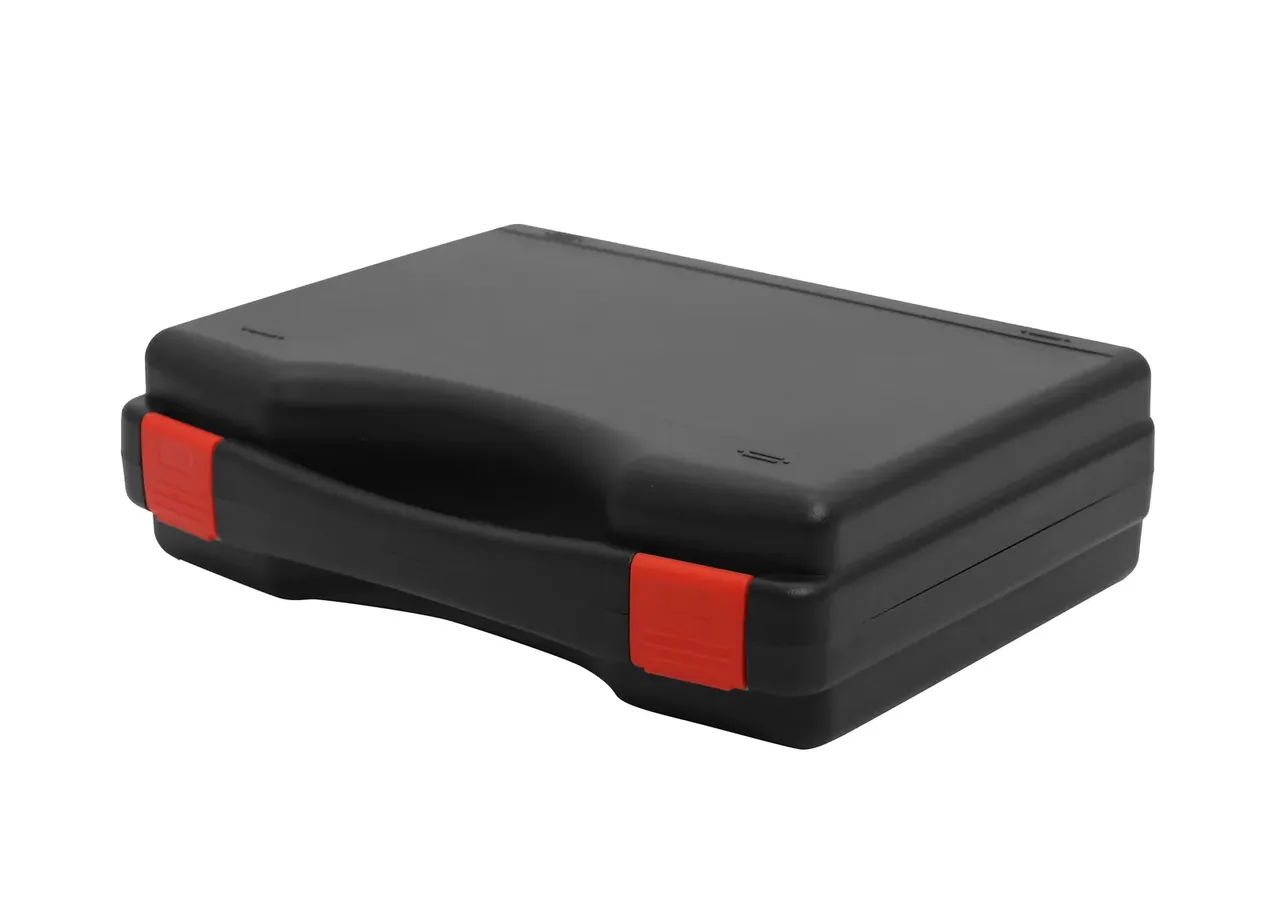
Interior height is 2.39 m and a 130 mm flat case measures 132 mm cartoned, which allows 18 layers. Four cases a layer on a 1.2×0.8 m pallet gives 72 cases at 400 kg, all on four bottom cartons.
A carton with 5.2 kN/m edge crush resists 3.4 kN. Moisture from 8% to 14% cuts that 40% to 2.0 kN, dropping the safety factor from 4 to 2.4, and thirty days above 80% RH guarantees the climb. Compression of 12 mm then takes lid overlap from 8 mm to 5 mm and gasket squeeze from 30% to 18%, which fails the 1 m, 30 min immersion test.
Three fixes for Sea Freight Cases: a 5 mm honeycomb sheet every 6 layers, a 1.6 m cap at 12 layers, and a three-runner base, cutting bottom load from 400 kg to 260 kg.
4. Pallets and Salt Fog
Wood packaging leaves under ISPM 15, core at 56 °C for 30 min plus an IPPC stamp. An untreated pallet is held whole at destination, against USD 35 a pallet and from USD 120 a day in storage.
Keep pallet moisture under 20%. A 22 kg pine pallet drying from 22% to 12% releases 2.2 kg of water, a humidifier running 20 days inside the box. Hours above 80% reach roughly 200 on a 30-day voyage: an 8 μm zinc latch shows white rust at 96 h, 12 μm reaches 240 h, 304 stainless runs 500 h. Zinc and aluminium sit 0.9 V apart, so corrosion at a rivet hole runs 3 times faster within 0.5 mm — hence 304 latches and nylon washers on Sea Freight Cases builds.
5. The 48 Hours Before Packing
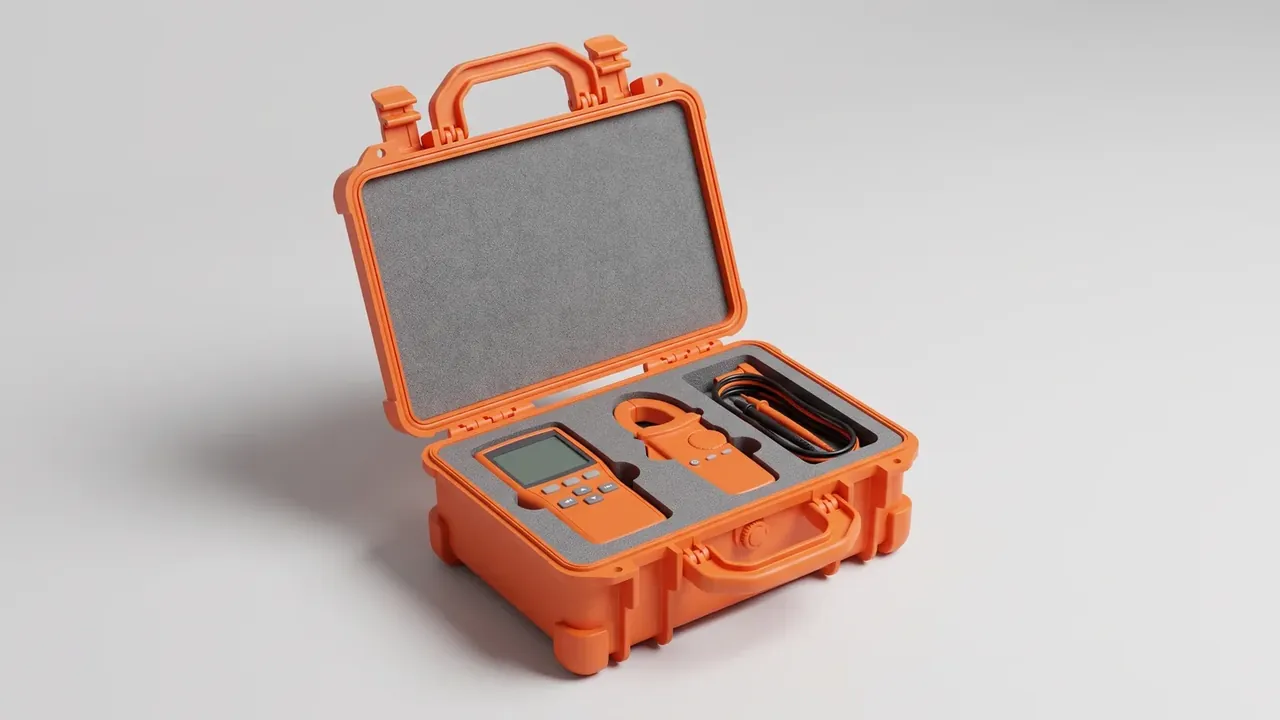
Hold the case at 23 °C and 50% RH for 48 hours. PP absorbs under 0.01%, so the liner is the issue: EVA takes 1.5% to 3%, and a 1.2 kg liner carries 30 g of water, enough to push interior humidity to 70%.
Seal within 20 min of leaving the conditioning room; past 40 min and 3 °C of skin offset, the trapped air already carries risk. Stretch wrap is not waterproofing, it breaks the capillary path up the wall: 0.02 mm PE, three turns at 50% overlap, 40×40×3 mm guards, five-wall carton, 50 mm tape over hand holes, about 90 s a case. Guards also cut local pressure from 1.8 MPa to 0.6 MPa and corner cracking by 70%, which matters on an 18-layer Sea Freight Cases order.
6. Vacuum Bags and USD 1.10
The set is a vacuum bag, a desiccant charge and a humidity card. Use 0.1 mm PA/PE pulled to -0.08 MPa, residual air under 8%, and a three-spot card at 5%, 10% and 60% inside the lid.
| Item | Specification | USD a case | Function |
|---|---|---|---|
| Wrap and guards | 0.02 mm, 3 turns | 0.12 | Breaks capillary path |
| Foil bag | 0.08 mm | 0.35 | Reflects radiant heat |
| Vacuum bag and 2 g silica | 0.1 mm PA/PE | 0.48 | Holds interior under 40% |
| Card and conditioning | 5%/10%/60% | 0.15 | Read at arrival |
Sea Freight Cases above 35 days and 60 L take the full set at USD 1.10, 6% of an USD 18 case; under 20 days and 30 L, wrap, guards and a sachet cost USD 0.20. The foil bag earns its USD 0.35 on an equatorial run, cutting the swing inside the case from 25 °C to 9 °C and condensation by over 60%.
Conclusion
Sea Freight Cases fail on three numbers: a 25 °C daily swing, 400 kg on the bottom tier and 200 hours above 80% RH. Fit 20 g/m³ of interior volume plus four 1 kg bars, cap the stack at 12 layers with honeycomb sheets, verify pallet moisture under 20% and move latches to 304 stainless. At USD 1.10 a case against USD 18, the set buys a gasket that still seals on arrival.
Related Reading
- Controlling condensation inside a case
- Loading and bracing points for case shipments
- Case weight and what it does to freight
- Export packaging selection guide
Related Products
- 8 Series — Gun Cases; Military Equipment Cases; Camera Equipment Cases; Drone Cases; Watch Cases; Knife Cases; First Aid Cases; Electronics Equipment Cases
- WL8-2812 PP Gun Case — model WL8-2812
- All protective cases and toolboxes: 7 series, 158 models