

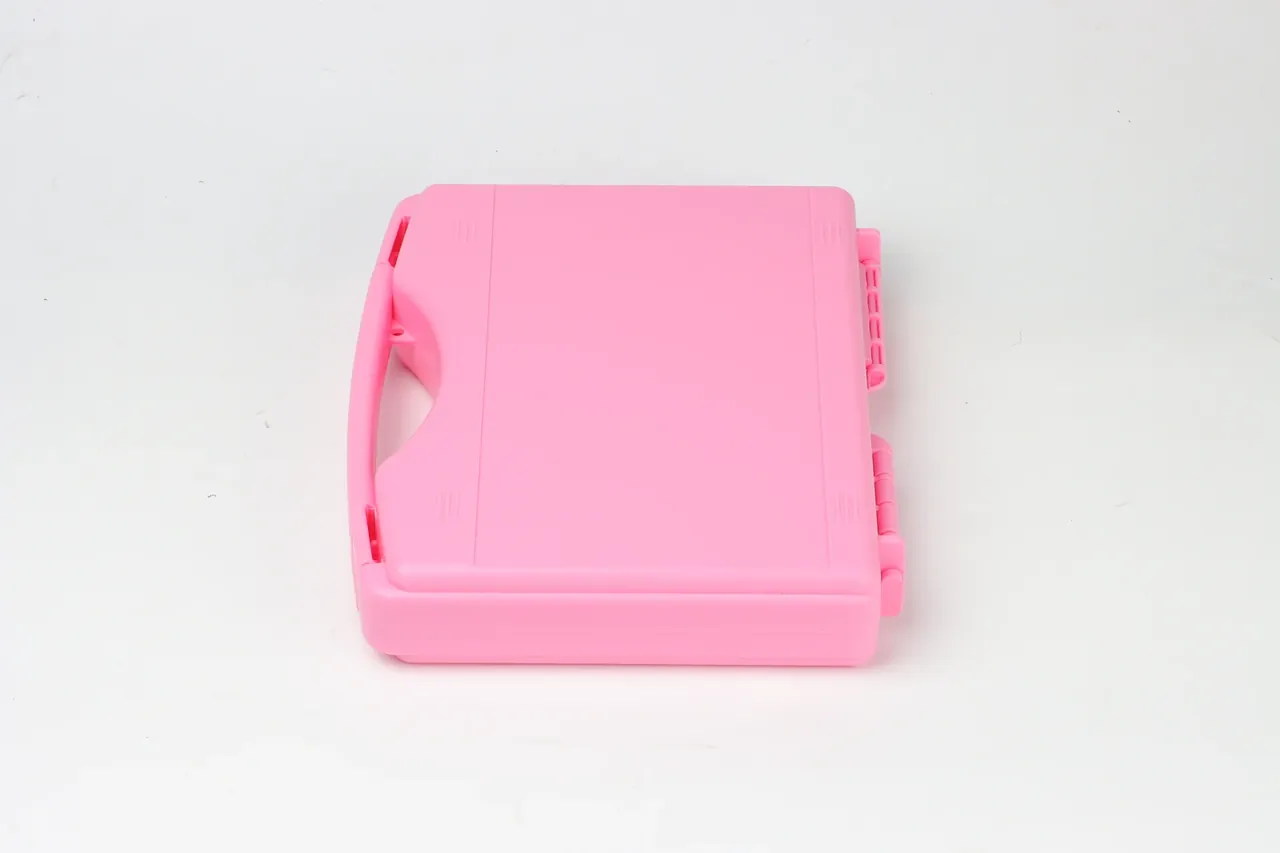
Quick answer: Case weight only moves the freight bill when gross weight passes volumetric weight. A 626 × 442 × 250 mm case cubes out at 11.5 kg, so a 3.6 kg shell holding 6 kg of kit still ships at 11.5 kg and 1 kg saved is worth nothing; at 13.5 kg gross, 1 kg off saves 38 CNY by air.
Table of contents
- Four Sources of Case Weight
- Chargeable Weight vs Volumetric
- What 1 kg Saves in Three Scenarios
- Four Ways to Drop Weight, and Their Cost
- Checking Weight on a Quote
- FAQ
1. Four Sources of Case Weight
Split 3.60 kg and it reads: lid 1.05, base 1.42, hardware 0.68, foam 0.45. Plastic comes to 2.47 kg, or 69%; the other 31% is latches, hinges, handle mounts and liner, which is the part quotes forget. Case weight has to be booked in those four lines, or a weight-reduction programme ends up thinning foam.
Run the same outline at a 5.0 mm wall and plastic rises to 3.53 kg, the whole case to 5.10 kg. Of the extra 1.50 kg, 1.06 is wall and 0.44 is ribs thickened to match. Ribs grow with the wall, which is why two quotes rarely agree.
Rotomoulded PE at the same size lands at 7.80 kg, 2.2 times the injection-moulded PP. A uniform 6 mm wall buys a drop rating past 1.5 m, and costs case weight that needs two people to lift.
| Part | Weight | Share | Detail |
|---|---|---|---|
| Lid | 1.05 kg | 29% | 3.5 mm wall, two transverse ribs inside |
| Base | 1.42 kg | 39% | 3.5 mm wall, eight floor ribs |
| Hardware | 0.68 kg | 19% | Two hinges, two latches, two handle mounts |
| Foam | 0.45 kg | 13% | 30 mm, three bonded layers |
| Total | 3.60 kg | 100% | 600 × 400 × 230, injection PP |
2. Chargeable Weight vs Volumetric
Carriers bill the greater of actual and volumetric weight. Volumetric is the outline multiplied out and divided by a factor: 6000 for air freight, 5000 for express. At 62.6 × 44.2 × 25.0 cm the case measures 69,173 cm³, which is 11.5 kg by air and 13.8 kg by express.
The 3.6 kg shell is 31% of that 11.5 kg. Three tenths of an air bill pays for the case, seven tenths for the space it encloses. Shrinking the outline beats shaving grams every time.
| Mode | Chargeable rule | This case | Rate | Per case |
|---|---|---|---|---|
| Air freight | L × W × H ÷ 6000 | 11.5 kg | 38 CNY/kg | 437 CNY |
| Express | L × W × H ÷ 5000 | 13.8 kg | 52 CNY/kg | 718 CNY |
| Sea LCL | W/M, 1 m³ = 1000 kg | 0.0692 revenue ton | 450 CNY/ton | 31 CNY |
| 40HQ FCL | Per container, 26 t limit | 855 cases | 15,800 CNY | 18.5 CNY |
Sea LCL takes the larger of the two: 0.0692 m³ becomes 0.0692 revenue tons against 0.0036 tons of actual weight, a factor of 19, so volume always wins. FCL follows the same logic — 855 cases at 3.6 kg is 3.1 t, 12% of a 26 t limit. On those two lanes case weight barely enters the calculation.
3. What 1 kg Saves in Three Scenarios
Scenario A, light cargo. Six kilos of kit plus a 0.9 kg carton gives 10.5 kg gross, still billed at 11.5 kg. Take case weight from 3.6 to 2.4 and the chargeable figure does not move: saving, zero.
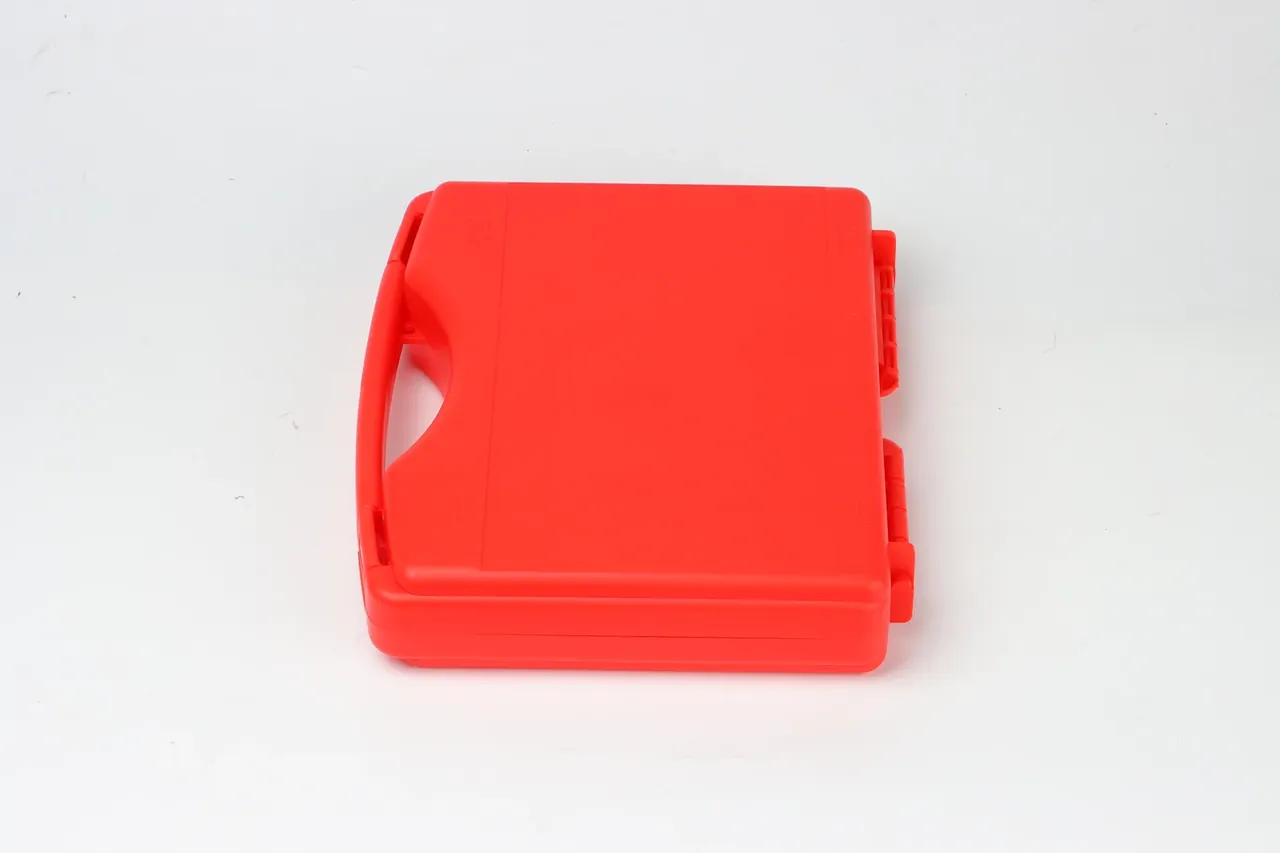
Scenario B, heavy cargo. Nine kilos of kit gives 13.5 kg gross, billed at 13.5 kg, and 437 CNY becomes 513 CNY. Here every kilogram removed is worth 38 CNY by air and 52 CNY by express.
Scenario C, an overweight FCL. At 28 kg of kit the gross is 32.5 kg, 855 cases reach 27.8 t and the 26 t limit cuts the load to 800 cases. One kilogram off case weight allows 825 cases, 25 more per load, worth 0.08 USD a case.
| Scenario | Gross | Chargeable | Saving per kg |
|---|---|---|---|
| A light | 10.5 kg | 11.5 kg | 0 |
| B heavy, air | 13.5 kg | 13.5 kg | 38 CNY |
| C overweight FCL | 32.5 kg | 26 t limit | 25 more cases |
The dividing line sits at 7.0 kg of payload: 3.6 kg case plus 0.9 kg carton plus 7.0 kg of kit equals 11.5 kg, exactly the volumetric figure. Below that payload, case weight never reaches the billing formula.
4. Four Ways to Drop Weight, and Their Cost
Foam from 30 to 20 mm saves 0.42 kg and 10 mm of travel; at a 1.2 m drop the peak acceleration on 9 kg of kit climbs from 42 g to 58 g. Stainless hinges swapped for POM save 0.15 kg and show red rust at the pin after 96 hours of salt spray. Cutting floor ribs from eight to five saves 0.18 kg and lets the top case settle 1.2 mm under five-high stacking.
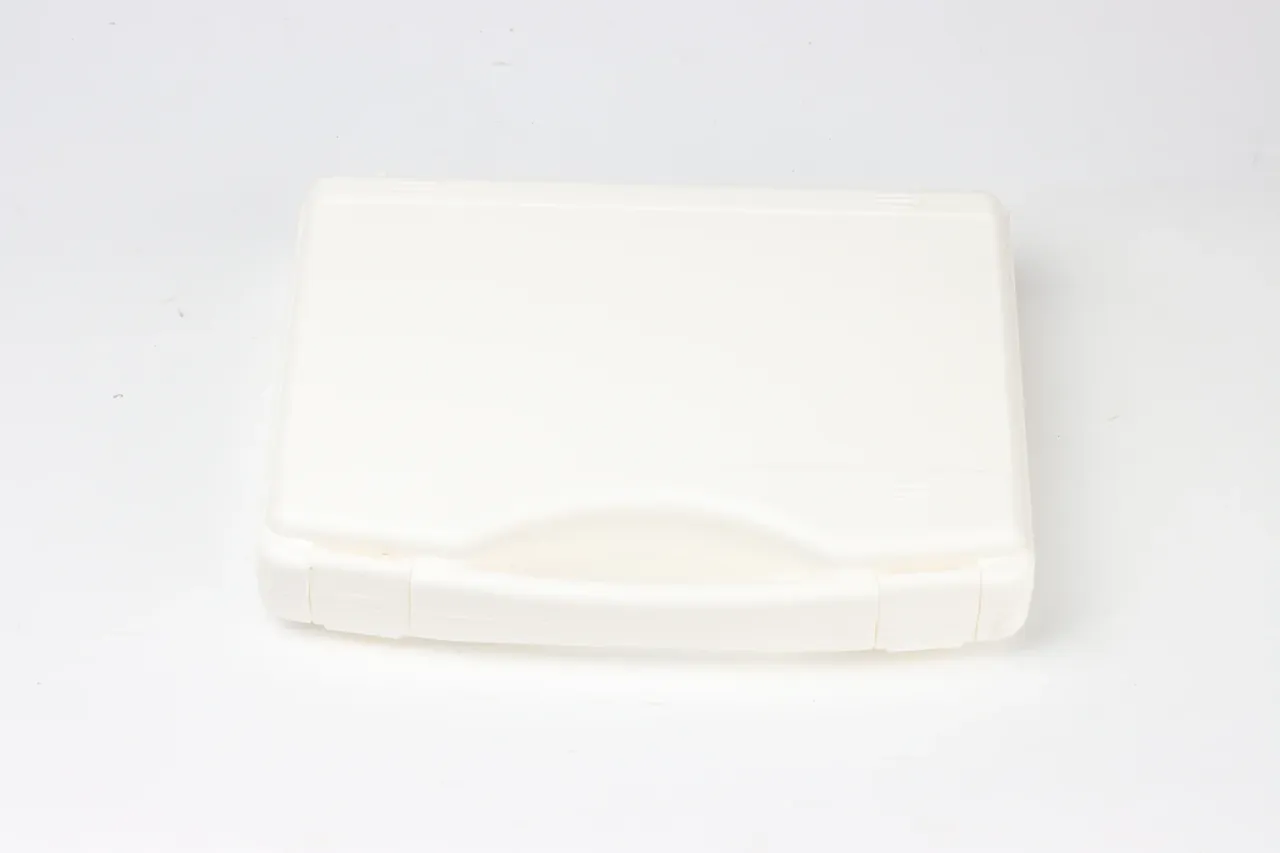
Wall thickness from 3.5 to 3.0 mm saves 0.45 kg and costs the most: corner cracking at -20 °C rises from 2% to 11%. Do all four and case weight falls from 3.60 to 2.40 kg, a total of 1.20 kg.
What is 1.20 kg worth? Zero in scenario A, 45.6 CNY a case in scenario B, 30 extra cases per FCL in scenario C. The same reduction differs by an order of magnitude depending on the load, so count the payload before touching the wall.
5. Checking Weight on a Quote
Three checks: weigh by part, reconcile against density, ask about regrind. A 0.01 kg scale, three cases, median; lid and base weighed apart, because a single total usually hides 0.2 kg of missing hardware.
Density reconciles faster. PP at 0.91 g/cm³ puts 2.47 kg of plastic at 2714 cm³, which over a 3.5 mm wall is 0.78 m² of developed area. A drawing claiming 0.95 m² means the wall is overstated while the weight was quoted at 3.5 mm.
Ask about regrind separately. At 30% regrind the density holds and case weight stays identical, but stiffness at the same wall falls 8%, and the drop margin has to come out of thickness. The number on the scale is the same; the impact reserve is not.
Conclusion
Case weight is a two-step calculation: check whether gross passes volumetric, then see which billing line the saving lands on. A 626 × 442 × 250 mm case cubes at 11.5 kg, so under 7.0 kg of payload, going from 3.6 to 2.4 kg saves nothing at all; above that line each kilogram is worth 38 CNY. The outline decides the freight, and case weight only matters once gross crosses it.
This article discusses only the specification and design intent on the container (case) side, and does not cover any handling, loading or use of the contents.
Related Reading
- Export pallets and case marking rules
- Maintenance and depreciation of reusable shipping cases
- Stacking height and load on stackable cases
- Wall thickness and hardware on heavy-duty cases
Related Products
- 8 Series — Gun Cases; Military Equipment Cases; Camera Equipment Cases; Drone Cases; Watch Cases; Knife Cases; First Aid Cases; Electronics Equipment Cases
- WL8-2812 PP Gun Case — model WL8-2812
- All protective cases and toolboxes: 7 series, 158 models