

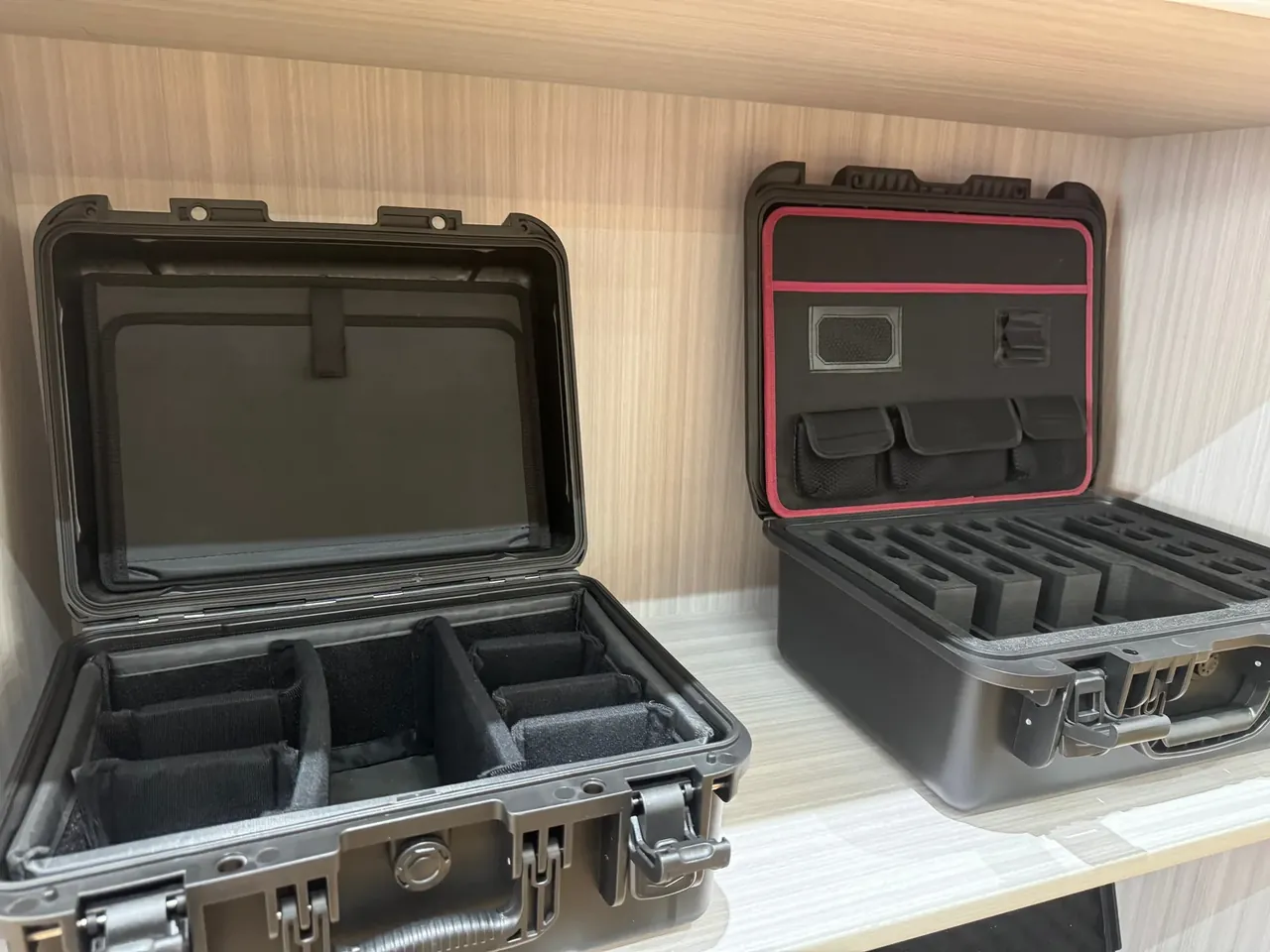
Quick answer: Food-Grade PP Toy Storage Bins are judged on three figures: a 2.8 mm wall, R8 corners and a 40 mm quiet caster, with whitening under 0.5 mm after impact.
Table of contents
- Where Food-Grade PP Toy Storage Bins Draw the Material Line
- Compliance Wording and Odour Control for Food-Grade PP
- R8 Against R12: What the Corner Radius Changes
- Caster Material and Noise Readings
- Corner Impact and Whitening Judgement
- FAQ
1. Where Food-Grade PP Toy Storage Bins Draw the Material Line
The first part of a bin to be tested is a corner, because a corner takes the whole load of a foot or a wheel. The 45 L shell runs 520 × 380 × 300 mm at a 2.8 mm wall, and a square corner whitens before it splits. Food-Grade PP Toy Storage Bins draw the material line at radius, wall and resin grade.
The first line is resin grade: faces that can be touched run food-grade PP homopolymer at 12 g/10min and 0.03% ash, while the base and caster bosses may take a little regrind. Food-Grade PP Toy Storage Bins then pair radius with wall, since at 2.8 mm an R8 corner holds 2.5 mm of wall inside the arc, while R5 thins it to 2.1 mm and whitening starts there.
| Corner radius | Inner wall at the arc | After impact | Where it belongs |
|---|---|---|---|
| R6 | 2.2 mm | Whitening about 1.2 mm wide | Dividers only |
| R8 | 2.5 mm | Whitening within 0.5 mm | Standard for four corners |
| R12 | 2.7 mm | Almost no whitening | Top corners and caster seats |
2. Compliance Wording and Odour Control for Food-Grade PP
Compliance comes down to three things: the permitted range of the grade, the conditions of the migration test, and whether moulding adds new extractables. Food-Grade PP Toy Storage Bins are benchmarked against the migration conditions of GB 4806.7, read on overall migration, permanganate consumption and heavy metals.
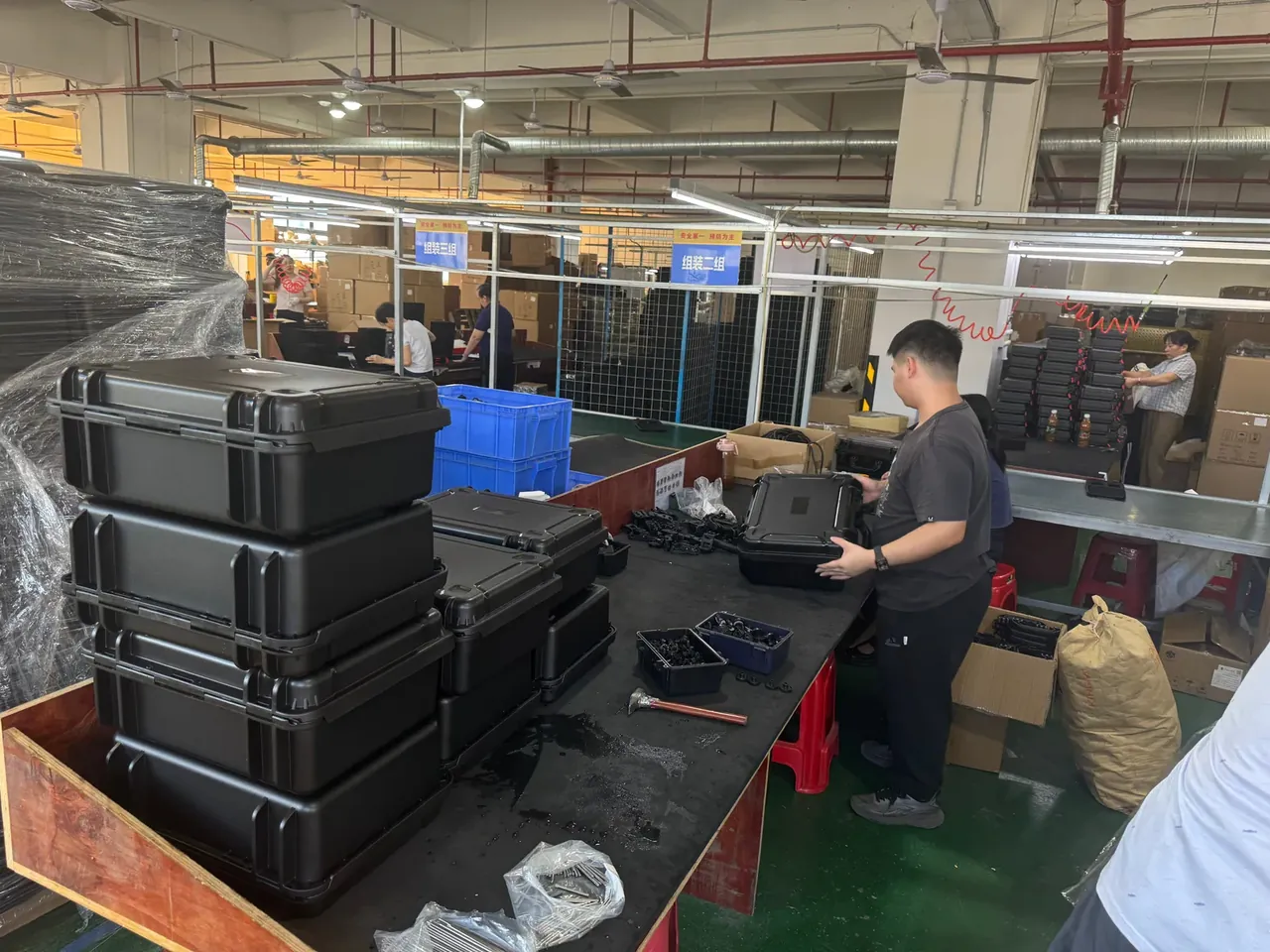
Odour is a separate line. Grades run from 1 to 6, and grade 2 means a faint smell on opening that clears within 30 s. The source is rarely the resin: long dwell in the barrel, a masterbatch carrier that cannot take the heat, or release agent on the tool. A 12 g/10min grade degrades after 8 min at 210 ℃, and odour moves from grade 2 to grade 3.
| Odour grade | How it reads | Usual source |
|---|---|---|
| Grade 1 | Practically none | Virgin resin, short dwell |
| Grade 2 | Faint, gone in 30 s | Standard production, passes |
| Grade 3 | Obvious, lingers | Barrel too hot or too much regrind |
Ash at 0.03% measures filler load: every 0.01 point added means more inorganic content, and odour follows. Incoming inspection reads ash, melt flow and odour together, because one alone lets a drifting batch through.
3. R8 Against R12: What the Corner Radius Changes
The 4 mm between R8 and R12 decides where stress goes. A tight radius concentrates impact on a short arc, and whitening appears at its midpoint; a wide radius spreads the energy along a longer arc, drops peak stress, and leaves no mark or a faint line.
Tooling cost differs: R8 is cut in one pass with a ball nose, so four corners match, while R12 needs two passes over a larger curve and a poor polish fogs the corner. Food-Grade PP Toy Storage Bins should be read on the ratio of radius to wall: at 2.8 mm, R8 gives 2.9 and holds whitening within 0.5 mm, R6 gives 2.1 and lets it reach 1.2 mm, and R12 gives 4.3 yet softens the edge until a six-high stack bulges.
4. Caster Material and Noise Readings
On Food-Grade PP Toy Storage Bins the noise comes from tread and floor, not wheel diameter. A 40 mm wheel suits a 45 L shell: a TPE tread at Shore 60A over a PP hub, two-shot moulded as one part, compresses and recovers as it rolls. A hard PP wheel of the same 40 mm reads 6 dB higher.
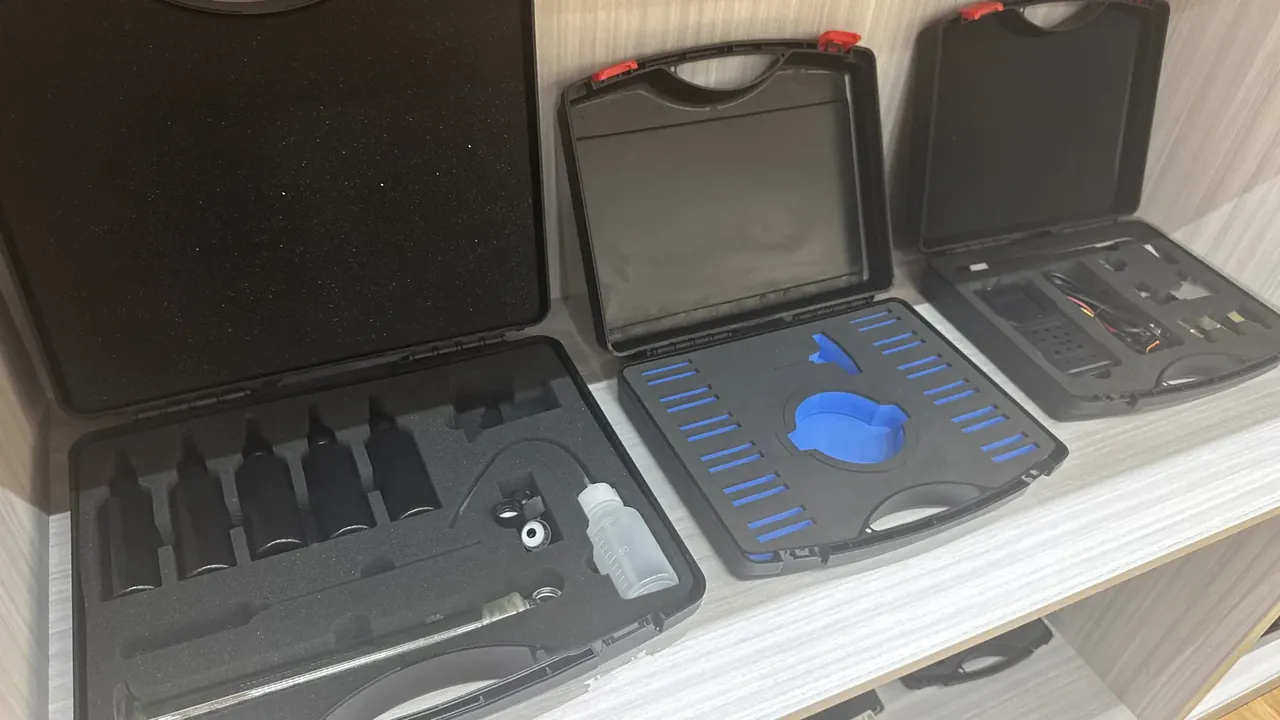
Readings are taken while pushing an empty bin, meter 1 m off the floor and 0.5 m from the shell. The TPE wheel gives 38 dB on timber and 42 dB on tile; the hard wheel gives 48 dB on tile. The 42 dB band is a faint roll that does not cover a conversation.
| Noise reading | Tread material | Floor | What it sounds like |
|---|---|---|---|
| 38 dB | TPE 55A | Timber | Barely audible |
| 42 dB | TPE 60A | Tile | Faint roll |
| 48 dB | Hard PP | Tile | Clear clatter |
The caster seat is the second source: on two clips only it rocks as the bin moves, and plastic-on-plastic rub adds to the roll. Four clips and a 0.5 mm TPE pad hold 42 dB.
5. Corner Impact and Whitening Judgement
Impact runs from 1.2 m with the bin loaded to 15 kg, once on each of the four corners, onto concrete. Judgement is on whitening, the optical sign of chains pulled into alignment: within 0.5 mm it passes, beyond it the wall or radius was chosen too low.
Below R8, with whitening past 0.5 mm after the corner impact, the batch does not reach the nursery channel. Residual stress sits under the mark, and the next impact starts a crack at its edge. Food-Grade PP Toy Storage Bins run −10 ℃ to +60 ℃: at 60 ℃ the edge crushes, at −10 ℃ a crack may open instead, so the cold end needs its own run.
Conclusion
The schedule for Food-Grade PP Toy Storage Bins comes down to four figures: a 2.8 mm wall, R8 corners, a 40 mm quiet caster and whitening within 0.5 mm after a 1.2 m impact. At 45 L, rated 15 kg and stacked six high, the shell keeps 2.5 mm inside each corner and odour at grade 2. Radius, wall and tread pull against each other, and changing one alone recovers neither of the others.
Related Reading
- Material Criteria for Food-Grade Plastic Cases
- Food-Contact Compliance Checks
- Hard Case and Carton in Cross-Border Transit
Related Products
- 8 Series — Gun Cases; Military Equipment Cases; Camera Equipment Cases; Drone Cases; Watch Cases; Knife Cases; First Aid Cases; Electronics Equipment Cases
- WL8-2812 PP Gun Case — model WL8-2812
- All protective cases and toolboxes: 7 series, 158 models