

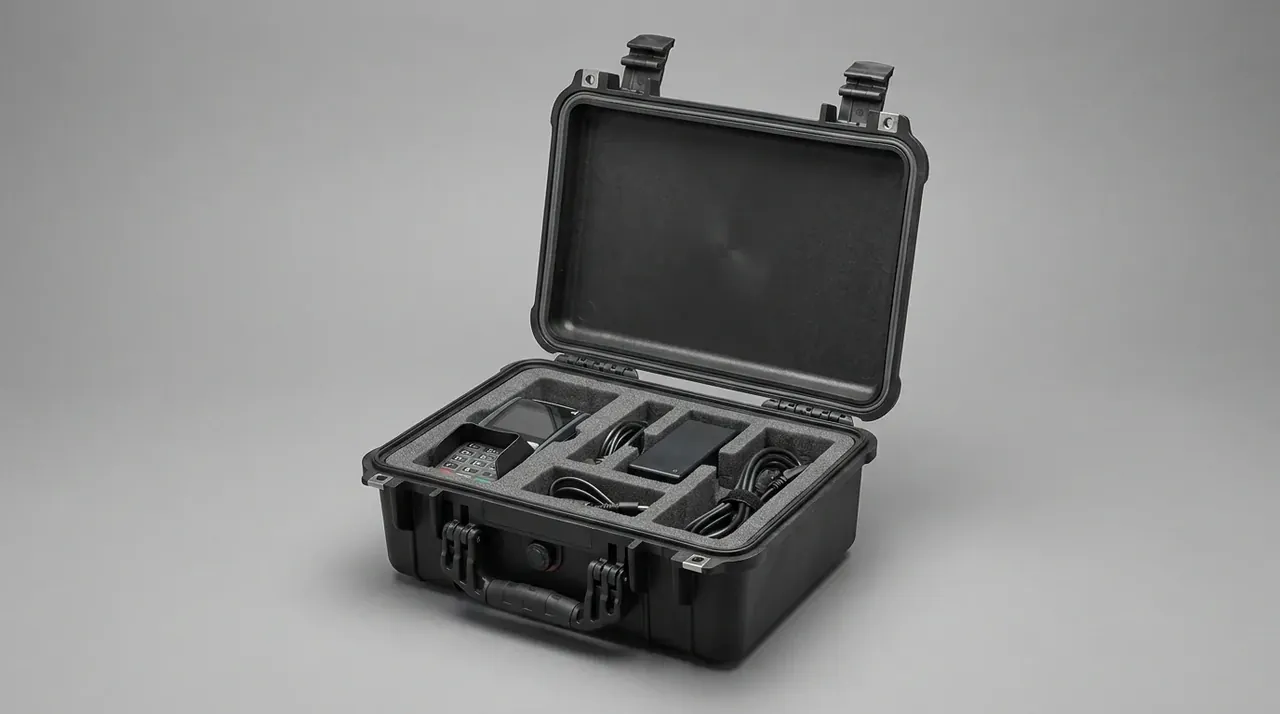
Quick answer: In freight negotiation the divisor sets the bill before the rate: 5000 for courier, 6000 for air, 1000 for LCL, so a 0.084 m³ case bills at 16.8 kg.
Table of contents
- Ask for the Divisor Before the Rate
- One Case, Three Divisors, Three Bills
- Four Levers Worth Pulling
- Pallet Height and the 78% Fill
- Five Lines the Contract Needs
- FAQ
1. Ask for the Divisor Before the Rate
A case of 600 × 400 × 350 mm encloses 0.084 m³ and weighs 6.8 kg empty. By courier, divide by 5000, it bills at 16.8 kg; by air, divide by 6000, at 14.0 kg; in an LCL box, at 0.084 revenue tons. Three channels, three numbers, no two bills alike.
The divisor has a second face: critical density. Dividing by 5000 states the same thing as 200 kg per cubic metre, so anything lighter pays by volume. Divide by 6000 and the line sits at 167 kg/m³, by 8000 at 125 kg/m³. A plastic case runs 60 to 120 kg/m³, so it always lands on the volumetric side: the case is never billed at its own weight.
| Channel and divisor | 1 m³ bills as | Critical density | This case bills at | Where to push |
|---|---|---|---|---|
| Courier, ÷5000 | 200 kg | 200 kg/m³ | 16.8 kg | Monthly minimum weight for a softer divisor |
| Air, ÷6000 | 167 kg | 167 kg/m³ | 14.0 kg | Low-density commodity rate |
| Sea LCL, ÷1000 | 1000 kg | 1000 kg/m³ | 0.084 revenue tons | Rate per revenue ton only |
| Sea FCL, no divisor | Not applied | Not applied | Per box | Fill rate, box size |
Read it downwards: channel, divisor, rate. Read it upwards and a quote on ÷6000 meets an invoice on ÷5000, so the 2.8 kg gap looks like a price rise.
2. One Case, Three Divisors, Three Bills
Run the arithmetic side by side and the argument settles itself. Multiply 0.084 m³ by 200, 167 and 125 and the bills read 16.8 kg, 14.0 kg and 10.5 kg. The 6.8 kg actual weight only comes close under the last divisor.
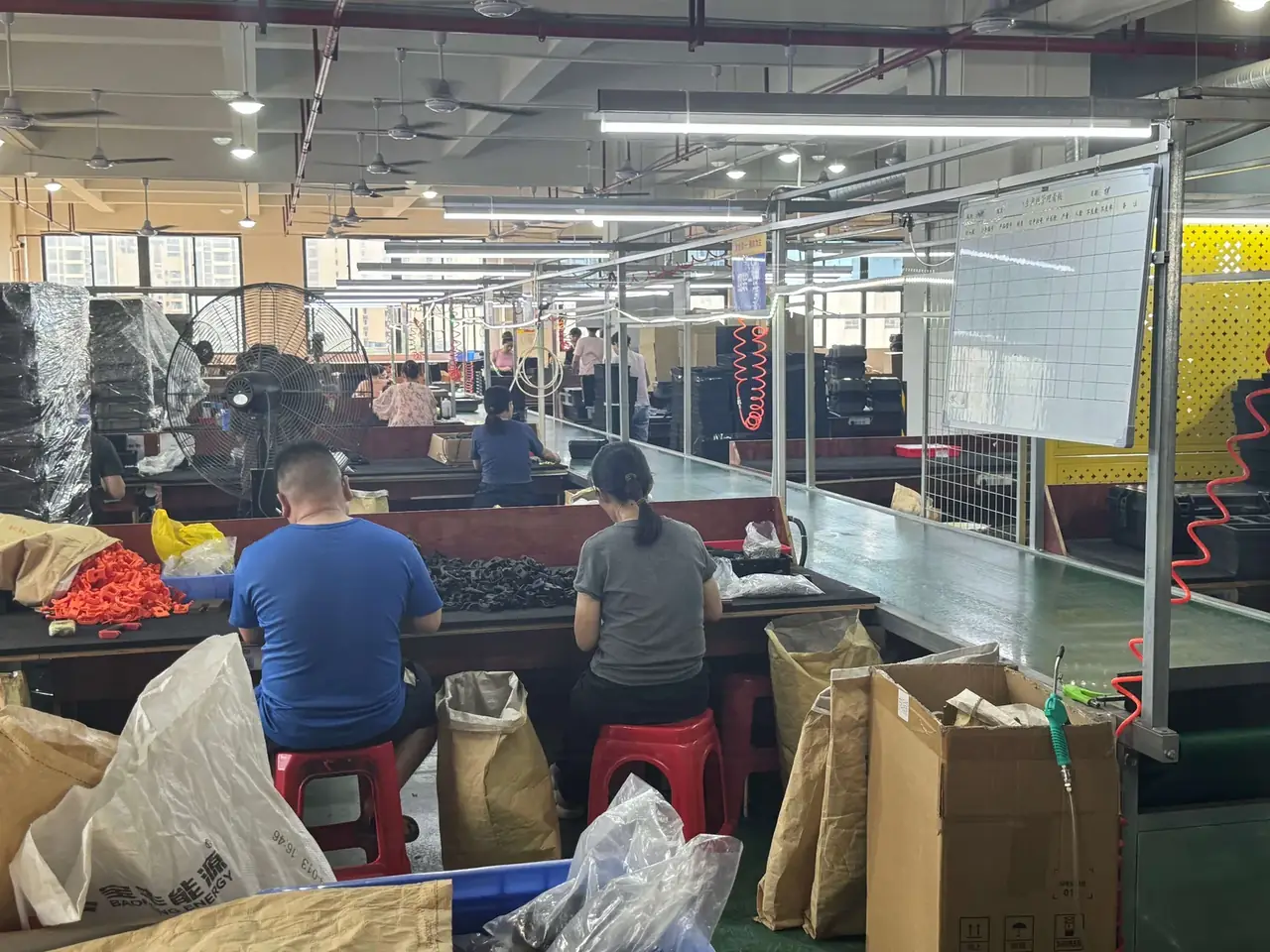
Rounding comes next. Most carriers round up to 0.5 kg, so 16.8 kg becomes 17.0 kg. On a 2000-case lot that rounding is 400 kg of billable weight, 10400 CNY at 26 CNY per kg.
The break-even point works backwards. To bill at actual weight under ÷5000, case plus load must pass 16.8 kg; with a 6.8 kg shell the load must reach 10 kg. Below that line, shaving shell weight changes nothing; above it, weight finally matters. Knowing the side tells the buyer whether to negotiate volume or mass.
LCL runs on other logic. At 1000 kg/m³ a case would have to weigh 84 kg to bill by mass, so LCL always bills by volume. Negotiate the rate per revenue ton and the minimum charge.
3. Four Levers Worth Pulling
Four things move the bill. Reshaping the case from 350 mm to 322 mm deep drops 0.084 m³ to 0.0773 m³ and the bill from 16.8 kg to 15.5 kg, at the cost of 28 mm of internal height and a redesigned foam stack. Asking for ÷8000 takes the same case to 10.5 kg, but usually needs 8 t of monthly billable weight or a 12-month commitment.
The third lever is pallet billing: billing actual stack height instead of a nominal 1.5 m saves 79.2 kg per pallet. The fourth is a minimum monthly weight commitment, say 6 t for a 5% rate concession, about 1.3 CNY per kilo, with exposure in a slow season.
The levers do not stack. Reshape the case and the argument for ÷8000 weakens, since the volume reduction is already spent. Commit to a monthly minimum and the carrier rarely moves the divisor too. Rank them before the meeting.
4. Pallet Height and the 78% Fill
Pallet billing is where buyers misread their invoice. A 1200 × 1000 × 1500 mm pallet is 1.8 m³ of envelope, but stacked cases fill 78% of it, or 1.404 m³. Billed at ÷5000 the envelope weighs 360 kg; the actual 1.17 m stack weighs 280.8 kg. One measurement is worth 79.2 kg.
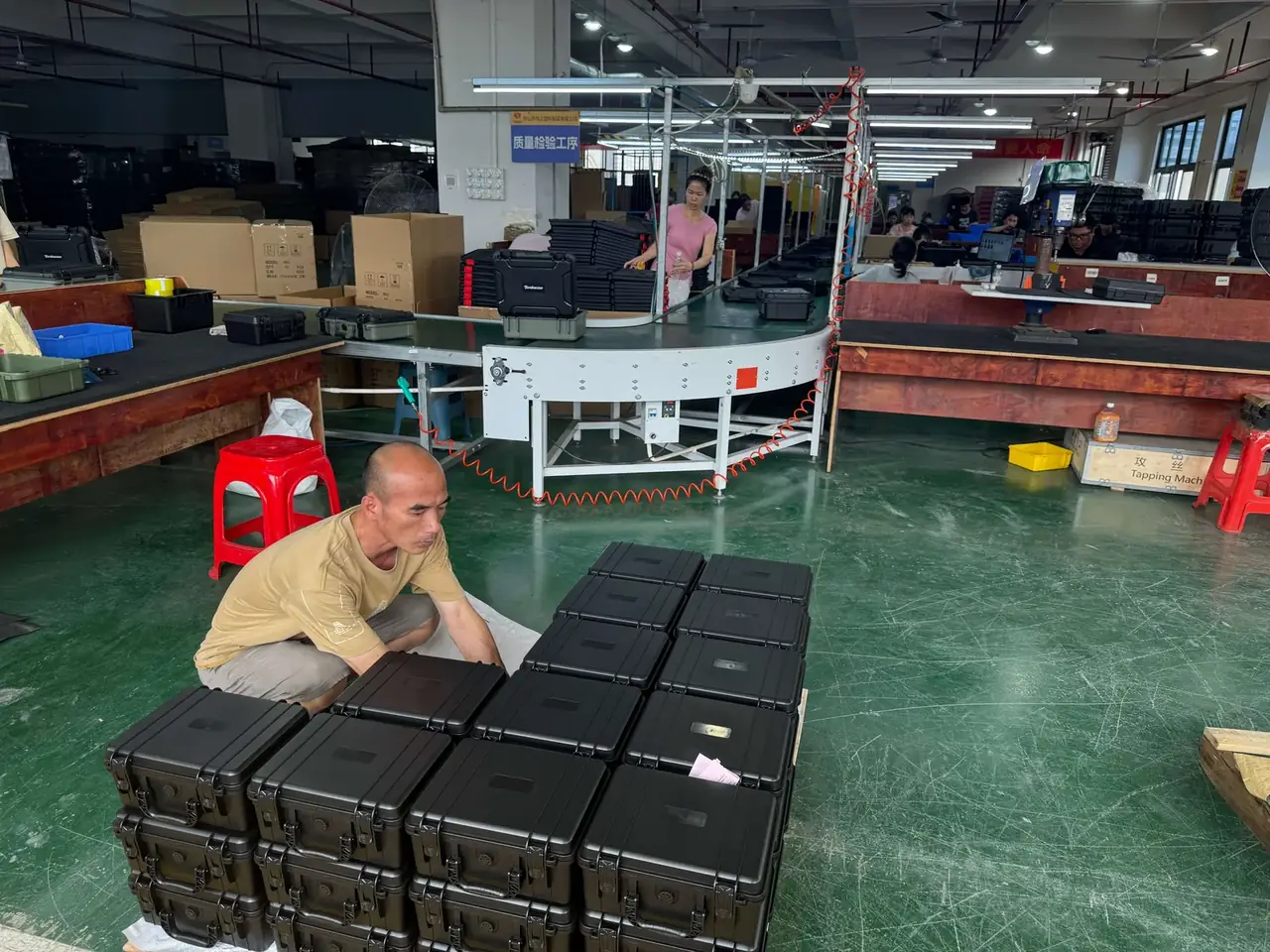
Sixteen cases occupy 1.344 m³; the gap to 1.404 m³ is air. Billed loose they weigh 268.8 kg, so palletising at nominal height adds 91.2 kg.
| Stack pattern | Envelope | Bill at ÷5000 | Against loose cases |
|---|---|---|---|
| 16 cases loose | 1.344 m³ | 268.8 kg | Baseline |
| Pallet at nominal 1.5 m | 1.8 m³ | 360 kg | +91.2 kg |
| Pallet at actual 1.17 m | 1.404 m³ | 280.8 kg | +12 kg |
| Pallet at actual height, ÷6000 | 1.404 m³ | 234 kg | −34.8 kg |
The real lever is the height basis, not the pallet. Prove it: measure from the deck to the highest lid, photograph the tape, attach the image to the shipping document. Without that photo the 1.5 m on the invoice cannot be argued.
5. Five Lines the Contract Needs
A verbal concession resets on the next shipment. Five items belong on paper: the divisor and its channels, the rounding rule, the minimum billable weight with a shortfall remedy, the pallet height basis, and the right to audit the statement.
Write the divisor with its scope: one carrier may use different divisors for courier and air, and a single number lets both sides read it their own way. Write rounding as 0.5 kg; silence between 0.5 kg and 1 kg runs 1.5% to 2% of billable weight a year.
A minimum weight commitment needs a defined shortfall remedy, cash or credit; that wording decides a five-figure settlement. The audit right is one line: a statement by the 10th listing envelope, actual and billable weight.
Conclusion
Freight negotiation is mostly decided before anyone says a price: confirm the divisor, convert 0.084 m³ into 16.8 kg or 10.5 kg, then argue the rate. Reshaping works long term, the divisor for the contract, pallet height for the floor, a minimum commitment for the slow season.
This article covers case-side specifications only and does not address any handling, loading or use of the contents.
Related Reading
- Case weight and freight cost per kilogram saved
- Incoterms and freight options for cases
- Condensation inside a sea container
- Case footprint against the pallet module
Related Products
- 8 Series — Gun Cases; Military Equipment Cases; Camera Equipment Cases; Drone Cases; Watch Cases; Knife Cases; First Aid Cases; Electronics Equipment Cases
- WL8-2812 PP Gun Case — model WL8-2812
- All protective cases and toolboxes: 7 series, 158 models