

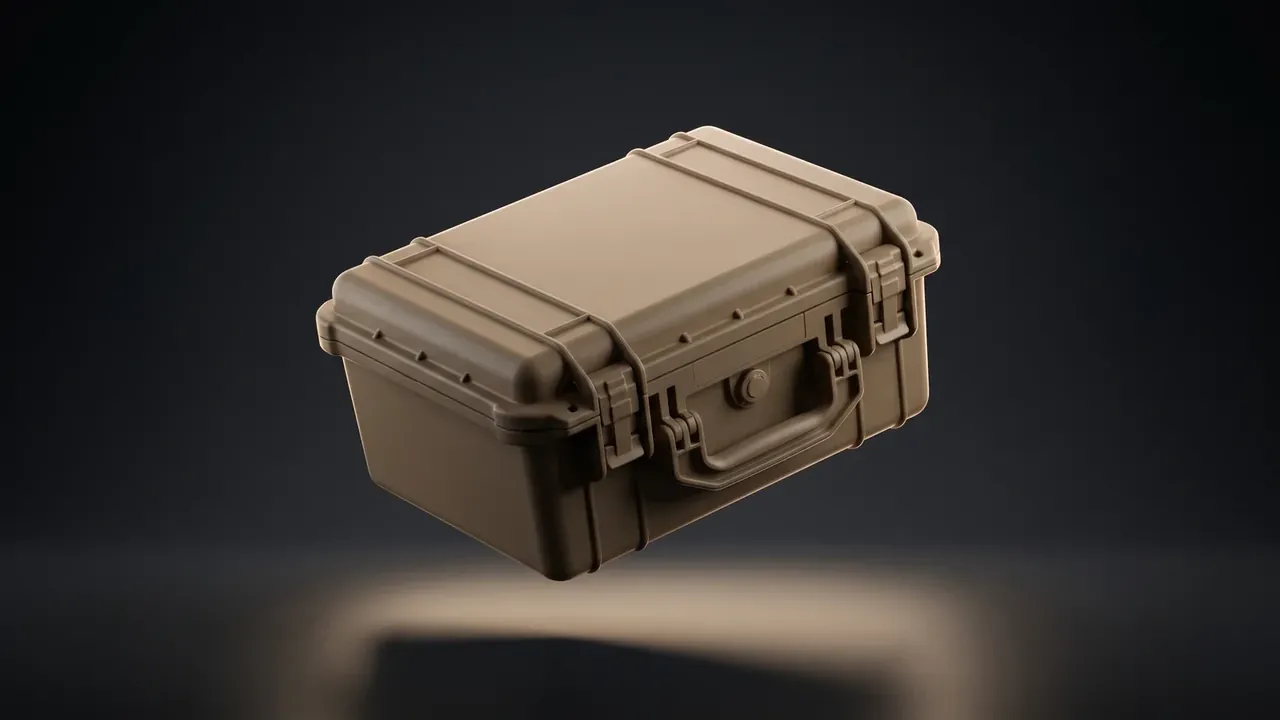
Quick answer: Failures at the coast start at the latch and the vent, not at the wall. Salt fog crusts the pins, humidity condenses inside, and cold makes plastic tongues brittle. Four conditions follow, with the symptoms and the fix.
Table of contents
- Salt fog and standing humidity
- Cold store: the tongue at minus thirty-five
- Air freight: pressure and the vent
- Stacking and three handling habits
- FAQ
1. Salt fog and standing humidity: where seizure starts
A warehouse on the Fujian coast keeps stock three kilometres from open water, on a floor that never dries, at 85 percent humidity. By month five, the latches on the first Fuze Pack Assembly needed both hands to break open. Under each tongue the pin carried a white crust, and scraping it off turned a running fit into an interference fit.
Two hundred forty hours of neutral salt fog reproduces it: leave the sample a day after the chamber, and a passing latch gains 20 to 30 N. No drawing captures that gain, yet it decides whether anyone follows the opening procedure.
| Condition | Main failure | What you see | Change that works |
|---|---|---|---|
| Coastal store, 85 percent RH | pin corrosion, rising effort | white tongue, gritty swing | stainless pins, chip clearance |
| Day-night swing above 15 degrees | condensation, damp insert | droplets on opening | add a vent, bag the insert |
| Constant forklift moves | worn corners, rib cracks | pale corners, hairline at rib | thicker corner, wear pads |
The weakest part in salt air is rarely the shell. A rotomoulded body has no exposed steel; pins, rivets and the vent spring do, and corrosion works inward from a scratch. Ask for those three by name, not a salt-spray rating for the case.
2. Cold store: the tongue at minus thirty-five
At a northern range store the mercury reaches minus 35 degrees Celsius. A latch that cycled hundreds of times indoors broke on its first drop of the season, flat fracture, no stretching.
Nylon tongues absorb moisture, and the high-absorption grades go brittle first. Soak the latch at minus 35 for four hours, work it three times inside 90 seconds, then drop the case a metre onto concrete: no break, no more than 15 N of change in opening effort.
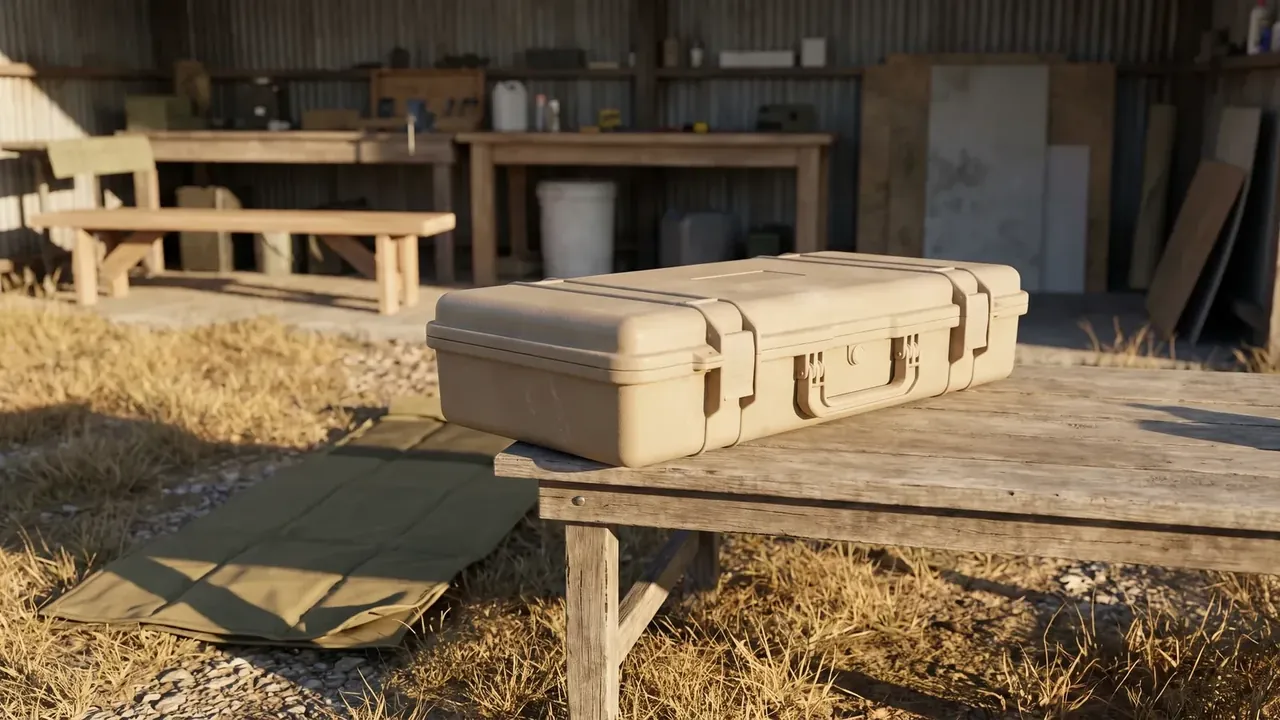
Cold changes the hands: a thick glove cannot pinch a small catch, so people slap or lever it. The concession is a wider pad, a 25 mm boss a gloved palm can press.
Assembly order on a Fuze Pack Assembly matters as much: insert, part, lid. Reverse it and a stiff cold insert chips at the edge; below minus 20 degrees Celsius, warm the insert two hours indoors.
3. Air freight: pressure, vent and the trip home
Air freight is the condition most often left out of a specification. A hold is pressurised to roughly cabin pressure at 2,400 metres, leaving about 40 kPa across the wall; the better the seal, the fewer places that pressure has to go.
- cracking pressure near 0.35 bar, enough to balance, high enough to keep rain out;
- membrane facing down, so condensate runs off the lid instead of pooling;
- vent clear of the stacking zone, since a sandbag on top shuts it;
A Fuze Pack Assembly without a vent pops when the lid comes off after landing, and the gasket usually leaves its groove in that pull. Batches of Fuze Pack Assembly that skip the vent replace gaskets at destination instead.
4. Stacking, handling and three habits that cost seals
Five high, 12 kg each, the bottom case carries the four above plus a set-down peak near twice the static load.
| Habit | Result | Correction |
|---|---|---|
| Carrying by one edge at an angle | hinge twists, lid shifts | two hands under the base |
| Dragging the case across concrete | corner wears through, ribs crack | wear pads, or a trolley |
| Using a latch as a handle | tongue bends, catch loosens | handle takes load, latch never |
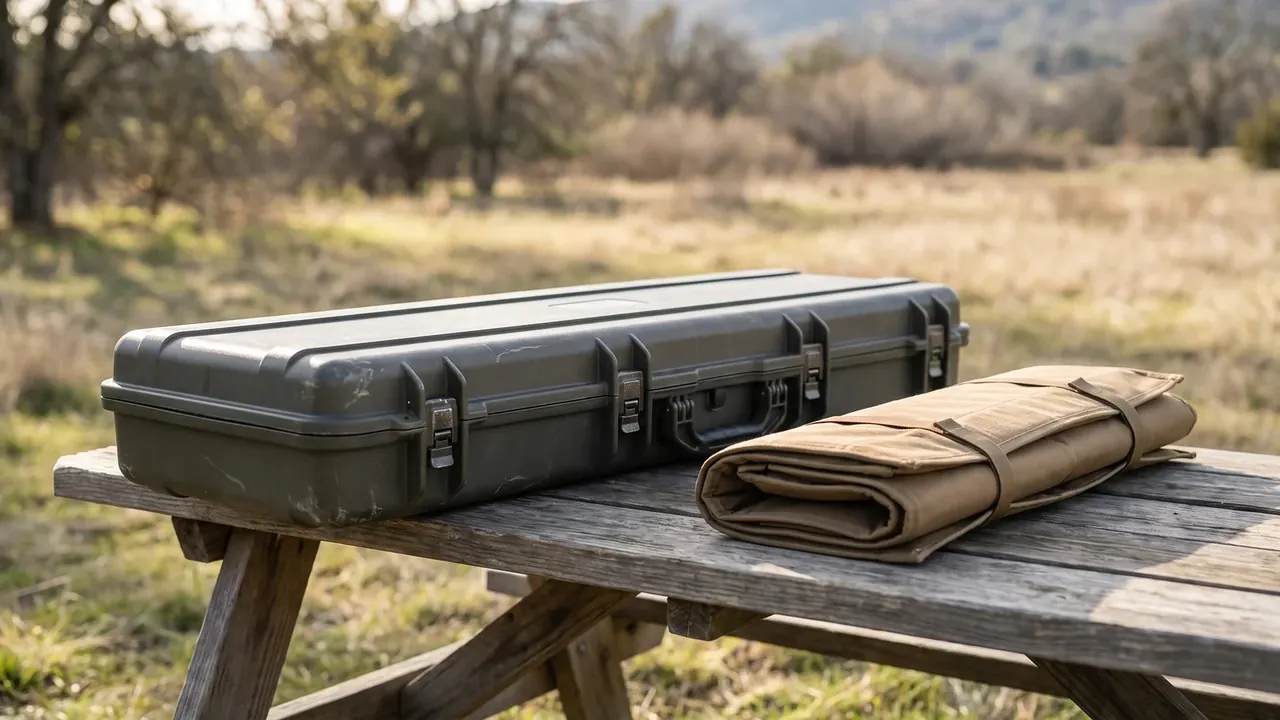
The last one is the most common. A latch ear is designed for clamping force, not for 12 kg of case, and metal bends or plastic whitens under it. The Fuze Pack Assembly shell survives, the seal does not, because one clamp point along the rim does nothing.
Conclusion
All four conditions point one way: the life of a Fuze Pack Assembly is set by its thinnest part, and that part sits in the hardware and the seal rather than the wall. Ask about pin material, membrane orientation and what a latch ear may carry.
This article discusses only the container (case body) side of specifications and design intent, and does not cover any handling, loading or use of the contents.
Related Reading
- How a Fuze Pack Assembly is built in four layers
- Cushioning and location design inside a Fuze Pack Assembly
- Inspection items and pass criteria for military packing boxes
Related Products
- 8 Series — Gun Cases; Military Equipment Cases; Camera Equipment Cases; Drone Cases; Watch Cases; Knife Cases; First Aid Cases; Electronics Equipment Cases
- WL8-2812 PP Gun Case — model WL8-2812
- All protective cases and toolboxes: 7 series, 158 models