

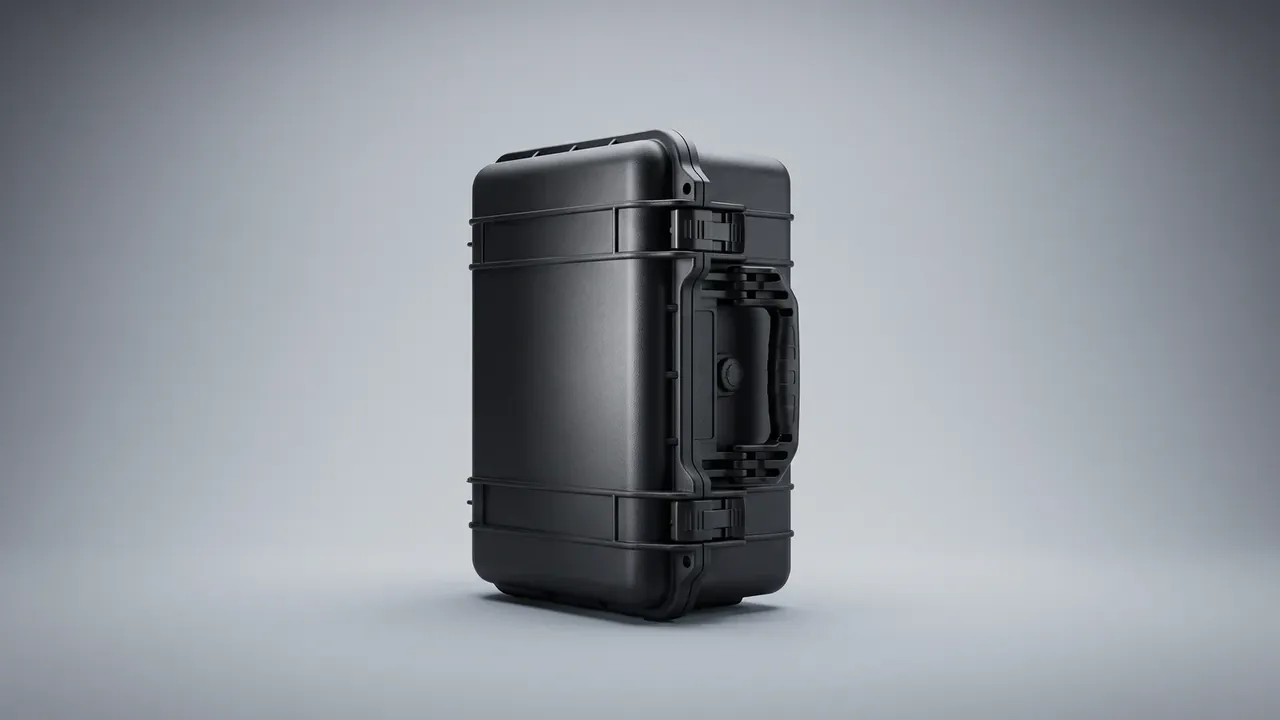
Quick answer: A case leaving a -25 °C freezer frosts within seconds on a 5 °C dock, hiding the lid seam. Judge the Fuze Pack Assembly in a fixed order — exterior, lid gap, latch force, hinge play — against hard numbers.
Table of contents
- Fuze Pack Assembly Checks Belong on the Dock
- Three Moves That Settle Pass or Fail
- Sampling, Gauges and the Numbers Behind a Call
- Grading a Failure and Routing It
- FAQ
1. Fuze Pack Assembly Checks Belong on the Dock
Inspection happens at the tailgate, not in the freezer. Six hours at -25 °C evens shell and liner temperature, so nothing shifts under the gauge. On a 5 °C dock the case starts frosting in about twelve seconds.
That frost is the clock. Once it beads along the lid seam, a feeler measures ice, not gap.
So a Fuze Pack Assembly gets ninety seconds from lid release to last reading. Measure first, wipe second.
Two preconditions decide whether those readings mean anything. Surface and dock must sit within 5 °C, or a gauge freezes its own film and the gap reads low. One batch means one mould run and one liner lot; mixing runs averages two distributions nobody can separate later. Skip either and the work becomes arithmetic on noise. The numbers still look precise. None of them are true.
| Field condition | Value on site | What it does to the check |
|---|---|---|
| Freezer temperature | -25 °C | Shell stiffens; latch pull runs about 15 % above room temperature |
| Dock temperature | 5 °C | Frost starts here, and so does the ninety-second window |
| Decision window | 90 seconds | Past it, wipe and restart; one reading, one entry |
2. Three Moves That Settle Pass or Fail
A Fuze Pack Assembly is judged with three moves, not a forty-line checklist. First, step back to 300 mm: seam level, corner radii free of whitening, rib roots free of hairline cracks. Whitening is where the polyethylene has crazed after a knock, and it precedes a crack.
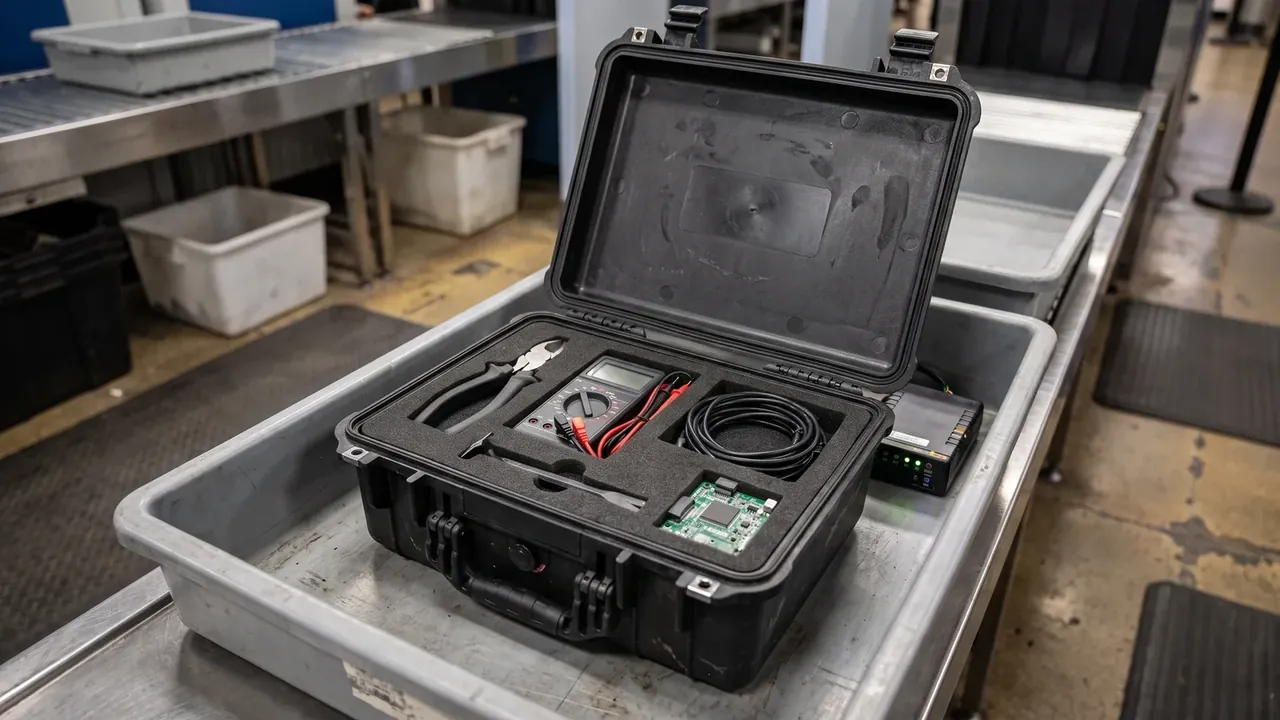
Second, run a 0.05 mm leaf around the lid edge. Where it slides in, the seal is not compressed. Where it refuses, stop pushing.
Third, hook a load cell on a latch and pull. Between 60 and 110 N is normal. Under 60 N, road vibration walks the latch open. Over 110 N, a handler reaches for a screwdriver, and the pry marks begin the second failure.
Hinges get their own number. Open the lid to 90°, push and pull along the pin axis, and past 0.3 mm of end play the bore has opened up.
3. Sampling, Gauges and the Numbers Behind a Call
Sample by batch, never by pallet count: up to 200 sets pull five, above that add 2 % with five as the floor. All five go through all three moves. Three gauges cover it:
- Caliper, 0.02 mm resolution, three points per liner pocket
- Feeler stack, thinnest leaf 0.05 mm, count the sections it enters
- Load cell, 0 to 300 N, peak hold on the latch pull
Exterior and closure are pass/fail; gauge readings support them. One section taking the feeler fails the case, whatever its length. A latch outside the window pulls ten more sets; two failures there fail the batch. Liner pockets count past 1.5 mm on one side; below that, clearance absorbs it.
4. Grading a Failure and Routing It
Failures fall into three grades, and the grade decides who signs.
| Grade | Typical defect | Action | Deadline |
|---|---|---|---|
| A | Feeler through the lid seam, cracked latch body, hinge play over 0.3 mm | Reject the batch, no release note | Same shift |
| B | Liner pocket off by more than 1.5 mm, seal flat in one area | Pull ten more sets, re-judge, release downgraded | 24 hours |
| C | Label off position, light scuff on the shell | Rework on site, then re-check every unit | 48 hours |
Grade A is never sorted. A leaking lid seam usually traces to one mould section cooling unevenly, so send it back and let the moulder open the tool.
Grades B and C need a paper trail: the ten extra readings, the rework count, the initials of whoever re-checked.
Conclusion
Cold dispatch turns a Fuze Pack Assembly inspection into three moves in ninety seconds, where order matters more than form. Each item has a number, each grade has an owner, and the batch, gauges and disposition all get written down. A standard holds only when the same case keeps producing the same reading, and that is what a Fuze Pack Assembly check is for.
This article discusses only the container (case body) side of specifications and design intent, and does not cover any handling, loading or use of the contents.
Related Reading
- How the layers of a Fuze Pack Assembly divide the work
- Cushioning and locating numbers for a Fuze Pack Assembly
- Inspection items and verdict habits for military packing boxes
Related Products
- 8 Series — Gun Cases; Military Equipment Cases; Camera Equipment Cases; Drone Cases; Watch Cases; Knife Cases; First Aid Cases; Electronics Equipment Cases
- WL8-2812 PP Gun Case — model WL8-2812
- All protective cases and toolboxes: 7 series, 158 models