

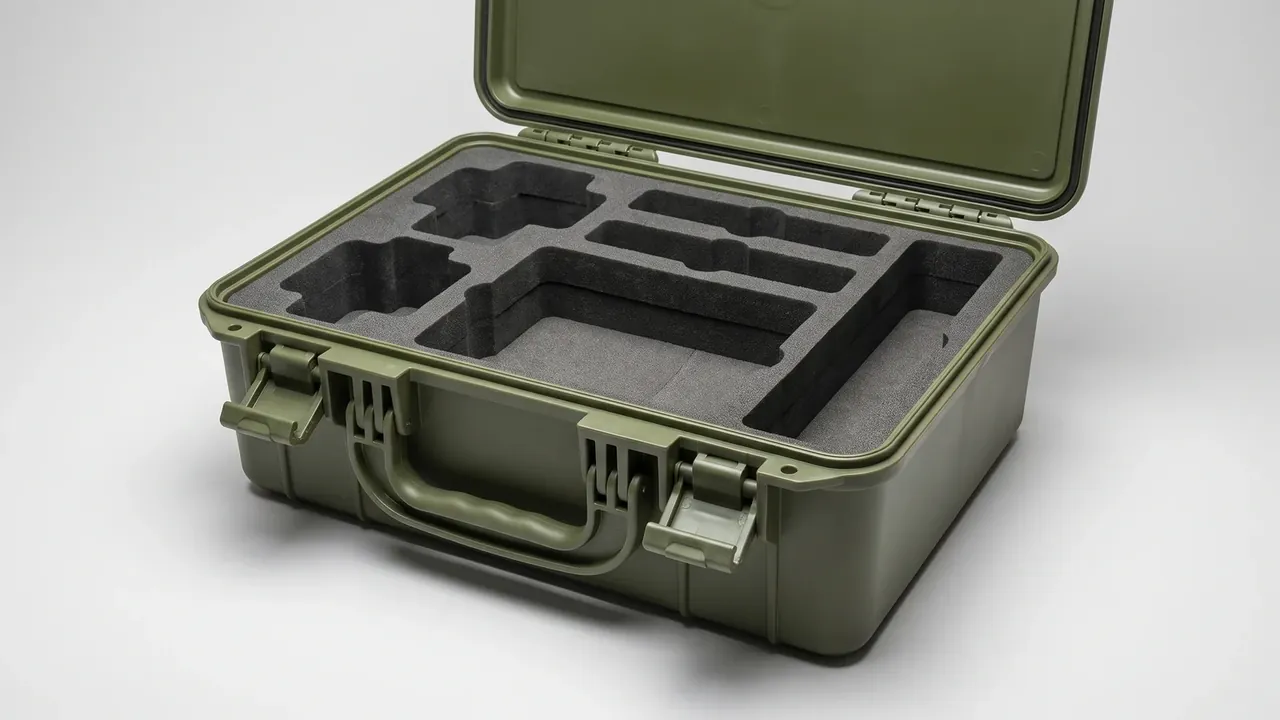
Quick answer: A Gear Case is configured by four numbers taken from the job, not the industry name: drop height, immersion depth, temperature range and lid cycles per day. Settle those four and the rest follows.
Table of contents
- Six Work Scenarios a Gear Case Has to Cover
- Outdoor Work versus Field Service
- Water, Diving and the Sealing Rules
- Cold Slopes and Hot Vans
- Photo, Video and Emergency Repair
- FAQ
1. Six Work Scenarios a Gear Case Has to Cover
Selection starts from a threat list, not an industry name. A Gear Case that lasts five years on a service truck seizes its latches in three months on an island. Four numbers decide it: drop height, immersion depth, temperature and lid cycles.
Impact rules outdoor and repair work, immersion water work, embrittlement alpine work, vibration photo work. Table 1 pairs site and configuration.
| Site | Threat | Insert | Carry |
|---|---|---|---|
| Outdoor | 1.1 m drop | PE foam | Strap |
| Service | Oil, cycles | Trays | Handle |
| Water | Salt | EVA | Tie-down |
| Alpine | Cold | Moulded EVA | Panel |
| Photo | Vibration | Foam | Trolley |
| Repair | Time | Pull-out tray | Wheels |
IP67 means one metre of water for thirty minutes; IP68 leaves depth and duration to the maker, commonly 1.5 m for sixty minutes.
2. Outdoor Work versus Field Service
An outdoor Gear Case must survive being dropped. Sliding off a tailgate lands the impact at about 1.1 m, almost always on a corner, where a double wall and an R12 radius cut the stress peak by thirty percent. A 30 kg/m³ PE insert cut with 3 mm interference stops tools lifting the foam out.
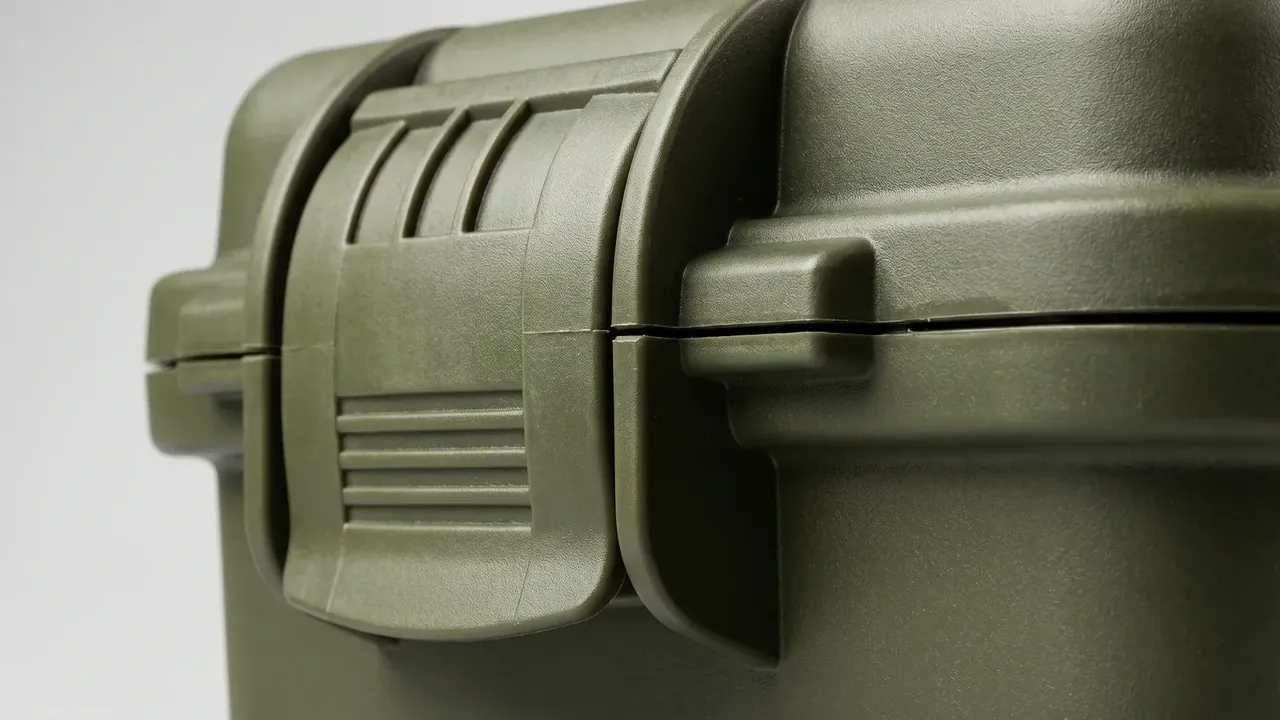
Field service runs forty lid cycles a day with oily gloves. Latch effort belongs between 60 and 90 N: below that a tool bag flicks it open, above it a gloved thumb fails. Trays 55 mm deep leave 40 mm above for long bars, though one case serving both ends up with loose pockets and shallow trays.
3. Water, Diving and the Sealing Rules
On water the variable is temperature and salt, not pressure. Moving from a 35 °C deck into 12 °C water drops internal pressure by about 8 kPa, so the lid needs a purge valve set at 0.35 bar; prying it open rolls the gasket out of its groove.
An empty 6.8 kg case with 22 L of volume, filled with metal parts, is denser than water; sealing only slows the leak.
Salt spray is checked at 48 hours neutral: 304 pins hold, carbon steel seizes in three months and effort climbs from 70 N to 130 N. Tie-downs take 2.5 kN.
4. Cold Slopes and Hot Vans
Cold damages mouldings by embrittlement. PP keeps its toughness at -20 °C but cracks radially at -30 °C, and PC loses sixty percent of its notched impact strength. Accept a Gear Case only after four hours at -30 °C and a 1.2 m corner drop.
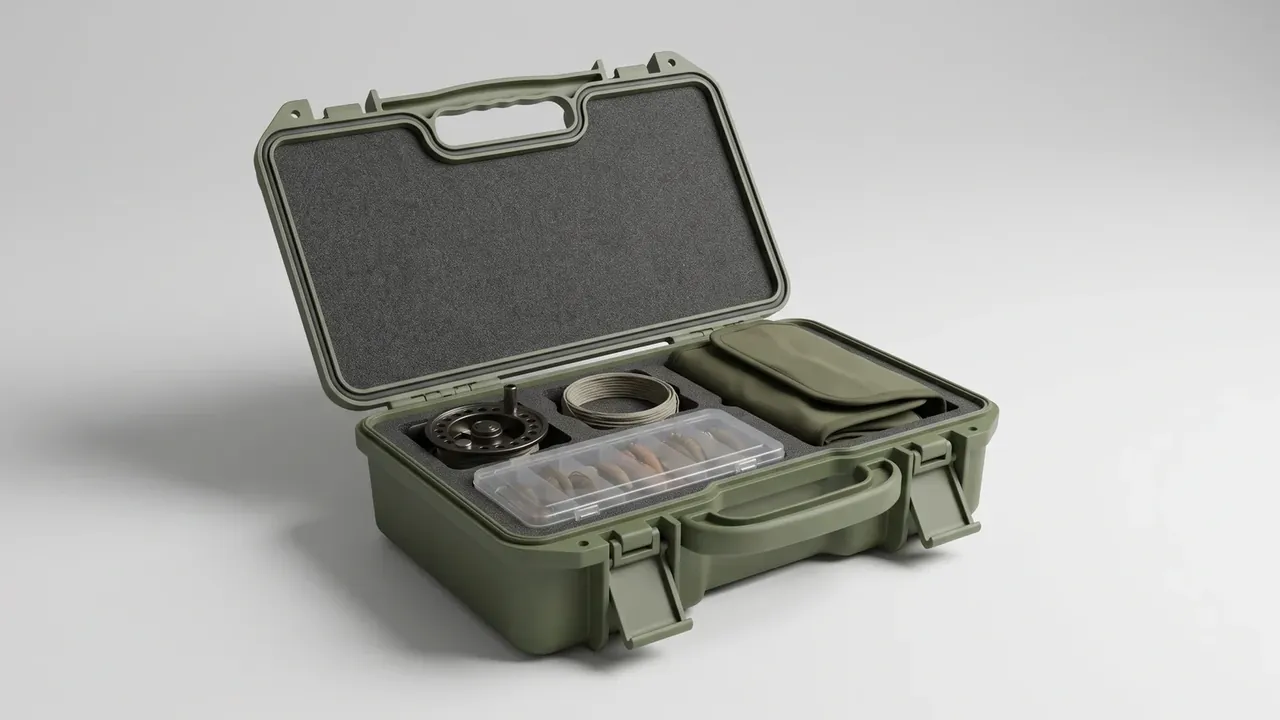
Heat is often skipped. A closed van reaches 65 °C, a dark case runs 12 °C hotter than a pale one in sun, and black foam adds 5 °C. A pale body with an aluminised liner lowers that peak; a thicker wall only delays it.
5. Photo, Video and Emergency Repair
Photo fixing is about return accuracy: a pocket 2 mm larger than the barrel, 8 mm of foam beneath, a 10 mm lid pad above.
Repair work needs one hand. A 75 mm wheel clears a 15 mm threshold where anything under 60 mm jams on gravel.
| Carry | Limit | Access | Site |
|---|---|---|---|
| Handle | 18 kg | Stairs need two | Outdoor |
| Top handle | 12 kg | Narrow aisles | Field service |
| Panel | 15 kg | Long walks | Alpine |
| Trolley | 30 kg | Hard floors | Photo |
| Wheels | 25 kg | Thresholds | Repair |
A photo case can afford a thick wall; a repair Gear Case cannot, since every kilogram shortens a day of range.
Conclusion
Configure from the site and the site limits the configuration: a trolley moves the centre of gravity back, a harness forces a thinner wall. Write those four numbers down as acceptance figures and the rest stops arguing. Where a Gear Case is used is written in the threat list of a site, not in a catalogue.
This article discusses only the container (case body) side of specifications and design intent, and does not cover any handling, loading or use of the contents.
Related Reading
- What a gear case is and how it differs from a tool box
- Gear case versus equipment case: similar names, different jobs
- How custom foam inserts are designed and cut
- How a waterproof hard case is sealed and rated
Related Products
- 8 Series — Gun Cases; Military Equipment Cases; Camera Equipment Cases; Drone Cases; Watch Cases; Knife Cases; First Aid Cases; Electronics Equipment Cases
- WL8-2812 PP Gun Case — model WL8-2812
- All protective cases and toolboxes: 7 series, 158 models