

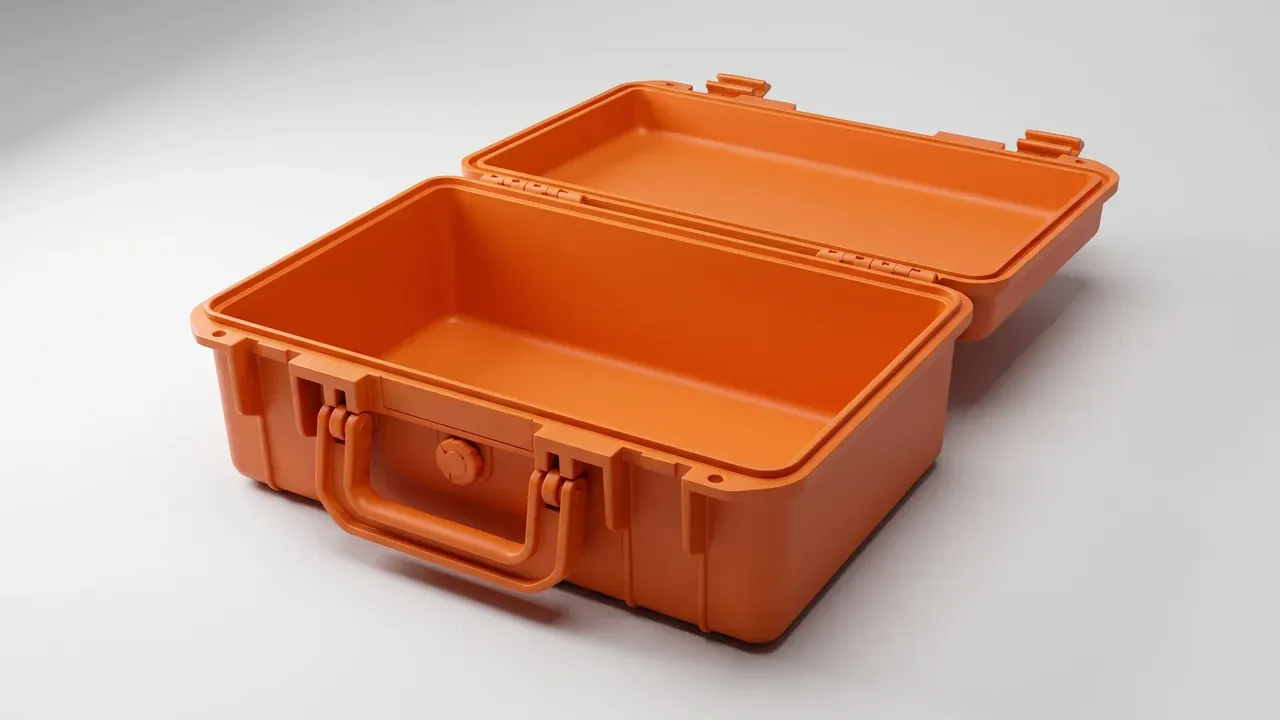
Quick answer: A Gear Case and its alternatives differ on five measurable points: drop and immersion protection, carry efficiency set by weight, volume efficiency, stack load, and lid life against access time. It wins protection and stacking, loses weight and volume, so the pick depends on your bottleneck.
Table of contents
- How the Gear Case Sits Against Four Alternatives
- Protection: Drops and Immersion, Measured
- Carry Efficiency: Paying for Weight
- Volume Efficiency and Stack Load
- Handling Convenience and Life-Cycle Cost
- FAQ
1. How the Gear Case Sits Against Four Alternatives
Comparison starts from the job, not from the strongest option. A soft pack trades protection for weight, a storage box trades sealing for price, an aluminium case trades sealing for stiffness, a rotomoulded case trades weight for impact. A Gear Case sits on the protection side, buying a stable interior with a moulded wall and a gasket.
| Option | Structure | Aim | Usual failure |
|---|---|---|---|
| Gear case | Moulded wall, gasket | Stable interior | Latch wear |
| Soft pack | Fabric, zip | Weight, fit | Insert tears |
| Storage box | Thin moulding, loose lid | Price, volume | Catch breaks |
| Aluminium | Sheet, frame | Stiffness, look | Rivets weep |
| Rotomoulded | Thick shell | Impact | Weight, bulk |
Treating a soft pack as a light hard case is the common mistake: a compressed gasket holds water at one metre, a coated zip does not.
2. Protection: Drops and Immersion, Measured
Fix the test first: 1.5 m, corner first, fully loaded. The moulded body shows no crack and the latches hold; the soft pack tears at the insert corner with a 6 mm dent; the storage box pops a catch and cracks; the aluminium case dents 3 mm and its lock deforms; the rotomoulded case passes.
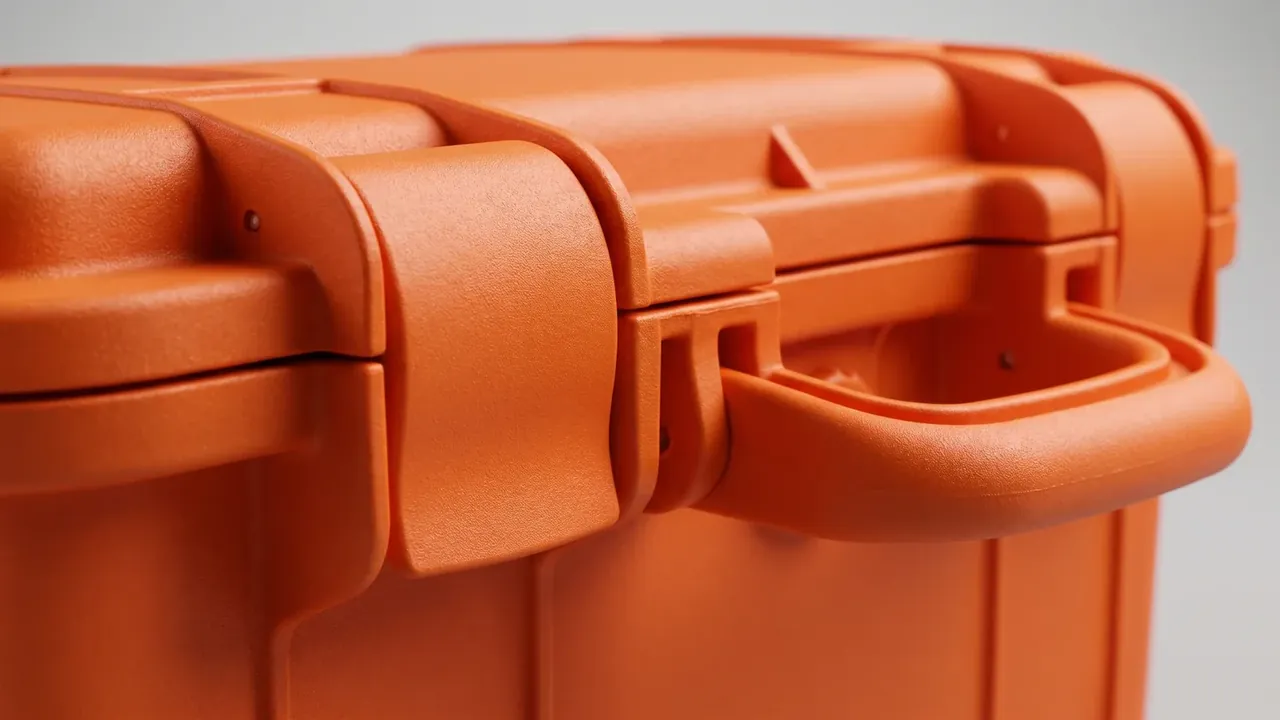
Immersion is overrated. At one metre for two hours the moulded and rotomoulded cases stay dry, an aluminium case weeps at its rivets, a storage box takes in about 300 mL and a soft pack soaks through. The difference is the sealing interfaces.
3. Carry Efficiency: Paying for Weight
Carry efficiency is weight over usable volume: 5.8 kg for 46 L is 0.126 kg/L, against 0.063 in a soft pack, 0.164 in aluminium and 0.240 rotomoulded.
| Option | Weight | Volume |
|---|---|---|
| Gear case | 5.8 kg | 46 L |
| Soft pack | 2.4 kg | 38 L |
| Storage box | 3.1 kg | 52 L |
| Aluminium | 7.2 kg | 44 L |
| Rotomoulded | 11.5 kg | 48 L |
Weight is not the only cost. A soft pack can be worn where a hard case is carried: a harness spreads load to shoulder and hip, a handle puts it all on the hand, and 30 kg changes hands every 50 m. Wheels only pay on hard floors.
4. Volume Efficiency and Stack Load
Volume efficiency is usable volume over outside volume: 62 percent for 46 L inside a 73 L envelope, 58 in aluminium and 52 rotomoulded, against 78 in a soft pack and 74 in a box. Ribs and radii take space.
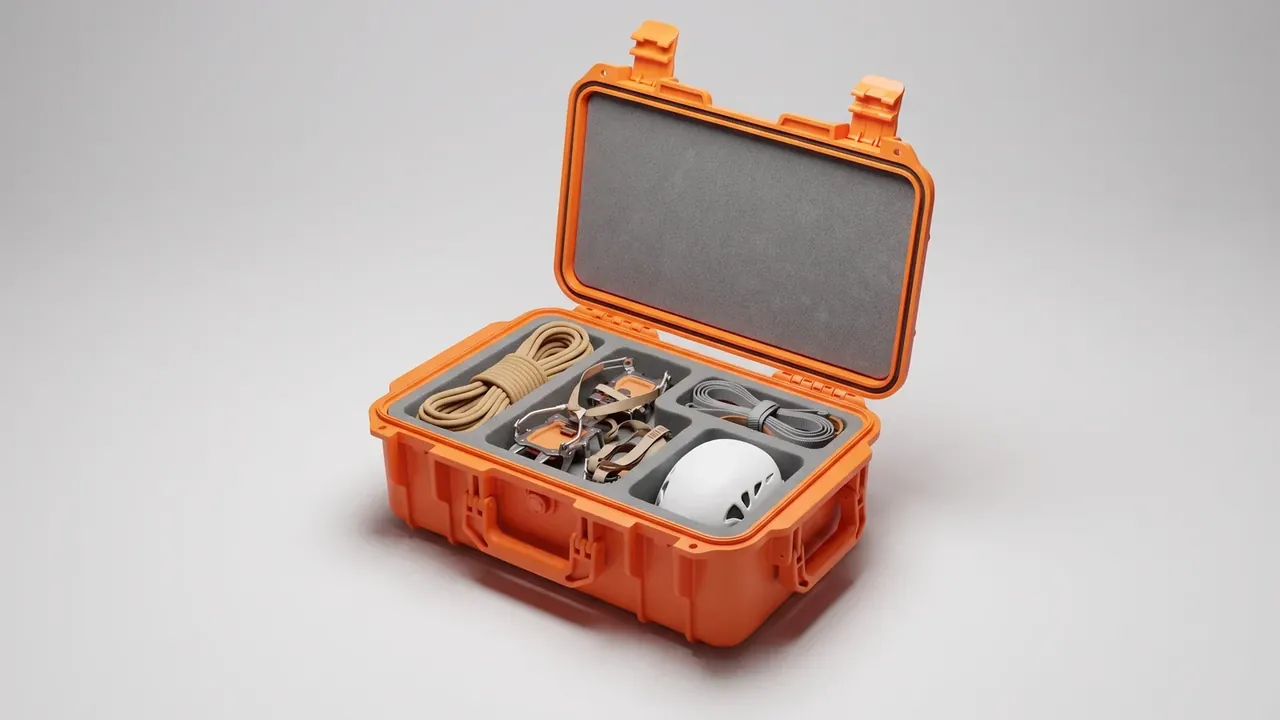
Stack load opens the gap. Load at 4 mm deflection runs 4.8 kN for the moulded case, 7.5 kN rotomoulded, 2.6 kN aluminium, 1.4 kN for a storage box and 0.6 kN for a soft pack, so at 20 kg a case sits five tiers up, a storage box two.
5. Handling Convenience and Life-Cycle Cost
Convenience comes down to access time and lid life. Two cam latches open in about 6 s, a storage box lid in 5 s, a zipped soft pack in 9 s, an aluminium case in 12 s and a rotomoulded case in 8 s; seconds add up over forty cycles.
Lid life spreads wider: 20000 cycles for a cam-latched case, 15000 rotomoulded, 5000 for an aluminium lock, 3000 for a zip and 1500 for a storage box catch. At twenty cycles a day that catch fails inside two years. Life-cycle cost is not a purchase price: a soft pack is replaced every year or two, the shell runs five years.
Conclusion
Set the five numbers side by side and nothing wins everywhere: protection and stacking go one way, weight and volume the other, convenience sits between, and cost depends on replacement. The question is which shortfall costs money first. A Gear Case is finally judged by whether its weaknesses fall outside your job.
This article discusses only the container (case body) side of specifications and design intent, and does not cover any handling, loading or use of the contents.
Related Reading
- What a gear case is and how it differs from a tool box
- Gear case versus equipment case: similar names, different jobs
- How rotational moulding shapes a case shell
- How PP and ABS cases differ as materials
Related Products
- 8 Series — Gun Cases; Military Equipment Cases; Camera Equipment Cases; Drone Cases; Watch Cases; Knife Cases; First Aid Cases; Electronics Equipment Cases
- WL8-2812 PP Gun Case — model WL8-2812
- All protective cases and toolboxes: 7 series, 158 models