

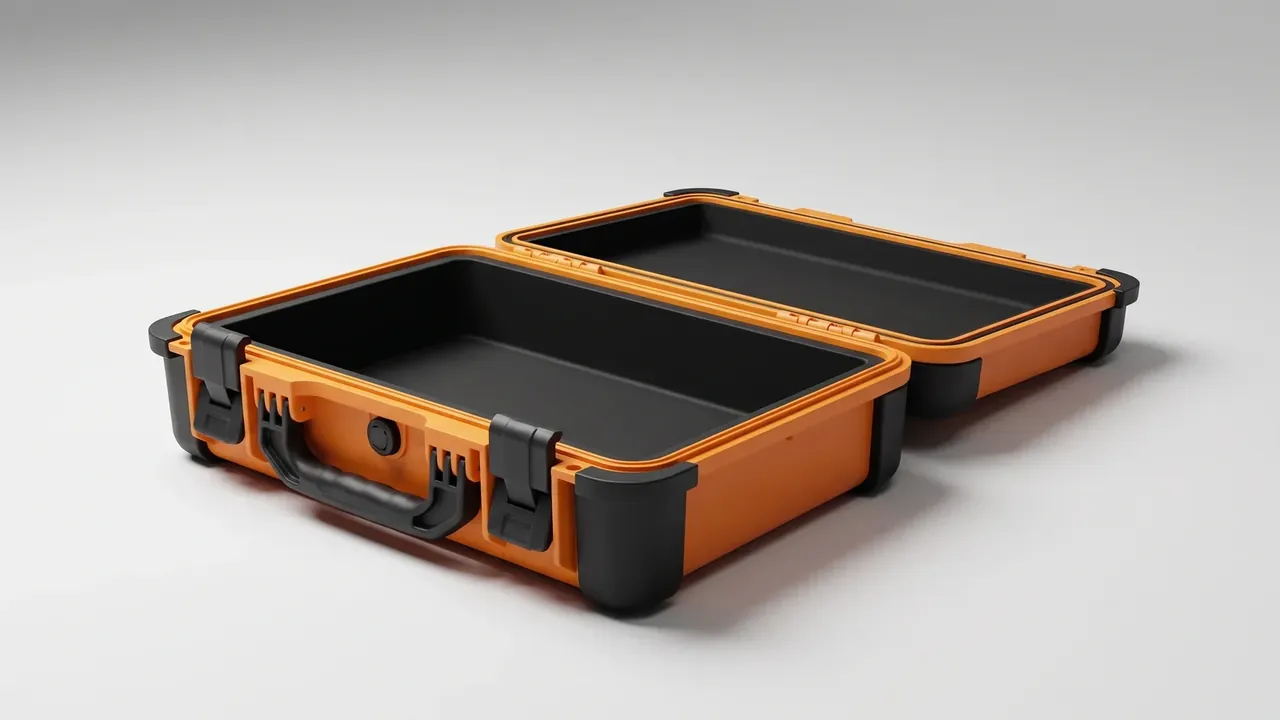
Quick answer: A Gear Case fails in a fixed order: divider foam collapses first, the gasket loses rebound second, latches loosen last. Six checks on 30, 90 and 180 day cycles, each with a measurable limit, retire a case on evidence, not after a leak.
Table of contents
- How a Gear Case Fails in Order
- Divider Collapse and Liner Debonding
- Gasket Compression Set and the Replacement Line
- Latch Preload and Hinge Pin Play
- Cracks Valves and Cleaning Cycles
- FAQ
1. How a Gear Case Fails in Order
Sort returned cases by part; three come first: divider foam, gasket, latches. The shell rarely goes first because the wall carries margin; what fails early works by elasticity or adhesive.
Cycle by duty: out over twelve times a month, 30 days; quarterly, 90; a stored spare, 180 with a full check. Kit: 0.05 and 0.5 mm feelers, a rule, a torch.
| Check point | Method | Cycle |
|---|---|---|
| Divider foam | Steel rule on wall height | 90 days |
| Gasket | Feeler gauge at the joint | 30 days |
| Latches | Pull gauge and calipers | 90 days |
| Hinge pin | Rock the lid, try a gauge | 180 days |
| Shell | Raking light, fingernail | 180 days |
| Pressure valve | Press for rebound | 90 days |
2. Divider Collapse and Liner Debonding
Divider foam loses shape first. EVA at 30 kg/m³ drops its bay walls 2 to 4 mm after 3000 load cycles; PE at 45 kg/m³ passes 6000 for 0.4 kg of extra weight.
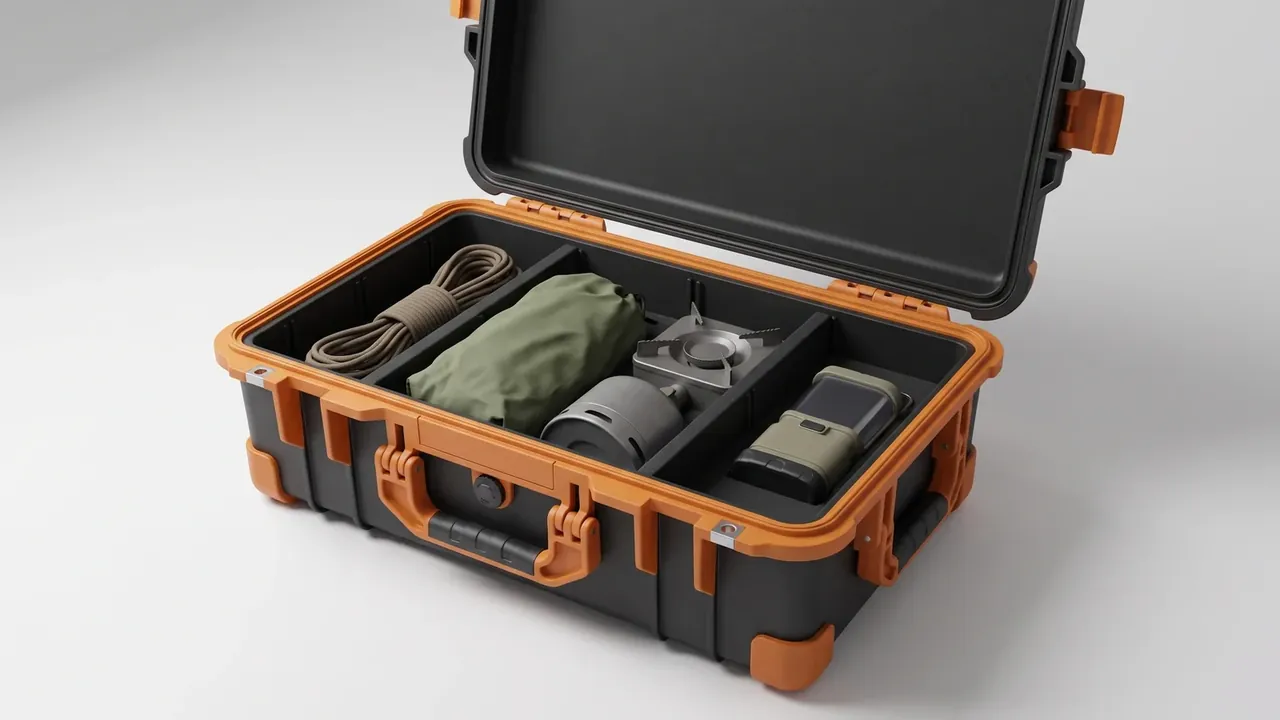
Judge collapse by height, not area. A wall top 3 mm below a new case, with two bays no longer separating contents, has failed; three failed bays means a new sheet.
Debonding hides better. Adhesive lifting 50 mm along an edge, or over 20 cm², lets the liner float. One 110 °C hot melt repair holds; a second does not.
3. Gasket Compression Set and the Replacement Line
Most Gear Case gaskets are foamed silicone or EPDM at about 55 Shore A, fitted at 25 to 30 percent compression, so an 8 mm cord closes to 5.6 mm. No latch tension revives a cord that has stopped rebounding.
The reference test holds the cord at 70 °C for 24 h, releases it for 30 min, and calls anything past 30 percent set a failure. In the field, a 0.05 mm gauge entering at three points, each run over 30 mm, is enough.
Replace the whole loop: scarf the ends 45 degrees, cure the silicone adhesive for 24 h, then prove the case at 0.5 m of water for 20 min.
4. Latch Preload and Hinge Pin Play
A new latch holds about 450 N. Under 300 N, or a 60 N spread between the two sides of one case, the catch is worn: change the latch, keep the case. Catch stock is 3.2 mm, due at 2.4 mm.
Preload is a figure, not a feel: the gasket should close 2.0 to 2.6 mm and the tongue should click over centre. Shim the catch, never bend the tongue.
Hinge play on a Gear Case is read at the pin. A 5 mm pin in a 5.2 mm bore is the factory fit; past 0.5 mm the lid rocks and pushes the gasket off its seat. Retain a drifting pin with a circlip.
5. Cracks Valves and Cleaning Cycles
Gear Case shell damage comes three ways: cracks, scores, whitening. A crack over 15 mm, or one running from the rim to the first rib, ends load duty. A score past 0.6 mm on the mid-wall becomes a crack.
The pressure valve is the most ignored part. Its disc opens near 5 kPa to equalise air freight against ground pressure; when it sticks, the case will not open at altitude. Press for rebound, then inject 10 mL of air.
| Item | Watch | Replace or retire |
|---|---|---|
| Divider wall collapse | 3 to 5 mm | over 5 mm or past centre |
| Gasket set | 20 to 30 percent | over 30 percent |
| Latch holding force | 300 to 400 N | under 300 N |
| Hinge pin play | 0.3 to 0.5 mm | over 0.5 mm |
| Shell crack | under 15 mm | over 15 mm or through |
Anything on watch drops to a 30 day cycle. Cleaning follows the same discipline: neutral detergent at pH 6 to 8, chlorine at 500 mg/L for 10 min, twice a month at most.
Conclusion
Put six checks on 30, 90 and 180 day cycles and a record replaces memory. Only one judgement remains per item: watch or retire. Once thresholds are numbers, swapping a part or scrapping a shell stops depending on feel. A Gear Case on that schedule serves a third longer.
This article discusses only the container (case body) side of specifications and design intent, and does not cover any handling, loading or use of the contents.
Related Reading
- How a gear case is built
- Gear case against four alternatives
- How case dividers and liners are set up
- Care and repair for hard shell cases
Related Products
- 8 Series — Gun Cases; Military Equipment Cases; Camera Equipment Cases; Drone Cases; Watch Cases; Knife Cases; First Aid Cases; Electronics Equipment Cases
- WL8-2812 PP Gun Case — model WL8-2812
- All protective cases and toolboxes: 7 series, 158 models