

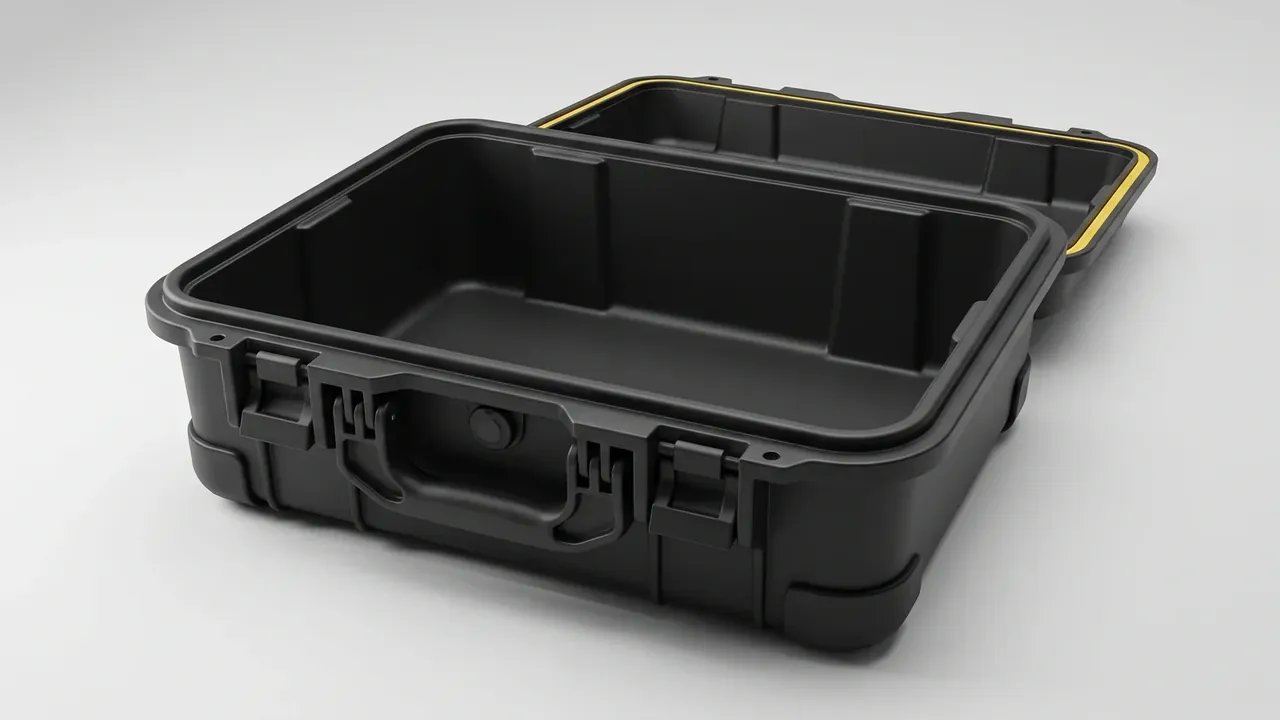
Quick answer: Choosing a Gear Case means five tests in order: usable volume and compartments, carrying method against empty weight, ingress rating against the environment, opening frequency against latch type, and stacking or transport fit.
Table of contents
- Start With Usable Volume, Not Outside Size
- Carrying Method Against Empty Weight
- Match the Ingress Rating to the Environment
- Opening Frequency Decides the Latch
- Stacking and Transport Fit
- FAQ
1. Start With Usable Volume, Not Outside Size
The first test is the volume a load occupies, not the outside size. A Gear Case measuring 465×355×215 mm holds 22 L inside once walls, lid depth and foam are removed; at a 65 percent loading limit, about 14 L is reachable.
| Usable volume | Compartments | Cell size | Load shape |
|---|---|---|---|
| 22 L | 4 to 6 | 180×120×95 mm | hand tools and cable |
| 38 L | 6 to 8 | 220×150×120 mm | instruments and accessories |
| 60 L | one open bay plus two boxes | none fixed | long items and whole units |
More cells is not better: each partition takes 8 to 12 mm, and six cells to nine narrows the cell from 120 mm to 78 mm, where a wrench no longer lies flat. Lids open 100 to 110 degrees, so a 55 mm lid leaves 90 mm and fingers need 35 mm.
2. Carrying Method Against Empty Weight
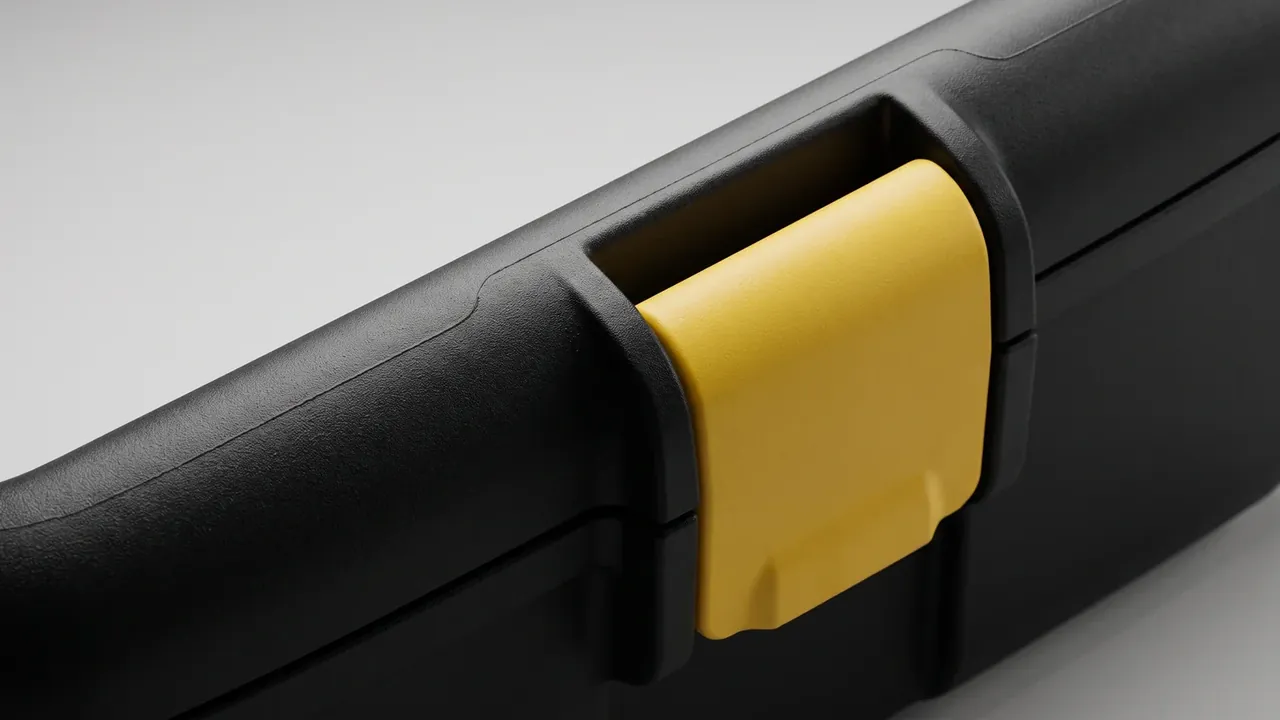
Empty weight decides the carrying method: 4.2 kg empty lands at 14 to 18 kg loaded, and a 25 mm moulded handle stops being comfortable past 1 km. Wheels suit loads over 20 kg on hard floors, though anything under 100 mm jams on a threshold. Batteries belong next to the handle, because at the base centre, 120 mm below it, the wrist moment grows.
| Method | Load ceiling | Distance | Cost |
|---|---|---|---|
| Moulded handle | 12 kg | under 1 km | fingers compress |
| 50 mm shoulder strap | 16 kg | 3 km | ring fittings, 0.3 kg |
| Two shoulder straps | 20 kg | over 5 km | back panel, 0.6 kg |
| Handle and two wheels | 30 kg | hard floors | wheels under 100 mm catch |
3. Match the Ingress Rating to the Environment
A higher rating is not a better choice. Moving a 22 L Gear Case from IP65 to IP67 adds about 40 N of latch force, because a double-lip gasket needs more compression.
| Environment | Seal | Rating that suffices |
|---|---|---|
| Indoor workshop, dust only | labyrinth rim, single lip | IP6X |
| Open air, rain | single lip plus drain channel | IPX5 |
| Short immersion or washdown | double lip plus pressure valve | IP67 |
| Salt atmosphere | silicone gasket | IPX6 with 48 h salt spray |
Drop is separate: 1.2 m onto 26 faces, corners and edges is carried by R8 radii and a 3.0 mm wall, not the gasket. At minus 20 °C nitrile hardens while silicone stays flexible for ten percent more, and summer sun takes the inside to 75 °C, so the foam adhesive needs a limit.
4. Opening Frequency Decides the Latch
Forty openings a shift make the latch a wear part; four a day make it a lid holder. A butterfly latch holds 520 N, opens one-handed and fatigues at 20,000 cycles; a draw latch survives 5,000 but needs two hands.
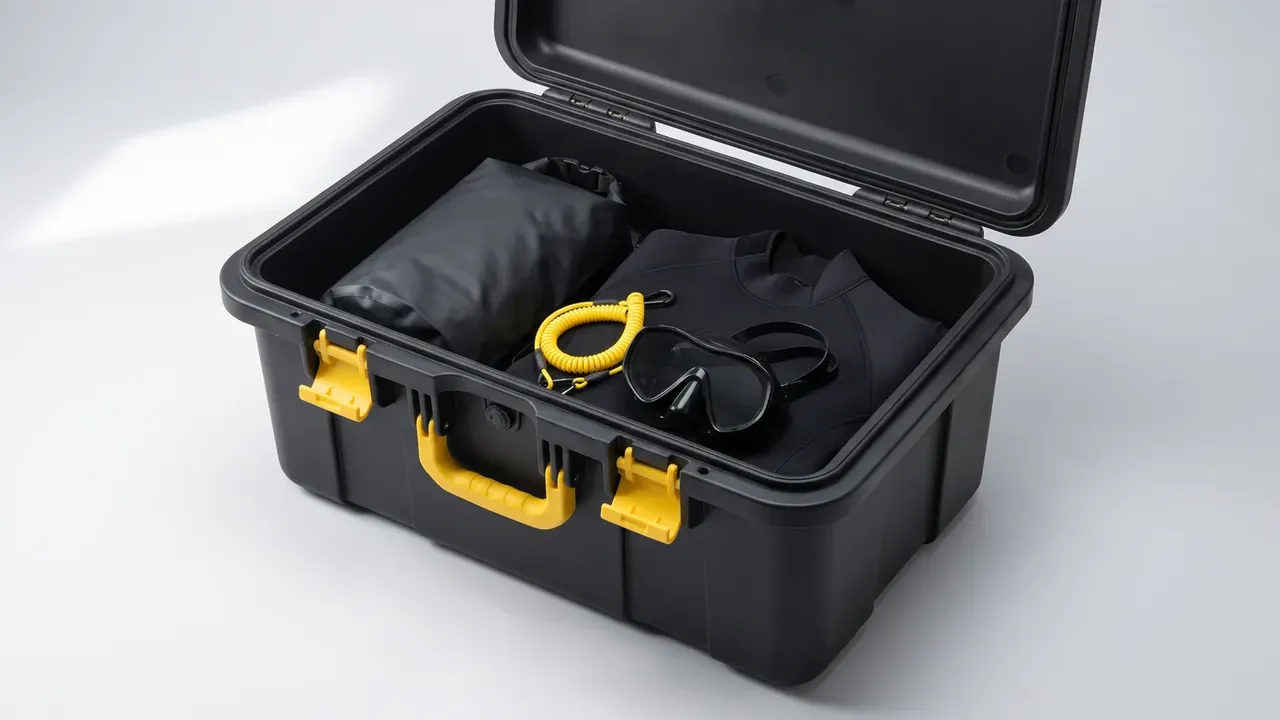
Above 30 cycles a day, choose butterfly and stock seats; below 10, choose draw; in between, ask about gloves, since butterfly opens twice as fast gloved. Two 4 mm stainless pins carry 20,000 cycles, a moulded hinge wears oval by 3,000.
5. Stacking and Transport Fit
Stacking loads the lid of a Gear Case, not the side walls. Three tiers at 18 kg put 36 kg on the bottom lid, and a 500 N centre load is closer to a forklift setting a case down than an even spread.
A 1200×1000 mm pallet takes six units per layer, two layers, twelve in all; without corner grooves the stack shifts 20 mm after wrapping and stops clearing a container door. Above three tiers add a 5 mm PP sheet, above that a 90 mm timber skid; at four tiers the lid passes 8 mm.
Conclusion
The five tests run one way: volume sets compartments, weight sets carrying, environment sets ingress, frequency sets the latch, tiers set stacking. Skip a link and the gap is closed with hardware, which shows up as mass and cost. Run the chain and the Gear Case choice holds after delivery.
This article discusses only the container (case body) side of specifications and design intent, and does not cover any handling, loading or use of the contents.
Related Reading
- What a gear case is, and how it differs from a tool box
- Gear case against the alternatives
- How to size a case from the load backwards
- How internal dividers and partitions are laid out
Related Products
- 8 Series — Gun Cases; Military Equipment Cases; Camera Equipment Cases; Drone Cases; Watch Cases; Knife Cases; First Aid Cases; Electronics Equipment Cases
- WL8-2812 PP Gun Case — model WL8-2812
- All protective cases and toolboxes: 7 series, 158 models