

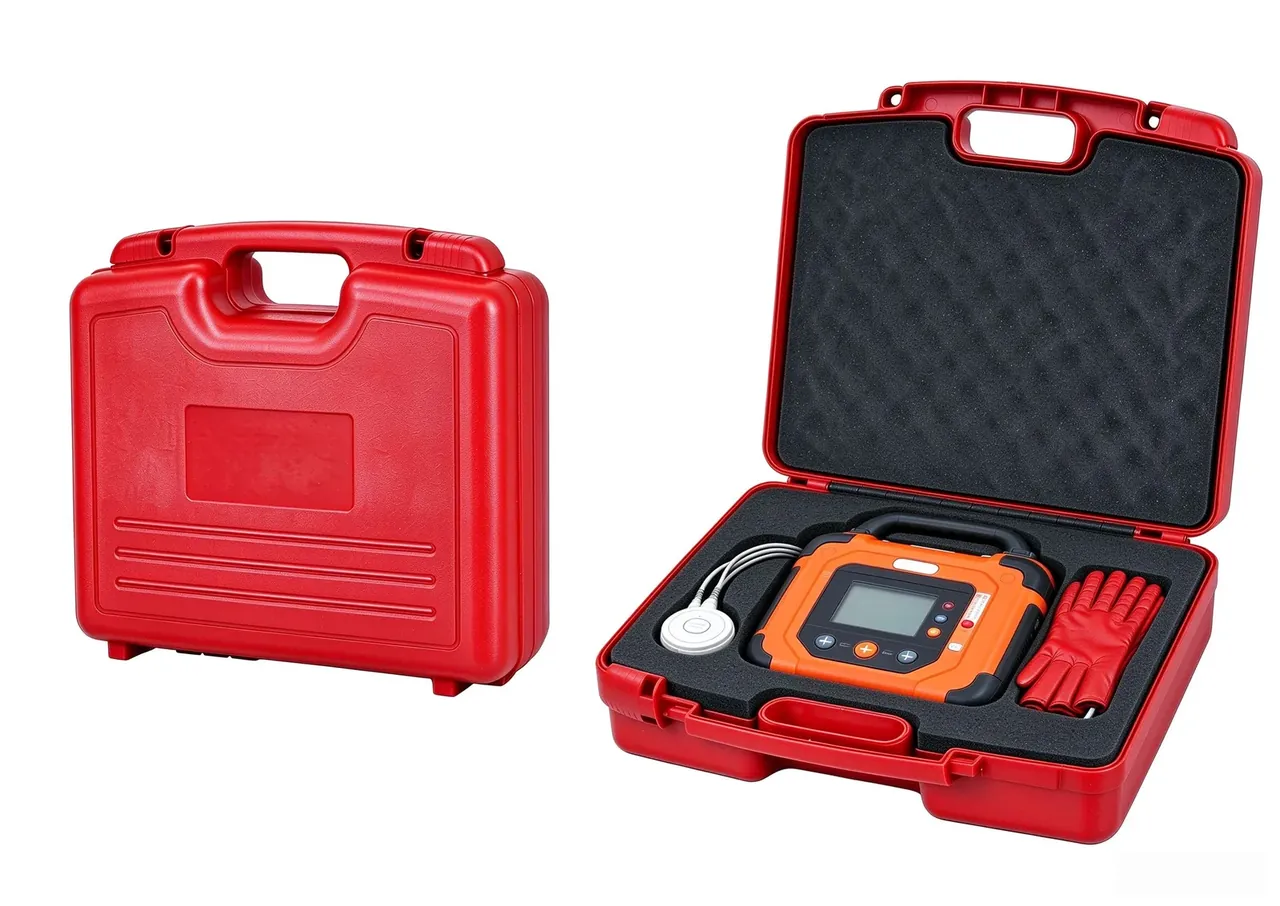
Quick answer: Geological exploration instrument waterproof hard box: sloped drain lip with twin gaskets, dry after 1.0 m / 60 min soak, lid deflection under 1.5 mm.
Table of contents
- Geological exploration instrument waterproof hard box drain lip slope
- Twin gasket contact in sandy water
- Lid deflection under four-layer stacking
- Immersion hold and lid-open inspection
- Pressure valve trip point across temperature swings
- FAQ
1. Geological exploration instrument waterproof hard box drain lip slope
Geological exploration instrument waterproof hard box measures 720 × 500 × 340 mm outside and 650 × 430 × 275 mm inside; a 4.8 mm wall and the mouth flange take the difference. Empty mass is 9.6 kg, rated load 21 kg and full mass 30.6 kg; stacking uses the full figure. A short outward drain slope along the long edge sends muddy water off the lid seam rather than onto the gasket land. Inspectors read the gap from slope end to outer lip, not the angle.
Three zones define the fit: the first contact point past the rise, a runoff path free of mould sink marks, and a flush transition with no step for grit. Geological exploration instrument waterproof hard box flange shares the 4.8 mm wall gauge. Four latches rated 480 N each spread closing force along the long edge, with compression measured on both sides of the slope. After a 1.2 m drop the slope is checked for cracks before the seam is checked for misalignment. Twin gaskets, two rings in total, split the work: the outer lip sheds muddy water, the inner lip stops fine sand, and the cavity between catches what the slope drains.
2. Twin gasket contact in sandy water
Geological exploration instrument waterproof hard box gives the two lips different hardness: a softer outer lip to follow slope undulations, a firmer inner lip to bear on the lid edge. The 1.0 m / 60 min immersion criterion applies to both lips under static head at once.
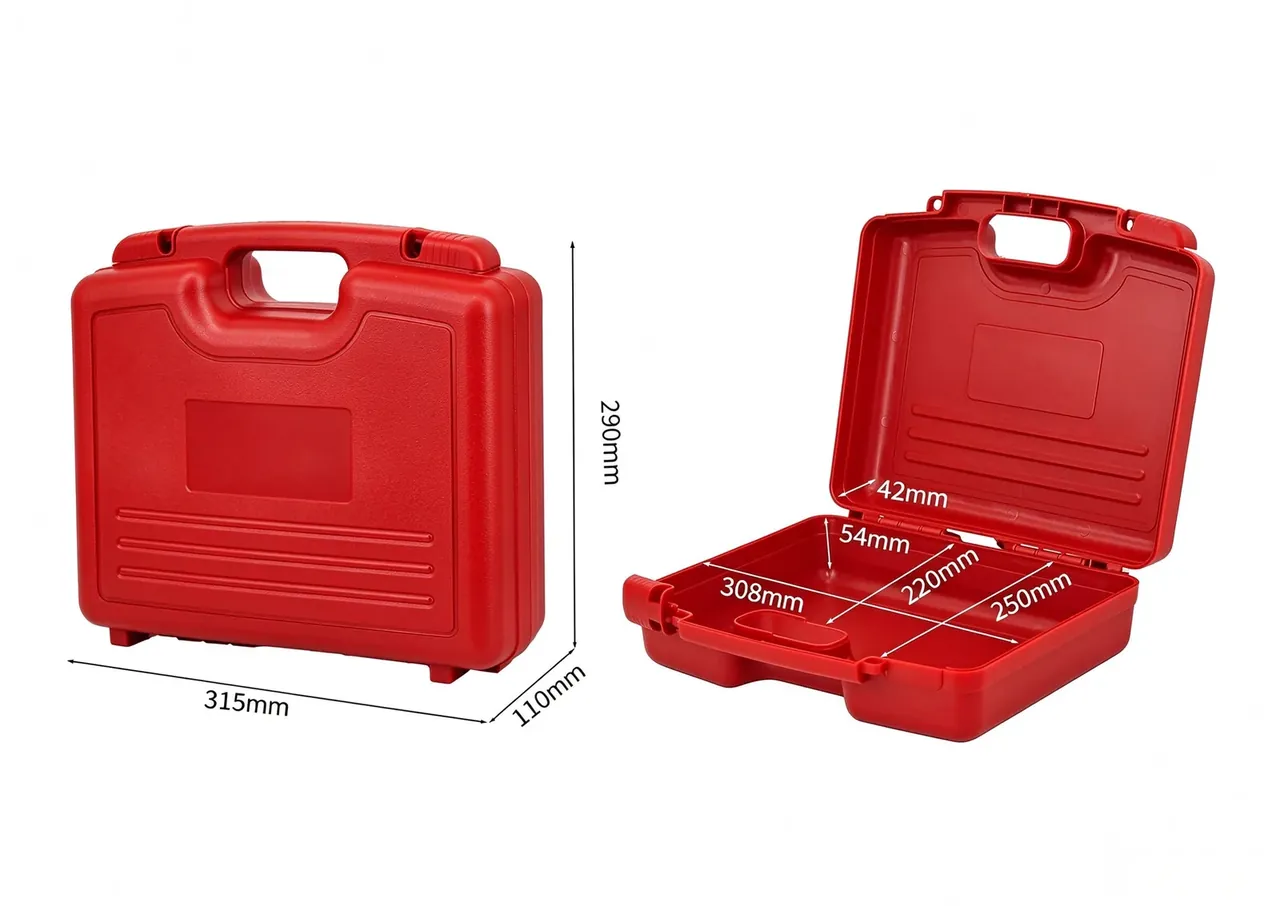
Geological exploration instrument waterproof hard box hold is logged in three stages, one lid opening for a water-trace check at the end of each. Sand particle size is outside the criterion; only visible scoring and residual grit are recorded. JUNZHIJIA validates this mouth by a 60 min pressure-hold method rather than a grade claim.
| Immersion stage | Watch item | Pass value |
|---|---|---|
| 0–20 min | Outer lip water trace | No water line |
| 20–40 min | Inner lip and lid edge | No grit deposit |
| 40–60 min | Mouth cavity | No standing water |
3. Lid deflection under four-layer stacking
Geological exploration instrument waterproof hard box stacking of four layers for 24 h must hold lid deflection within 1.5 mm. Three lids each carry one full 30.6 kg case above them; the bottom lid is measured at the centre plus the diagonal quarter points.
Geological exploration instrument waterproof hard box deflection is read as residual set after unloading, not the elastic dip under load. Internal ribs run along the short edge at the 4.8 mm wall gauge to keep the centre inside the limit. If the 24 h residual exceeds 1.5 mm, the ribs and the four latches are checked before any lid is scrapped.
| Stack layer | Measurement point | Recorded item |
|---|---|---|
| Top lid | Lid centre | Reading delta |
| Middle two | Diagonal quarter points | 24 h residual |
| Bottom lid | Rim and rib crossing | 1.5 mm verdict |
4. Immersion hold and lid-open inspection
Geological exploration instrument waterproof hard box immersion testing presses the whole shell to 1.0 m depth for a 60 min hold, with no top-up and no opening. The case is tested empty, so any water trace on opening points to the mouth seal. IP68 is written in only as a benchmark; the record carries the measured hold time.
Geological exploration instrument waterproof hard box opening check has three moves: trapped water at the slope end, grit between the two lips, then the wiped compression mark. A 72 h salt spray run comes before immersion so rust is not misread as a leak. The −20 ℃ to 60 ℃ working band belongs to material selection, not the immersion reading.
5. Pressure valve trip point across temperature swings
Geological exploration instrument waterproof hard box uses a 20 mm pressure valve on the short lid edge, with its trip point set by the inside-outside differential. The valve seat is flush with the lid face, so nothing protrudes during stacking.
Geological exploration instrument waterproof hard box valve action is not judged by feel: the test logs when the differential reaches the trip point and whether the seat hesitates on return to ambient. A 20 mm bore matches the 650 × 430 × 275 mm cavity, and the calibration sheet states only a differential band. Closing force of the four 480 N latches is rechecked under the swing.
| Deflection limit | Condition | Recheck item |
|---|---|---|
| 1.5 mm | Four layers / 24 h | Residual set |
| 1.5 mm | Restack after 1.2 m drop | Point drift |
| 1.5 mm | Back to ambient from −20 ℃ to 60 ℃ | Valve seat area |
Conclusion
Geological exploration instrument waterproof hard box rests on two threads: whether the mouth clears itself after muddy water, and how much lid stiffness survives long stacking. The drain slope with twin gaskets handles the first; internal ribs and even compression from four latches handle the second. Putting the 1.0 m / 60 min no-seepage result and the four-layer / 24 h deflection of 1.5 mm on one sheet closes the shell-side specification. JUNZHIJIA validates each item by the methods above.
Related Reading
- Core sample box dividers and retention
- IP67 protective case sealing criteria
- Dustproof and waterproof case test methods
- Field sampling case lid and handle specs
Related Products
- 8 Series — Gun Cases; Military Equipment Cases; Camera Equipment Cases; Drone Cases; Watch Cases; Knife Cases; First Aid Cases; Electronics Equipment Cases
- WL8-2812 PP Gun Case — model WL8-2812
- All protective cases and toolboxes: 7 series, 158 models