

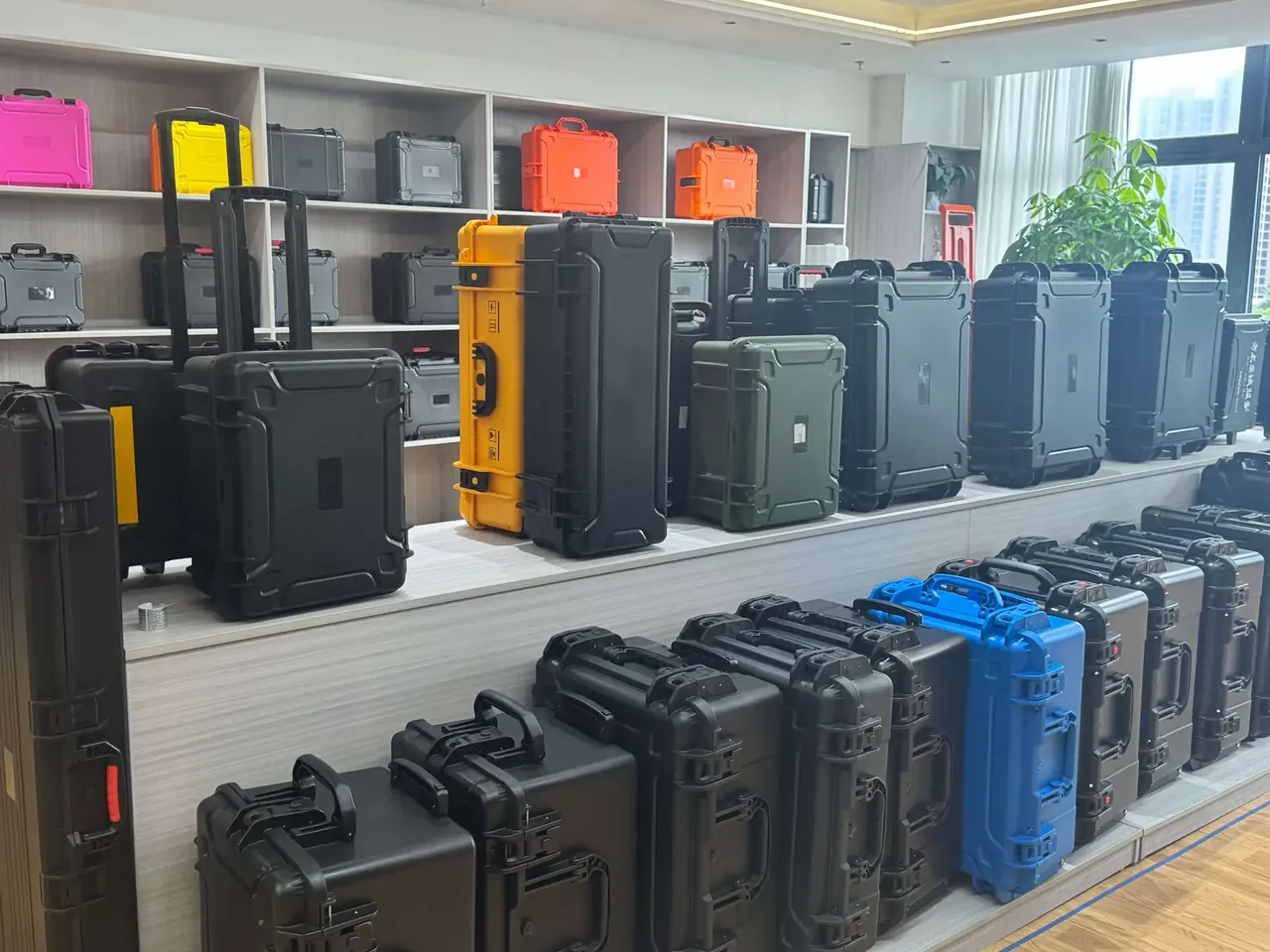
Quick answer: Upkeep of a grenade transport container rests on three lines: a full check every 30 trips or 6 months, gasket replacement once compression set passes 25 percent, and scrapping at 15 percent wall loss. A full check takes about 12 minutes per unit, and most swaps finish in 0.2 to 0.4 hours.
Table of contents
- Inspection Cadence for a Grenade Transport Container
- Gaskets and Air-Tightness
- Latches, Hinges and Hardware
- Wall Thickness and Structure
- Replacement Triggers and Scrapping
- FAQ
1. Inspection Cadence for a Grenade Transport Container
Fix the interval first, or upkeep drifts into improvisation. The baseline is a full inspection every 30 trips or 6 months, whichever comes first. Busy routes pass 40 trips a year, so the trip count governs; quiet depots hit the calendar.
The check has three layers, and a trained inspector covers a grenade transport container in about 12 minutes: 3 minutes for appearance, 4 for hardware, 3 for pressure and 2 for gauging. Two inspectors clear a 200-unit pool in two days.
| Layer | Items | Method | Pass mark |
|---|---|---|---|
| Appearance | Cracks, latches, hinges | Visual and hand feel | No through crack |
| Air-tightness | Seal face, pressure drop | 20 kPa, hold 60 s | 1 kPa maximum |
| Structure | Eight fixed points | Ultrasonic gauge | 2.7 mm minimum |
2. Gaskets and Air-Tightness
The gasket on a grenade transport container ages first. The number that counts is compression set: 22 hours at 70 °C, 30 minutes of free recovery, then measure. Past 25 percent it sits on the replacement line, and appearance proves nothing, because a gasket can look intact with its rebound gone.
Confirm air-tightness by pressure drop: 20 kPa inside, held 60 s, accepting 1 kPa or less. Clean the groove first, since one 0.5 mm quartz grain can double the drop. A new gasket reads Shore A 55±5, and past 70 the plasticiser has migrated out.
3. Latches, Hinges and Hardware
Latch trouble on a grenade transport container shows up as holding force. Pull along the opening direction at 320 N and the latch must not release; below that, check hook wear. A hook worn past 1 mm is replaced, never compensated for by tightening the catch.
Measure hinge pin clearance with a feeler gauge, replace past 0.5 mm; pins are cheap, oval bores are not. Restore 1.8 N·m on hinge screws and 2.2 N·m on latch seats with a torque wrench, then cycle the latch.
4. Wall Thickness and Structure
Gauge the grenade transport container at eight fixed points. Nominal is 3.2 mm and the scrap line is 2.7 mm, a 15 percent loss. Thinning concentrates at bottom corners and radius transitions, so those points stay marked and never move; a new point restarts the data set.
| Check | Limit | Action |
|---|---|---|
| Wall thickness | 2.7 mm | Scrap the body |
| Seal-face flatness | 1.5 mm gap | Scrap or rework |
| Rib-root crack | Any white stress line | Re-check in 10 trips |
Structure also covers seal-face flatness and rib-root cracks. A 1.5 mm gap under a straight edge means the face has distorted, and no new gasket will hold pressure against it. Thermal cycling exposes what a warm workshop hides: 4 hours at -30 °C, 4 hours at 60 °C, five cycles.
5. Replacement Triggers and Scrapping
Triggers for a grenade transport container come in three grades: service parts swapped on site in 0.2 to 0.4 hours, repairable inserts and handles that go back to the workshop, and scrap items that leave the rotation at once.
| Part | Trigger | Action | Labour |
|---|---|---|---|
| Gasket | Set over 25 percent, hardness over 70 | Replace whole length | 0.3 h |
| Latch | Holding force under 320 N, hook wear over 1 mm | Replace as a pair | 0.2 h |
| Hinge pin | Clearance over 0.5 mm | Swap pin, re-measure | 0.4 h |
| Case body | Wall under 2.7 mm or through-crack | Scrap | — |
Scrapping is cost control, not failure. Retiring a case at 2.7 mm keeps material value, while a split at 2.4 mm puts risk on the load. Records decide the next order: unit number, trips, date, part batch, inspector. Without them, sixty trips is a claim, not a fact.
Conclusion
The work is not complicated; holding the three lines is. Inspect every 30 trips or 6 months, replace the gasket at 25 percent compression set, scrap the body at 15 percent wall loss. Written into a checklist, that turns upkeep into a process, and it keeps every grenade transport container sealing like new at its sixtieth trip.
This article discusses only the container (case body) side of specifications and design intent, and does not cover any handling, loading or use of the contents.
Related Reading
- Day-to-day upkeep points for grenade storage containers
- Setting the maintenance interval for reusable shipping containers
- Rust prevention and patching on metal ammunition boxes
- How warehousing practice prevents case damage
Related Products
- 8 Series — Gun Cases; Military Equipment Cases; Camera Equipment Cases; Drone Cases; Watch Cases; Knife Cases; First Aid Cases; Electronics Equipment Cases
- WL8-2812 PP Gun Case — model WL8-2812
- All protective cases and toolboxes: 7 series, 158 models