


Quick answer: A gun case rarely fails at the shell. It fails at the seal channel, the latch tension and the foam, in that order. Below is one 42-unit inspection and the four replacement thresholds it produced.
Table of contents
- How the Gun Case Inspection Interval Was Set
- Surface and Seal Channel: Tracing One Leak
- Latches, Hinges and Handle: Three Load Points
- Foam and Interior: Collapse, Debonding, Replacement
- FAQ
1. How the Gun Case Inspection Interval Was Set
In March a municipal tactical unit rolled 42 gun cases into a corridor for the first quarterly check of the year. Rain the night before had left the air at 78 percent humidity, and every lid came up wet inside. The rule had been twice a year. It became quarterly after three units showed a pale brown water mark along the lid line. Two people spent two days at 25 minutes per unit, and 11 of the 42 were pulled for work. Every mark sat directly above a latch, and once the white crystals in the seal channel were brushed out and the channel dried before closing, none of the three leaked again.
Intervals follow open-close cycles and the room the case lives in, not habit.
| Interval | Action | Threshold |
|---|---|---|
| 30 days | Wipe shell, clear seal channel | No crystal, gasket supple |
| Quarterly | Latch force, hinge pin play | 140 to 200 N, under 0.3 mm |
| 6 months | Foam compression and bonding | Recovers within 4 seconds |
| 2 years | Full spray re-test | 30 minutes, dry lid line |
Only the second row needs a gauge.
2. Surface and Seal Channel: Tracing One Leak
The mark started above a latch, which puts the entry point at the channel shoulder beside the latch seat. When a latch pulls the gasket down, the channel corners lift a hairline gap first.
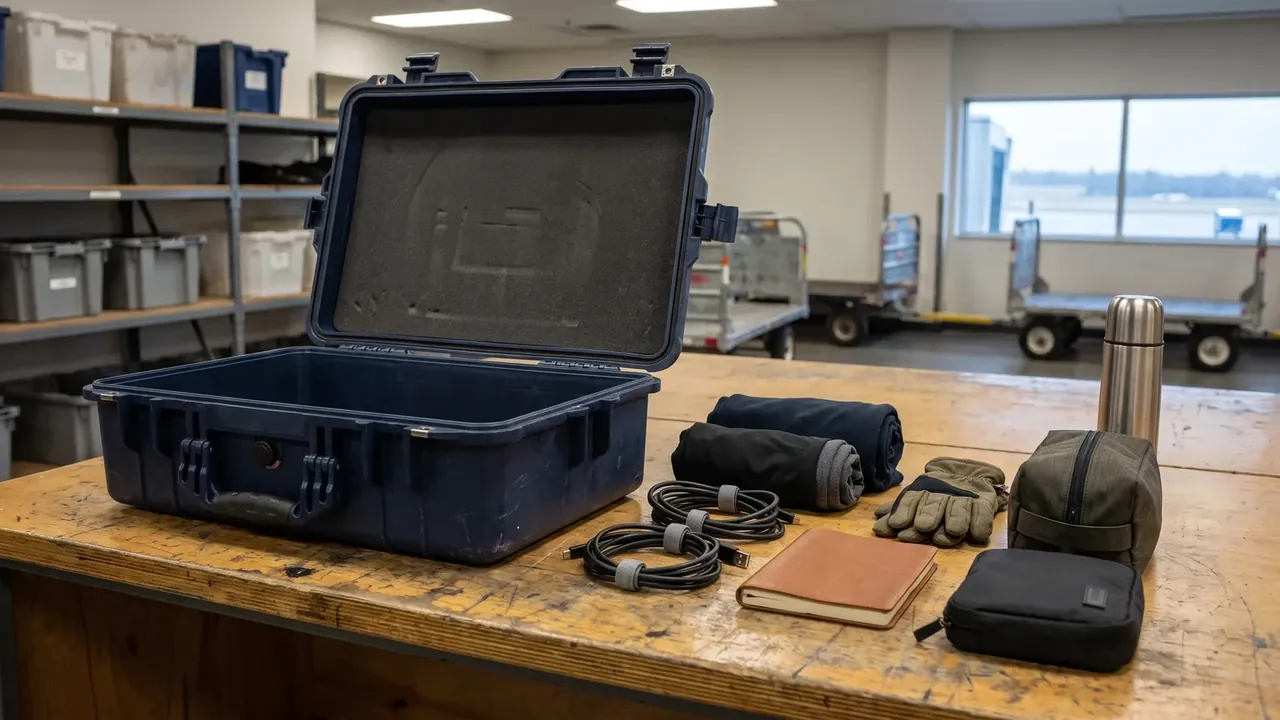
Cleaning runs in four steps; order matters.
- Dry brush: break the crystal loose, no water yet;
- Wet wipe: water under 35 C with neutral detergent;
- Rinse: clear residue, twice around the latch seat;
- Dry: 20 minutes with the lid open, close only when bone dry.
Skip the pressure washer: a jet lifts the gasket out of its groove.
Hot water is worse. Above 40 C, coating and substrate shrink at different rates and blisters start.
3. Latches, Hinges and Handle: Three Load Points
A gun case has three load points that fail in three ways, so one test cannot cover them.
| Point | Failure | Test | Threshold |
|---|---|---|---|
| Latch | Rounded tongue, tired spring | Pull with a gauge | 140 to 200 N |
| Hinge | Pin drift, cracked seat | Open 90 degrees, rock the lid | End play under 0.3 mm |
| Handle | Loose rivets, twisted grip | Lift 22 kg for 30 seconds | No rivet movement |
The latch goes first.
Tongue wear is gradual. The first month only feels soft; by the time two hands are needed, half the engagement is gone.
The handle is the easiest item to pass by mistake. A shake in place proves nothing, because the shell weight still hangs on the rivets; lifting 22 kg for half a minute is the only test that loads them.
Gasket squeeze belongs in the log: 25 percent compression by design, 18 percent once the rubber hardens.
4. Foam and Interior: Collapse, Debonding, Replacement
Foam failure in a gun case is a recovery question, not a colour question. Cut a 20 mm strip, squeeze it to half thickness and time the return; past 4 seconds it has lost its support.
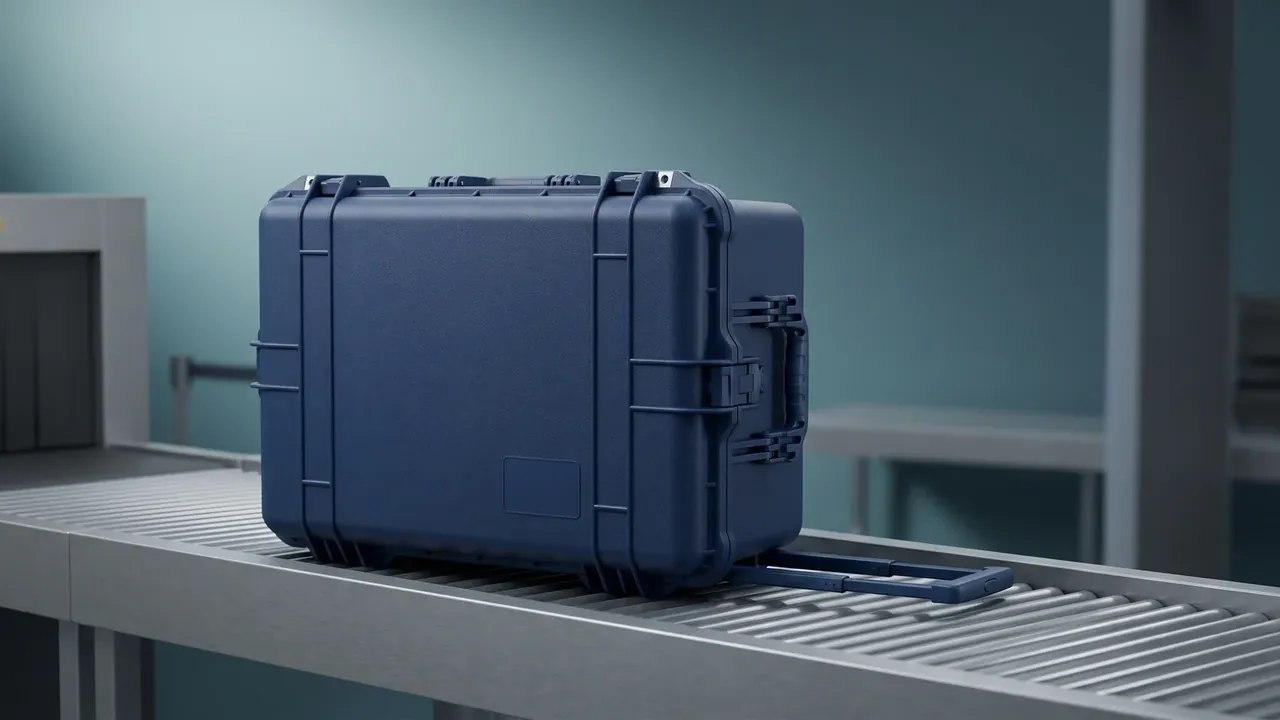
Debonding shows at the edge of the lid liner. If the adhesive comes away as powder, re-gluing buys a quarter and a panel swap is cheaper.
Replace foam as a set. Swap only the worst block and the load lands on the new piece, so it collapses first again.
The four lines fit on a card taped inside the lid.
- Gasket: hardened, or under 20 percent compression, full length;
- Latch: opening force under 140 N, or 1 mm off the tongue radius, replace as a pair;
- Foam: recovery past 4 seconds, or any powdering, whole layer;
- Shell: through-crack or cracked hinge seat, retire the unit.
The first three close out on inspection day; the fourth goes to disposal.
Conclusion
Inspection, cleaning, load points and foam only work as one routine. The table decides when to act, the thresholds how far, the replacement lines when to stop spending. What extends the life of a gun case is not a thicker wall but a schedule that gets executed.
This article discusses only the container (case body) side of specifications and design intent, and does not cover any handling, loading or use of the contents.
Related Reading
- Keeping a submachine gun storage box in service
- Sealing and periodic checks on a war reserve case
- Rust removal and gasket replacement on a metal ammunition box
Related Products
- 8 Series — Gun Cases; Military Equipment Cases; Camera Equipment Cases; Drone Cases; Watch Cases; Knife Cases; First Aid Cases; Electronics Equipment Cases
- WL8-2812 PP Gun Case — model WL8-2812
- All protective cases and toolboxes: 7 series, 158 models