

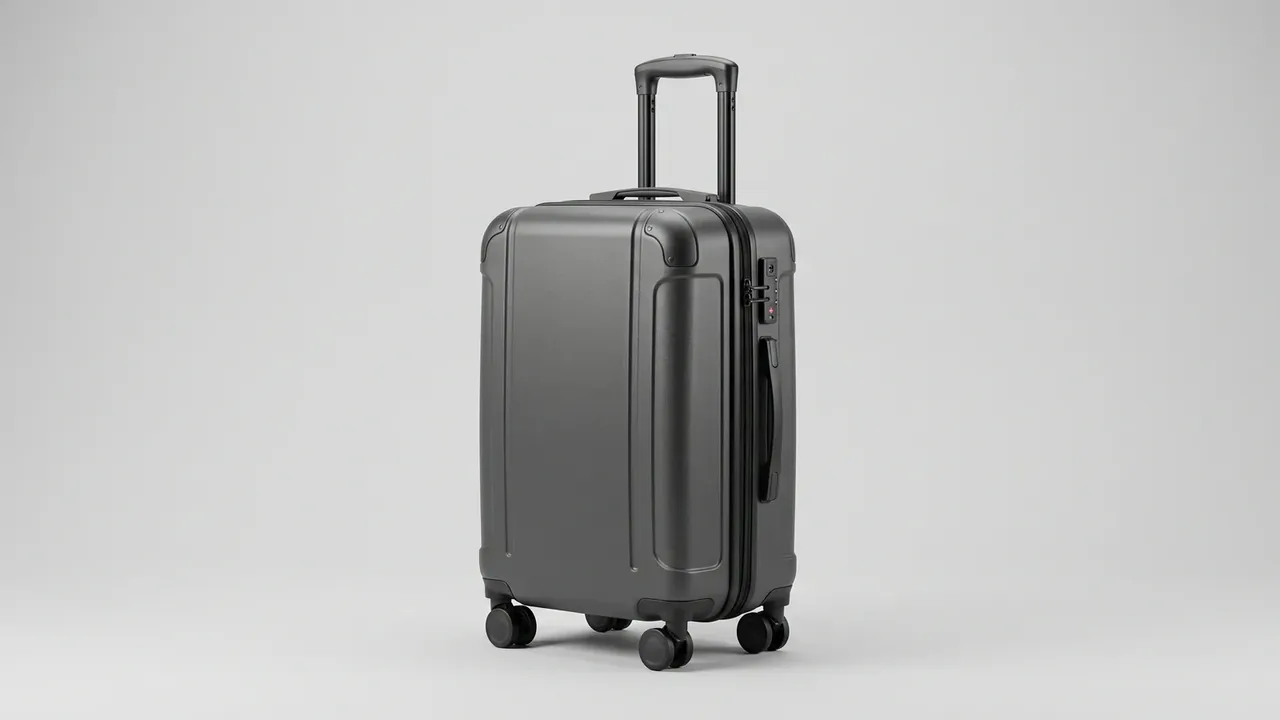
Quick answer: A gun case wall is derived, not drawn. Payload, the longest item the cavity must hold, and stacking layers set thickness, rib spacing and tolerance. Run the chain in that order and the numbers stop being a guess.
Table of contents
- Where the Gun Case Specification Chain Starts
- Cavity Size: Fit the Longest Item First
- Wall Thickness and Structure: Corners, Ribs, Base
- Load and Stacking: Turning Layers Into Thickness
- Latches, Sealing and Tolerances: Onto the Drawing
- FAQ
1. Where the Gun Case Specification Chain Starts
Early last year a unit replaced 30 units with three inputs: a 1010 mm longest item, a 32 kg ceiling, and three-layer stacking. There was no drawing to copy. Worked in order, the three gave a cavity of 1080 × 310 × 170 mm, a 3.0 mm flat wall, 4.2 mm corners and a shell under 14 kg. Later the cavity grew 60 mm and stacking went to four layers; base deflection moved from 0.7 mm to 1.3 mm and failed acceptance. Nothing in a gun case is independent, and one changed number moves the far end of the chain.
The order is fixed: load and cavity, then wall, then tolerance.
| Input | Move | Result |
|---|---|---|
| 1010 mm longest item | 35 mm at each end | Cavity 1080 mm |
| 32 kg load | Check at 4x, 128 kg | Wall 3.0 mm |
| Three layers | Bottom carries two | Corners 4.2 mm |
| 170 mm depth | 25 plus 20 mm liner | Height 235 mm |
2. Cavity Size: Fit the Longest Item First
Length follows the longest item, width the widest section, depth the liner. Width is where drawings fail: dividers get left out and the third item is 15 mm short.
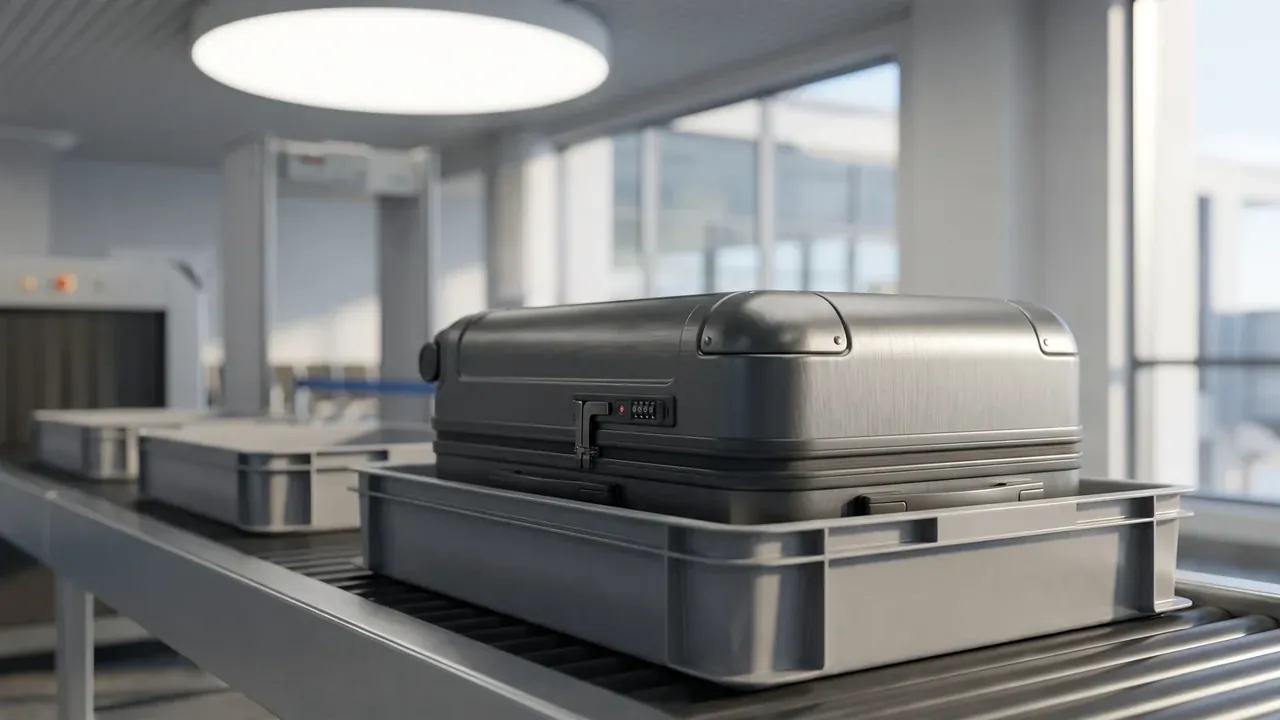
Clearance is not optional: 35 mm at each end is the smallest gap a gloved hand needs, and below it long items go in at an angle.
Depth is liner arithmetic: 25 mm base, 20 mm lid, and the clear gap is the drawing number.
Oversizing costs twice: a cavity 20 mm too wide lets the item shift and loads the thinnest foam.
3. Wall Thickness and Structure: Corners, Ribs, Base
At 32 kg with a 4x factor the check is 128 kg, and 3.0 mm holds about a 1.6 margin. Five rules carry the rest:
- Flat wall 3.0 mm, corners and latch seats 4.2 mm;
- Three ribs, 6 mm high, 150 mm apart;
- A ring rib on the base, 20 mm in from the edge;
- Parting line off the seal channel, 4.5 mm deep;
- Draft 1.2 degrees, none where foam sits.
Ribs shorten the span rather than add material: 220 mm down to 150 mm nearly doubles base capacity.
Corners are about drops: the corner lands first, and the extra thickness keeps a crack from reaching the side wall.
4. Load and Stacking: Turning Layers Into Thickness
Three layers puts 64 kg on the bottom unit for months, so acceptance reads residual deflection at 24 hours.
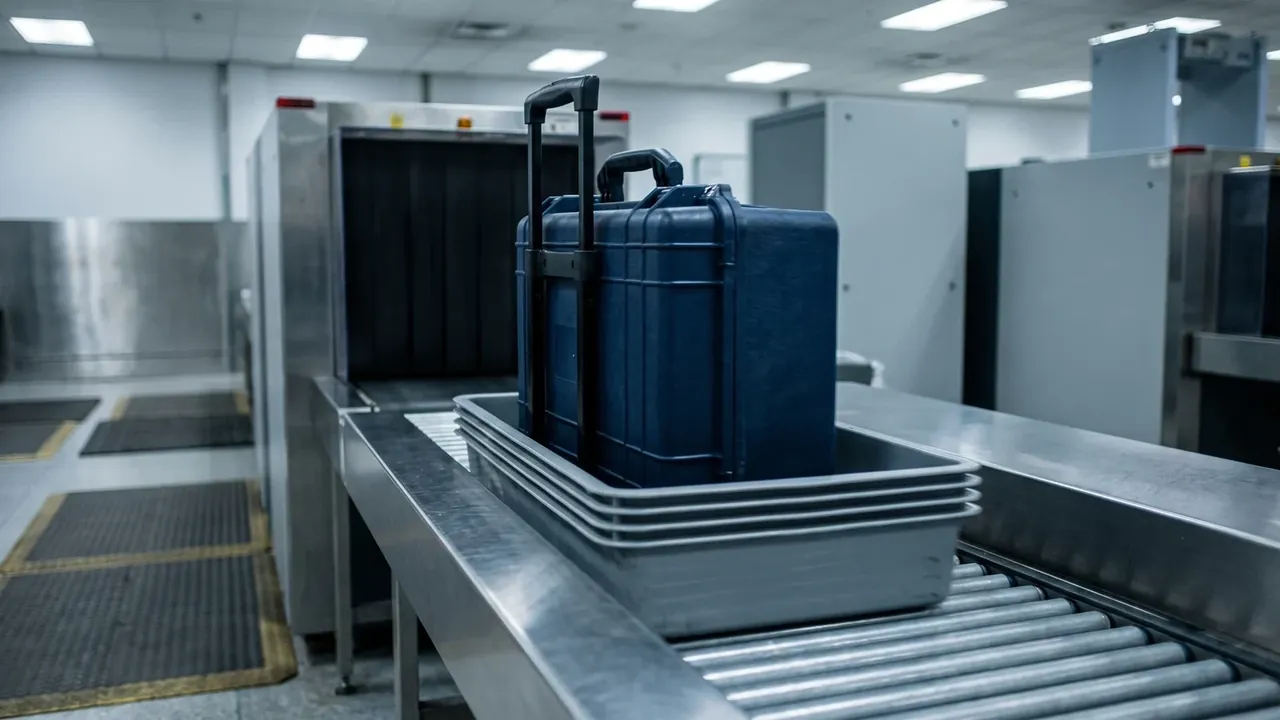
The line is 1.0 mm at the base centre: load 24 hours, release, wait 30 minutes, read again.
Heat moves it: at 45 C the modulus drops about 30 percent and the same unit reads 1.3 mm, so hot stores stack lower.
Layer count also picks the wall: four layers means 96 kg, so 3.4 mm or ribs at 120 mm.
5. Latches, Sealing and Tolerances: Onto the Drawing
The latch decides whether the gasket compresses at all: 180 N plus or minus 15, with the seal at 28 percent inside a 24 to 32 band.
| Item | Nominal | Tolerance | Measured by |
|---|---|---|---|
| Cavity length | 1080 mm | ±0.5 mm | Caliper, 3 points |
| Flat wall | 3.0 mm | ±0.2 mm | Ultrasonic, 5 points |
| Latch force | 180 N | ±15 N | Force gauge |
| Seal compression | 28% | 24 to 32% | Gap after closing |
Tolerance is the first thing cut and the last that should be: half a millimetre on the cavity is what lets foam sit tight.
Conclusion
A gun case specification runs one way: payload and cavity go in, wall and structure come out, tolerance closes the loop. Any link filled in by feel is paid for later in trial moulds. Give every number a source, and the drawing survives acceptance.
This article discusses only the container (case body) side of specifications and design intent, and does not cover any handling, loading or use of the contents.
Related Reading
- What to compare first when choosing a gun case
- Moulding and lining steps in gun case production
- Records to check in a gun case production audit
- How a submachine gun storage box is built
Related Products
- 8 Series — Gun Cases; Military Equipment Cases; Camera Equipment Cases; Drone Cases; Watch Cases; Knife Cases; First Aid Cases; Electronics Equipment Cases
- WL8-2812 PP Gun Case — model WL8-2812
- All protective cases and toolboxes: 7 series, 158 models